

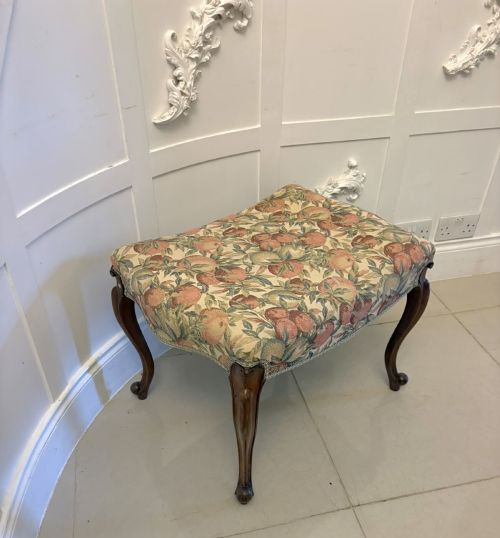

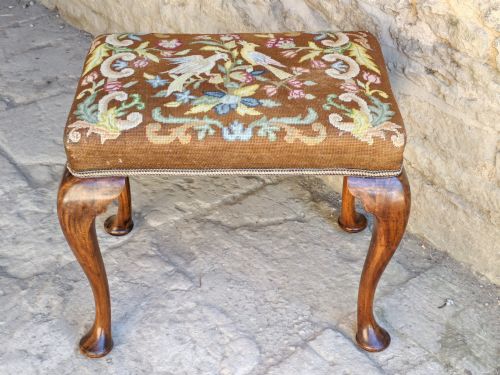
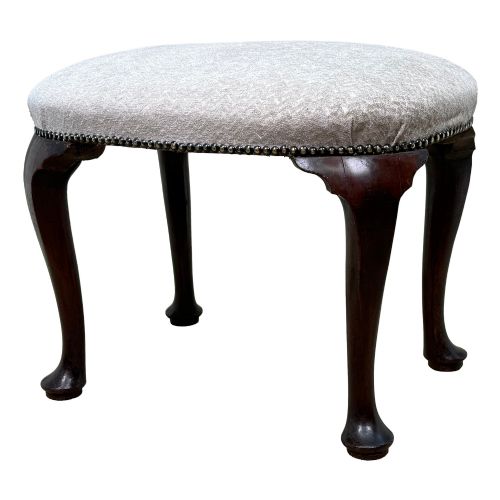
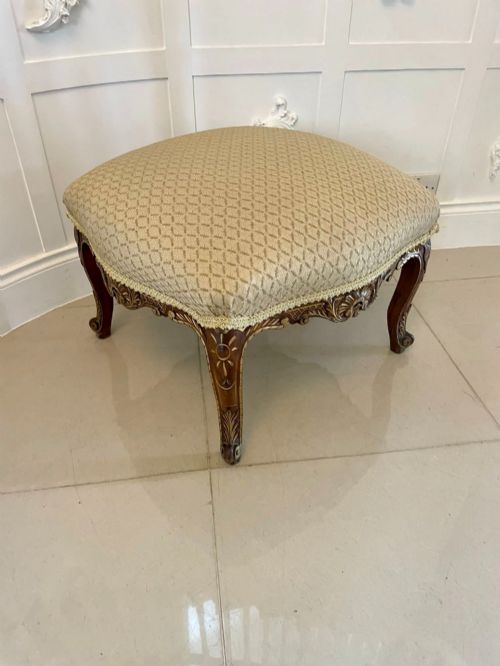

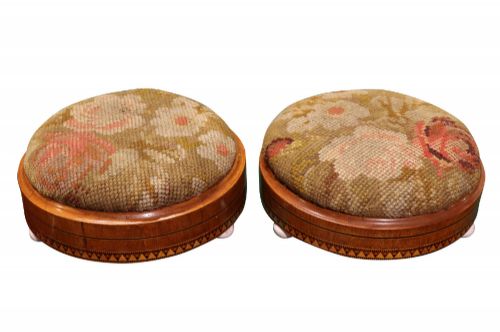


Walnut Foot Stool
A walnut foot stool is a solid timber platform designed to elevate the feet, combining dense grain with upholstery.
Walnut Foot Stool
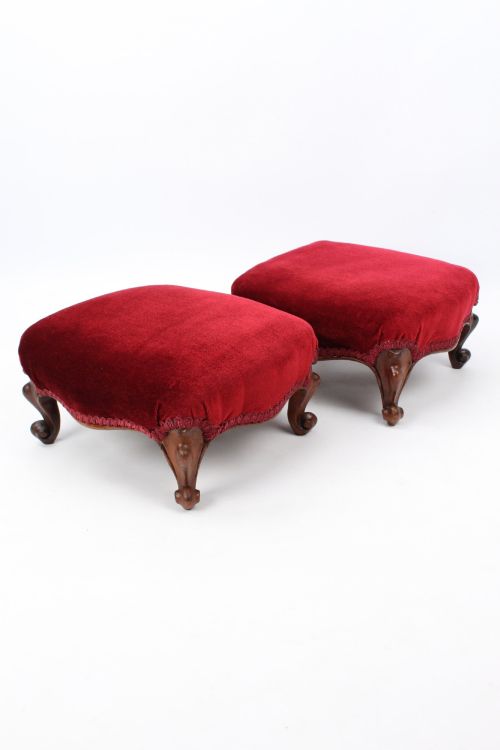
A walnut foot stool is a small timber support designed for fireside, dressing table or lounge use, constructed to raise the feet from cold floors. These pieces appear frequently in Victorian iterations, alongside earlier 18th century examples and later revivals spanning the Regency and 19th century eras.
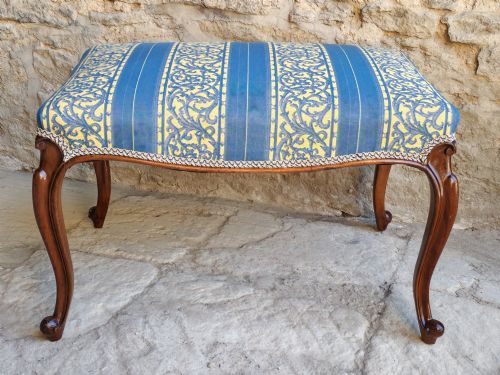
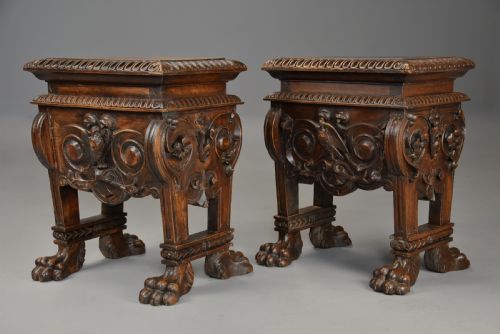
The silhouettes range from simple circular and oval pads to X-frame seats, rectangular long benches and cabriole-legged forms. Buyers encounter compact domestic versions alongside larger Scottish Baronial or Venetian carved seating variants.
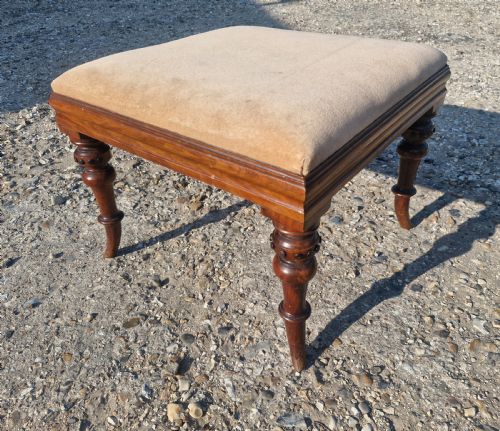
The structural framework relies on dark temperate hardwoods, shaped into sturdy cabriole, turned or straight legs that support padded upper surfaces.
Craftsmanship and Material Depth
Quality rests in the precision of the timber carving and the integrity of the frame construction, separating basic domestic items from master-carved seating. Sharply defined details on cabriole legs, inlaid Tunbridge ware or figural carvings indicate superior workshop production.
The original condition of the upholstery materials, whether crewel work, kilim tapestry or plain leather, influences the integrity of the piece. Untouched timber surfaces with deep, warm patina command greater regard than stripped or heavily restored frames.
Walnut Foot Stool Retail Price Guide 2026
Typical asking prices for walnut foot stool among the pieces listed under this phrase on Sellingantiques today, from the lower quarter to the upper quarter. They describe what is for sale here now, not the wider market.
Listings feature walnut foot stools spanning the Victorian era, Regency period, and 18th century, utilising wool, velvet, brass, and tapestry upholstery.
The Walnut Foot Stool Glossary
- Cabriole leg
- A furniture leg that bends outward and tapers downward to a pad or scroll foot, echoing animal limbs. This form appears frequently on 18th century and revival pieces.
- Tunbridge ware
- Small scale decorative woodwork involving mosaic patterns assembled from tiny coloured wood blocks. This meticulous technique decorates the wooden borders of select Victorian pieces.
- Needlepoint
- Hand-stitched embroidery executed on a stiff canvas mesh, creating durable geometric or floral seat covers. These textile surfaces form the top panels of many domestic foot rests.
- X-frame
- A structural base formed by intersecting diagonal timbers that cross to support the seat. This architectural layout provides steady balance for window seats and benches.
- Gout stool
- A specialised adjustable fireside rest designed to elevate an afflicted foot at a comfortable angle. These forms are padded with textiles to ease physical discomfort.
Walnut Foot Stool: Frequently Asked Questions
What is a walnut foot stool used for?
These low timber platforms served as comfortable rests for the feet beside domestic fireplaces or in dressing rooms. They provided insulation from cold floors and supported weary limbs during long periods of sitting.
Over successive periods, they evolved from utilitarian household items into decorative furnishings matched to parlour chairs and window seats.
How do I date a walnut foot stool?
Dating relies on observing structural characteristics, timber finishes and the style of the legs, such as the curved line of the cabriole or the heavy turning of the Victorian era. Comparing the upholstery techniques and underlying secondary woods provides additional chronological markers.
Pieces from the 18th century display simpler, restrained lines, whereas mid to late 19th century iterations often incorporate elaborate carving, inlay and needlepoint textiles.
Are these stools sturdy enough for daily use?
Solid walnut frames offer robust structural integrity, making most surviving examples fully capable of supporting everyday domestic placement. The dense nature of the hardwood protects the foundational joints from routine wear.
Care should be taken with fragile antique needlepoint or delicate inlaid surfaces, which benefit from gentle placement away from direct foot traffic.
What styles of walnut foot stool exist?
The inventory encompasses diverse aesthetic traditions, ranging from early 18th century George I forms to Victorian Rococo Revival and Scottish Baronial expressions. Continental influences also appear through French, Italian and Venetian carved variants.
Surfaces vary from plain leather upholstery and simple circular shapes to elaborate tapestry needlework and X-frame timber supports.