



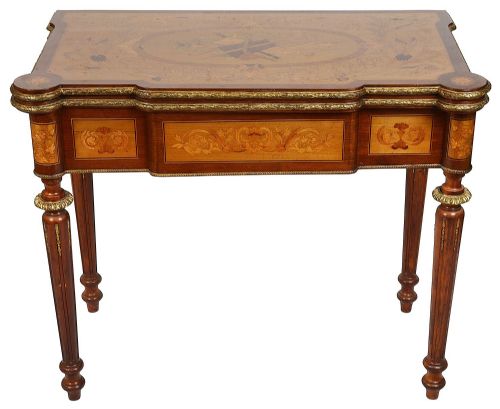


Walnut Foldover Gaming Table
A walnut foldover gaming table is a clever piece of dual-purpose furniture designed for evening entertainment and polite card play.
Walnut Foldover Gaming Table
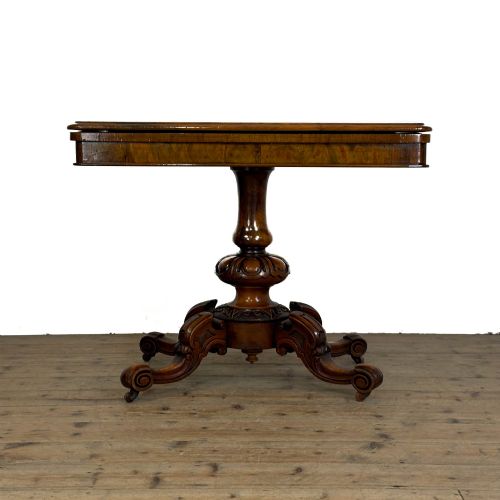
When you search for a walnut foldover gaming table, you encounter versatile furniture pieces primarily spanning the Victorian period and the nineteenth century, alongside eighteenth-century Dutch examples and later revivals. These tables typically feature a hinged top that opens to reveal a baize-lined surface for cards, chess or draughts, transforming quickly from a console or pier table into a functional playing surface.
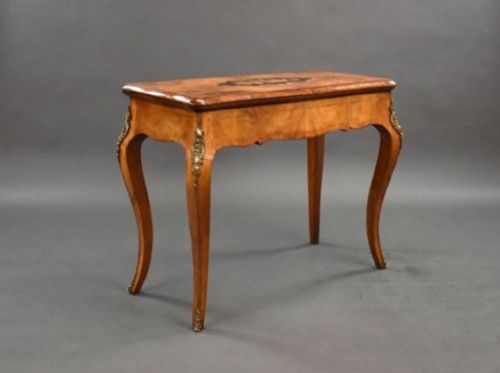
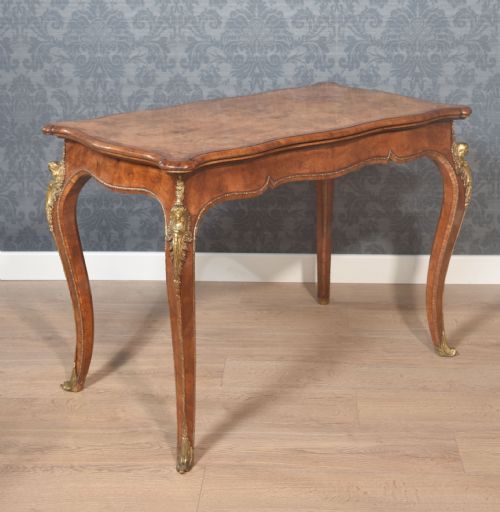
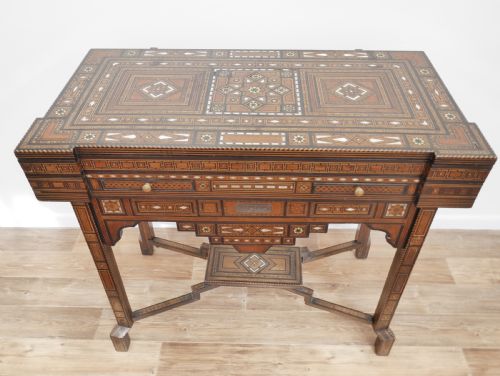
The versions you are most likely to meet on this page are Victorian burr walnut card tables, often displaying intricate marquetry or boxwood inlay upon serpentine or demi-lune tops. Alongside these standard English forms, the selection includes distinct regional interpretations such as Dutch Baroque marquetry pieces and occasional butterfly-shaped variants.
Makers such as Edwards & Roberts and retailers like S&H Jewell appear among the Victorian examples, demonstrating the high standards of nineteenth-century cabinet making. Whether configured for simple card games or multi-use chess boards, these tables served as social centres in period drawing rooms.
What varies in quality
The choice of veneer sets the baseline for visual appeal, with highly figured burr walnut commanding greater attention than plain timber. Mastery in the execution of marquetry inlay, where floral or geometric patterns fit flush without excessive filler, distinguishes superior workshop output.
Engineering precision in the folding mechanism dictates daily utility, ensuring the opened leaf sits level and firm without strain on the hinges. The crispness of carved mouldings and the retention of original brass or ceramic castors further separate standard production from exceptional pieces.
Styles span Victorian Rococo Revival, Queen Anne style, Dutch Baroque and Louis XV Revival forms across card and games tables.
Edwards & Roberts·S&H Jewell
The Walnut Foldover Gaming Table Glossary
- Burr walnut
- Timber taken from a tree growth where the grain has swirled into intricate knots and eyes, prized for its decorative grain. Cabinet makers sliced this wood into thin veneers for table tops.
- Serpentine top
- A table edge shaped with a central convex curve flanked by concave sweeps, popular in Victorian cabinet design. This contour softens the rectangular outline of the furniture.
- Marquetry
- The art of applying pieces of veneer to a structure to form decorative patterns and pictures. Craftsmen cut various woods together to create flush pictorial surfaces.
- Demi-lune
- A half-moon shape characteristic of tables designed to sit flat against a wall when folded. Upon opening, the top often forms a full circle or semi-circular playing area.
- Ormolu
- Gilded bronze ornamentation applied to furniture mounts and feet during the nineteenth century. This decorative metalwork adds bright metallic contrast to dark timber.
Walnut Foldover Gaming Table: Frequently Asked Questions
What is a walnut foldover gaming table?
A walnut foldover gaming table is a domestic piece featuring a hinged top that doubles the surface area when opened for play. These tables were essential furniture in period homes for hosting evening card games and social pastimes.
Most examples date from the nineteenth century, utilising figured walnut and intricate marquetry to present an elegant appearance against a drawing room wall when closed.
How did people use these tables?
Owners used these tables primarily for card games, chess and draughts during formal evenings of entertainment. The folded top protected the baize playing surface from dust and wear during daily use.
When guests arrived, the top leaf swung or unfolded to reveal compartments for counters and a stable surface for playing cards.
How do I distinguish Victorian from earlier tables?
Victorian tables often display rich burr walnut veneers, serpentine edges and machine-assisted marquetry or boxwood inlay. They frequently rest on pillar and claw bases or turned legs with ceramic castors.
Earlier eighteenth-century pieces, such as Dutch marquetry examples, tend to feature heavier proportions, floral inlay covering the entire body, and simpler structural framing.
How do I care for a walnut gaming table?
Keep the table away from direct sunlight and heat sources to prevent the walnut veneer from drying and splitting. Maintain a stable room temperature to protect the antique timber and internal pivot mechanisms.
Apply a quality beeswax polish occasionally to nourish the wood and preserve the depth of the grain without building up heavy residues.