

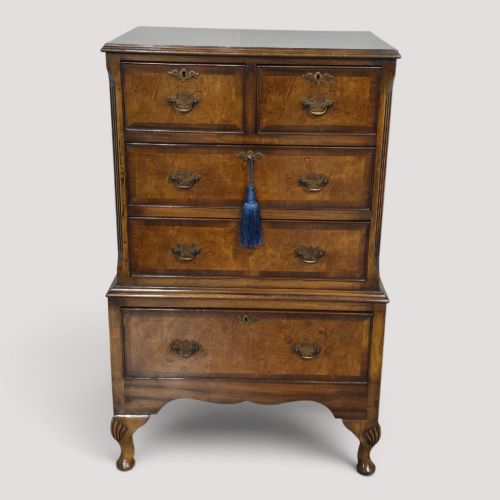
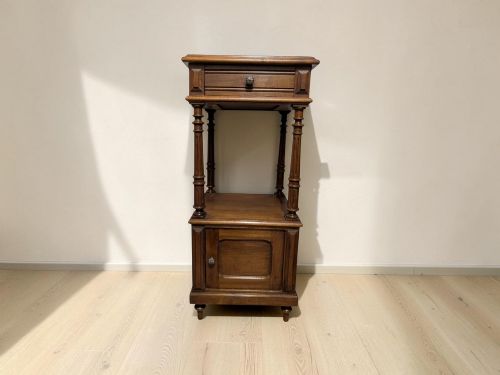
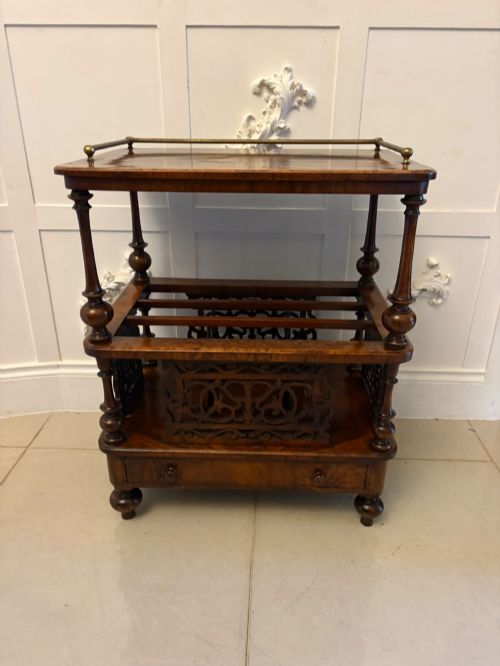
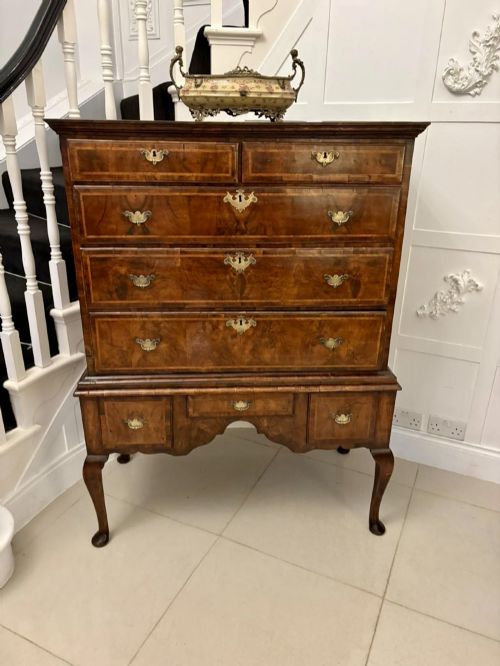

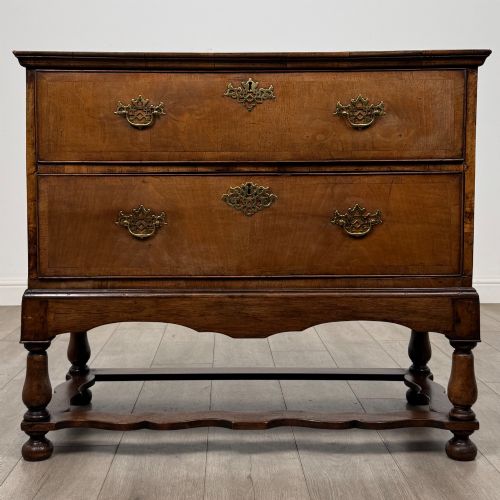
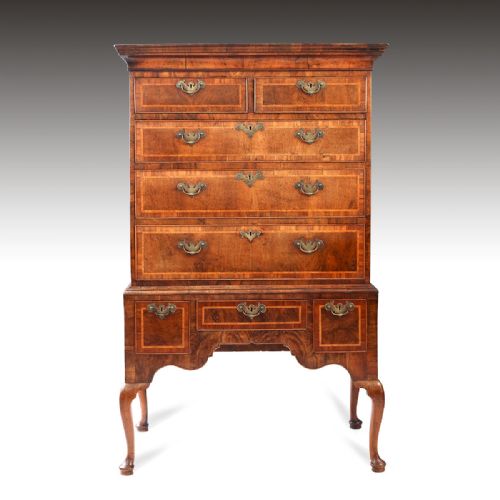

Walnut Drawer on Stand
A walnut drawer on stand brings tactile warmth and elevated storage to a room, combining lower drawer units with raised leg supports.
Walnut Drawer on Stand
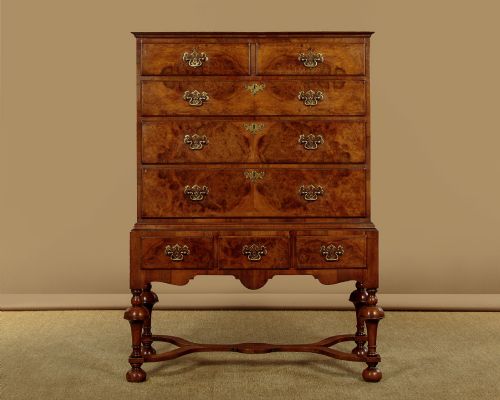
A walnut drawer on stand pairs a set of drawers with a supporting table frame or stand beneath. These pieces span periods from the seventeenth century through the Georgian era, alongside later revival pieces.
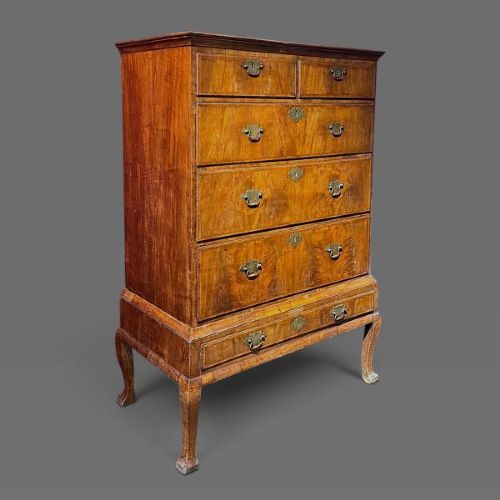
The form separates upper storage compartments from the floor, utilising cabriole legs, spiral turnings, or straight supports. Early examples display crossbanding and veneered surfaces, while later versions adopt different proportions.
Buyers encounter eighteenth-century designs alongside twentieth-century interpretations. The arrangement places primary storage capacity at a convenient height.
Materials and construction
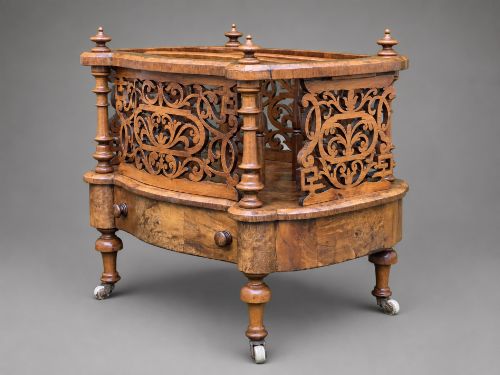
Cabinetmakers utilised walnut and burr walnut veneers, laid over secondary timbers such as oak, to create figured grain patterns across drawer fronts. Boxwood stringing and brass drop handles add contrasting detail to the main timber body.
Stands incorporate matching timber legs joined by stretchers for stability, supporting the heavy drawer section above. Construction techniques rely on dovetail joints for drawer boxes and mortise and tenon joints within the structural stands.
Walnut Drawer on Stand Retail Price Guide 2026
Typical asking prices for walnut drawer on stand among the pieces listed under this phrase on Sellingantiques today, from the lower quarter to the upper quarter. They describe what is for sale here now, not the wider market.
Listings feature walnut and burr walnut timber across seventeenth-century, Georgian, and later twentieth-century periods.
Assessing quality
Quality rests in the matching of timber veneers and the crispness of crossbanding details. Superior pieces maintain harmonious grain patterns across multiple drawer fronts without disruption.
The relationship between the upper drawer chest and its lower stand dictates structural integrity. Original matching stands hold greater cohesion than associated bases paired together at a later date.
The Walnut Drawer on Stand Glossary
- Crossbanding
- A border technique where thin strips of veneer are laid perpendicular to the surrounding grain. This frames drawer fronts and top surfaces with a contrasting linear pattern.
- Burr walnut
- Timber harvested from walnut tree growths that produce complex swirling grain patterns. Cabinetmakers sliced these burls into decorative veneers for principal surfaces.
- Cabriole leg
- A furniture support shaped with a double curve, turning outward at the knee and tapering inward at the foot. It appears frequently on Queen Anne and Georgian stands.
- Dovetail
- An interlocking joint used in drawer construction, formed by interlocking wedge-shaped fingers. This method provides strong resistance to pulling apart under daily use.
- Associated stand
- A lower support frame united with an upper chest of drawers from a different origin or date. Collectors note whether stand and chest share identical manufacture.
Walnut Drawer on Stand: Frequently Asked Questions
What is a walnut drawer on stand?
A walnut drawer on stand is a raised cabinet piece consisting of a drawer section resting upon a separate open leg base. The design elevates the storage compartment off the floor.
Such furniture developed to keep contents away from damp ground while offering accessible drawer storage. The configuration combines cabinet work with table-making techniques.
How do I date a walnut chest on stand?
Dating relies on examining the timber construction, hardware fixings, leg style, and veneer application methods. Seventeenth and eighteenth-century examples display specific turning and joinery characteristics.
Later revival pieces from the twentieth century often use different secondary woods and modern glues beneath the walnut surface. Comparing leg profiles and edge banding helps establish the period.
Where should I place this in my home?
These pieces function well in hallways, living rooms, or bedrooms where elevated storage and a compact footprint are required. Their vertical proportion makes use of wall space without overwhelming a room.
Position them away from direct heat sources and strong sunlight to protect the walnut veneers and prevent timber movement. Freestanding placement allows the leg structure and stretchers to remain visible.