
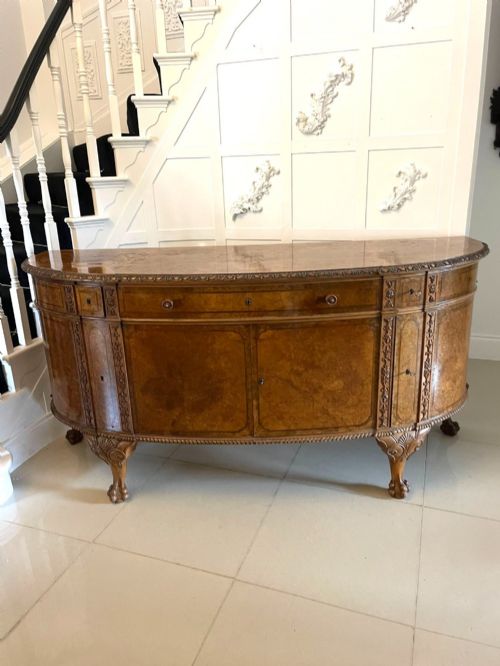
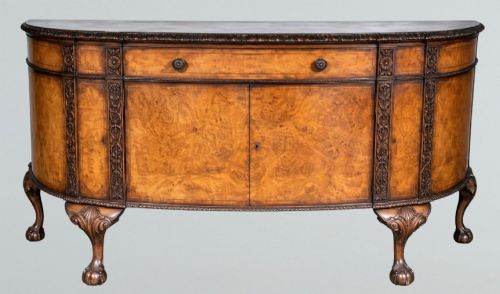
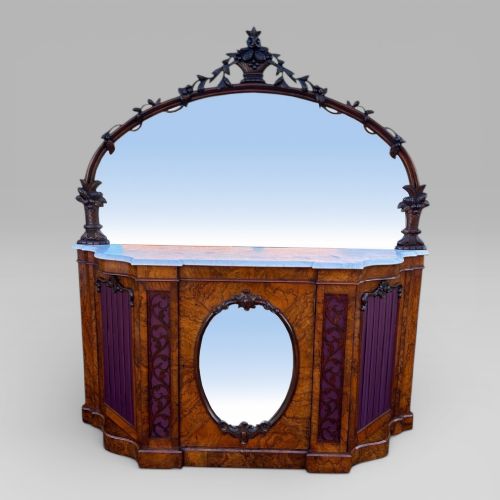
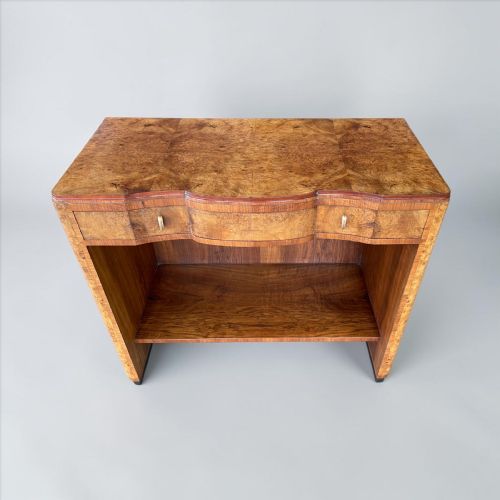

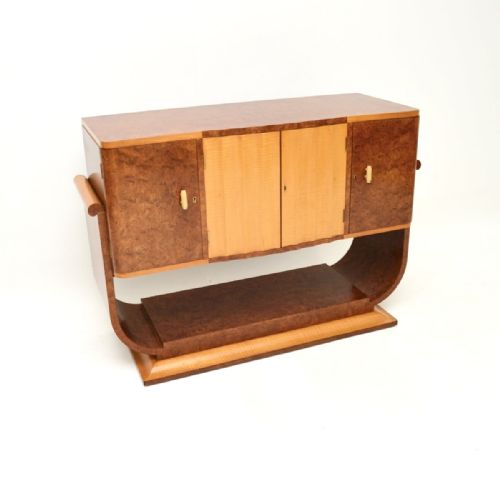
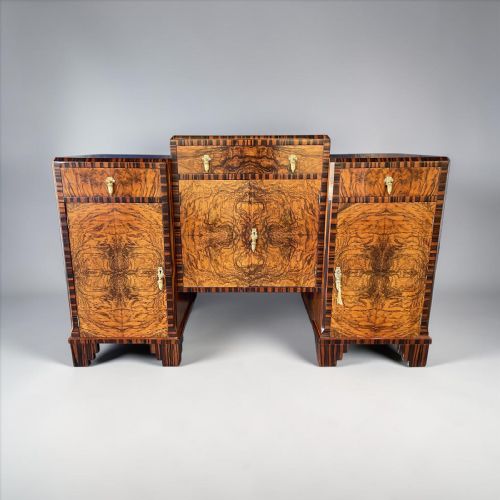
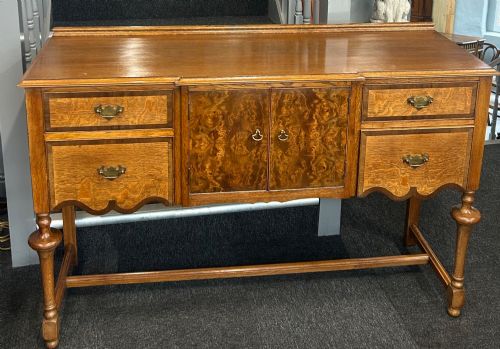
Walnut Dining Server
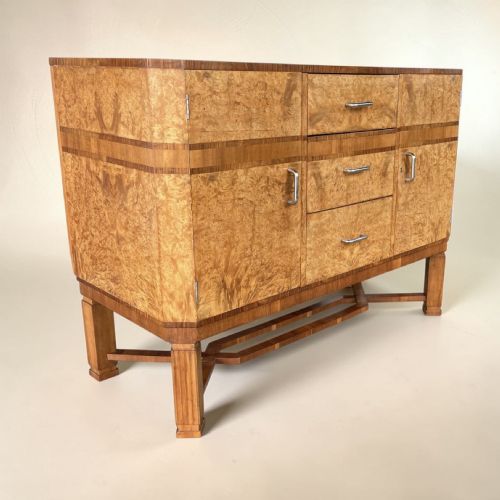
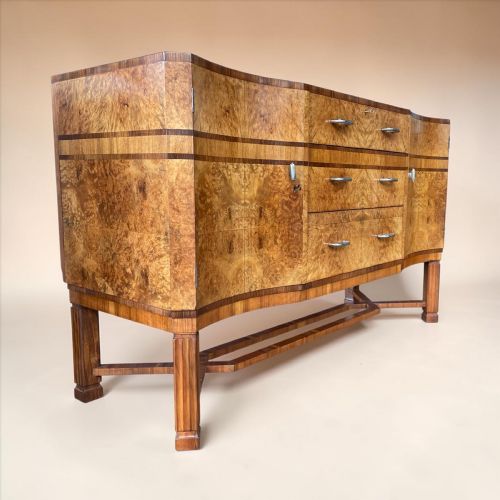
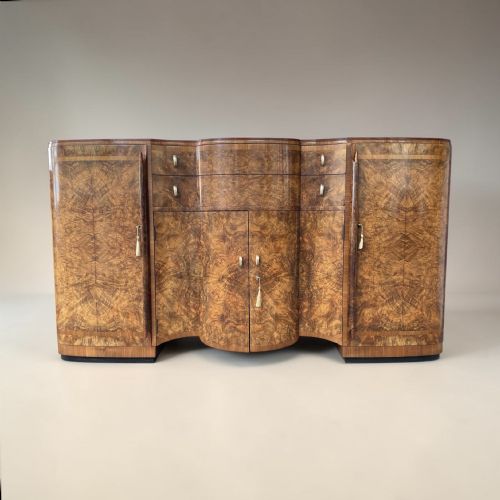
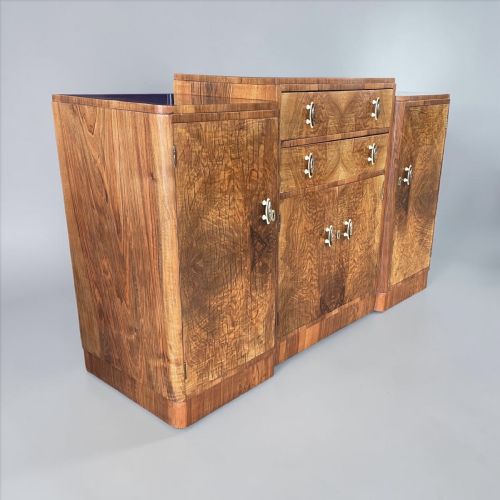
A walnut dining server brings substantial storage and distinct grain patterns to a room, ranging from restrained Victorian credenzas to sleek Art Deco cabinets.
Walnut Dining Server
When searching for a walnut dining server, you encounter a variety of forms including sideboards, buffets, credenzas, serving tables, and dumb waiters designed for dining spaces.
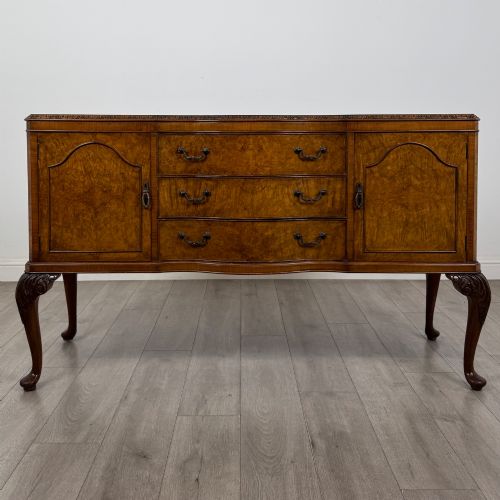
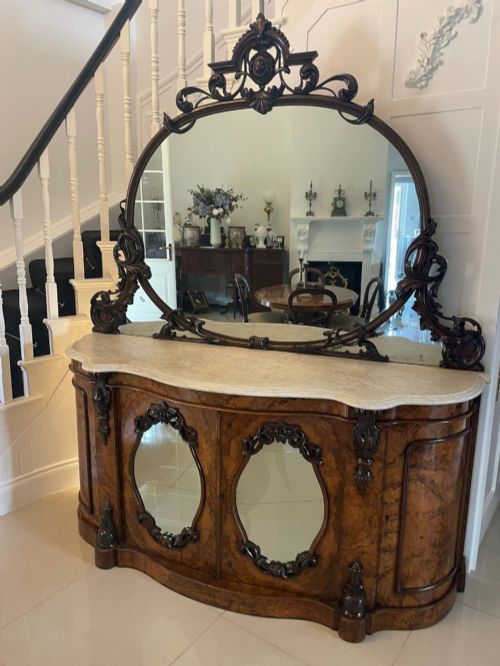
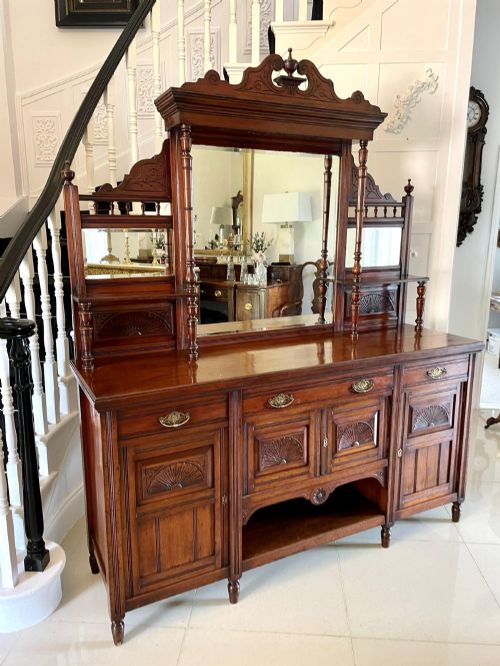
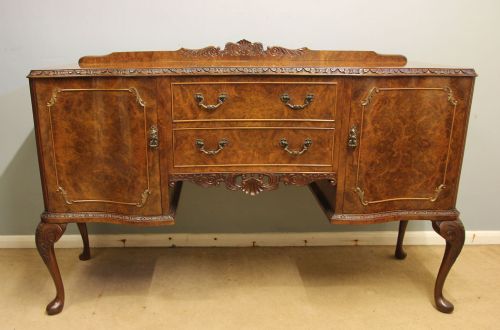
The pieces on this page span several periods, with Art Deco examples from the 1930s appearing alongside Victorian mirror-backed credenzas, Edwardian cabinets, and revival styles such as Queen Anne and Georgian.
Makers and origins vary from London firms like Hille and Epstein to Scottish workshops such as Whytock & Reid, alongside Italian and French regional items.
Materials and construction methods
Cabinet makers utilised solid walnut alongside burr walnut veneer and figured walnut to create rich, patterned exterior surfaces on carcases of hardwood.
Decorative details rely on brass hardware, mother-of-pearl inlay, marquetry, and carved elements, with specific pieces incorporating marble tops or glass components.
Listings feature walnut dining servers spanning from the 19th century through the Edwardian era and into 1930s Art Deco.
Distinctions in quality and execution
The distinction between standard production and top tier pieces rests on the choice of timber figure, particularly the depth and symmetry of burr walnut veneer across the doors and drawers.
Superior execution shows in crisp carving, the integration of secondary timbers like sycamore, and the reputation of the workshop or maker responsible for the construction.
Maurice Adams·Epstein·Harry and Lou Epstein·Hille of London·Hamptons of Pall Mall London·Whytock & Reid
The Walnut Dining Server Glossary
- Burr walnut
- A prized veneer taken from the growth growths of a walnut tree, showing intricate swirling patterns. It is frequently utilised on the primary facade of Art Deco and Victorian dining servers.
- Credenza
- A sideboard or buffet typically featuring a mirror back and display shelving. Victorian iterations often combine carved woodwork with marble tops.
- Dumb waiter
- A tiered serving stand designed to hold dishes or glassware near a dining table. Examples range from simple multi-tier stands to fitted cabinet forms.
- Crossbanding
- A decorative border technique where strips of veneer are laid with the grain running perpendicular to the main panel. This frames the top or drawers of a sideboard.
- Marquetry
- The art of applying pieces of veneer to a structure to form decorative patterns or pictures. It appears on early twentieth-century cabinet doors.
Walnut Dining Server: Frequently Asked Questions
What is the difference between a sideboard and a server?
Sideboards generally provide extensive enclosed storage with cupboards and drawers for dining linen and cutlery. Servers tend to offer a more compact surface intended primarily for presenting food during a meal.
Both forms utilise similar walnut timbers and revival aesthetics, but their proportions reflect different functional requirements within a dining room.
How do I identify an Art Deco walnut server?
Art Deco pieces from the 1930s typically feature clean geometric lines, waterfall edges, and dramatic burr walnut or sycamore veneers without heavy carving. Hardware is often minimal or streamlined.
These servers emphasise the natural grain of the wood over applied ornamentation, distinguishing them from Victorian or revival models.
Where were these serving tables manufactured?
Production centres included notable London cabinet makers and workshops, Scottish firms like Whytock & Reid, and continental European makers in France and Italy.
Local timber availability and prevailing regional design preferences guided whether a server received heavy carving, marquetry, or minimalist veneered surfaces.
How do I care for a walnut veneer surface?
Walnut furniture benefits from regular dusting with a soft, dry cloth and protection from direct sunlight and excessive heat fluctuations. Moisture should be wiped away immediately to safeguard the veneer.
Occasional application of appropriate wax maintains the lustre of the timber without building up heavy residues on the polished grain.