

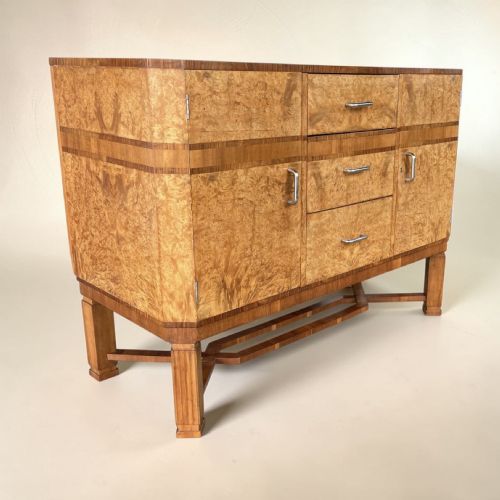
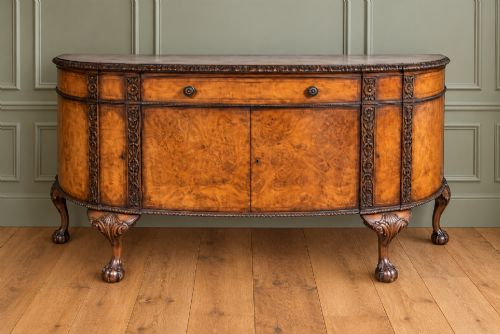
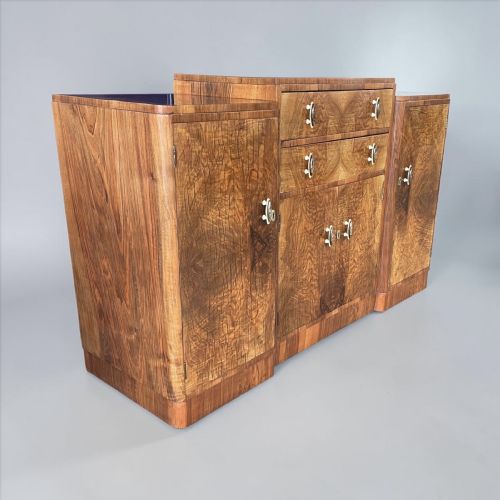
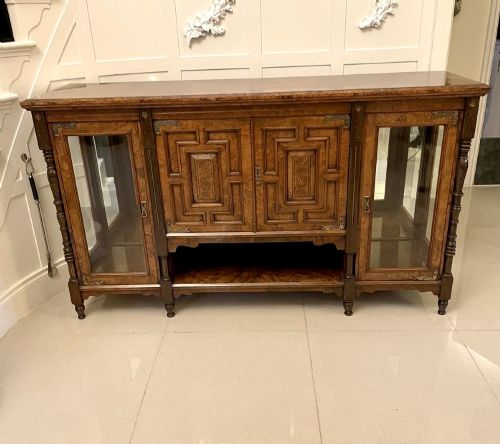
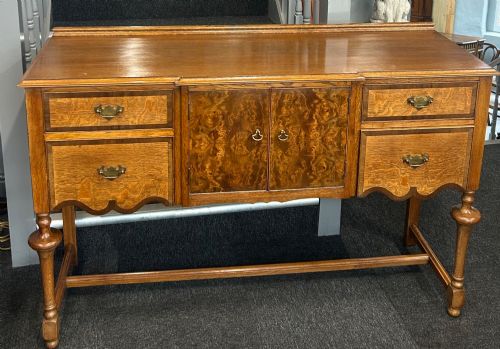


Walnut Dining Room Cabinet
A walnut dining room cabinet offers both gravitas and practical storage, spanning elaborate Victorian credenzas to streamlined Art Deco designs.
Walnut Dining Room Cabinet
When searching for a walnut dining room cabinet, buyers encounter a diverse selection of storage furniture including sideboards, credenzas, buffets, and cocktail cabinets.
The pieces on this page originate from periods ranging through the nineteenth and twentieth centuries, encompassing Victorian craftsmanship and Art Deco modernism.
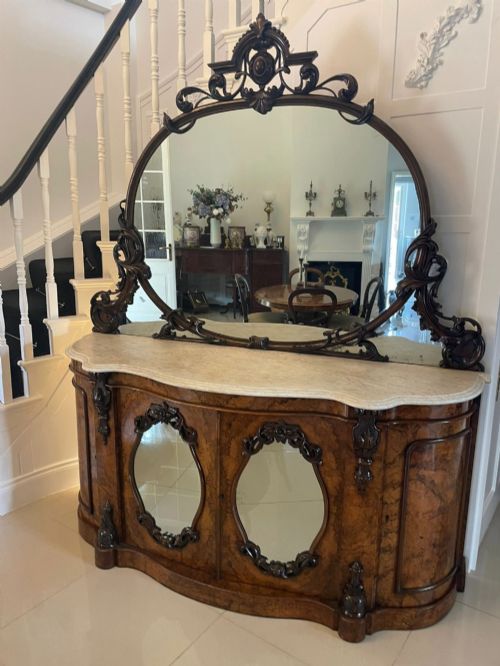
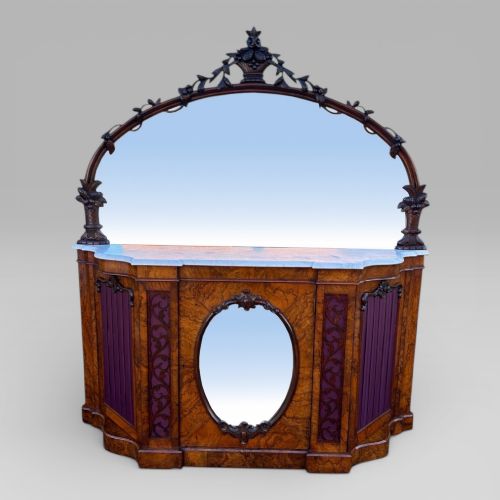
Forms vary from glass-fronted display units and marble-topped servers to large mirror-backed credenzas designed for formal dining rooms.
How They Were Made
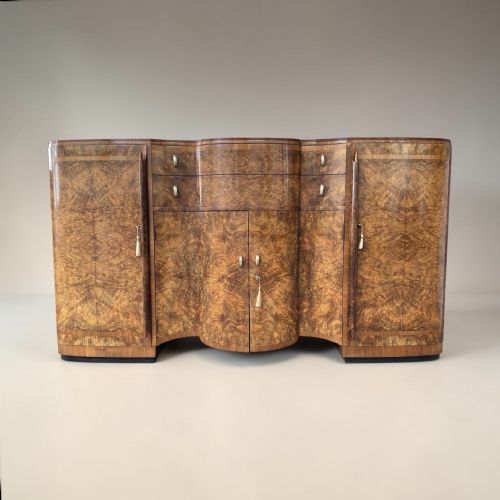
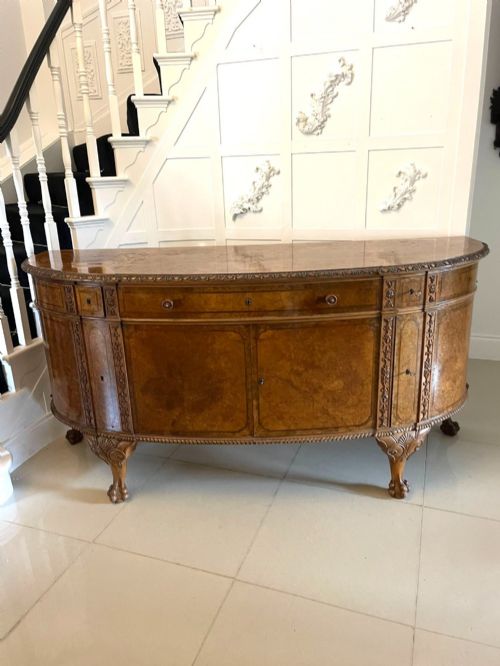
Cabinet makers utilised solid walnut and decorative walnut veneer, often highlighting burr walnut for its rich, swirling grain patterns across door panels and drawer fronts.
Construction frequently incorporated secondary hardwoods alongside brass hardware, marble tops, and detailed carved elements such as mirror backs and marquetry inlays.
Walnut Dining Room Cabinet Retail Price Guide 2026
Typical asking prices for walnut dining room cabinet among the pieces listed under this phrase on Sellingantiques today, from the lower quarter to the upper quarter. They describe what is for sale here now, not the wider market.
Listings feature walnut dining room cabinets spanning the Victorian era, early twentieth century, and Art Deco period.
What Varies in Quality
The calibre of a walnut dining room cabinet depends heavily on the selection of timber veneers and the intricacy of hand-carved details or marquetry work.
Superior examples demonstrate meticulous joinery, robust internal structuring, and high-grade supplementary materials like polished marble and cast or gilt bronze mounts.
Maurice Adams·Hamptons of Pall Mall London·Epstein·Harry And Lou Epstein
The Walnut Dining Room Cabinet Glossary
- Credenza
- A low dining room cabinet or sideboard, frequently featuring mirrored backs and glass doors in Victorian iterations.
- Burr Walnut
- A highly figured timber veneer prized for its knotty, swirling grain patterns across prominent cabinet surfaces.
- Marquetry
- Decorative patterns formed by the precise insertion of contrasting veneer pieces into the primary wooden ground.
- Chiffonier
- A compact nineteenth-century sideboard or storage cabinet typically fitted with enclosed shelving and a raised superstructure.
- Ormolu
- Gilded bronze ornamentation applied to cabinet doors, corners, and mounts on select continental and revival pieces.
Walnut Dining Room Cabinet: Frequently Asked Questions
What is a walnut dining room cabinet used for?
These cabinets served historically to store fine tableware, linens, and cutlery while providing a surface for serving food and displaying decorative objects during dining.
Today, they function similarly in domestic spaces, offering substantial storage capacity alongside a strong visual focal point for a dining room or living area.
How do I identify a Victorian credenza?
Victorian credenzas typically present low, elongated profiles often accented with curved ends, carved mirror backs, and delicate marquetry inlay across the walnut surfaces.
Many incorporate central cupboard doors flanked by glass-fronted side cabinets, resting upon a plinth base rather than tall legs.
What is the difference between art deco and Victorian cabinets?
Art Deco cabinets favour geometric symmetry, clean horizontal lines, and the dramatic use of figured burr walnut grain without historical revival ornamentation.
Victorian pieces lean towards ornate carvings, elaborate mirror backs, marble tops, and traditional period motifs such as those seen in Queen Anne revivals.
How do I care for walnut veneer furniture?
Walnut surfaces require protection from direct sunlight and extreme humidity fluctuations to prevent timber movement and veneer lifting over time.
Regular dusting with a soft, dry cloth and occasional application of appropriate furniture wax preserves the finish and natural lustre of the wood.