

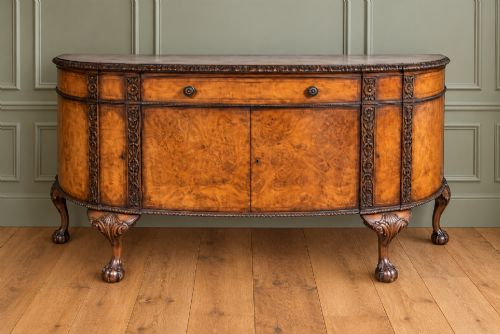
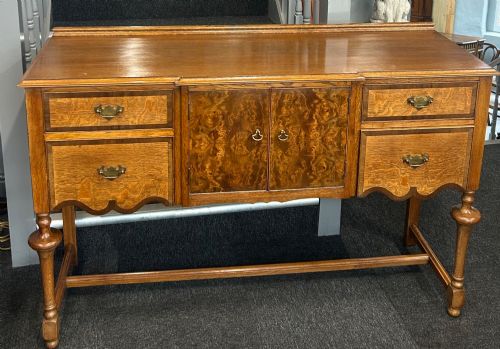
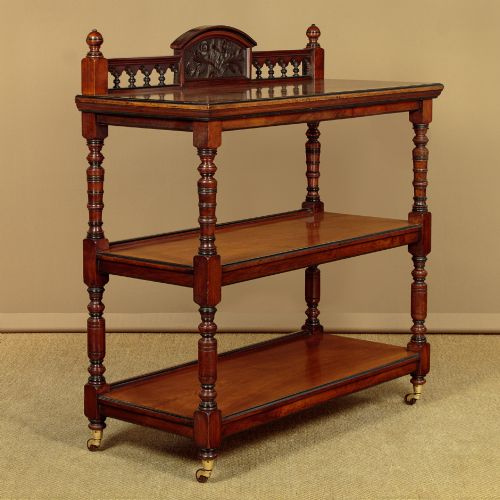


Walnut Dining Room Buffet
Walnut dining room buffets bring warmth and substantial presence to a dining space, uniting practical storage with distinct period character.
Walnut Dining Room Buffet
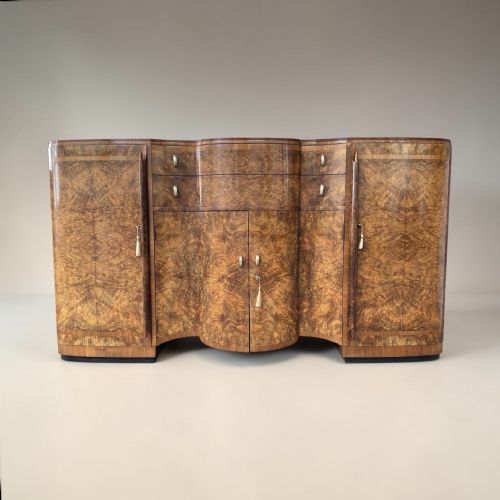
A walnut dining room buffet serves as a substantial serving surface and storage unit, appearing across periods from the Victorian era through the Art Deco decade. These items encompass closely related forms such as credenzas, sideboards, and servers, which share the primary function of hosting dining ware.
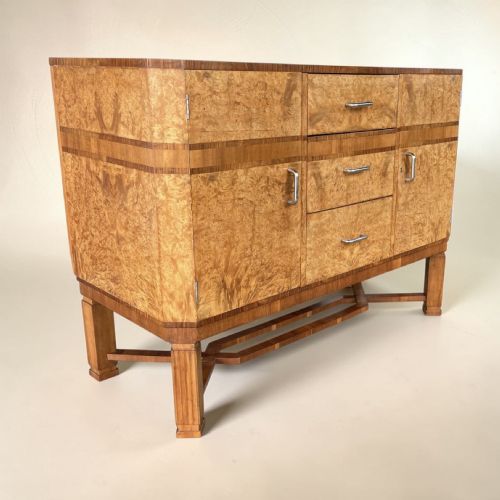
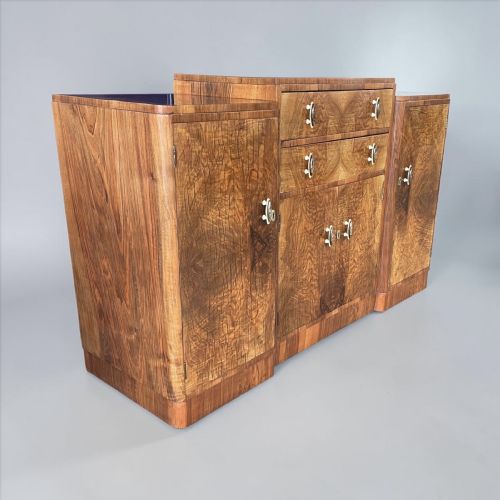
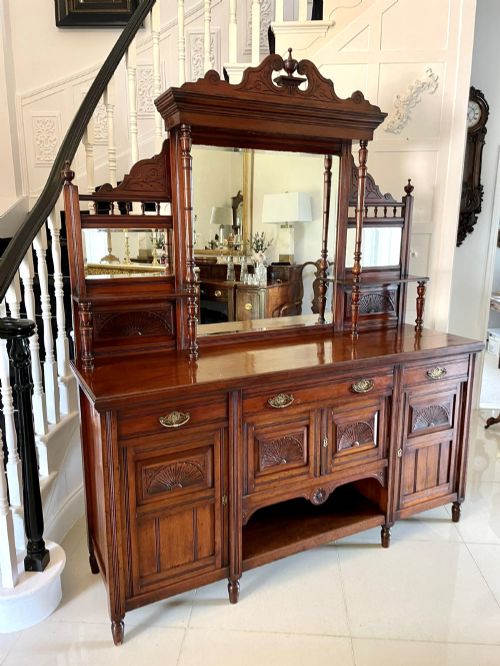
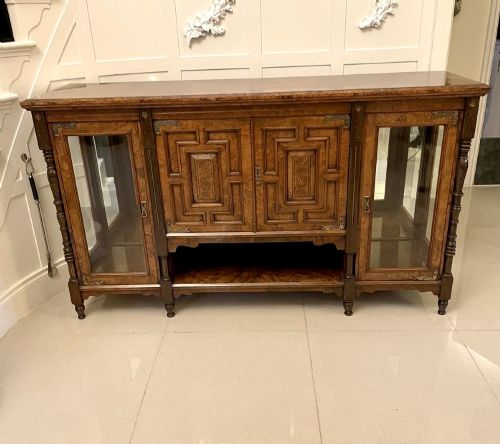
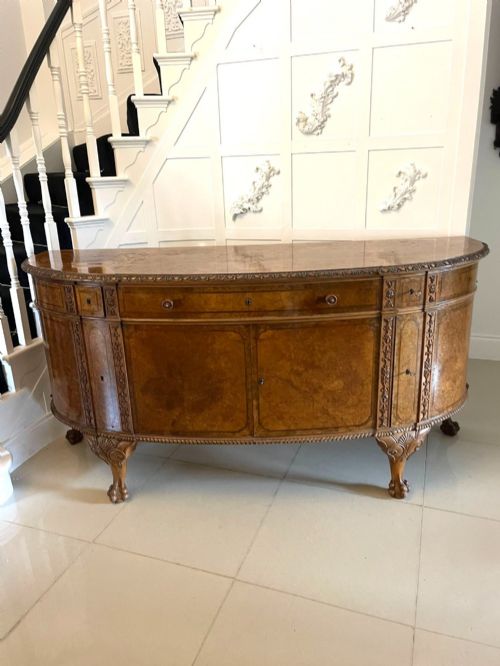
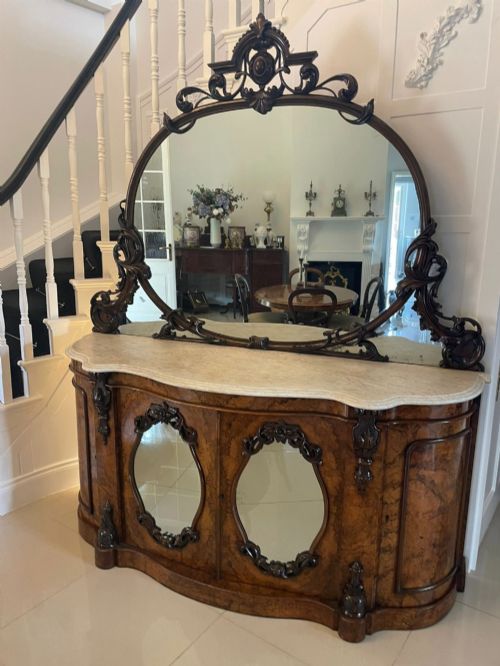
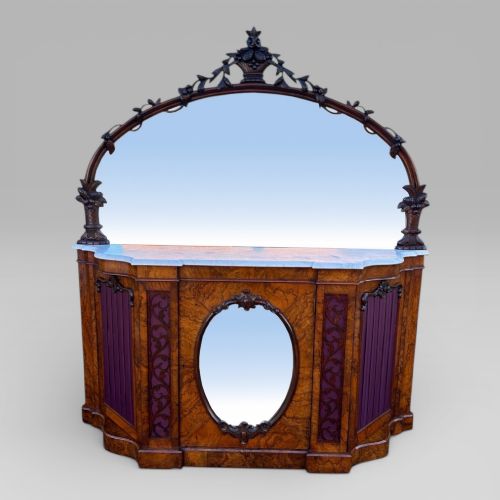
The most common examples on this page date from the Victorian period and the 1930s. Victorian pieces often feature carved mirror backs and marquetry inlay, whereas 1930s examples lean towards streamlined Art Deco silhouettes.
How they were made
Constructed primarily from walnut and burr walnut, these pieces frequently utilise walnut veneer over hardwood foundations to showcase complex grain patterns. Artisans incorporated brass hardware, marble tops, and glass panels to complement the timber.
Techniques range from elaborate hand-carving and marquetry inlay found on mid-nineteenth-century examples to clean geometric veneering characteristic of later Art Deco workshops.
Walnut Dining Room Buffet Retail Price Guide 2026
Typical asking prices for walnut dining room buffet among the pieces listed under this phrase on Sellingantiques today, from the lower quarter to the upper quarter. They describe what is for sale here now, not the wider market.
The selection includes styles ranging from Gothic Revival and Aesthetic Movement to Queen Anne Revival and Art Deco.
What varies in quality
Quality separates through the selection of timber figures, such as highly figured burr walnut or cross-banded veneers, which demand greater skill to apply. The complexity of carved ornamentation and the integration of secondary timbers like amboyna or kingwood further distinguish finer examples.
Execution of inlay work, the stability of marble surfaces, and the sophistication of the hardware or mirror back assembly dictate the overall refinement of each item.
Maurice Adams·Hamptons of Pall Mall London·Epstein·Harry And Lou Epstein
The Walnut Dining Room Buffet Glossary
- Burr walnut
- A specialised timber cut from the abnormal growth of a walnut tree, producing highly prized swirling grain patterns. It is frequently utilised as a decorative veneer on prominent surfaces.
- Credenza
- A low cabinet or sideboard, often featuring doors and shelving, originating in Italy and commonly seen in Victorian forms. These pieces frequently incorporate mirror backs and marquetry.
- Marquetry
- The art of applying decorative pieces of veneer to a structure to form intricate pictorial or geometric designs. It appears extensively on Victorian and early twentieth-century examples.
- Dumb waiter
- A tiered serving table or trolley designed to hold dishes without the need for attendants. Examples range from Victorian three-tier models to metamorphic variations.
- Aesthetic Movement
- A late nineteenth-century design style emphasising visual beauty over narrative subject matter. Pieces from this movement display restrained walnut construction.
Walnut Dining Room Buffet: Frequently Asked Questions
Where should I place a walnut buffet?
A walnut dining room buffet fits naturally against a main dining room wall, providing a surface for serving food and displaying objects. Their finished backs and substantial proportions allow them to anchor large reception spaces effectively.
Ensure adequate clearance around the piece for doors and drawers to open fully. Placing them away from direct heat sources protects the walnut timber and any veneered surfaces from drying out.
How do I care for walnut furniture?
Dust the timber regularly with a soft, dry cloth to prevent particulate accumulation. Apply a quality beeswax periodically to nourish the walnut grain and maintain its natural lustre.
Avoid placing hot serving dishes directly on the timber or marble surfaces to prevent thermal shock and marking. Keep the piece out of direct sunlight to preserve the colour of the walnut veneer.
What is the difference between a sideboard and a credenza?
Sideboards traditionally feature long surfaces and deep cupboards designed specifically for dining room storage and service. Credenzas historically lacked legs, sitting closer to the floor with enclosed cabinetry, though Victorian iterations often added mirror backs and raised platforms.
On this page, the terms frequently overlap due to maker terminology and stylistic evolution. Both serve comparable functions within a modern dining room setting.
How do I identify a Victorian walnut buffet?
Victorian examples generally exhibit dark walnut tones, elaborate hand-carved motifs, and frequently incorporate mirror backs or marble tops. Marquetry inlay and heavy architectural framing are common hallmarks of this mid-nineteenth-century period.
In contrast, later Edwardian and Art Deco pieces favour simpler geometric lines and distinct veneer patterns. Examining the construction methods inside drawers and cabinets further clarifies the period of origin.