
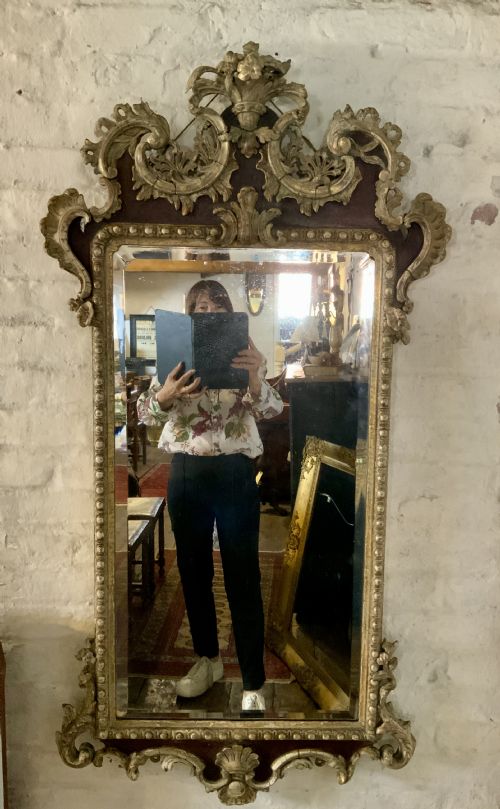
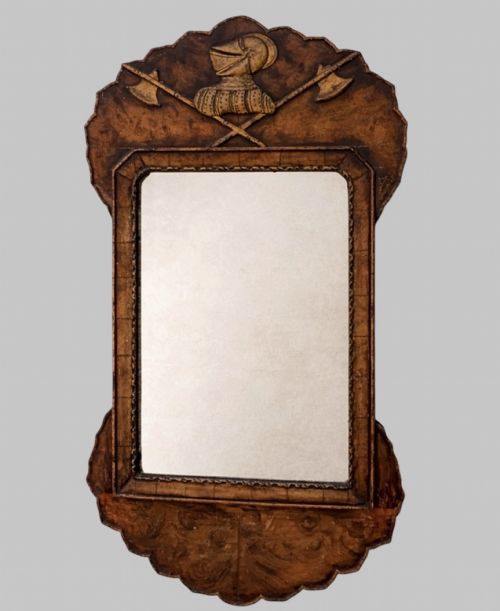


Walnut Decorative Mirror
A walnut decorative mirror brings rich timber grain and warm tone to a wall, offering centuries of craftsmanship from the seventeenth century to the twentieth.
Walnut Decorative Mirror
When you search for a walnut decorative mirror, you are looking at wall-hanging and floor-standing looking glasses framed in figured timber, frequently enhanced with parcel gilding or inlay. These range from small chamber glasses to grand pier mirrors and tall dressing pieces designed to reflect light and anchor a room.
You are most likely to meet nineteenth-century examples and revival pieces on this page, alongside earlier seventeenth-century oyster veneer designs and eighteenth-century styles. The selection spans straightforward domestic wall mirrors to elaborate carved Italian and French frames bearing armorial crests or painted panels.
How they were made
Carpenters constructed the primary frames from solid walnut or oak carcasing, applying thin cross-grain veneers such as oyster cuts or rich burr walnut to display intricate natural patterning. Craftsmen frequently incorporated parcel gilding, mother-of-pearl inlay, and ebonised details to highlight architectural moulding and carved crests.
Mirror glass of the earlier periods was hand-beveled or foil-backed, while nineteenth-century iterations introduced larger plate glass sheets held within rebated frames. Joinery relied on traditional pegged mortise and tenon joints, ensuring the heavy timber frames remained stable over generations.
Listings span multiple centuries, incorporating Victorian revival pieces, Edwardian display combinations, and seventeenth-century oyster veneer work alongside giltwood accents.
What varies in quality
The choice of timber veneer dictates much of the visual appeal, with tightly swirled burr walnut and symmetrical oyster cuts commanding higher regard than plain straight-grained stock. The crispness of hand-carving on crests and the subtlety of parcel gilding separate ambitious workshop output from simpler commercial production.
Original mercury or early silvered glass plates retain a mottled, soft reflection that marks out uncompromised survival, whereas later replaced mirror plates alter the visual depth. The integrity of the foundational framing timbers and the survival of original backing boards and hanging hardware also influence the standing of any given piece.
The Walnut Decorative Mirror Glossary
- Oyster veneer
- Slices cut transversely from small branches to produce circular, eye-like patterns in the timber grain. This technique is typical of seventeenth-century English and continental cabinetwork.
- Parcel gilt
- Part gilding applied to selected details of a wooden frame, such as mouldings or carved foliage. It highlights specific design elements against the dark walnut ground.
- Pier glass
- A tall mirror specifically designed to hang on the wall space between two windows. These pieces often sat above matching console tables or sideboards.
- Burr walnut
- Wood taken from a tree growth or knot featuring highly convoluted and swirling grain patterns. It provides a decorative surface favoured for high-status frames and furniture.
Walnut Decorative Mirror: Frequently Asked Questions
Are these mirrors made of solid walnut?
Most frames combine solid timber construction with decorative veneers applied to secondary woods such as oak or pine. This method prevented warping while allowing craftsmen to display highly figured burr or oyster walnut on the visible surfaces.
Examining the edges and reverse reveals the underlying construction methods used by the period maker.
How should I clean the glass and frame?
Clean the mirror glass sparingly with a soft cloth and a minimal amount of glass cleaner, taking care not to let liquid seep behind the antique plate edges. Dust the walnut frame with a dry lint-free cloth and avoid modern silicone polishes that can damage old finishes.
Gentle maintenance preserves the patina built up on the wood over centuries of use.
How do I date a walnut mirror?
Dating relies on stylistic clues such as the presence of seventeenth-century oyster veneer, eighteenth-century parcel gilt moulding, or Victorian carved armorial crests. Construction techniques, screw types, and the bevel style of the mirror plate further help narrow down the period of origin.
Comparing the decorative vocabulary to known historical revival styles prevents confusion between original pieces and later nineteenth-century interpretations.