

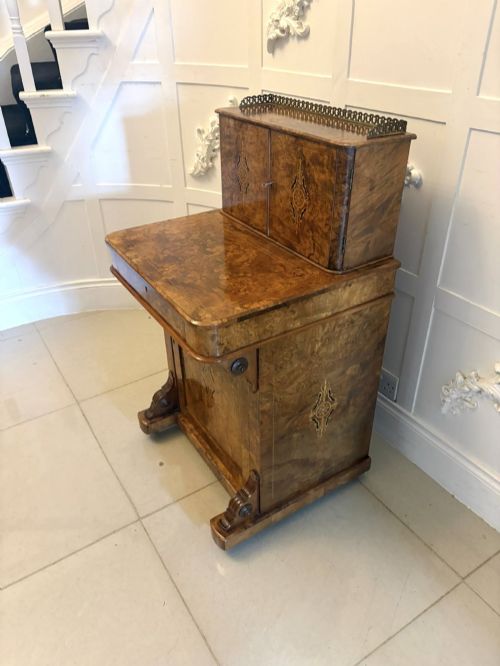
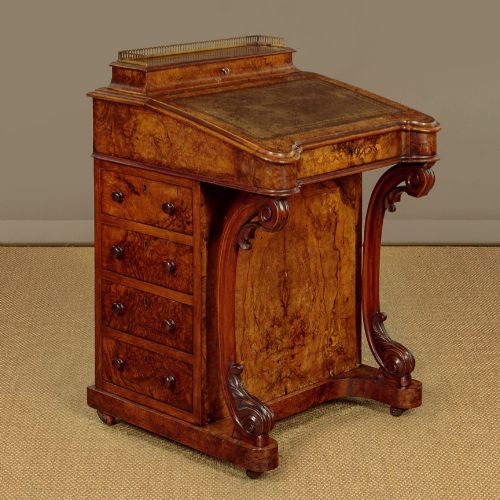
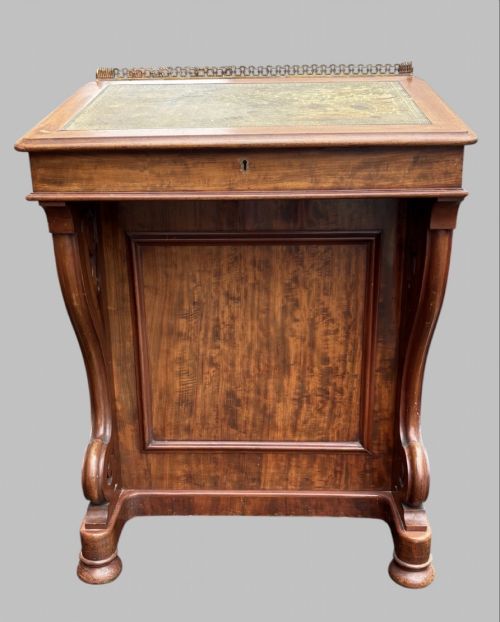
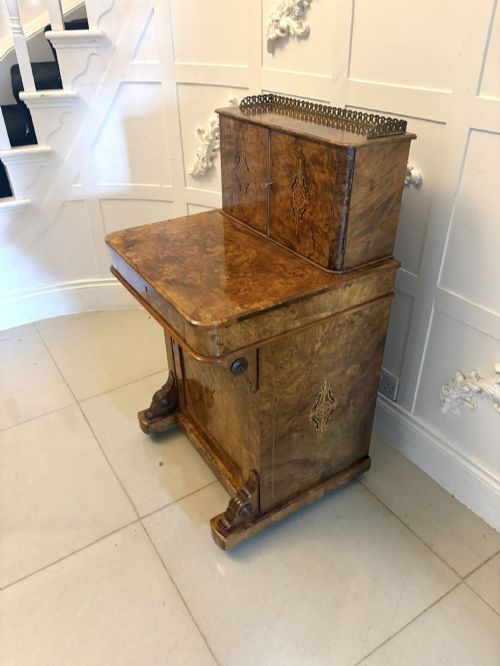




Walnut Davenport Writing Desk
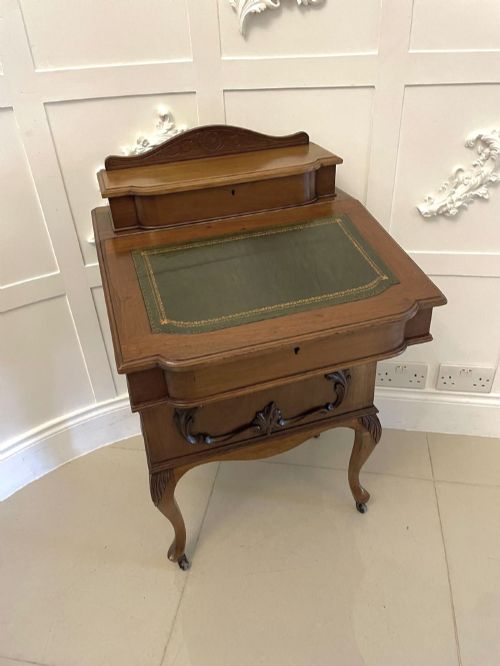
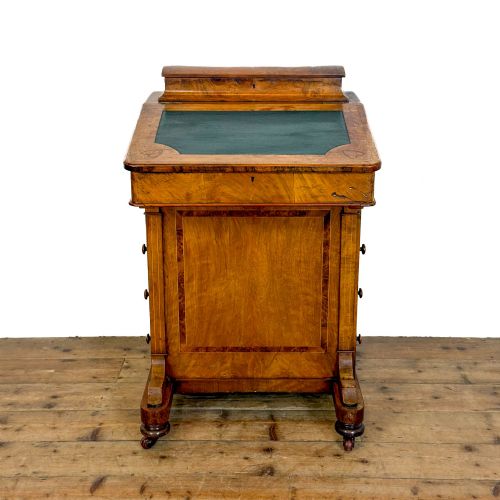
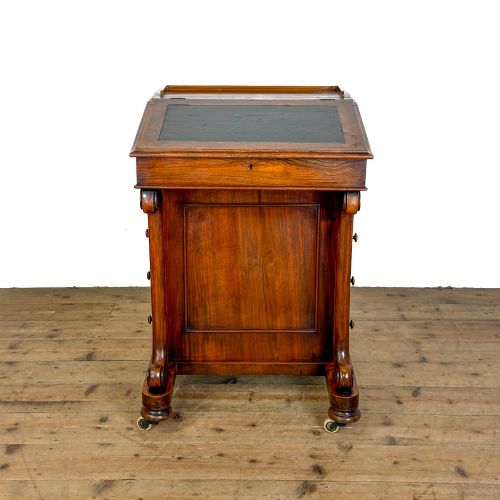
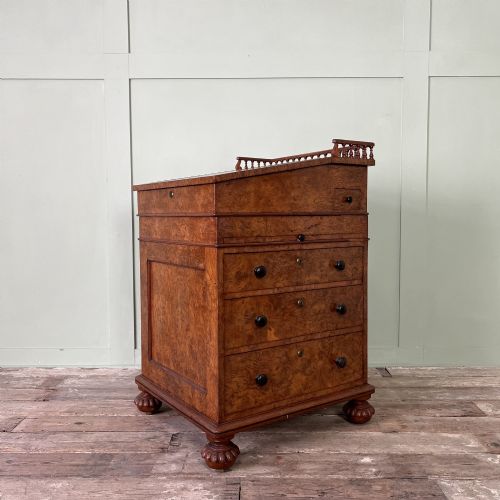
These walnut davenport writing desk pieces offer compact elegance and fitted drawers, providing a dedicated writing surface that suits a period study.
Walnut Davenport Writing Desk
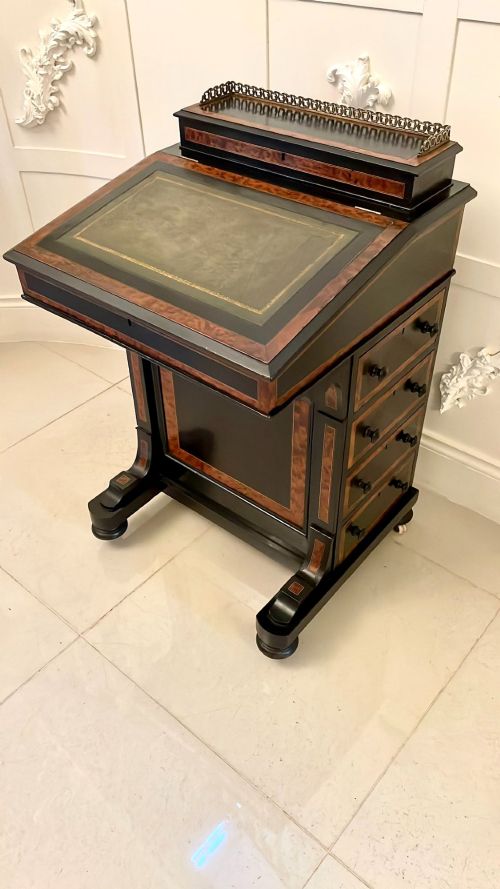
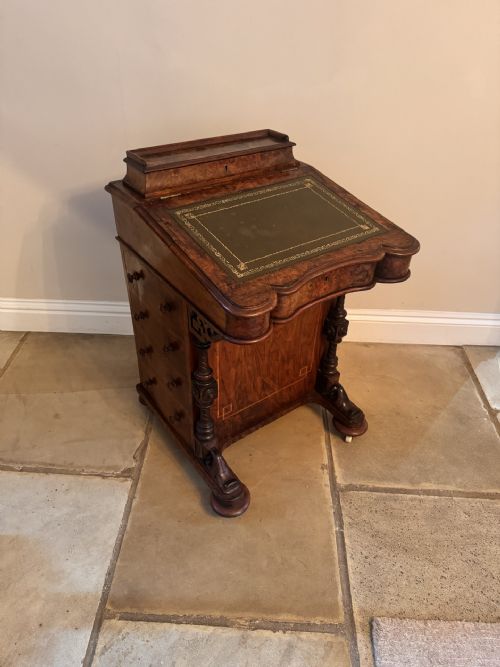
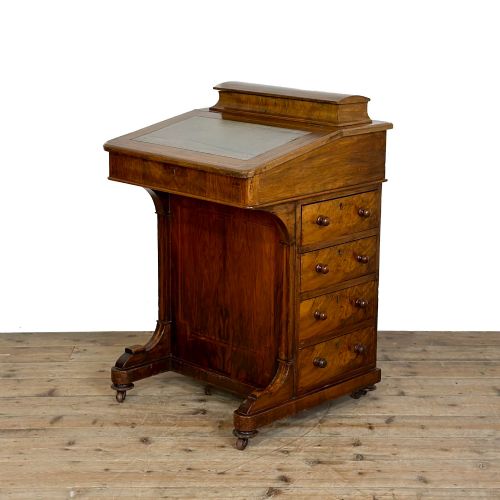
A walnut davenport writing desk sits firmly within nineteenth century furniture production, spanning the Victorian and Regency eras. These small desks combine a sloping writing surface with a pedestal of drawers, often incorporating stationery compartments and side cabinets.
The versions met on this page date principally from the mid-nineteenth century, including pieces assigned to 1850, 1860, 1870, and 1880. Many examples adopt a freestanding format or feature specialised mechanisms such as pop-up upper sections and piano top designs.
Makers such as Gillows contributed to this form, producing refined variations in burr walnut. Buyers encounter standard pedestal configurations alongside taller bureau cabinet formats and pieces finished with marquetry inlay.
How they were made
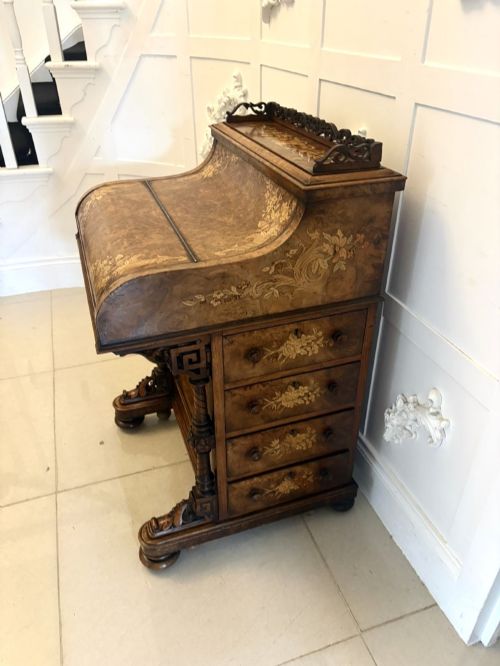
Carpenters utilised walnut and burr walnut as the primary timber, capitalizing on the figured grain patterns of the wood. Surfaces frequently incorporate marquetry inlay, boxwood inlay, and general wood inlay to create geometric or floral decoration.
Functional hardware relied on brass fittings, while writing surfaces typically integrate inset leather panels for a durable writing plane. Interiors often reveal secondary woods like satinwood within the small fitted drawers and stationery compartments.
Walnut Davenport Writing Desk Retail Price Guide 2026
Typical asking prices for walnut davenport writing desk among the pieces listed under this phrase on Sellingantiques today, from the lower quarter to the upper quarter. They describe what is for sale here now, not the wider market.
The listings demonstrate that burr walnut is the predominant timber choice, frequently paired with satinwood interiors and brass hardware.
What varies in quality
The choice of timber creates a distinct visual hierarchy, where highly figured burr walnut and intricate floral marquetry distinguish finer specimens from plain walnut examples. Crossbanding, ebonised details, and balanced proportions further elevate the cabinetwork.
Internal complexity marks the division between standard forms and exceptional pieces, particularly those housing pop-up stationery compartments, piano tops, or fully fitted satinwood interiors. Maker attribution to firms like Gillows adds structural and historical distinction.
Gillow and Co·Gillows
The Walnut Davenport Writing Desk Glossary
- Davenport
- A compact writing desk featuring a sloping top hinged over a pedestal of drawers. This form gained popularity during the nineteenth century for domestic study use.
- Burr Walnut
- Timber taken from a tree growth or wart, yielding highly figured grain patterns with swirling knots. Cabinetmakers utilised this veneer on principal exterior surfaces.
- Marquetry Inlay
- Decorative patterns formed by fitting contrasting veneers into prepared recesses in the wood. Artisans employed floral and geometric motifs using materials like boxwood.
- Secretaire
- A desk or cabinet containing a pull-down writing flap and concealed drawers. These interior compartments organise letters and writing supplies.
- Crossbanded
- A border technique where veneer strips are laid around the edge of a panel with the grain running perpendicular to the centre. This frames the primary burr walnut surface.
Walnut Davenport Writing Desk: Frequently Asked Questions
What is a davenport desk?
A davenport is a small nineteenth-century writing desk characterised by a sloped writing surface and a pedestal base containing drawers. It provides a compact workspace suited to domestic correspondence.
The writing slope typically lifts to reveal small storage compartments, while the side of the pedestal houses a series of functional drawers.
How do pop-up davenports work?
Pop-up davenports incorporate a spring-loaded or mechanical mechanism that raises an upper stationery cabinet as the writing lid opens. This conceals inkwells and letter slots until needed.
Such mechanisms represent the more complex engineering achieved by Victorian cabinetmakers for these small writing desks.
Where were davenports placed?
Freestanding davenport desks were designed to stand away from walls in the centre of a room, finished with false drawers on the reverse side. This allowed them to occupy prominent positions in Victorian drawing rooms and studies.
Standard versions were positioned against walls, utilising the pedestal drawers accessible from one side only.
What woods are used on these desks?
Walnut and highly figured burr walnut dominate the exterior surfaces of these pieces. Interiors often contrast this dark timber with lighter satinwood inside the stationery compartments.
Inlay work incorporates boxwood and general wood marquetry to accent the primary walnut veneer.