
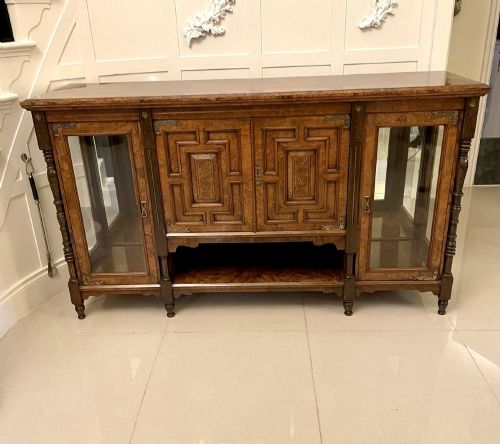
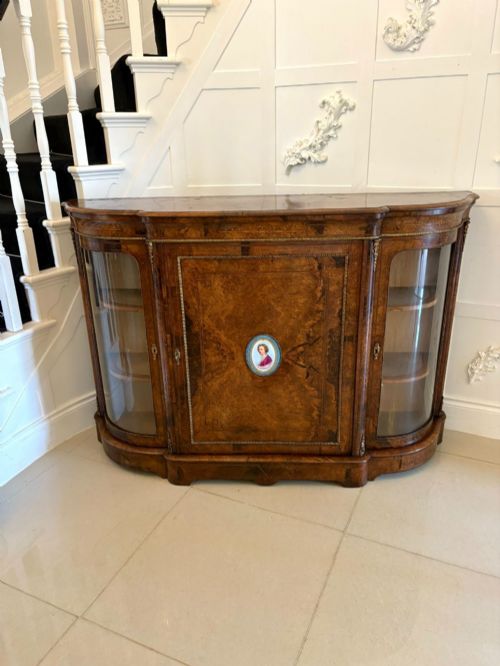
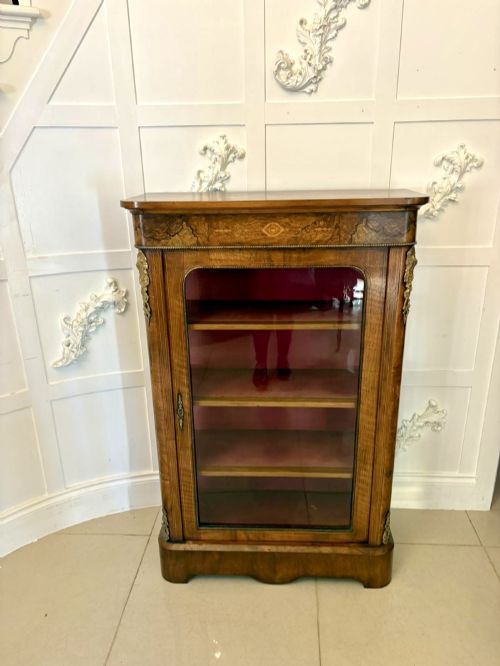
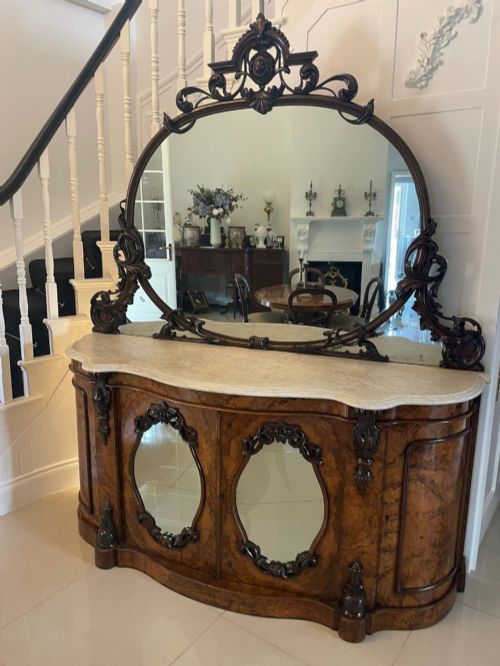
Walnut Credenza Display Cabinet
A walnut credenza display cabinet brings together figured timber and polished glass to anchor a formal interior.
Walnut Credenza Display Cabinet
A walnut credenza display cabinet combines enclosed cupboard space with glazed display sections, designed for prominent placement in a principal reception room. These low-profile pieces originate predominantly from the Victorian period, spanning the mid to late nineteenth century, alongside occasional twentieth-century examples.
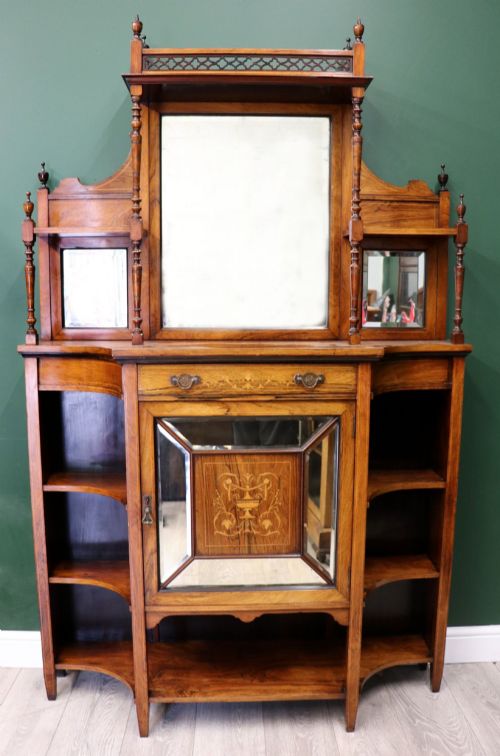
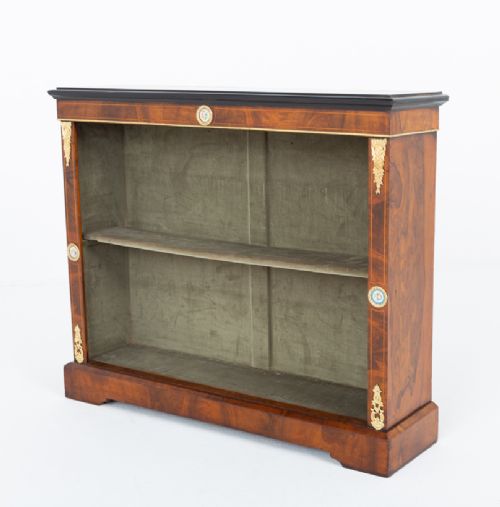
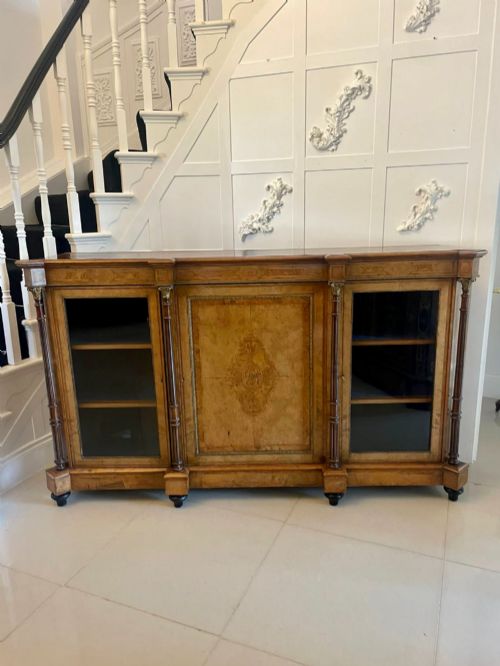
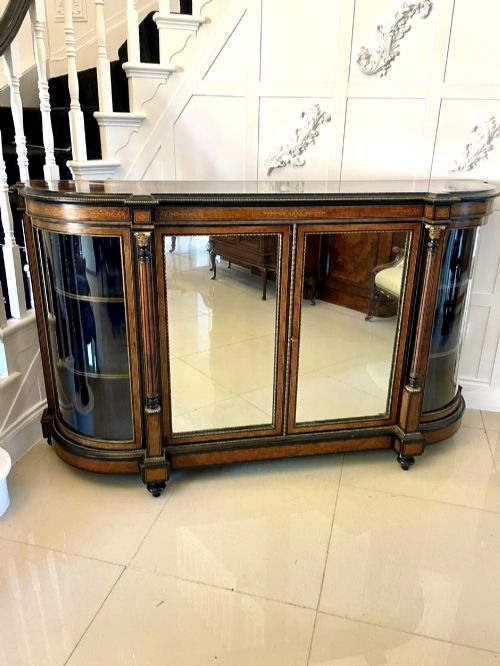
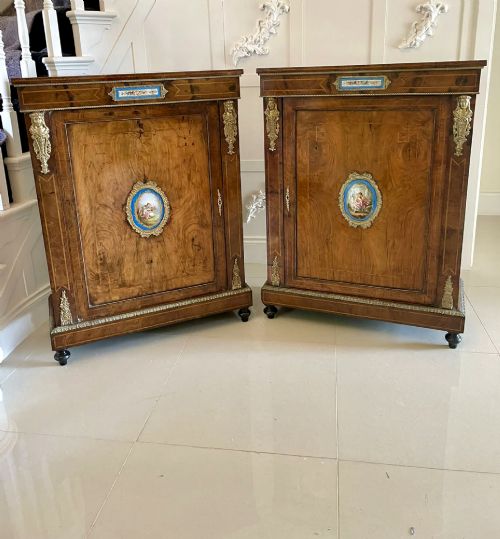
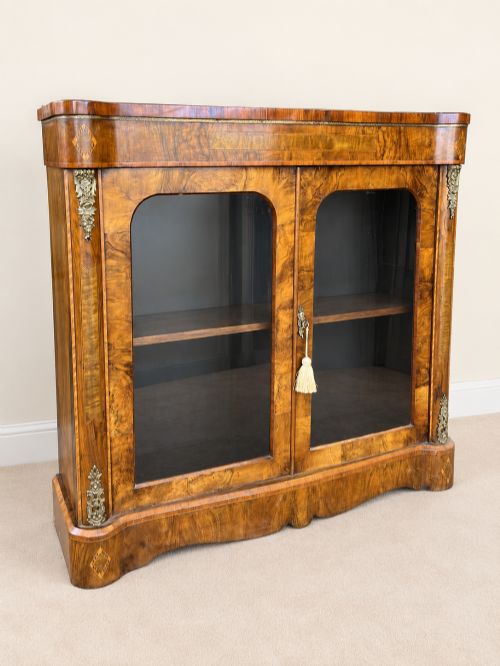
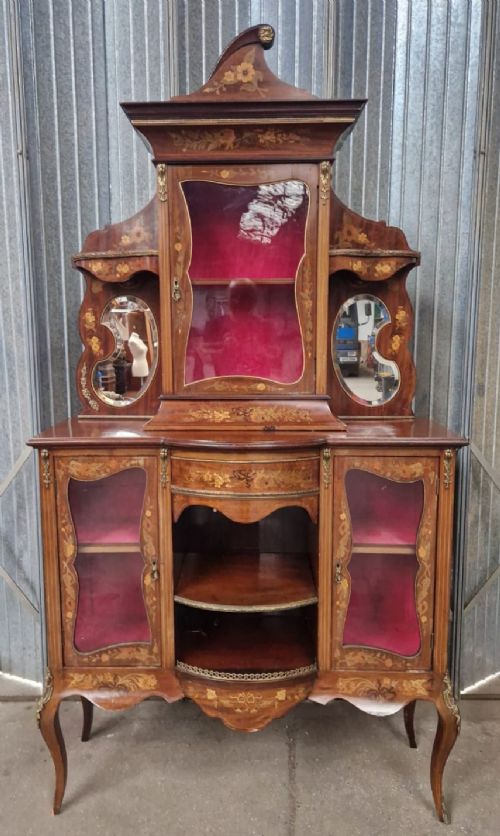
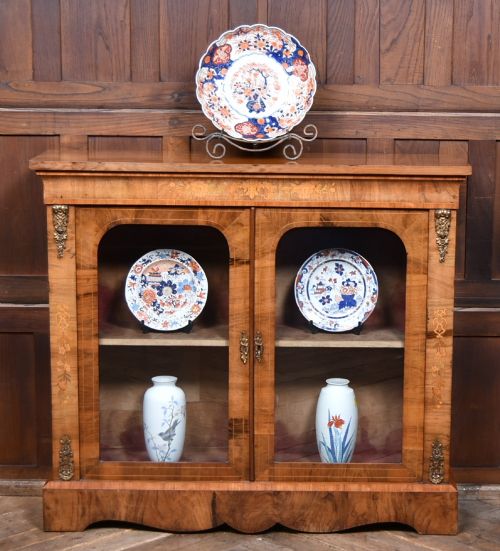
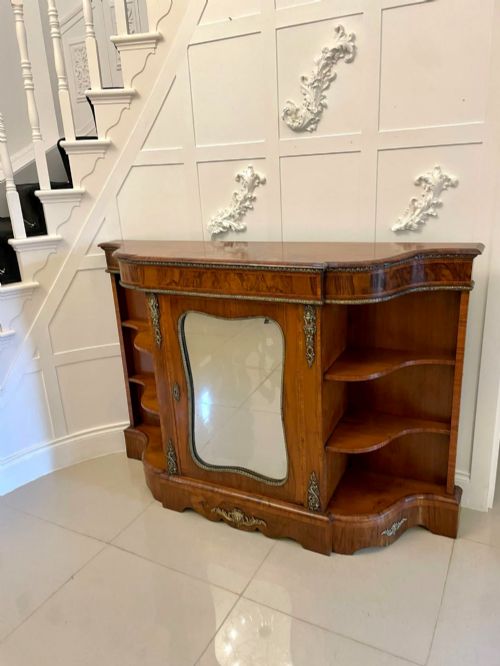
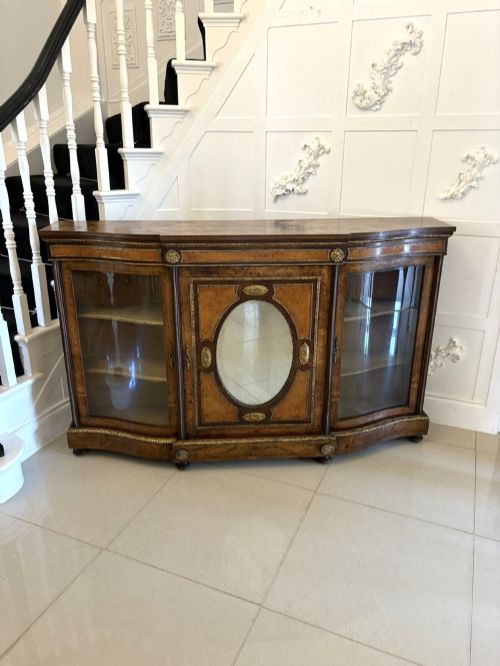
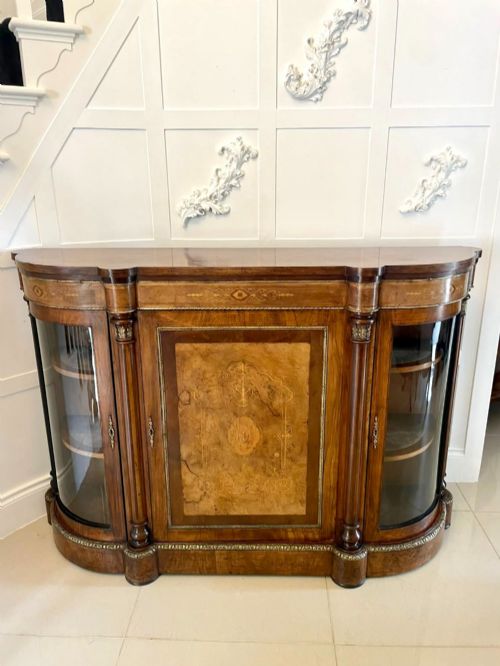
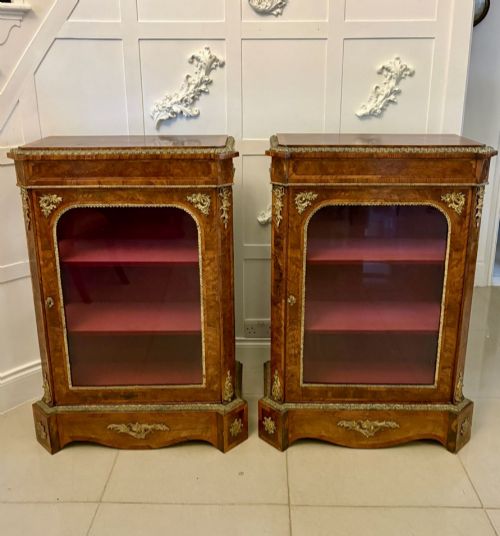
Buyers encounter numerous variations on this page, ranging from serpentine-fronted credenzas and twin-doored sideboards to slender pier cabinets and glazed bookcases. The nineteenth-century Victorian pieces dominate the selection, frequently featuring curved glass doors or central mirrored enclosures.
The form functions as both a surface for decorative objects and a secure cabinet for prized possessions. Makers utilised the substantial top surface for displaying porcelain and bronzes, while internal shelving held books and tableware behind glass.
Materials and Construction
Makers constructed these cabinets using a foundation of solid timber, principally walnut, overlaid with highly figured burr walnut veneers to create striking grain patterns across the primary surfaces. Marquetry inlay, utilising satinwood and other contrasting timbers, often decorates the friezes and door panels in complex floral or geometric arrangements.
Gilt bronze and ormolu mounts accentuate the architectural lines, framing the glazed doors and highlighting the corners and feet. Glass panels, sometimes curved for serpentine forms, allow visibility into the velvet-lined or polished wooden interiors.
Surviving examples frequently combine walnut, ebonised wood, and ormolu mounts within a single piece of furniture.
Judging Quality
The distinction between ordinary and exceptional pieces rests upon the selection of the burr walnut veneer and the crispness of the marquetry work. Finer examples display meticulously matched grain patterns that mirror across the doors and central panels, creating a balanced visual harmony.
The quality of the cast ormolu mounts and the precision of the brass hardware signal the original tier of production. Superior pieces incorporate heavier gilt bronze detailing and hand-chased mounts rather than mass-produced metalwork.
Gillows·Lamb of Manchester·Maison Gagneau
The Walnut Credenza Display Cabinet Glossary
- Burr Walnut
- Timber taken from the wart-like growths on walnut trees, yielding intricate swirling grain patterns highly prized for veneer work.
- Credenza
- A low cabinet, typically featuring a central cupboard flanked by curved glazed end doors, developed during the Victorian era for display and storage.
- Ormolu
- Gilt bronze mounts applied to furniture edges and panels to provide decorative contrast against dark timber surfaces.
- Marquetry
- Inlaid patterns formed by fitting small pieces of contrasting veneer into a prepared background wood.
- Pier Cabinet
- A narrow freestanding cabinet designed to fit the wall space between windows.
Walnut Credenza Display Cabinet: Frequently Asked Questions
What is a walnut credenza display cabinet?
A walnut credenza display cabinet is a low nineteenth-century storage and display furniture piece featuring glazed doors and burr walnut veneers.
Cabinetmakers designed these items for principal reception rooms to exhibit porcelain and glassware while concealing other household items within side compartments.
Where were these cabinets placed originally?
These pieces traditionally stood against the main walls of Victorian drawing rooms and morning rooms, often positioned between large windows.
The low profile ensured that the decorative top surface and any wall mirrors hung above remained unobstructed.
How do I identify a Victorian piece?
Victorian examples typically exhibit distinct construction methods, including hand-cut dovetails, oak carcass linings, and specific decorative idioms like ormolu mounts and floral marquetry.
The integration of burr walnut veneer and curved glass doors is characteristic of the mid-nineteenth-century aesthetic.
How should I care for burr walnut?
Burr walnut requires stable indoor humidity and protection from direct sunlight to prevent the delicate veneer from drying and cracking.
Periodic application of appropriate furniture wax helps maintain the lustre of the polished wood surface without building up residue.