

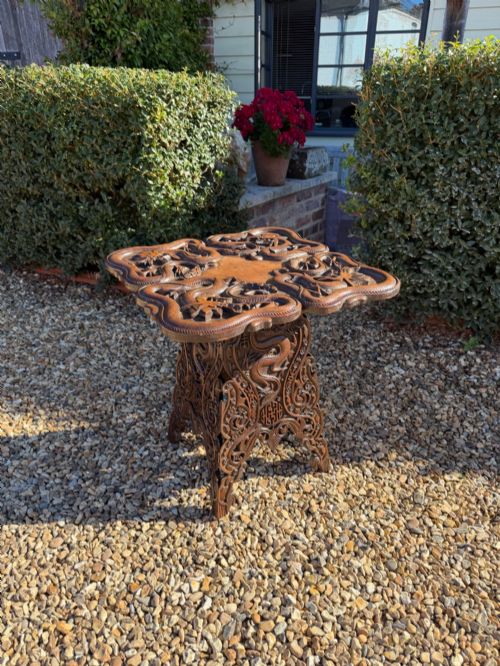
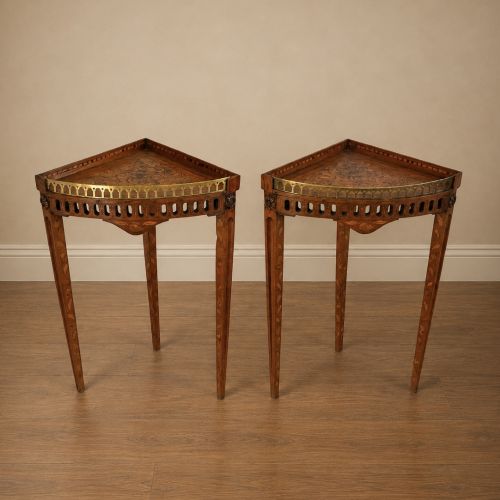
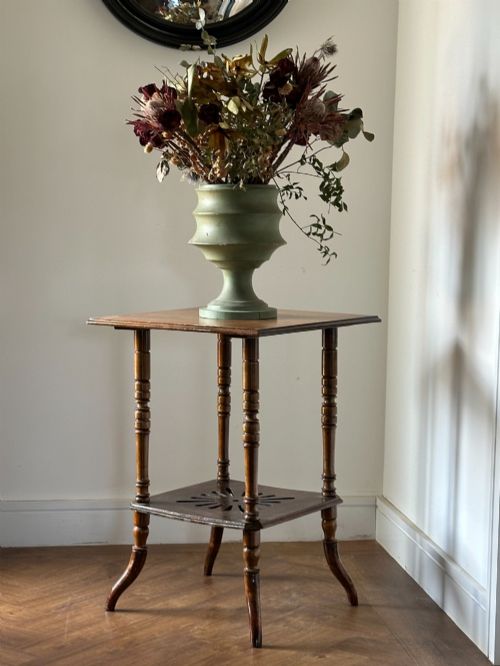
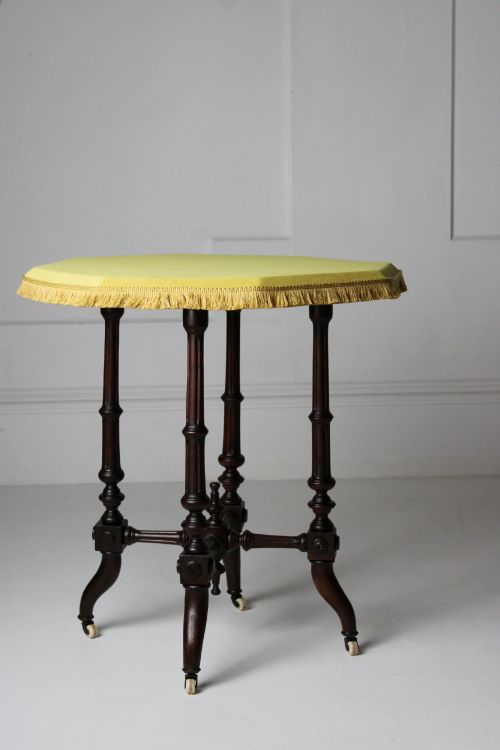


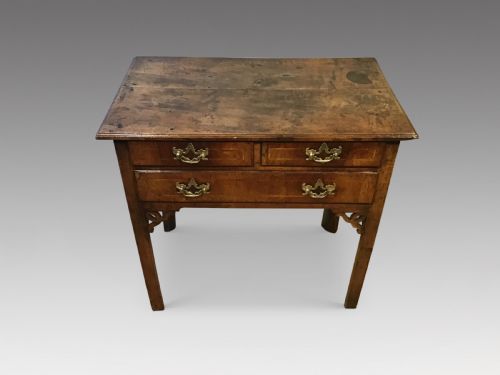


Walnut Corner Side Table
A walnut corner side table brings warmth and corner-fitting utility to a room, offering rich grain and practical surface space where straight furniture fails.
Walnut Corner Side Table
A walnut corner side table uses timber such as burr walnut, red walnut, and standard walnut to fit neatly into domestic angles. These items appear across periods including the Georgian and Victorian eras, alongside Edwardian examples.
Makers shaped these surfaces into forms designed for lamps, corners, and occasional display, utilising the natural figure of the wood. The selection spans compact tables, occasional pieces, and inlaid lamp tables tailored for specific rooms.
What varies in quality
The sophistication of the marquetry inlay and the choice of highly figured burr walnut elevate certain examples above plain timber versions. Crispness in carved details and the careful matching of wood grain across table tops distinguish finer cabinetwork from simpler production.
The integration of brass galleries and secondary woods indicates the level of care taken by the maker. Proportion and structural balance within the corner or occasional format determine the overall presence of the piece.
Walnut Corner Side Table Retail Price Guide 2026
Typical asking prices for walnut corner side table among the pieces listed under this phrase on Sellingantiques today, from the lower quarter to the upper quarter. They describe what is for sale here now, not the wider market.
Listings feature walnut across Georgian, Victorian, and Edwardian periods, utilising materials like burr walnut, brass, boxwood, and ebonised wood.
The Walnut Corner Side Table Glossary
- Burr walnut
- A highly prized wood figure formed from tree growths, yielding intricate swirling patterns used in veneering fine furniture. It creates a decorative surface texture highly sought after by period cabinetmakers.
- Marquetry
- The art of applying pieces of veneer to a structure to form decorative patterns and pictures. Craftsmen frequently employed boxwood and fruitwood for this detailed work.
- Brass gallery
- A small raised metal railing fitted around the edge of a table top to prevent items from sliding off. This feature is often found on lamp and occasional tables.
- Occasional table
- A small, light table intended for versatile placement and intermittent use around a room. These pieces appear frequently in Victorian and Edwardian settings.
- Ebonised wood
- Timber treated with a dark stain or finish to imitate ebony. This technique was popular during the nineteenth century for specific aesthetic styles.
Walnut Corner Side Table: Frequently Asked Questions
Where should I place a corner side table?
These tables fit naturally into empty room angles and tight junctions where standard rectangular furniture creates awkward gaps. They provide a functional surface for lighting or display without obstructing room flow.
Positioning them beside seating or in hallways makes effective use of otherwise neglected architectural space while introducing warm walnut tones to the interior.
How do I care for walnut veneer?
Burr and standard walnut veneers require protection from direct sunlight and excessive heat sources to prevent timber shrinkage and veneer lifting. Regular dusting with a soft, dry cloth preserves the finish.
Avoid applying harsh chemical polishes or excessive moisture to the surface. Occasional gentle treatment with traditional beeswax maintains the natural lustre of the wood.
What distinguishes Edwardian walnut tables?
Edwardian examples often feature lighter proportions and refined inlay work compared to heavier earlier Victorian designs. They frequently incorporate inlaid stringing and lighter secondary woods.
These pieces reflect the domestic priorities of the early twentieth century, prioritising elegance and adaptability in smaller drawing rooms and parlours.
Are these tables suitable for modern rooms?
The compact footprints and rich grain of these walnut tables allow them to integrate smoothly into contemporary interior schemes. They offer functional surface area while introducing historical texture and warmth.
Their varied period styles, from Georgian simplicity to Arts and Crafts character, provide versatile matching options for diverse home aesthetics.