


Walnut Console Desk
A walnut console desk unites the narrow profile of a side table with a practical surface for writing, bringing rich grain and deep colour to a room.
Walnut Console Desk
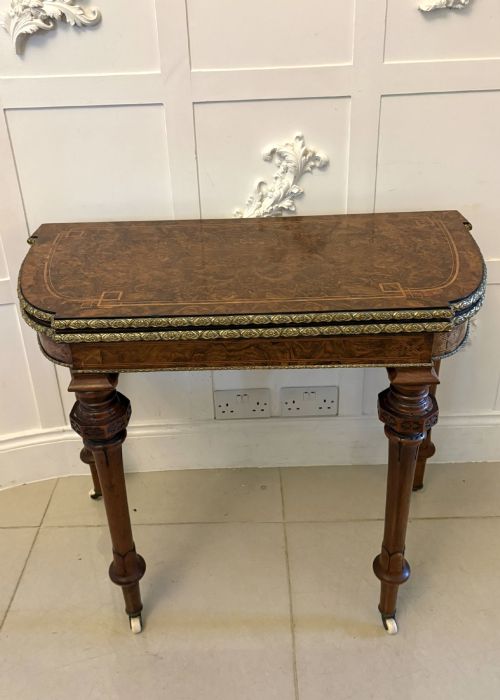
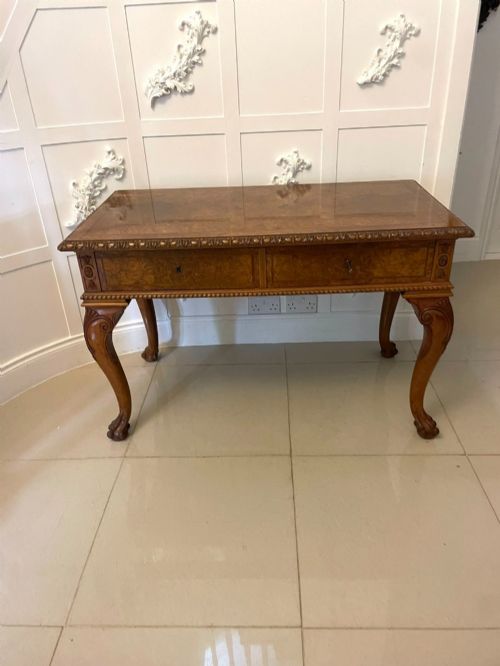
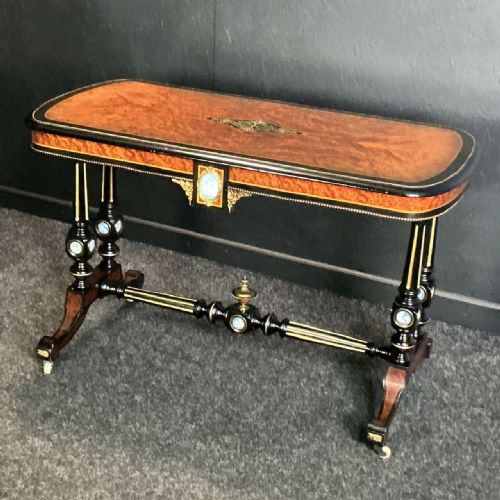
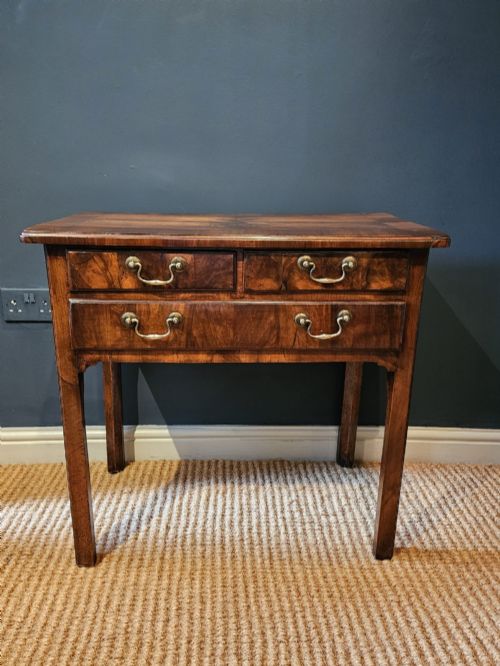
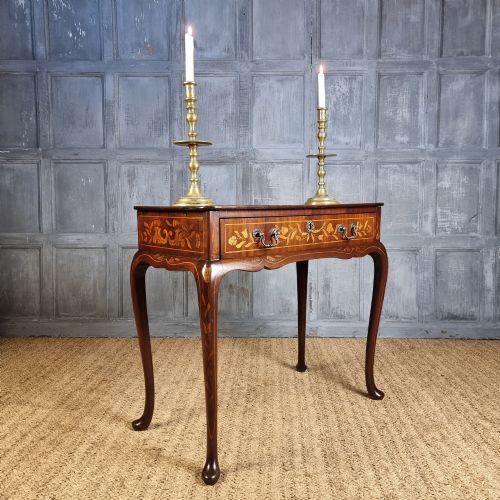
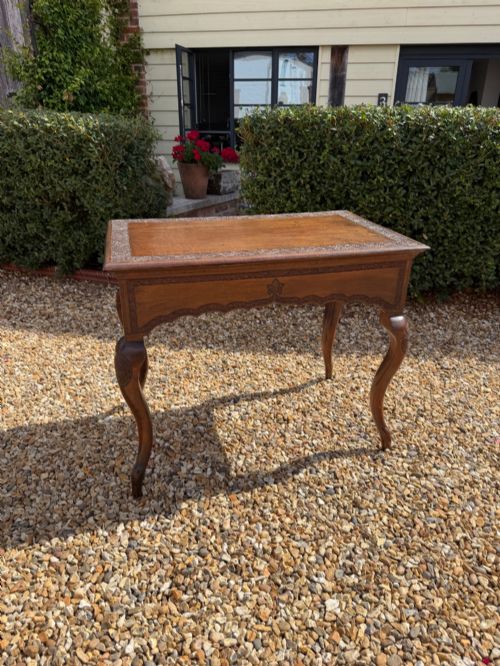
When searching for a walnut console desk, buyers encounter forms that bridge several historic functions, appearing as side tables, lowboys, writing tables, and console tables. The selection spans the seventeenth, eighteenth, and nineteenth centuries alongside twentieth-century revivals, drawing on Georgian, Victorian, French Provincial, and Spanish Baroque design.
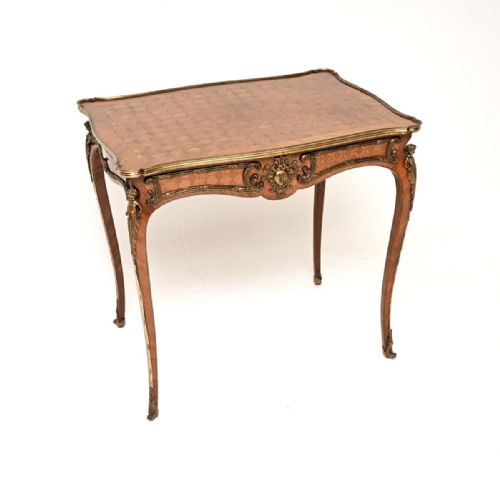
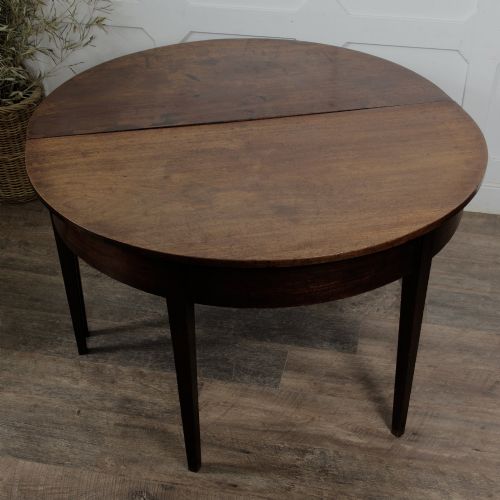
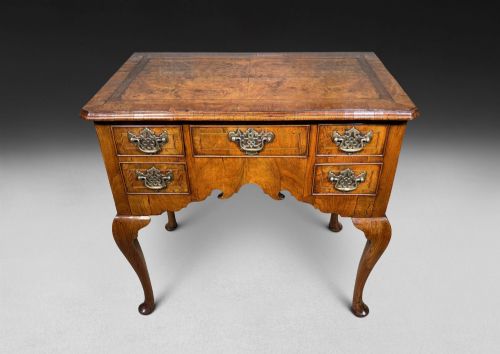
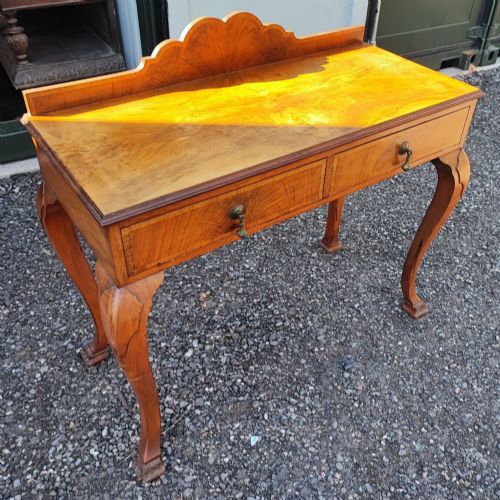
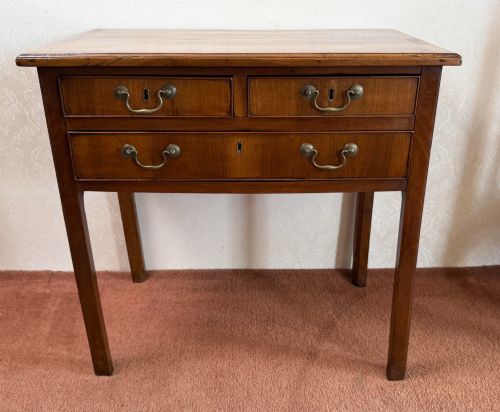
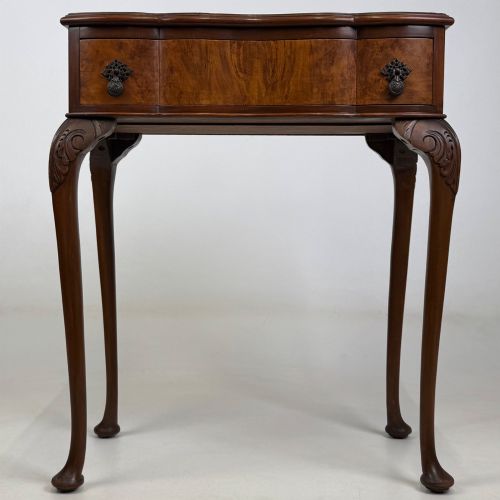
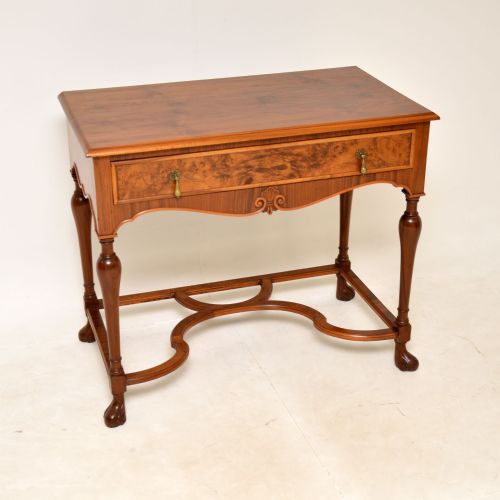
The pieces on this page vary from compact lowboys with multiple drawers to grand marquetry centre tables and serpentine or bow-fronted console tables. Figured timber, burr walnut, and satin walnut dominate the forms, offering surfaces suited to halls, sitting rooms, and studies.
How they were made
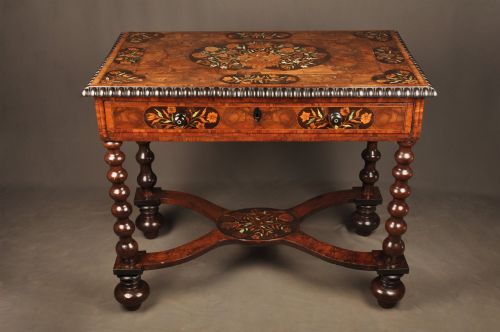
Cabinetmakers constructed these tables using solid walnut and applied burr walnut veneers, frequently enhancing the rich grain with feather banding, parquetry, and floral marquetry. Secondary woods provide structural stability inside drawer carcases, while brass handles, key escutcheons, and occasional ormolu mounts punctuate the dark timber.
Surface treatments rely on traditional polish and wax to bring out the natural figures of the wood, with certain Spanish and French examples preserving early patinas. Carved details appear on cabriole legs, Renaissance Revival frames, and serpentine edges.
Several centuries ago, someone decided that tables needed birds and flowers made of wood veneer pinned to the top.
What varies in quality
Quality rests primarily on the choice of timber and the sophistication of the veneer work, where deeply figured burr walnut and intricate marquetry command attention. The crispness of hand-cut dovetails in the drawer construction and the retention of original brass hardware further distinguish finer examples from standard production.
Proportion and execution set the upper tier apart, particularly where serpentine fronts, crossbanding, and carved cabriole legs integrate seamlessly into the overall design. Pieces retaining a healthy original patina show greater depth than those with heavily refinished surfaces.
Edward And Roberts
The Walnut Console Desk Glossary
- Lowboy
- A small table with drawers, typically raised on four tall legs and dating from the eighteenth century or later. It serves as a compact desk or dressing table.
- Marquetry
- Decorative patterns formed by inserting pieces of coloured wood, veneer, and other materials into a veneered surface to create floral or pictorial designs.
- Burr walnut
- Timber taken from the warted growths on a walnut tree, yielding a swirling and highly decorative grain pattern prized for fine furniture surfaces.
- Ormolu
- Gilded bronze mounts applied as decorative ornaments to furniture, frequently found on nineteenth-century pieces.
- Parquetry
- Geometric mosaic woodwork used for ornamenting floors and furniture surfaces, creating repeating patterns with contrasting wood veneers.
Walnut Console Desk: Frequently Asked Questions
What is a walnut console desk used for?
These pieces function as compact writing surfaces, hallway display tables, and occasional desks. Their narrow proportions allow them to fit into passageways and reception rooms without obstructing floor space.
Historically, similar tables accommodated correspondence and small ledgers in private chambers and libraries. Today, they serve both decorative and practical roles in modern interiors.
How do I identify a Georgian walnut lowboy?
Georgian lowboys typically feature three or more small drawers arranged beneath a rectangular top, supported by elegant cabriole legs. Look for feather banding around the drawer edges and traditional dovetail construction.
Earlier eighteenth-century examples often display rich figured walnut with a warm, aged patina. The proportions remain compact to suit domestic spaces of the period.
What is the difference between a console table and a writing table?
Console tables are designed to stand against a wall, sometimes featuring a shaped front and decorative mounts. Writing tables generally offer kneehole clearance and drawers configured specifically for seated use.
Many pieces bridge this divide, combining the shallow depth of a console with the functional surface of a desk.
How should I care for antique walnut furniture?
Keep walnut furniture away from direct sunlight and heat sources to prevent the burr veneer from drying out and lifting. Regular dusting with a soft, dry cloth preserves the finish.
Apply a microcrystalline wax sparingly when the wood appears dry to maintain the natural lustre. Avoid silicone-based sprays that can damage historic polishes.