


Walnut Chest with Mirror
A walnut chest with mirror combines storage with a reflective glass surface, offering both a functional dressing space and rich timber grain.
Walnut Chest with Mirror
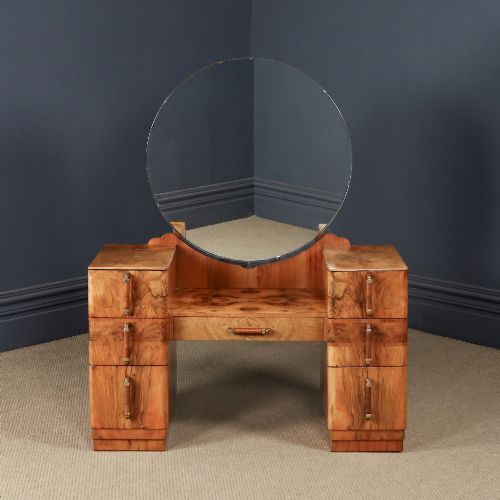
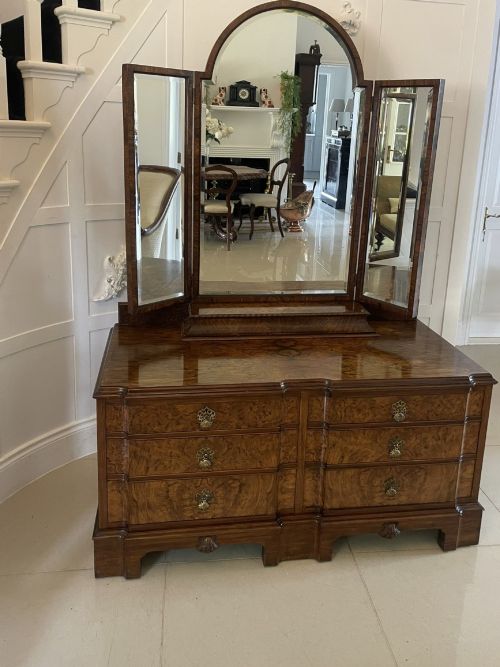
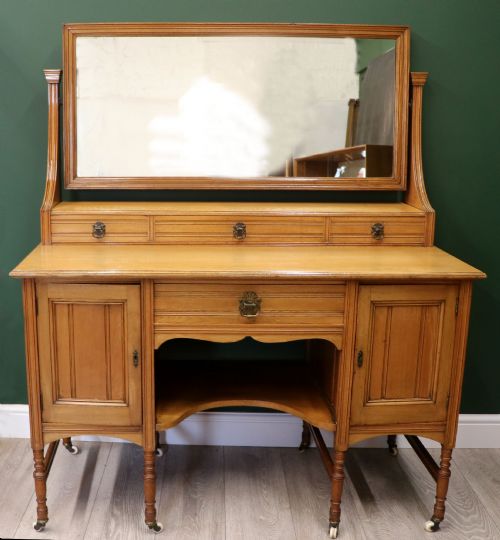
A walnut chest with mirror typically takes the form of a dressing table, dressing chest, or compactum, combining drawer storage with a swing or fixed glass mirror. These pieces emerge across the Georgian, Victorian, Edwardian, and Art Deco periods, displaying distinct design shifts from revival styles to modern geometric lines.
The most common examples on this page are Victorian burr walnut dressing tables and Art Deco pedestal dressing tables from the 1930s. Alongside these, buyers find related forms such as bureau bookcases and wardrobes incorporating mirror glass.
Origins vary from English workshops to Continental and American makers, utilising local variations of walnut alongside satin walnut and oak linings. Each period brings a specific proportion and detailing, from George II and Queen Anne revival curves to Cotswold School simplicity.
Materials and construction methods
The primary material is walnut, frequently utilised as burr walnut or figured veneer over solid timber carcases to showcase dramatic grain patterns. Secondary timbers such as oak and satin walnut provide structural stability for drawers and interiors.
Glass forms the mirror component, often held within pivoting wooden frames that attach to the upper chest or pedestal superstructure. Brass and other metals appear as handles, drawer pulls, and structural hardware supporting the mirror brackets.
Some Victorian dressing chests hide tiny jewellery drawers behind the mirror supports, built for secret late-night treasures.
Factors determining quality
Quality rests primarily on the selection and matching of the walnut veneer, where symmetrical burr patterns indicate superior cabinet-making. Plain or poorly matched timber indicates a more utilitarian standard of production.
Construction details such as dovetailed drawer joints, the original condition of the mirror glass, and the integration of the mirror supports distinguish finer examples from standard commercial output.
Maurice Adams
The Walnut Chest with Mirror Glossary
- Burr walnut
- A prized timber veneer taken from the growth growths or burls of the walnut tree, creating intricate swirling patterns. It is frequently employed on the primary display surfaces of Victorian and Art Deco furniture.
- Pedestal dressing table
- A form featuring two banks of drawers flanking a central kneehole space, with a mirror mounted above. This layout provides symmetrical storage and a dedicated place to sit.
- Swing mirror
- A looking glass hung on pivots within a vertical frame, allowing the user to adjust the angle. It typically attaches directly to the top of the chest or dressing table.
- Compactum
- A multi-functional wardrobe or storage unit designed to maximise internal space for various garments. Examples often integrate mirrors and smaller drawer compartments.
Walnut Chest with Mirror: Frequently Asked Questions
What periods do these pieces span?
The pieces span from the Georgian era through the Victorian and Edwardian periods, extending into 1930s Art Deco and Cotswold School designs.
This broad timeline means construction methods and decorative styles shift noticeably between earlier revival pieces and later modernist examples.
How do dressing chests differ from standard chests?
Dressing chests incorporate an integrated mirror and often a lower height or specific drawer arrangement suited for grooming items.
Standard chests focus solely on enclosed storage without the accompanying mirror superstructure.
Are the mirrors original to the chests?
Many pieces retain their original glass and pivoting frames, though mirror glass is susceptible to replacement over time due to wear or silvering degradation.
Examining the fixings and the backing boards helps determine whether the mirror assembly belongs to the original chest.
What is satin walnut?
Satin walnut refers to timber derived from the American sweetgum tree, possessing a lustrous grain that resembles true walnut.
It gained popularity during the late Victorian and Edwardian periods for bedroom furniture suites.