
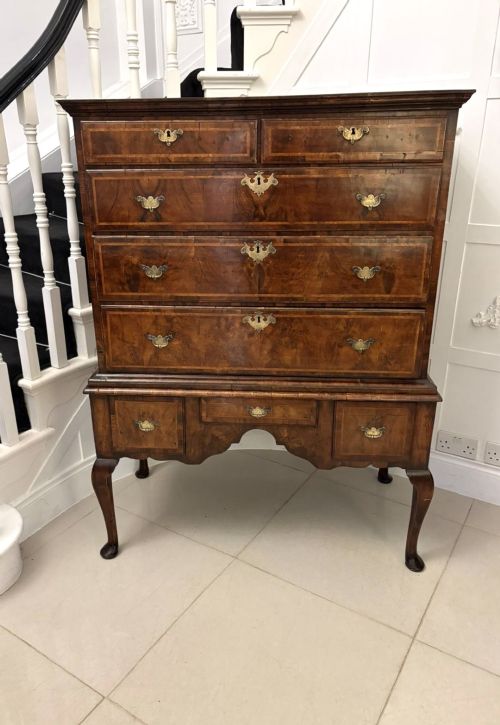
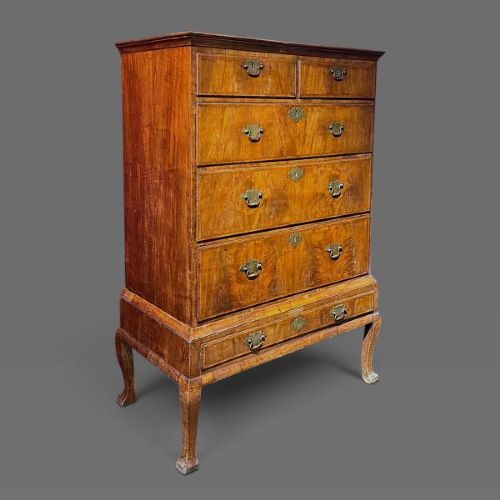
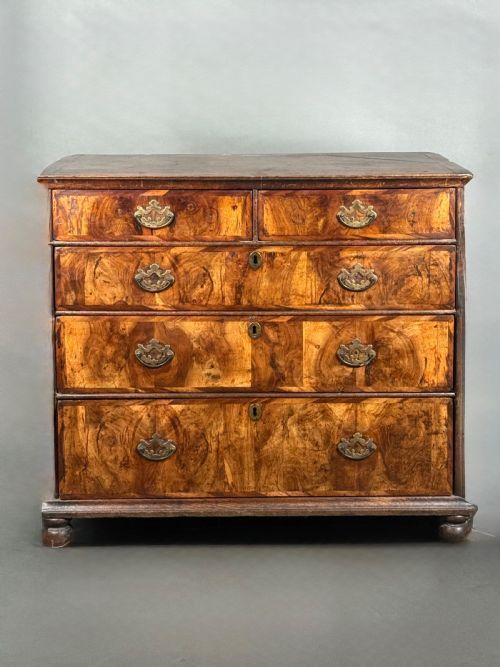
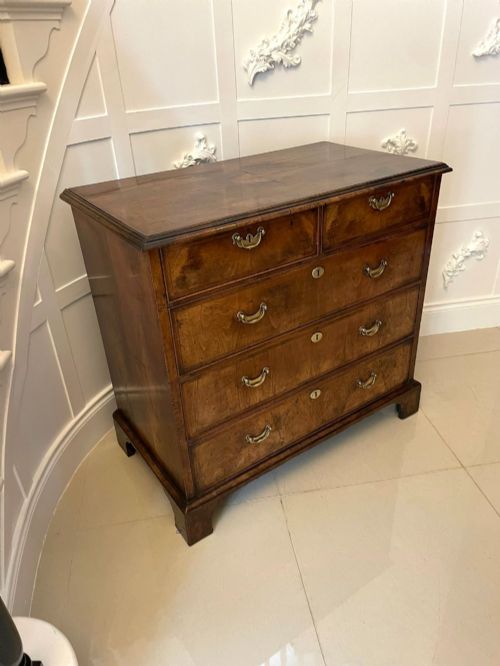
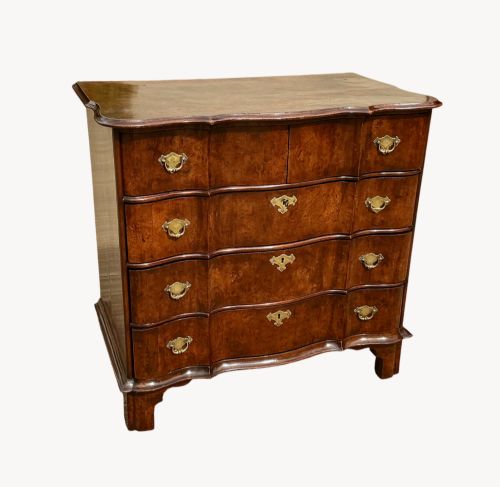
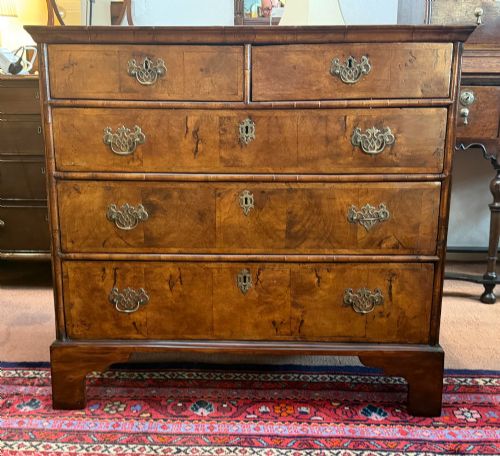
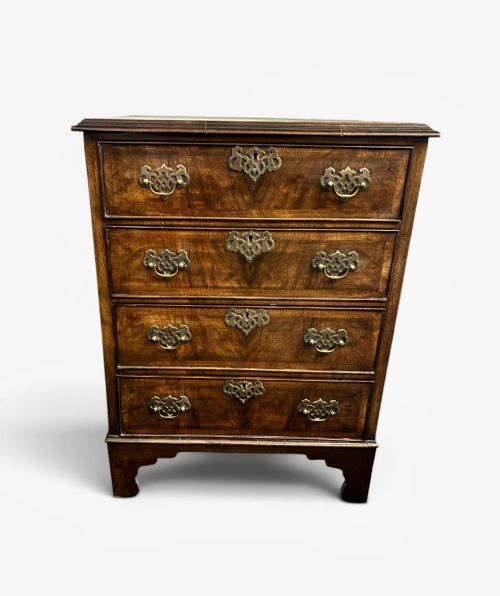
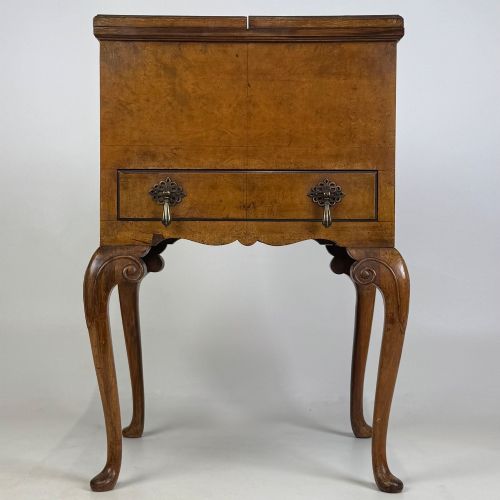
Walnut Chest with Handles
These walnut chest with handles pieces offer traditional storage and rich grain, built from timber that develops a deep patina over generations.
Walnut Chest with Handles
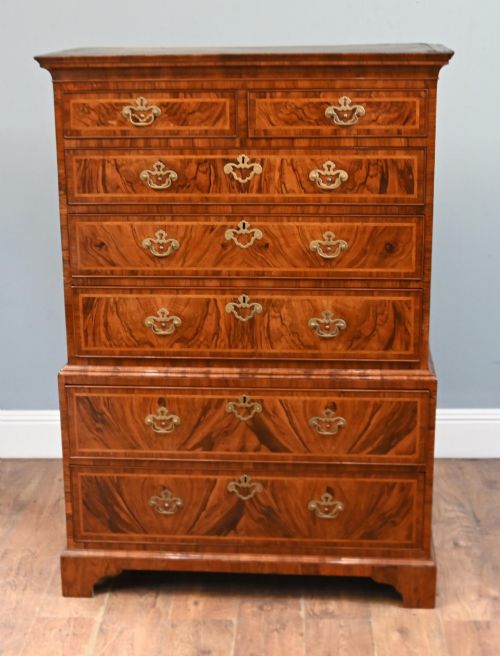
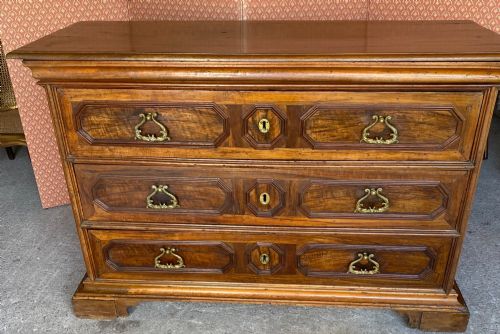
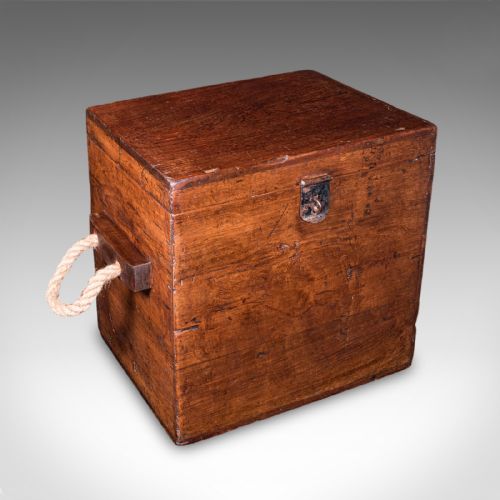
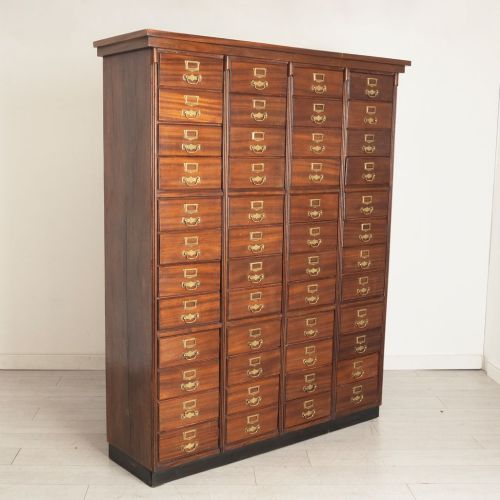
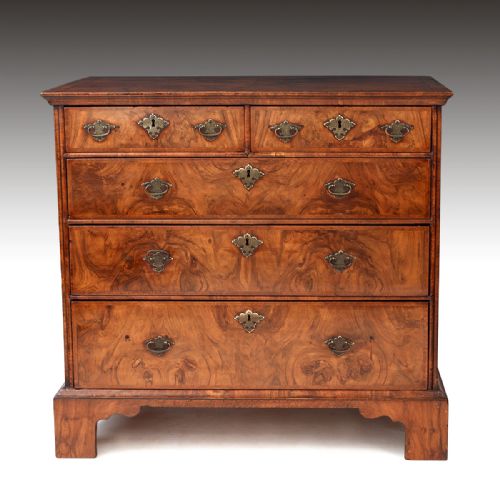
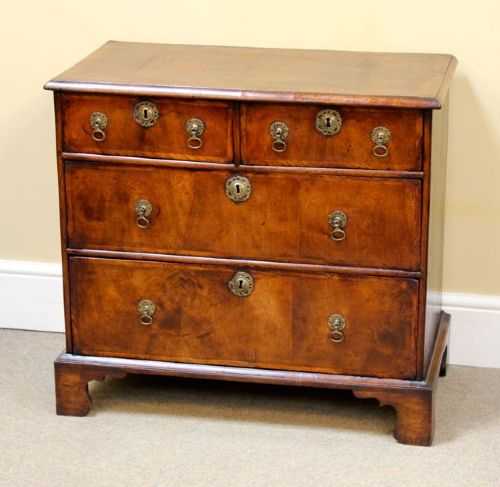
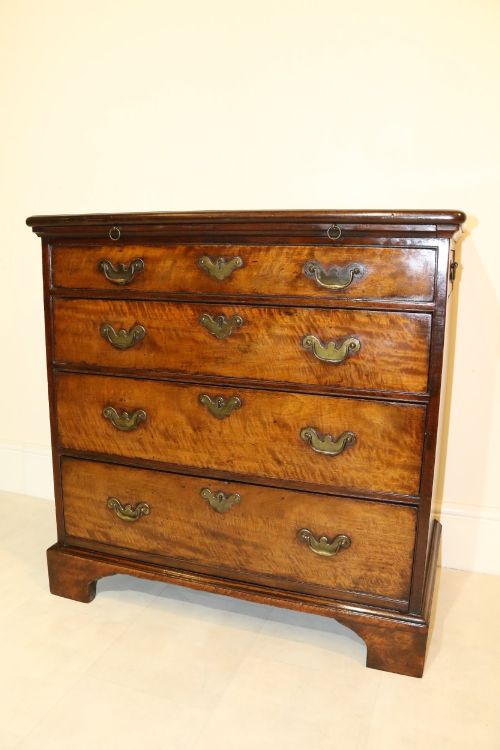
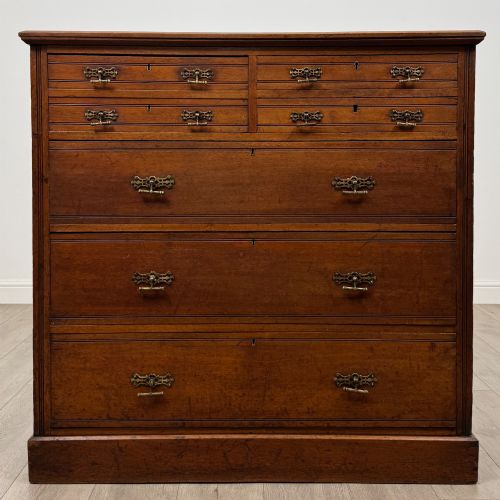
A walnut chest with handles brings together several centuries of cabinet-making, ranging from early eighteenth-century bachelor chests and tallboys to later Victorian shop counters and compact jewellery boxes. Buyers searching for a walnut chest with handles encounter diverse forms including banks of drawers, country house cabinets, and traditional chests of two short and three long drawers.
The material palette spans standard walnut and burr walnut, frequently accented with contrasting brass handles, drop handles, or gilt bronze rococo mounts. Makers combined the rich timber with oak linings and occasional glass or silk interior fittings, creating sturdy pieces designed for daily utility in domestic and commercial settings.
Materials and construction
Cabinet-makers constructed these pieces primarily from solid walnut and burr walnut veneers applied over sturdy oak or secondary carcases, yielding dense structures with decorative grain patterns. Master carpenters incorporated sunburst inlays and banded details to enhance the visual appeal of the drawer fronts and top panels.
Hardware fastening relied on brass, solid brass, and gilt bronze handles, often secured with drop loops, cup designs, or scalloped backplates. Structural stability was maintained through traditional joinery, including bun feet to elevate the chests off the floor and graduated drawer configurations.
One persistent eighteenth-century craftsman clearly enjoyed a challenge, packing twelve tiny drawers into a single chest just to test everyone's patience.
Assessing quality and finish
The distinction between standard examples and superior pieces rests in the preservation of the original timber patina and the complexity of the veneer work, such as burr walnut selection. Untouched surfaces displaying natural ageing outrank heavily refinished or replaced timber panels.
Quality also manifests in the detailing of the hardware, where finely cast gilt bronze rococo handles or crisp brass drop mounts indicate higher workshop standards than plain replacement fixtures. The precision of inlaid banding and the smooth operation of graduated drawers further separate fine commissions from utilitarian shop fittings.
The Walnut Chest with Handles Glossary
- Burr walnut
- A highly decorative wood veneer taken from the growth excrescences on walnut trees, prized for its swirling knot patterns. It is frequently employed on high-status cabinet fronts.
- Bachelor chest
- A small multi-drawer chest featuring a folding or sliding top panel designed for writing and personal grooming. These form an adaptable subset of early eighteenth-century furniture.
- Drop handle
- A pivoting metal pull suspended from a fixed backplate, common on pieces dating from the seventeenth and eighteenth centuries. They add vertical visual emphasis to the drawer facade.
- Bun foot
- A rounded, slightly flattened wooden foot shaped like a small bun, often supporting heavier case furniture from the Queen Anne and Georgian periods.
- Chest on chest
- A tall storage form consisting of a smaller upper chest stacked directly upon a larger lower base, also known as a tallboy. This configuration maximises vertical storage capacity.
Walnut Chest with Handles: Frequently Asked Questions
How do I date an antique walnut chest?
Dating relies on examining construction methods, timber choice, and hardware styles. Early pieces often feature oak linings and hand-cut dovetails beneath burr walnut veneers.
Later Victorian examples tend to have machine-sawn components, darker finishes, and standardised brass handles that reflect industrial manufacturing shifts.
What is the difference between a bachelor chest and a standard chest?
A bachelor chest incorporates a specialised sliding or folding top panel that serves as a writing surface. Standard chests focus strictly on storage through horizontal drawer arrangements.
Both forms utilise walnut timber and brass handles, but the bachelor variant offers dual functionality for writing and domestic storage.
How should I care for a polished walnut surface?
Maintain the timber by keeping it away from direct sunlight and maintaining stable room humidity to prevent veneer cracking. Regular dusting with a soft, dry cloth preserves the original polish.
Avoid silicone-based sprays, opting instead for traditional beeswax applied sparingly to nourish the antique grain.
Are these chests suitable for modern bedrooms?
These pieces provide deep storage drawers and compact footprints that fit well in contemporary domestic spaces. Their varied proportions accommodate modern clothing and household items while introducing historical warmth.
Placing them away from active heat sources ensures the antique wood remains stable in centrally heated rooms.