


Walnut Canterbury Table
A walnut canterbury table combines a compartmentalised rack for papers or music with a sturdy surface for lamps and books, offering both display space and practical storage.
Walnut Canterbury Table
When you search for a walnut canterbury table, you are looking at nineteenth-century furniture designed to hold folios, newspapers, or sheet music in vertical divisions below a useful tabletop surface. These pieces emerge chiefly from the Victorian and Regency periods, spanning decades from the early eighteen-hundreds to the close of the century.
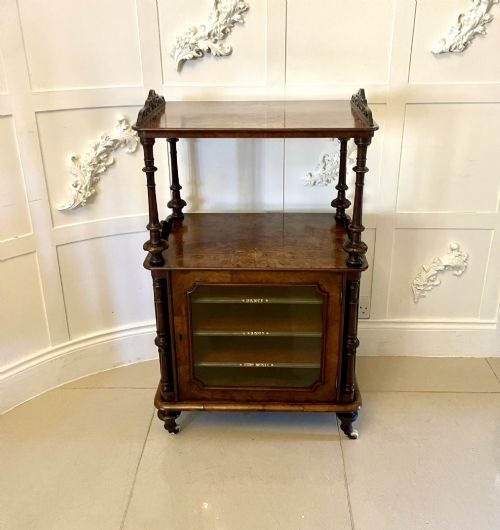
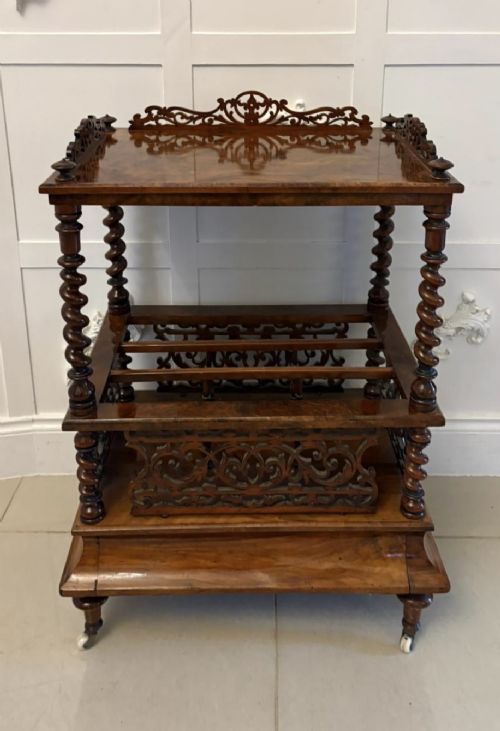
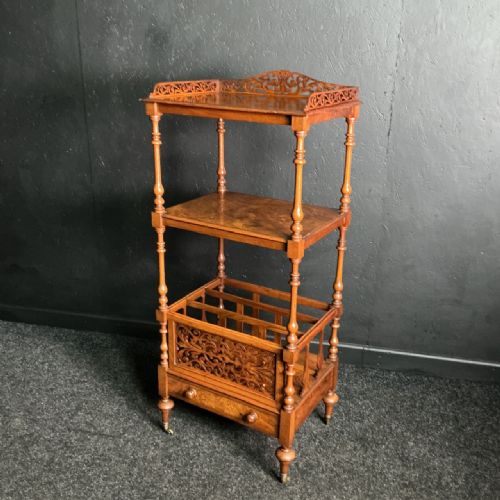
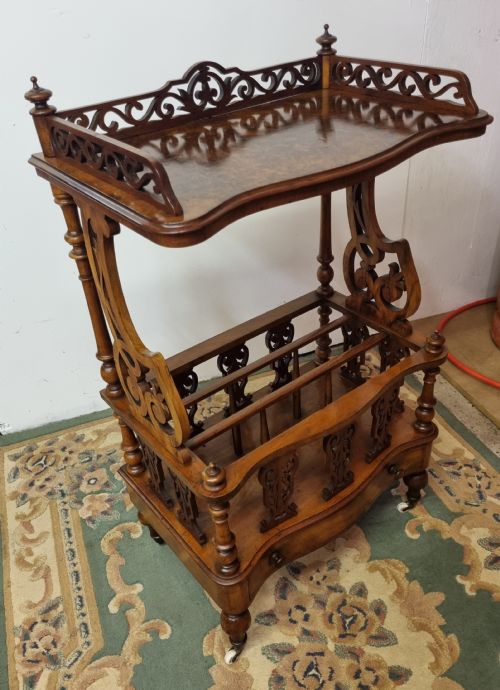
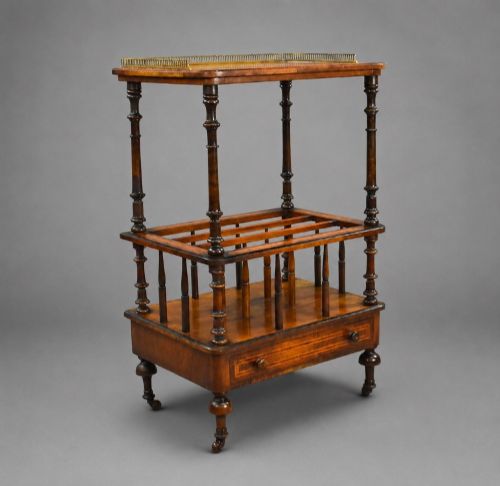
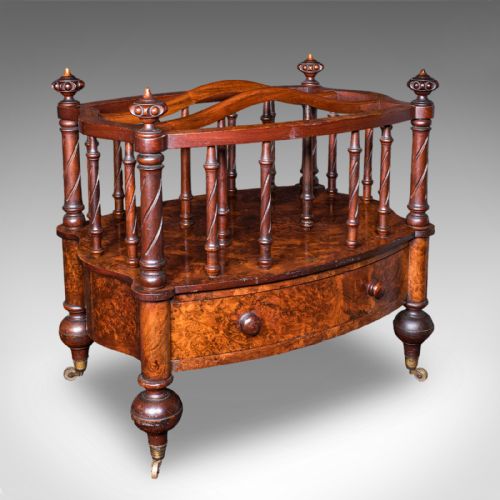
The version you are most likely to meet on this page is the Victorian burr walnut canterbury or whatnot combination. These examples often feature turned supports, lower drawers, and delicate marquetry inlay, serving as both side tables and repositories for reading material.
Makers adapted the form over time, producing variations that incorporate writing slopes, reading lecterns, or oval lamps. Some examples cross into music cabinets and occasional tables, yet retain the signature slatted partitions beneath the top tier.
How they were made
Cabinetmakers constructed these tables using solid walnut frameworks combined with decorative burr walnut veneers to create rich, figured grain patterns across the tabletops and drawer fronts. Artisans enhanced these surfaces with contrasting boxwood and ebonised wood stringing, along with fine marquetry inlay.
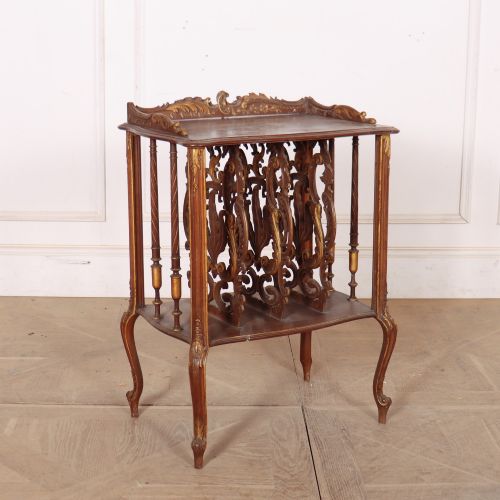
Structural elements frequently incorporated turned wooden columns and brass castors to allow smooth movement across carpets and wooden floors. Certain French-influenced pieces added ormolu mounts to accentuate the serpentine outlines and carved details.
The furniture style takes its name from an archbishop who supposedly asked his cabinetmaker for a low stand to hold his music folios.
What varies in quality
The standard of a walnut canterbury table rests upon the choice of timber and the depth of figure within the burr walnut veneer. Superior examples display symmetrical grain matching across expansive surfaces rather than simpler, plain timber planks.
Craftsmanship shows in the precision of the inlaid stringing and the stability of the slatted divisions below the table. Well-executed turning on the upright supports and the inclusion of dovetailed drawers mark out the finest specimens.
The Walnut Canterbury Table Glossary
- Burr walnut
- A highly prized wood veneer taken from the growth warts of walnut trees. It yields complex, swirling grain patterns that catch the light.
- Canterbury
- A low stand featuring vertical partitions, originally designed for holding sheet music or books. The name derives from an archbishop who requested such a stand.
- Whatnot
- A multi-tiered open shelving unit used for displaying decorative objects. These often merge directly with the canterbury form in nineteenth-century designs.
- Marquetry
- The art of applying small pieces of veneer to a structure to form decorative patterns. Craftsmen utilised boxwood and contrasting timbers for this work.
- Ormolu
- Gilded bronze mounts applied to furniture for decorative effect. This technique appears particularly on pieces influenced by French nineteenth-century styles.
Walnut Canterbury Table: Frequently Asked Questions
What is a canterbury table used for?
These tables served primarily to keep sheet music, newspapers, and periodicals close to hand in a domestic parlour or drawing room.
The upper surface functioned as a conventional side table for lamps, decorative porcelain, or writing materials.
How do I date a walnut canterbury table?
Dating relies on observing stylistic markers such as Regency restraint versus Victorian carving, alongside timber preparation methods.
Evidence of burr walnut veneers, brass castors, and inlaid boxwood stringing points directly to the nineteenth century.
Can I use a canterbury table beside a sofa?
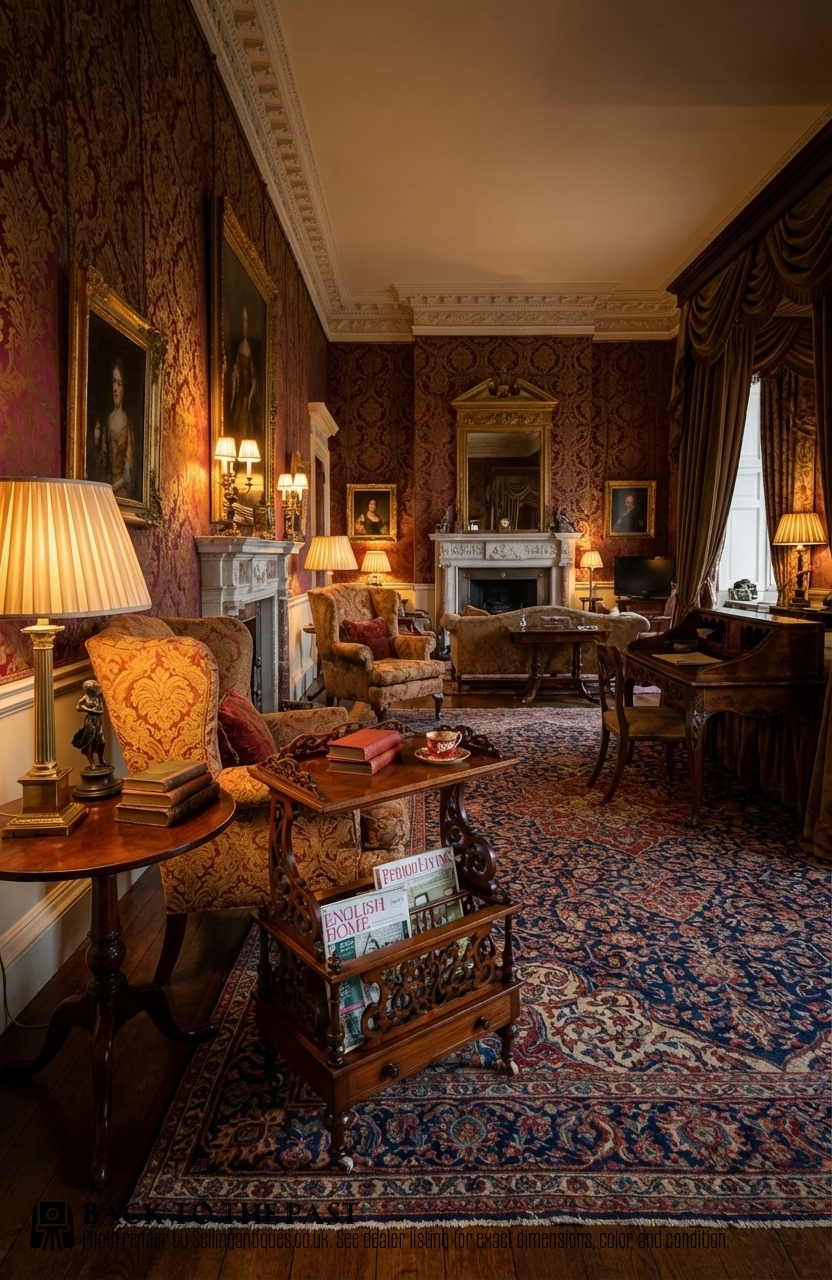
The compact proportions and useful top surface make these tables well-suited for placement next to seating.
The lower partitions provide convenient storage for modern magazines and daily broadsheets.