




Walnut Canterbury Holder
A walnut canterbury holder brings traditional compartmentalised storage for sheets, books and periodicals into a room with rich timber grain and polished presence.
Walnut Canterbury Holder
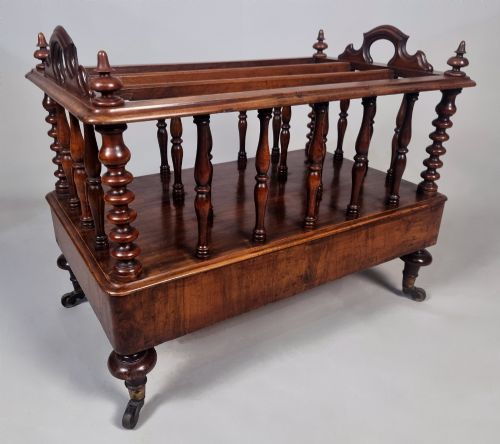
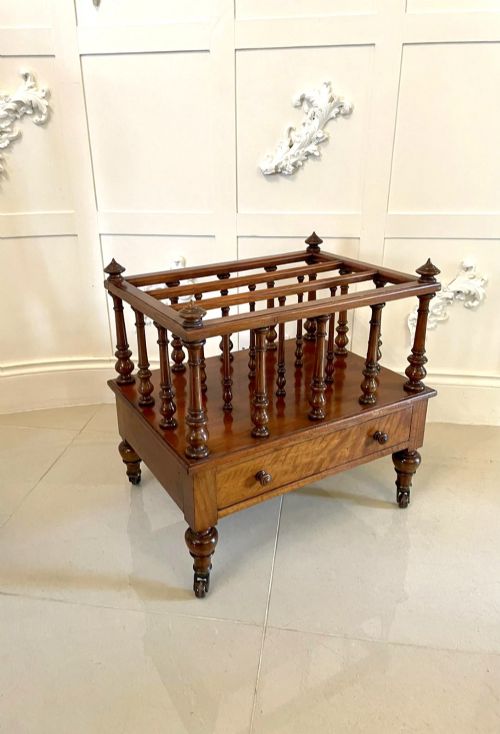
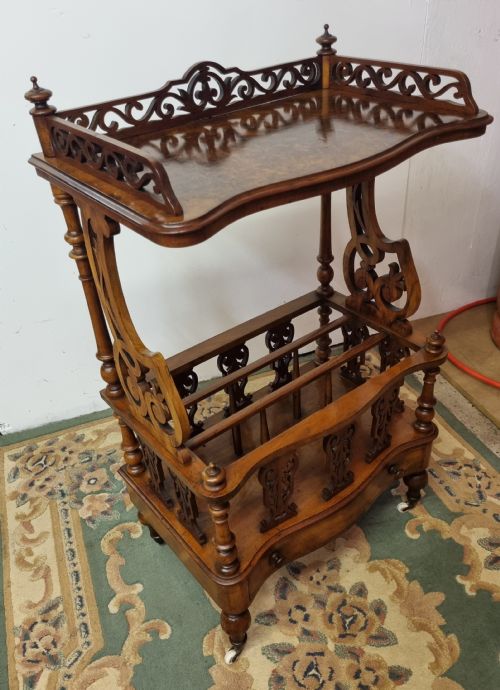
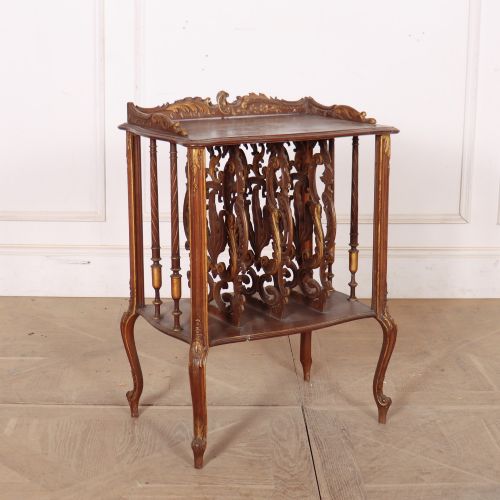
A walnut canterbury holder is a compartmentalised stand designed historically to hold sheet music, periodicals, and newspapers close to a seating area or instrument. You will most frequently encounter Victorian examples dating from the mid to late nineteenth century, shaped in standard rectangular forms or serpentine profiles.
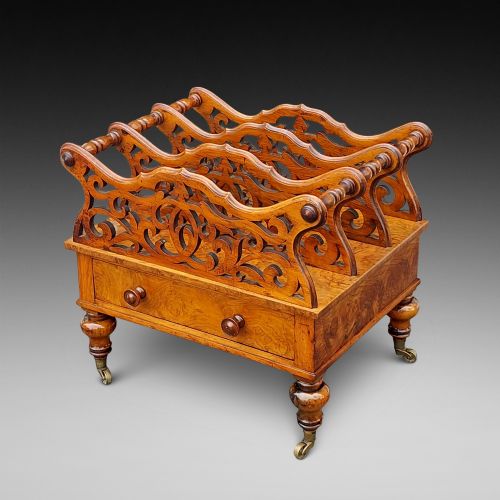
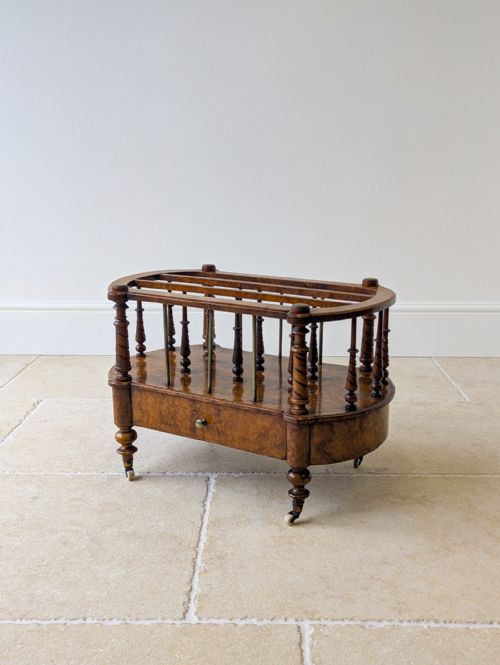
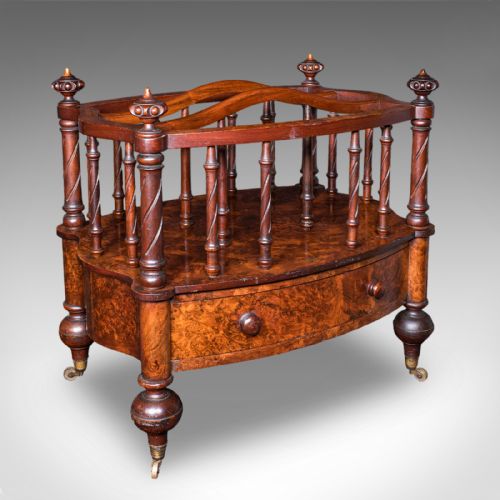
The material palette centres on rich walnut timber, often enriched by burr veneers, figured grains, or boxwood inlay. Many pieces combine traditional slatted divisions for journals with a low drawer underneath or an upper work surface, functioning as occasional tables alongside their primary storage role.
How they were made
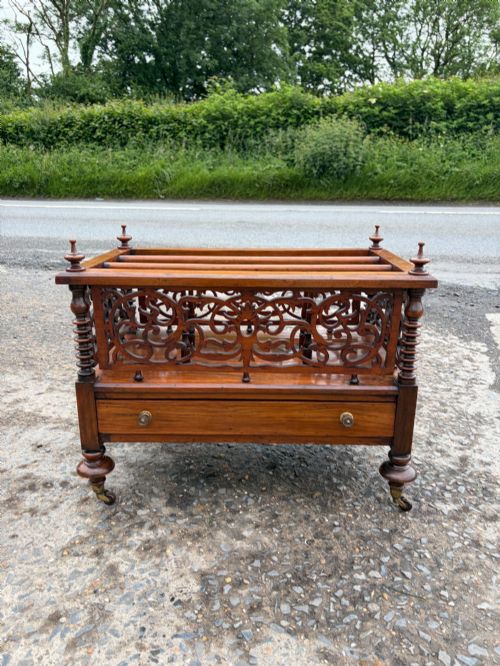
Cabinet makers utilised solid walnut and decorative veneers such as burr walnut, applying fine boxwood marquetry and brass elements for contrast and structural detailing. Interior dividers and fretwork panels were shaped with pierced carpentry techniques to keep the stands light while maintaining rigidity.
Turned wooden supports, ceramic castors, and small drawers fitted with dovetail joints complete the construction of these nineteenth-century stands. French polishing techniques brought out the deep chatoyancy and natural figuring of the walnut surfaces.
Walnut Canterbury Holder Retail Price Guide 2026
Typical asking prices for walnut canterbury holder among the pieces listed under this phrase on Sellingantiques today, from the lower quarter to the upper quarter. They describe what is for sale here now, not the wider market.
Listings feature nineteenth-century pieces constructed from walnut, burr walnut, and black walnut, frequently complemented by brass, porcelain, and boxwood inlay.
What varies in quality
Quality rests in the choice of timber veneer and the precision of decorative inlay work, where figured burr walnut and crisp boxwood marquetry elevate a standard stand into a piece of fine parlour furniture. The complexity of the fretwork and the presence of integrated elements like drawers or hinged work tops also distinguish finer cabinet-making.
Proportion and structural grace separate exceptional examples from simpler utility stands, particularly in serpentine or oval shapes that demand greater carpentry skill. The retention of original castors, brass fittings, and uncompromised structural joins preserves the integrity of the piece.
Edwards and Roberts·Shoolbred
The Walnut Canterbury Holder Glossary
- Canterbury
- A low stand with vertical divisions, originally designed for holding music folios and newspapers. The form dates back to the late eighteenth century and remained popular throughout the Victorian period.
- Burr walnut
- A prized timber veneer taken from the grotesque growths or burls of the walnut tree, yielding swirling, knotty patterns that catch the light. It was extensively used on high-grade nineteenth-century cabinet furniture.
- Marquetry
- The art of applying small pieces of veneer to a structure to form decorative patterns or pictures. Boxwood inlay is frequently seen contrasting against dark walnut grounds.
- Serpentine
- A curved line or shape that turns inward and then outward, resembling the movement of a snake. This contour adds considerable elegance and manufacturing complexity to table tops and frames.
Walnut Canterbury Holder: Frequently Asked Questions
What is a walnut canterbury holder used for?
These stands were originally created to keep sheet music, folios and current periodicals tidy beside a piano or in a drawing room.
Today they function effectively as magazine racks or occasional side tables in sitting rooms and studies.
How do I date a walnut canterbury?
Dating relies on stylistic clues such as serpentine shaping, turned supports, and the presence of marquetry inlay, which point predominantly to the Victorian era between eighteen-fifty and eighteen-ninety.
Earlier Regency examples exhibit simpler, crisper architectural lines, whereas later nineteenth-century pieces often incorporate heavier carved details.
Are all canterburys fitted with drawers?
Many traditional stands consist solely of vertical partitions mounted above castors for holding papers and magazines.
Others incorporate a single lower drawer or an upper work top, adding enclosed storage and surface utility.
Where should I place a canterbury in a room?
Because these pieces are finished on all sides to varying degrees, they sit comfortably beside armchairs, sofas, or empty wall spaces where books and periodicals accumulate.
Their narrow profile ensures they occupy minimal floor space while introducing rich wood tones.