




Walnut Canterbury Cabinet
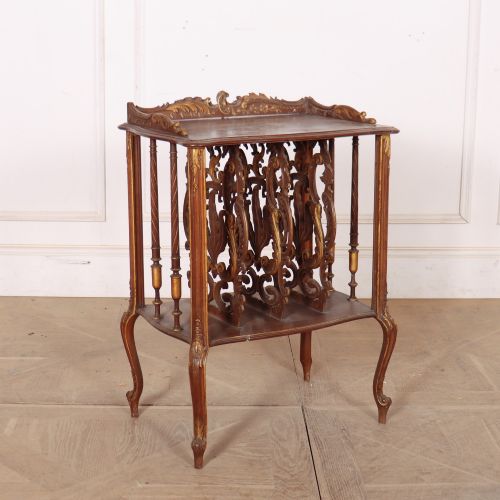
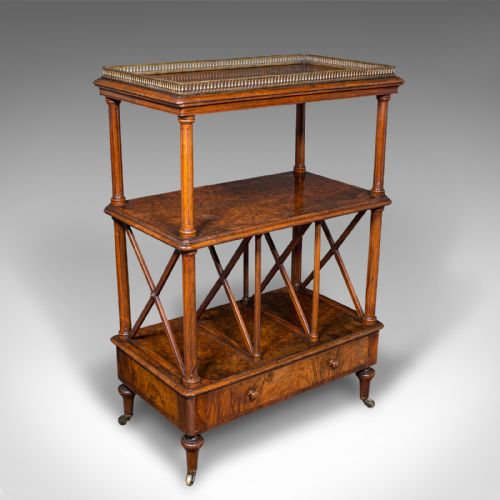
A walnut canterbury cabinet combines sheet music storage with display, bringing warmth and utility to a room through rich timber figure.
Walnut Canterbury Cabinet
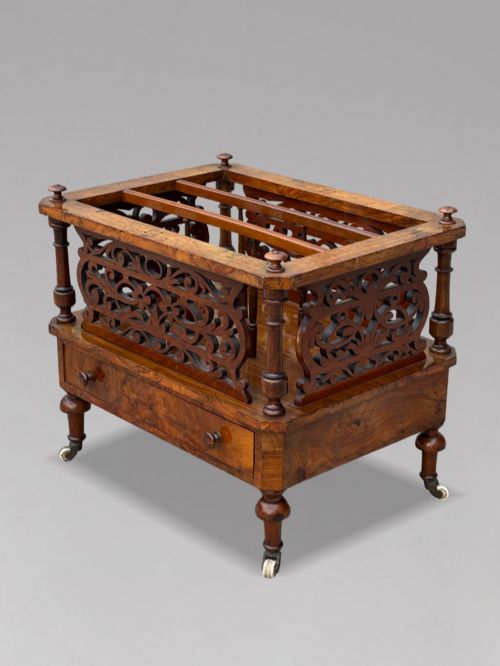
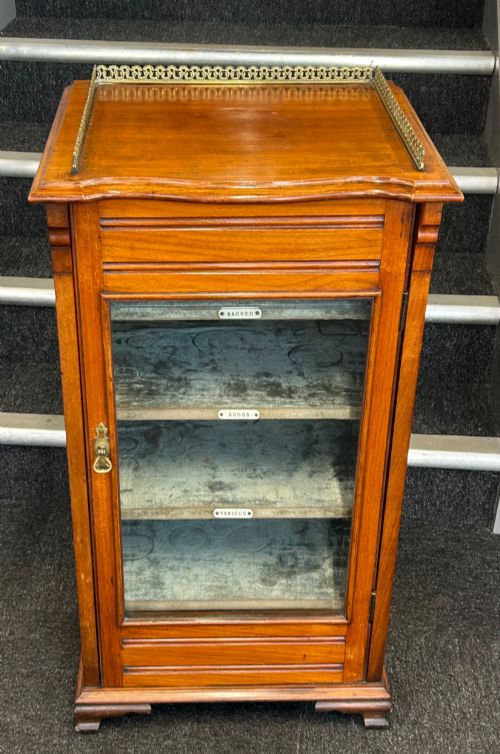
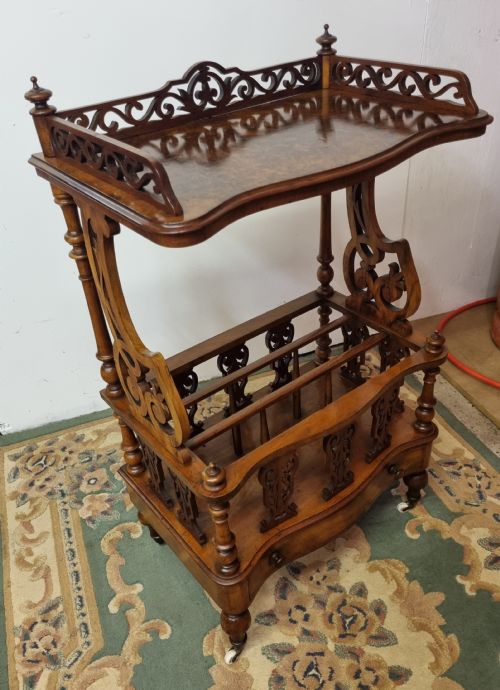
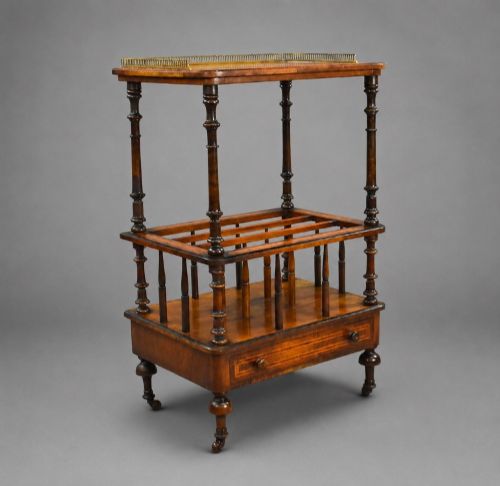
When you search for a walnut canterbury cabinet, you encounter versatile multi-tier furniture designed for holding periodicals, folios and sheet music. The pieces on this page span the Victorian and Edwardian eras, alongside earlier Regency examples.
Victorian examples frequently showcase burr walnut veneer with marquetry inlay and turned supports, whilst Edwardian pieces tend toward slim profiles with glass doors or open shelving. Many incorporate drawer storage or combine the form with a Canterbury stool and whatnot tiers.
Most items originate from the nineteenth century, including specific decades from eighteen-fifty to eighteen-ninety, reflecting the Victorian obsession with specialised household furniture for the drawing room and parlour.
How they were made
Cabinetmakers utilised solid walnut and decorative burr walnut veneers applied to secondary timbers, accentuating the grain with French polish. Marquetry inlay in boxwood and ebonised wood frequently adorns the surfaces, creating geometric and floral motifs.
Structural hardware relies heavily on cast brass for handles, castors and mounts, whilst glazed doors utilise fitted glass panels. Drawer construction employs traditional dovetailing, and multi-tier whatnots feature turned or carved upright supports.
Current listings feature pieces primarily from the Victorian and Edwardian periods, constructed in walnut, burr walnut, brass and ebonised wood.
What varies in quality
The choice of timber underpins the visual merit, with highly figured burr walnut commanding greater presence than plain grain. Crispness in marquetry inlay and delicacy in turned or carved supports distinguish superior examples from standard production.
Proportion and integration matter greatly, particularly in hybrid forms combining cabinets, drawers and partition rails. Original brass castors, intact glazed panels and sound internal divisions elevate the standing of a piece.
The Walnut Canterbury Cabinet Glossary
- Canterbury
- A low stand fitted with upright partitions for holding sheet music, folios or magazines. It often incorporates a drawer beneath or tiers above.
- Burr Walnut
- Timber taken from the warted growths on walnut trees, yielding intricate, swirling grain patterns highly prized for veneer work.
- Marquetry
- Decorative patterns formed by inserting thin veneers of different coloured woods into a prepared surface. Boxwood and ebonised wood often provide contrast.
- Whatnot
- An open set of tiered shelves used for displaying ornaments or books, frequently combined with a canterbury base in Victorian furniture.
- Ormolu
- Gilded bronze mounts applied to furniture for decorative effect, seen on select French-influenced pieces.
Walnut Canterbury Cabinet: Frequently Asked Questions
What is a walnut canterbury cabinet used for?
These cabinets were originally manufactured to store sheet music, folios and literary magazines within domestic drawing rooms. The partitioned lower sections kept unbound papers upright while drawers and upper shelves accommodated smaller accessories.
Today, they serve equally well as lamp tables, bedside stands or compact bookcases in contemporary living spaces. Their versatile proportions allow them to fit easily beside seating or in narrow hallways.
How do I tell Victorian from Edwardian pieces?
Victorian examples tend to display rich burr walnut veneers, dense marquetry inlay, turned columns and serpentine shapes. They often embrace elaborate French Rococo revival influences or substantial freestanding proportions.
Edwardian pieces generally present a slimmer profile with lighter construction, simpler stringing lines and occasional glass-fronted display doors. The aesthetic shifts toward refined restraint rather than heavy ornamentation.
Where should I place a canterbury in my home?
These cabinets suit placement beside a sofa, armchair or piano where their surface top holds lamps or drinks. Their finished backs often allow them to stand freely within a room rather than strictly against a wall.
Smaller occasional table versions function effectively as bedside units or compact display stands in entrance halls.