

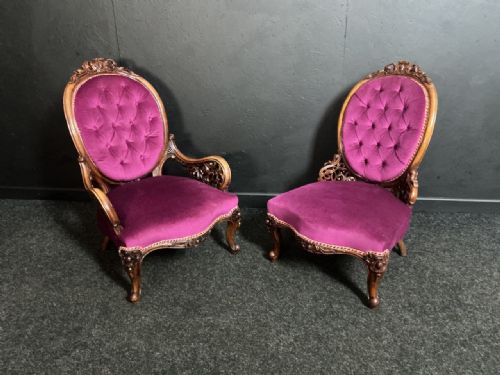
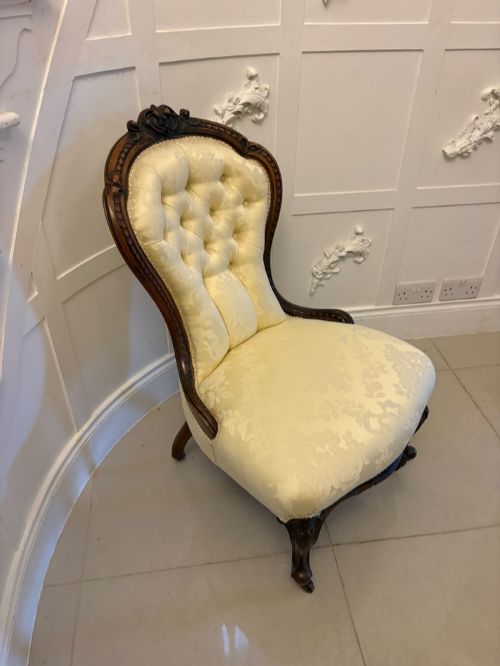
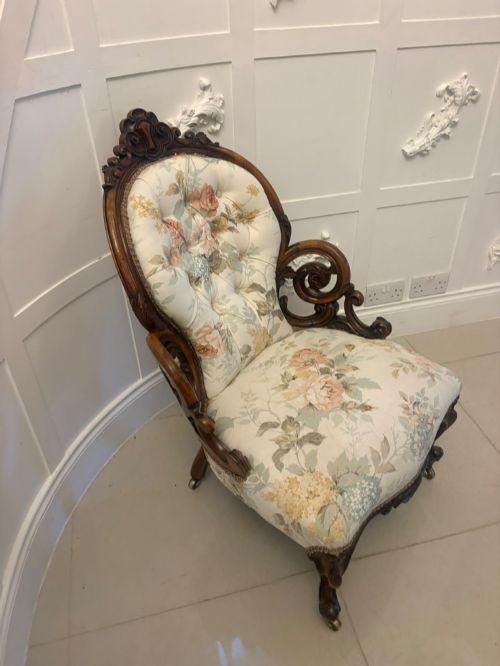
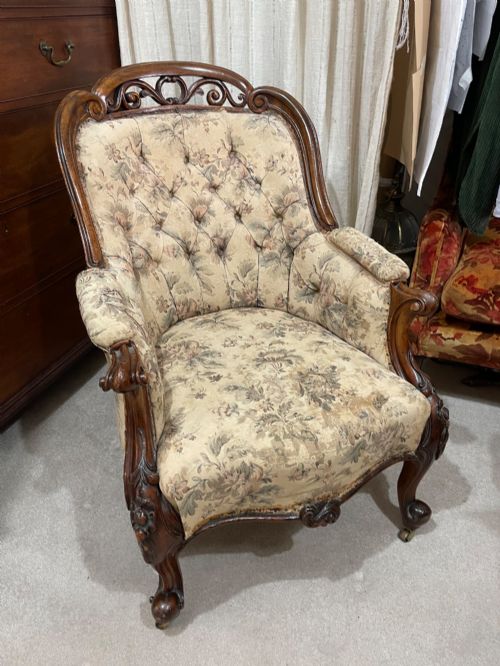
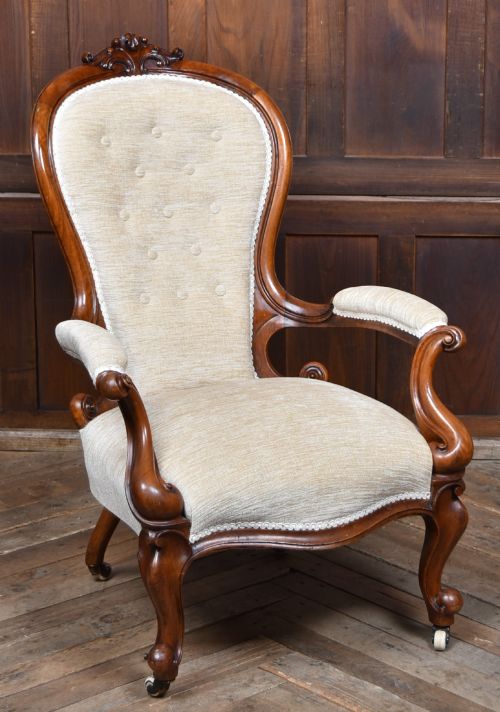
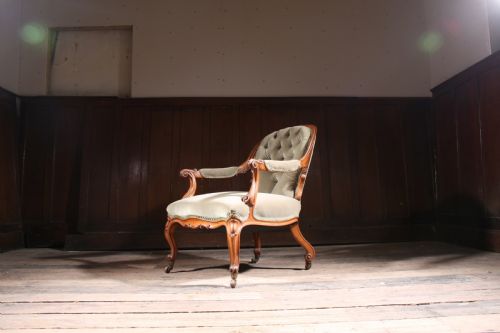
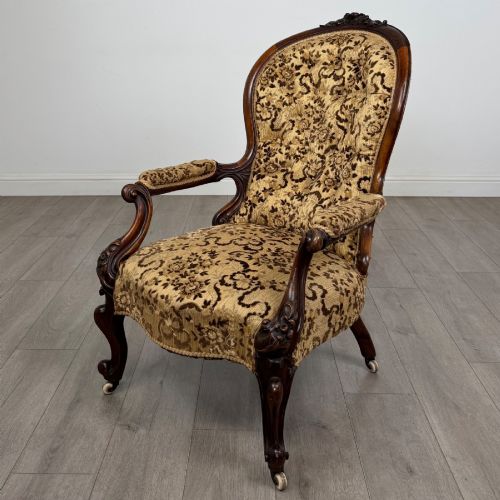
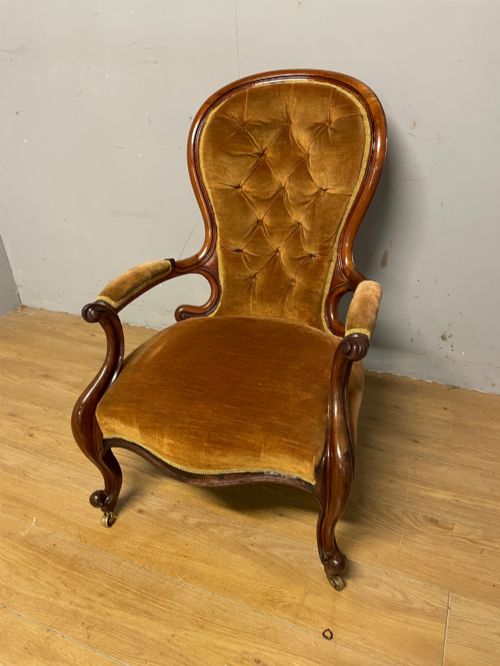
Walnut Button Back Armchair
A walnut button back armchair combines deep timber warmth with padded comfort, offering a traditional seating choice for a study or drawing room.
Walnut Button Back Armchair
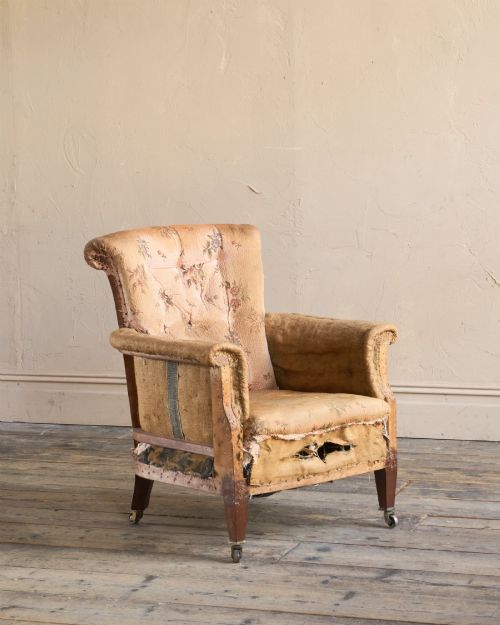
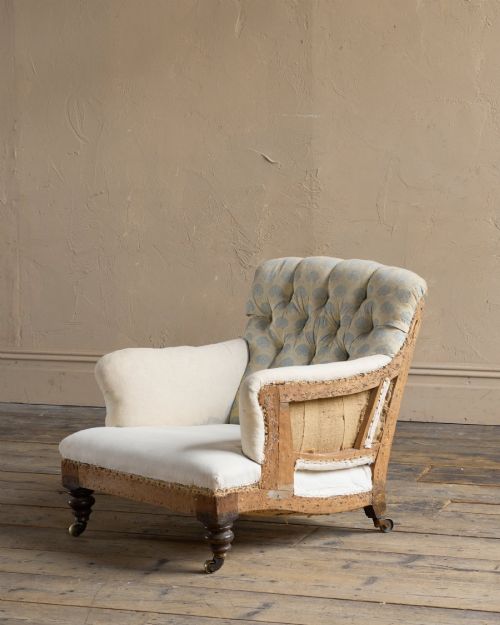
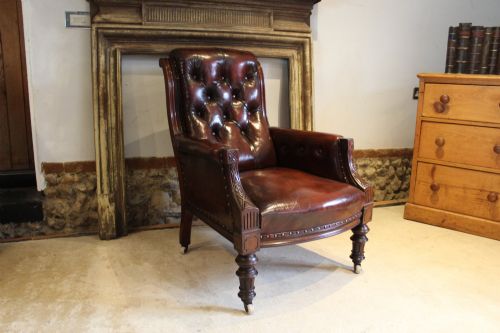
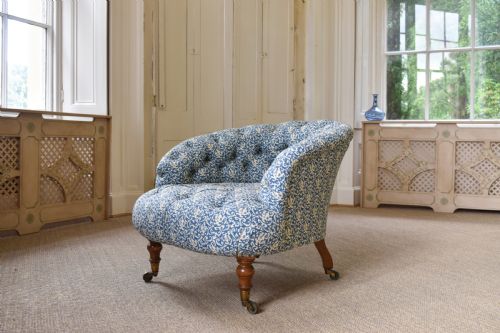
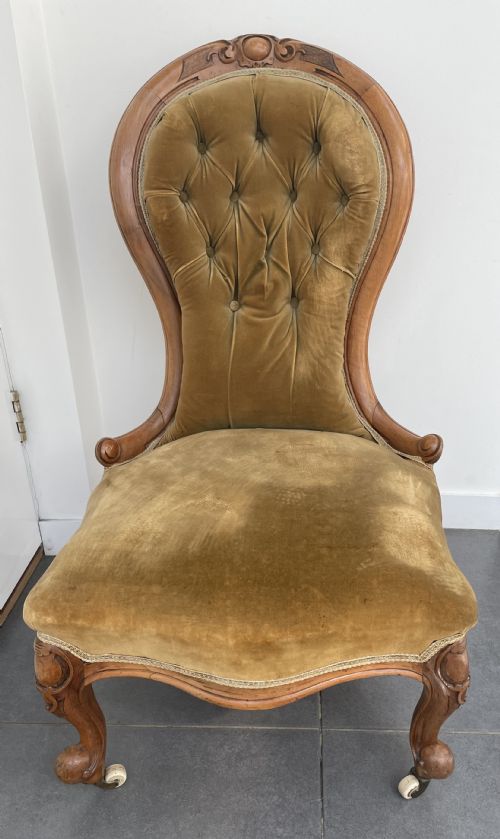
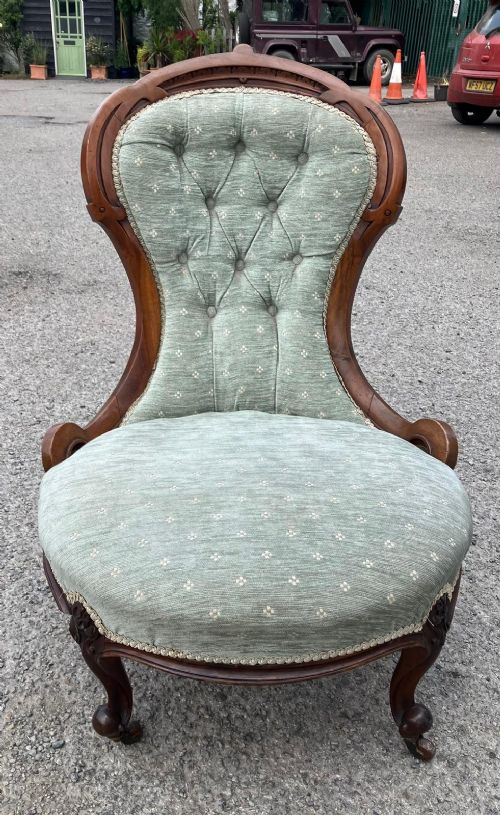
A walnut button back armchair is a padded seat framed in timber, designed for comfort in the nineteenth and early twentieth centuries. You will most frequently encounter Victorian examples featuring carved wooden frames and upholstered buttoning.
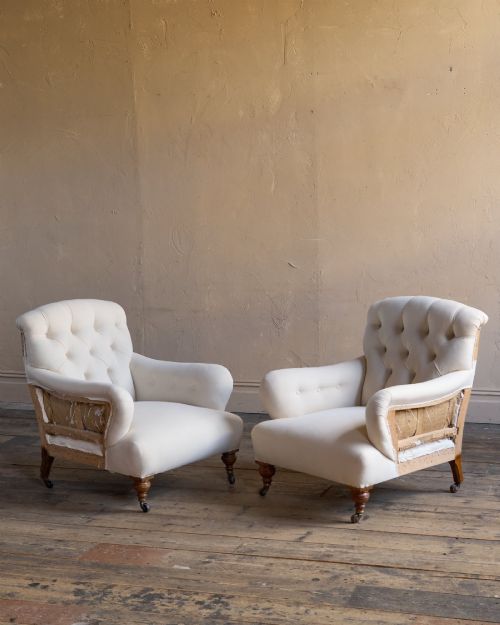
The selection includes specific forms such as low nursing chairs, open armchairs, library chairs, and occasional pieces. These variations span periods from early Victorian work through to Edwardian interpretations and revival styles.
Makers and workshops of the nineteenth century produced these chairs for formal salons, bedrooms, and reading rooms. The combination of exposed dark wood and textile upholstery defined domestic seating across several decades.
Distinctions in quality
The definition of quality rests upon the crispness of the timber carving and the architectural balance of the frame. Superior examples display fluent hand-carved ornament rather than mechanical repetition, showing careful selection of figured walnut veneers and solid stock.
Upholstery technique and the endurance of the underlying support dictate the integrity of the piece over time. Tightly executed buttoning and correct springing reflect the standard of the original workshop or subsequent professional restoration.
Walnut Button Back Armchair Retail Price Guide 2026
Typical asking prices for walnut button back armchair among the pieces listed under this phrase on Sellingantiques today, from the lower quarter to the upper quarter. They describe what is for sale here now, not the wider market.
Low nursing chairs were originally built short so Victorian ladies could tend the hearth without scorching their elaborate dresses.
C. Hindley and Sons·Howard and Sons·Gillows·Holland and Sons
The Walnut Button Back Armchair Glossary
- Button back
- An upholstery technique where indentations are formed across the padded surface using stitches or tufts, creating a geometric pattern of deep cushions. This method provides both structural tension and decorative relief.
- Spoon back
- A padded chair back shaped in a concave oval resembling the bowl of a spoon, designed to fit the human spine. It is characteristic of mid-nineteenth-century seating.
- Nursing chair
- A low-seated upholstered chair originally designed for nurseries or bedrooms, allowing a person to sit comfortably close to a fire or cradle. They often feature open arms or lack them entirely to accommodate voluminous garments.
- Open armchair
- A seat with structural armrests that are left un-upholstered, exposing the polished timber frame. This form highlights the craftsmanship of the wooden arm supports and uprights.
- Revival style
- A design movement that borrows decorative motifs from earlier historical periods, such as Louis XVI or French Napoleon III. These pieces reinterpret historic aesthetics within nineteenth-century manufacturing methods.
Walnut Button Back Armchair: Frequently Asked Questions
How do I identify a Victorian button back chair?
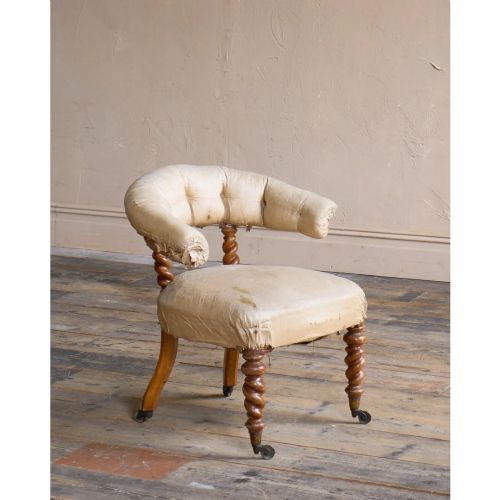
Victorian examples typically feature walnut frames with carved wooden details, deep buttoned upholstery, and curved structural lines. Look for stylistic cues such as spoon backs and turned or barley twist supports.
Construction methods from this period often involve traditional joinery and heavy timber frames. Comparing the woodwork and upholstery style to dated nineteenth-century examples helps confirm the era.
What is the difference between a nursing chair and a library chair?
A nursing chair is built with a lower seat and a compact frame designed for bedroom or fireside use. Library chairs are generally larger and sturdier, intended for prolonged reading and sitting at a desk or in a study.
The proportions and arm configurations distinguish the two forms. Library chairs offer broader armrests, whereas nursing chairs prioritize a low profile.
Are these chairs suitable for daily use?
Many nineteenth-century and Edwardian armchairs remain robust enough for regular seating if the frame and internal stuffing are sound. Checking the stability of the joints ensures the piece can support daily weight safely.
Restored upholstery with modern webbing or traditional springs improves comfort for everyday living. Professional assessment of the interior structure guarantees long-term durability.