

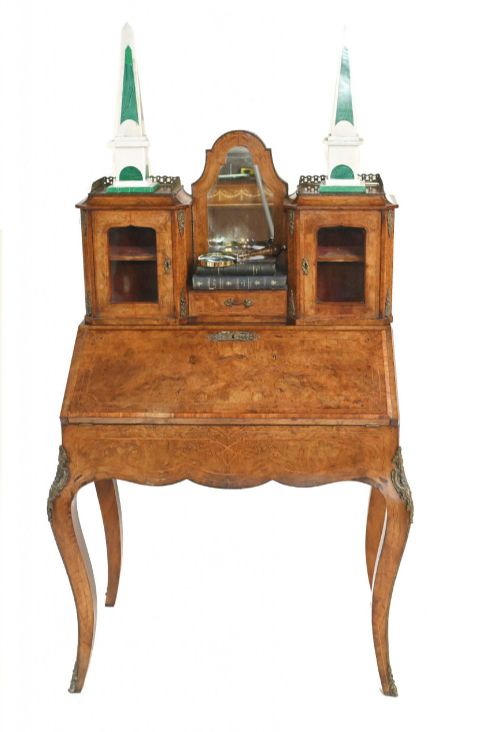
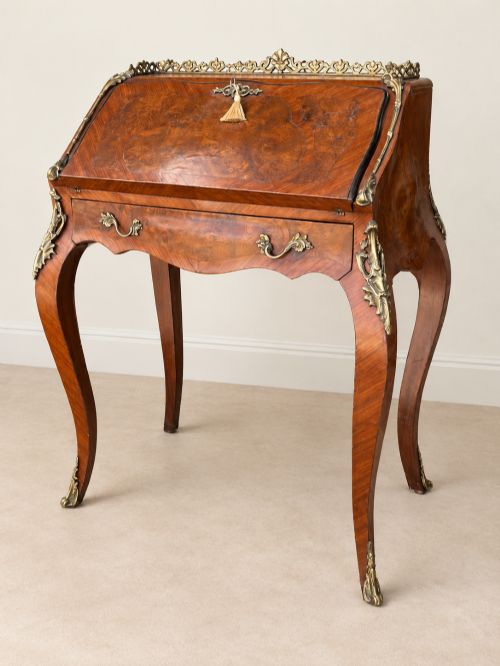
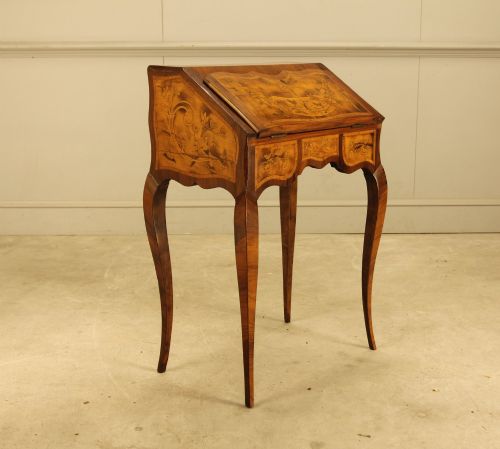
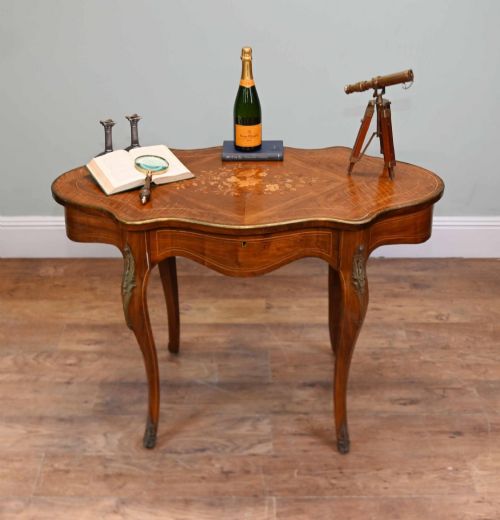
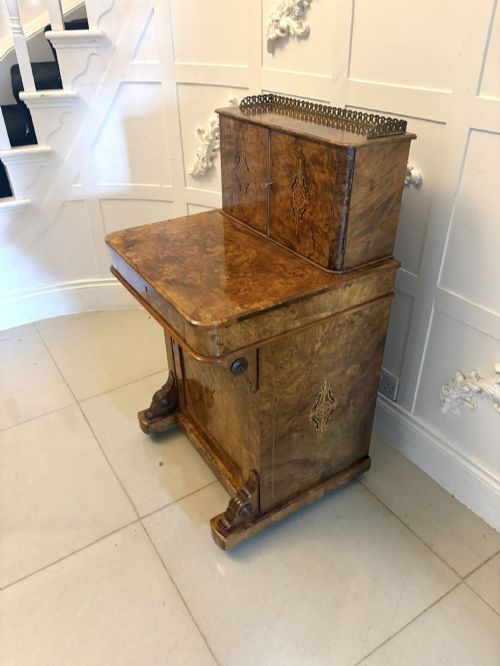
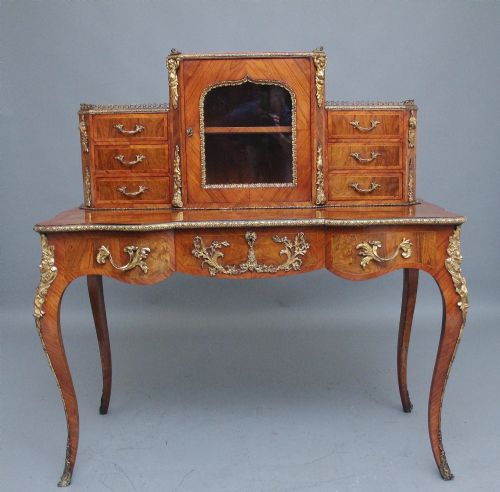
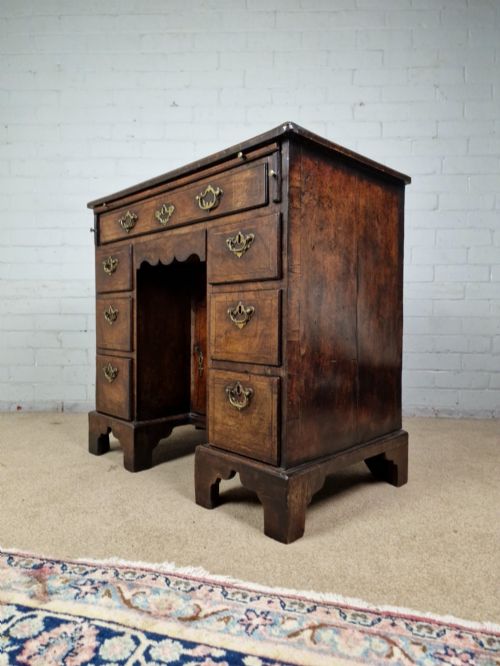
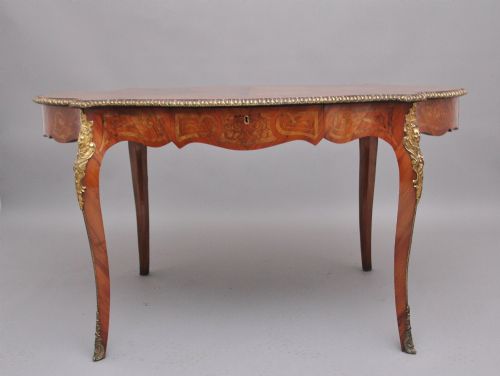
Walnut Bureau Table
These walnut bureau table examples combine practical writing surfaces with rich timber figures, offering useful workspace and classic proportions for the home.
Walnut Bureau Table
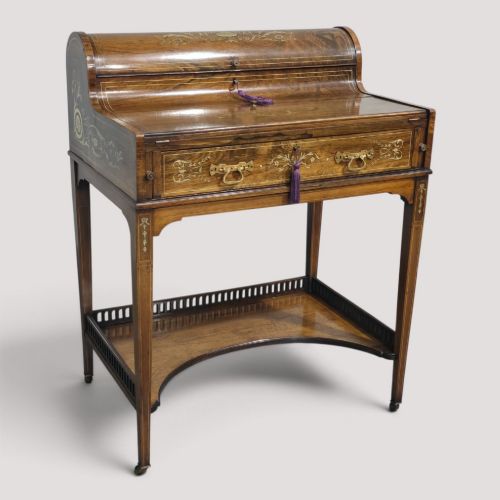
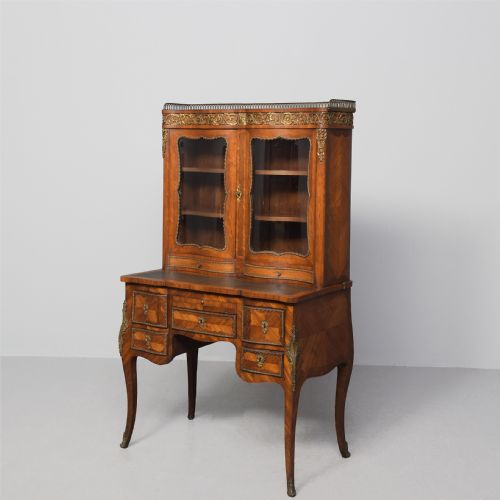
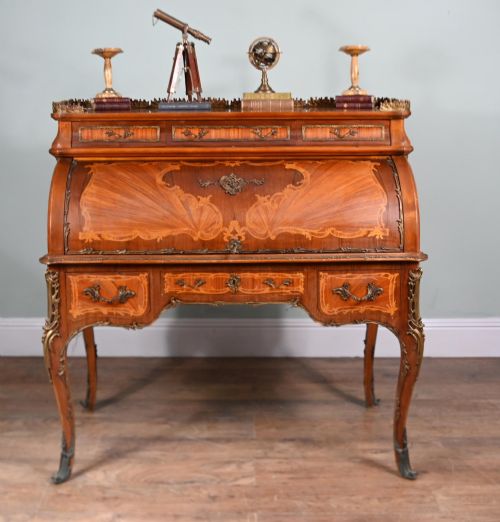
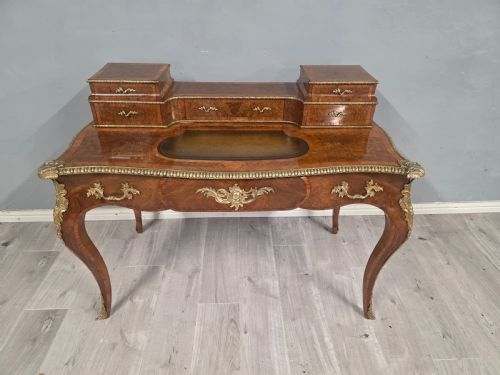
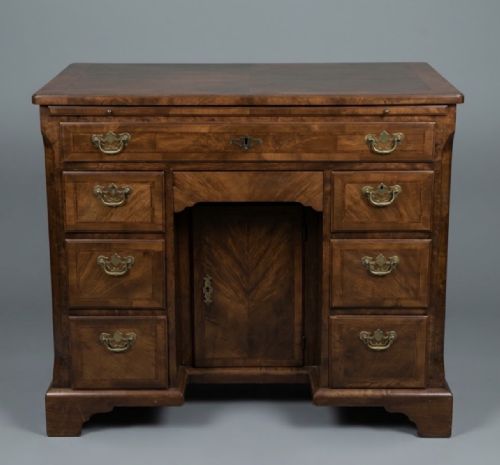
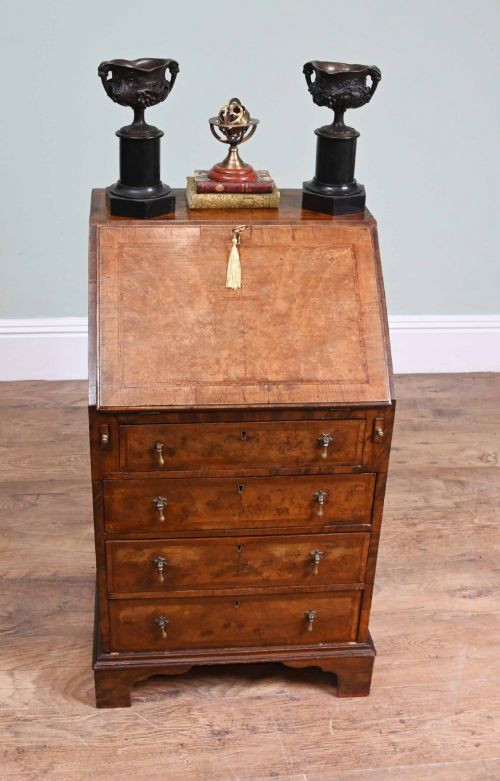
A walnut bureau table serves as a dedicated writing surface, combining enclosed compartments or drawers with a flat table top. When searching for this form, buyers encounter pieces ranging from compact kneehole desks to French bureau plat designs and Victorian writing tables.
The selections span multiple periods, with 18th century Georgian examples sharing space with Victorian, Edwardian, and Art Deco interpretations. English and French variations dominate, bringing distinct regional cabinetry traditions to the writing room.
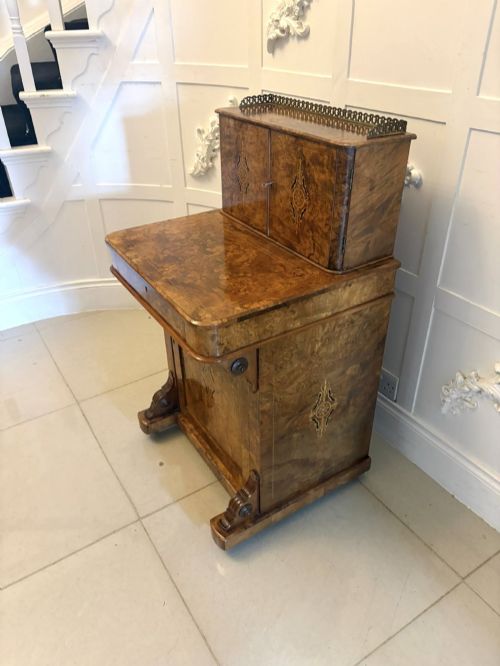
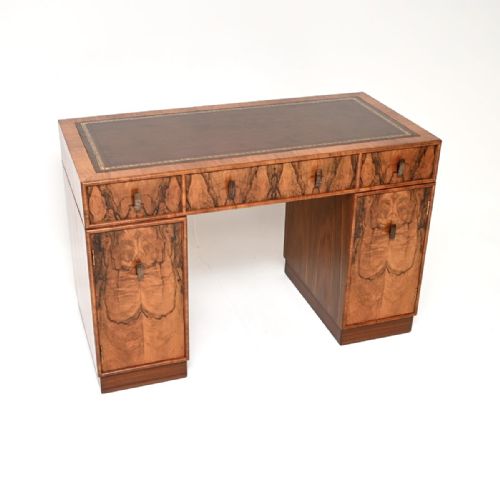
Formats vary from pedestal desks and Davenport configurations to freestanding centre tables with marquetry. The most frequent encounters involve smaller writing tables and kneehole desks finished in burr walnut or figured veneers.
How they were made
Cabinet makers utilised solid walnut and decorative veneers, often selecting burr walnut, fiddleback walnut, or kingwood to create striking grain patterns across the primary surfaces. Crossbanding and geometric marquetry or parquetry inlay frequently define the borders and tabletops.
Structural integrity relied on secondary timbers such as oak, while brass handles, escutcheons, and ormolu mounts provided functional and decorative accents. Many writing surfaces incorporated inset leather panels, sometimes tooled with gold leaf, alongside glass tops on later Art Deco pieces.
Walnut Bureau Table Retail Price Guide 2026
Typical asking prices for walnut bureau table among the pieces listed under this phrase on Sellingantiques today, from the lower quarter to the upper quarter. They describe what is for sale here now, not the wider market.
Secret compartments inside kneehole desks occasionally reveal forgotten ink stains left by meticulous writers centuries ago.
What varies in quality
The choice of timber grain sets the visual standard, with symmetrical burr walnut figures and matched veneer panels marking out superior examples. Plain timber surfaces rely entirely on clean joinery and balanced proportions.
Maker attribution elevates certain pieces, particularly those bearing stamps or paper labels from established firms. The finesse of the brass hardware, hand-cut dovetails in the drawer construction, and precision in the marquetry inlay separate standard workshop production from exceptional cabinet work.
Gillows·JAS Shoolbred·Maple and Co·Wylie and Lochhead Glasgow
The Walnut Bureau Table Glossary
- Burr walnut
- A prized timber harvested from walnut tree growths, producing swirling, highly decorative grain patterns used for table tops and drawer fronts. Cabinet makers prized this figured wood for formal reception rooms.
- Kneehole desk
- A compact writing desk featuring a central recessed space for the legs, flanked by pedestals of small drawers. This form originated in the late 17th century and remained popular through the Georgian period.
- Bureau plat
- A freestanding French writing table with a flat top, often fitted with one or more drawers in the frieze. These tables traditionally stood in the centre of a room rather than against a wall.
- Marquetry
- The art of applying decorative pieces of veneer to a structural structure to form pictorial or geometric designs. Craftsmen combined various woods to achieve tonal contrast.
- Ormolu
- Gilded bronze mounts applied to furniture edges, corners, and legs, particularly prominent on French inspired pieces. The technique involves coating base metal with a mercury and gold amalgam.
Walnut Bureau Table: Frequently Asked Questions
How do I identify a Georgian walnut desk?
Georgian examples often feature figured walnut or fiddleback veneers, herringbone banding, and traditional brass swan neck handles.
Drawer construction typically utilises hand-cut dovetails and solid oak linings rather than modern manufactured boards.
Where should I place a centre table?
Centre tables are designed to stand free in the middle of a room rather than pushed against a wall.
This placement allows the finished back, marquetry inlay, and polished walnut grain to remain visible from all angles.
How do I care for leather writing surfaces?
Leather inserts require gentle cleaning with a slightly damp cloth and occasional treatment with appropriate leather dressings.
Avoid placing hot cups or excessive moisture directly onto the leather or polished walnut timber to prevent staining.