



Walnut Breakfront Cupboard
A walnut breakfront cupboard stands as a commanding piece of furniture, offering structured display and deep storage for serious collectors.
Walnut Breakfront Cupboard
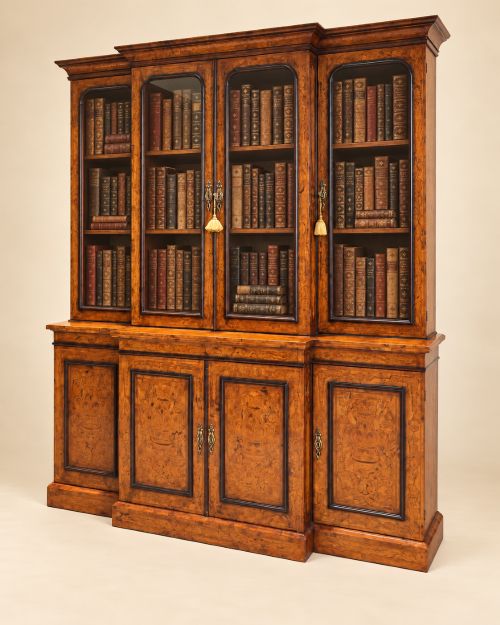
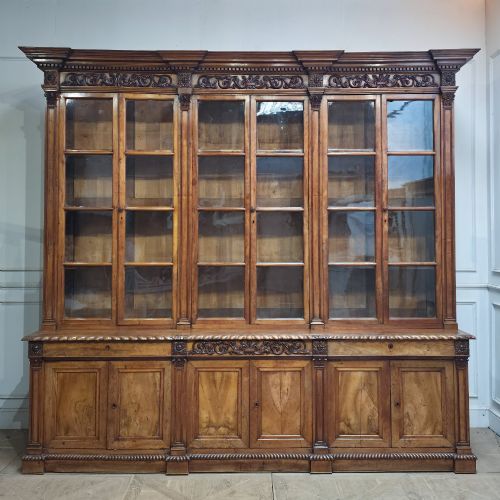
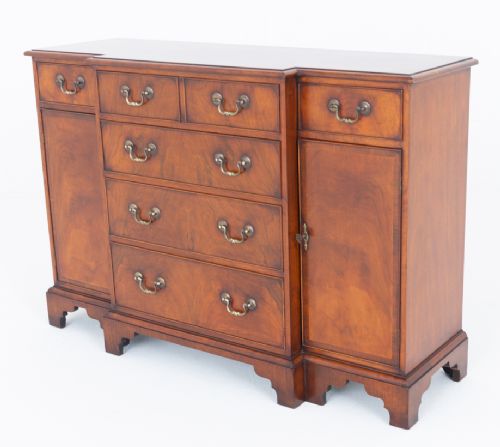
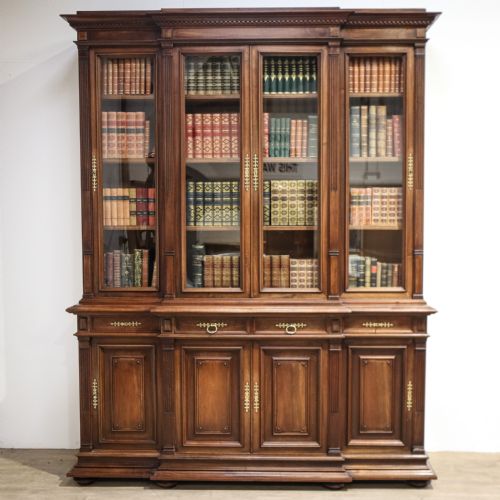
A walnut breakfront cupboard encompasses a grand variety of large storage furniture, most frequently seen here as bookcases, sideboards, and display cabinets. These pieces project outward centrally, creating a distinctive architectural profile that draws the eye in any room.
The selection ranges across the nineteenth century into the early twentieth century, spanning Victorian, Edwardian, and various revival styles such as Georgian, Queen Anne, Gothic, and Italian Baroque. Buyers will regularly encounter glazed bookcases and multi-door sideboards suited for formal libraries or dining rooms.
Origins stretch across Britain, France, Italy, and Northern Europe, reflecting diverse cabinet-making traditions applied to a singular prominent form. Pieces include both expansive library bookcases and refined low sideboards featuring marquetry or intricate hardwood inlay.
How they were made
Cabinet makers utilised solid walnut alongside striking burr walnut veneers to construct these prominent breakfront bodies. The natural grain patterns were carefully matched and balanced across large cabinet doors and drawer fronts.
Metal elements such as brass fixtures, alongside glass panels and occasionally fabric linings, complete the construction of glazed display sections and shelving units. Hardwood inlay and detailed marquetry provide surface ornamentation on select revival pieces.
Some nineteenth-century cabinet makers hid secret compartments behind decorative moulding for storing private documents.
What varies in quality
The choice and execution of timber veneer dictate the visual richness of each piece, distinguishing simple construction from masterwork cabinet-making. Finely figured burr walnut and precise marquetry demand exceptional skill to apply without flaw across expansive cupboard doors.
Architectural proportions and the integration of revival detailing determine the overall design success of the breakfront. Superior examples exhibit harmonious scale between the projecting central section and the recessed wings, paired with robust internal shelving and solid carcase construction.
Maple & Co.
The Walnut Breakfront Cupboard Glossary
- Breakfront
- A piece of furniture with a central section that projects further forward than the flanking sides. This architectural arrangement creates a pronounced shadow line and visual depth.
- Burr walnut
- Wood taken from a tree growth or wart, yielding complex, swirling grain patterns. It is sliced into thin veneers for decorative furniture surfaces.
- Marquetry
- The art of applying pieces of veneer to a structure to form decorative patterns or pictures. It requires immense precision in cutting and fitting various woods.
- Glazed
- Fitted with glass panes, typically seen on the upper doors of bookcases and display cabinets to protect contents while maintaining visibility.
- Revival
- A style of design that consciously mimics or adapts the aesthetic of a previous historical period. Examples include Georgian Revival and Gothic Revival.
Walnut Breakfront Cupboard: Frequently Asked Questions
What is a breakfront cupboard?
A breakfront cupboard is a large storage unit featuring a central section that projects forward from the side sections. This design creates a distinctive stepped profile often utilised for bookcases and sideboards.
Such pieces provide substantial interior capacity while breaking up the visual mass against a wall through architectural depth.
How were these cabinets used?
These large pieces served primarily to store and display valuable books, fine porcelain, and household silver in formal rooms. Glazed upper sections kept dust away from libraries while allowing titles to remain visible.
Lower cupboard doors and drawers concealed dining accessories, linens, and papers, keeping formal entertaining spaces orderly.
How do I live with walnut furniture?
Placing walnut furniture out of direct sunlight preserves the rich natural tones and prevents the timber veneer from fading unevenly. Maintaining stable room humidity protects the wood and prevents warping or veneer lifting.
Regular gentle dusting maintains the polished surface without the need for heavy chemical polishes that build up over time.
How do I tell periods apart?
Victorian and nineteenth-century pieces often lean towards heavy proportions and Gothic or Baroque revival motifs, utilising dark finishes and robust mouldings. Early twentieth-century examples frequently adopt lighter Edwardian styling or cleaner revival lines.
Examining the interior construction methods, hardware types, and secondary timbers helps establish the likely decade of manufacture.