



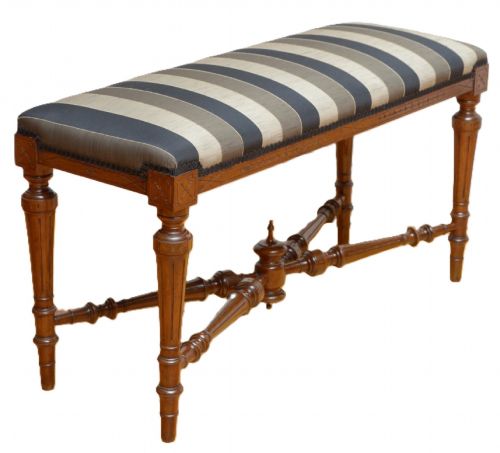


Walnut Bench Stool
A walnut bench stool brings versatile seating and warm timber tones to a room, ranging from compact footrests to grand window seats.
Walnut Bench Stool
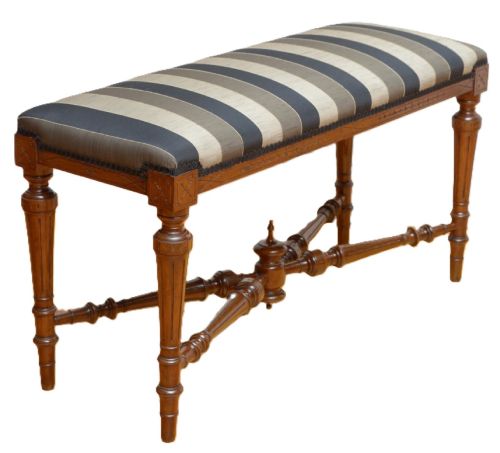
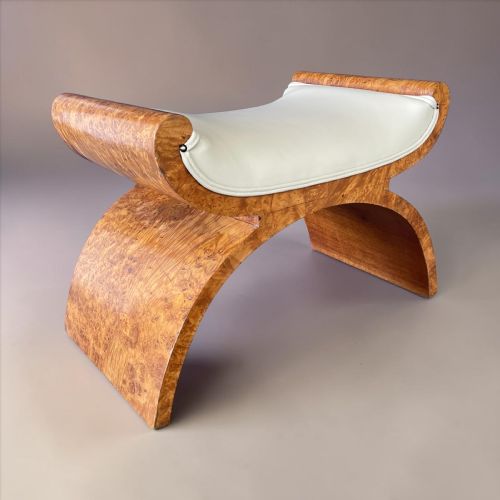
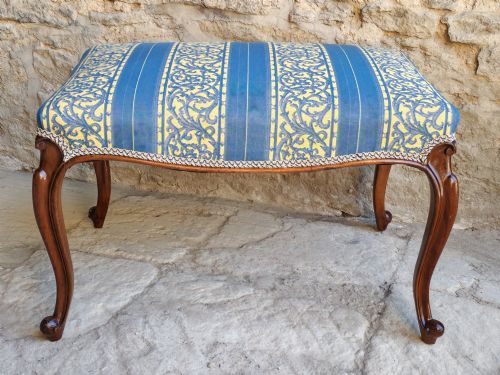
A walnut bench stool spans a broad range of domestic forms, including window seats, dressing table stools, piano stools, footstools, and long hall benches. The pieces you encounter most frequently on this page date from the nineteenth century and the Art Deco period of nineteen thirty, reflecting both Victorian exuberance and later twentieth-century modernist restraint.
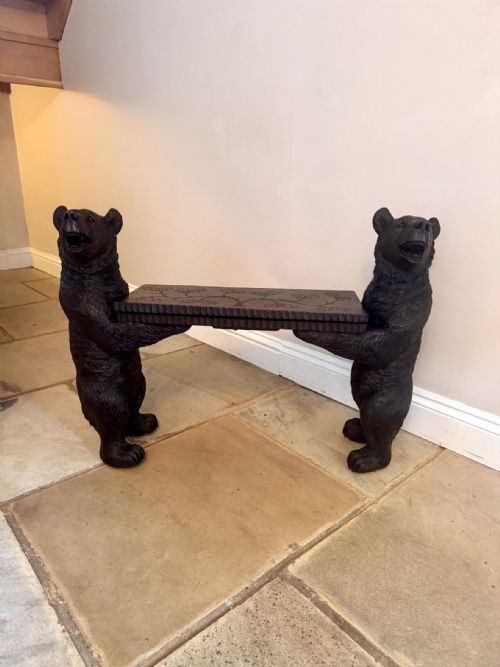
Makers and designers from various traditions shaped these forms, from English firms to continental workshops. You will find distinct stylistic revivals, such as Queen Anne, Renaissance, and Louis XIV styles, alongside simpler nineteenth-century vernacular pieces and Black Forest musical seats.
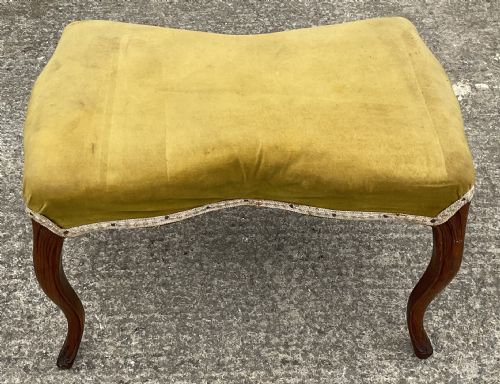
The seating surfaces vary considerably to match the underlying timber frames. Examples feature upholstered pads in velvet, leather, tapestry, needlepoint, and plain fabric, sometimes finished with buttons or new linen covers.
How they were made
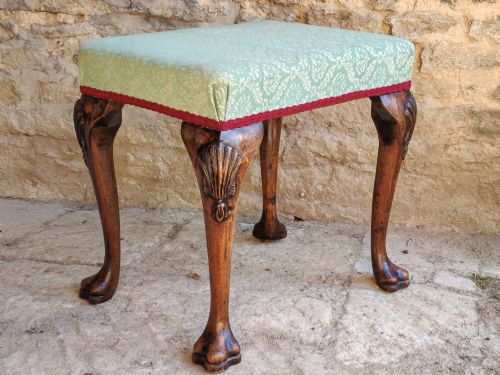
Makers constructed these frames predominantly from walnut and burr walnut, utilising the rich grain patterns and warm hues of the timber. Joinery methods varied from simple pegged frames to elaborate carved structures featuring cabriole legs, twisted rope supports, and claw and ball feet.
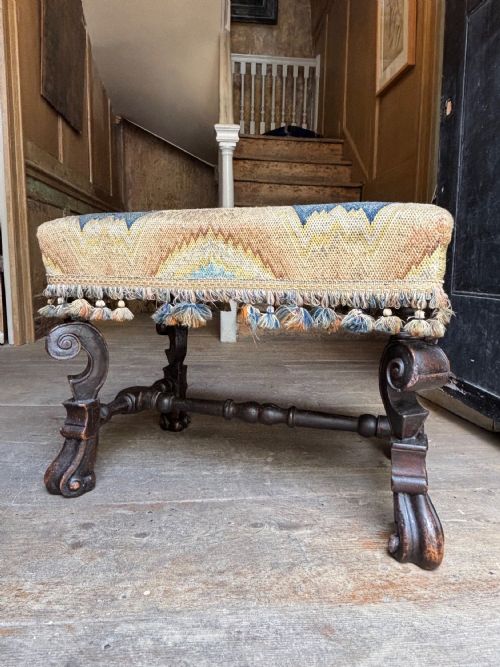
Upholstery techniques matched the period of manufacture, utilising traditional stuffing and webbing beneath textiles like wool tapestry, velvet, and leather. Decorative details often involved hand-carved wood elements, such as hunting dog heads or scrolling baroque foliage.
Walnut Bench Stool Retail Price Guide 2026
Typical asking prices for walnut bench stool among the pieces listed under this phrase on Sellingantiques today, from the lower quarter to the upper quarter. They describe what is for sale here now, not the wider market.
Materials paired with walnut frames across these selections include brass, leather, velvet, tapestry, and needlepoint.
What varies in quality
The distinction between ordinary and exceptional pieces lies in the crispness of the timber carving and the selection of the walnut veneer. Superior examples display deeply articulated details, such as carved animal heads or flowing baroque scrolls, executed with confident hand tools rather than mechanical repetition.
Proportion and structural integrity separate fine examples from simpler utilitarian items. A well-balanced frame with harmonious lines and high-grade upholstery materials elevates the piece, whereas heavier, less refined proportions suggest workshop production of lesser ambition.
Harry and Lou Epstein·Morris and Co
The Walnut Bench Stool Glossary
- Cabriole leg
- A furniture leg that curves outward at the knee and tapers inward toward an ankle and foot, common on eighteenth-century and revival stools. This graceful line mimics animal limbs.
- Burr walnut
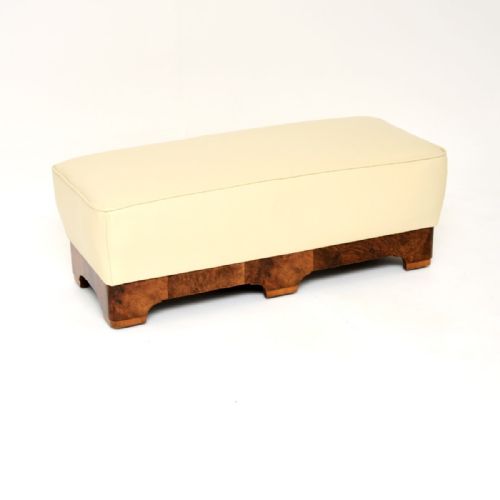
- A specialised timber cut from walnut tree growths, prized for its swirling, mottled grain patterns. It often covers the primary surfaces of Art Deco stools.
- Window seat
- A long, upholstered bench designed to fit into a recessed window alcove. These pieces frequently feature carved wooden frames and end arms.
- Fender stool
- A long, narrow footstool designed to sit in front of a hearth fireplace. They typically possess low profiles and extended rectangular proportions.
- X frame
- A structural furniture base formed by intersecting diagonal timbers creating an X shape. This configuration provides sturdy support and imparts a formal, architectural character.
Walnut Bench Stool: Frequently Asked Questions
Where should I place a walnut bench stool?
These pieces adapt easily to various rooms depending on their specific form and length. Window seats and long benches suit hallways and bedroom alcoves, while smaller footstools or dressing seats fit neatly beside chairs and dressing tables.
Consider the height and upholstery of the piece when choosing its location. Low footstools work well beside firesides, whereas sturdy piano stools or dressing seats provide practical daily seating.
How do I care for walnut timber?
Walnut benefits from occasional polishing with a traditional beeswax to nourish the wood and maintain a soft lustre. Keep the timber away from direct heat sources and strong sunlight to prevent the grain from drying out or fading.
Handle upholstered sections gently, brushing fabrics or leather according to their specific material requirements. Avoid using harsh chemical cleaners on either the wood or the textile coverings.
Can I use these stools for daily seating?
Most walnut stools are structurally robust enough for regular sitting, provided the frame joints remain tight and secure. Dressing stools and hall benches are specifically built to support daily use.
Delicate antique footstools or heavily carved decorative seats require a more considerate approach. Check the underlying stability of the frame before subjecting older pieces to heavy weight.
How do I identify an Art Deco walnut stool?
Art Deco pieces typically display clean geometric lines, smooth curved surfaces, and prominent burr walnut veneers. These mid-twentieth-century designs often eschew heavy carving in favour of sleek, streamlined silhouettes paired with leather or plain fabric.
Look for Makers such as Harry and Lou Epstein, who produced iconic dressing stools during this era. The combination of warm burr veneers and functional storage compartments is characteristic of the style.