


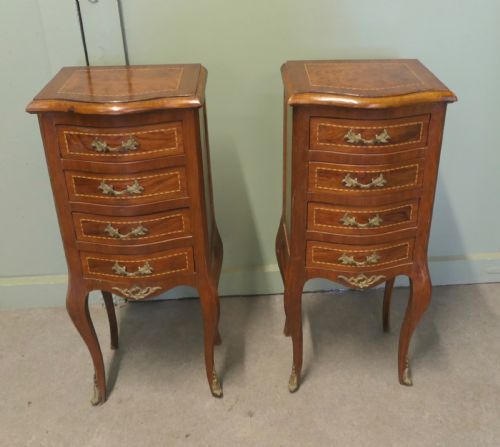
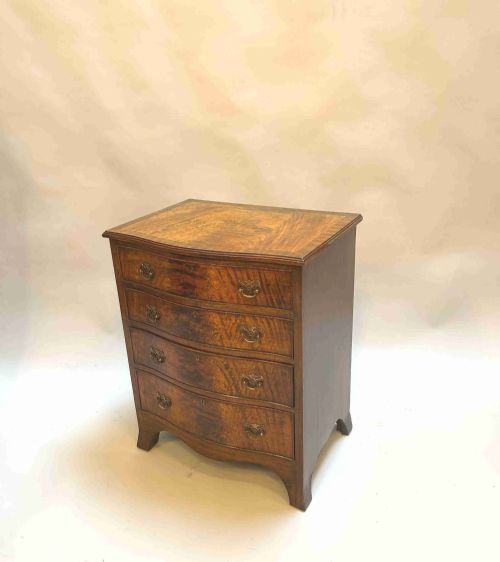
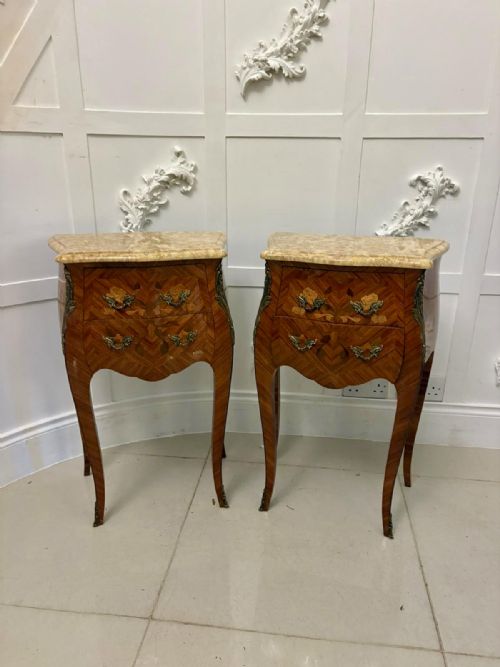
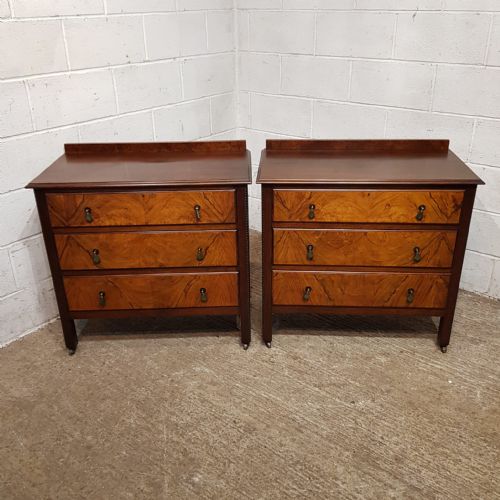
Walnut Bedside Commodes
Walnut bedside commodes bring French and Italian craftsmanship to the bedroom, offering rich wood figures and marble surfaces for practical bedside storage.
Walnut Bedside Commodes
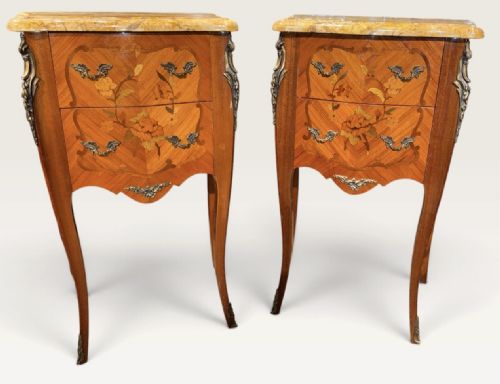
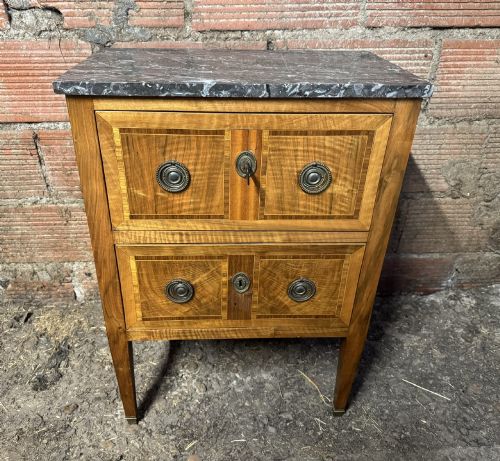
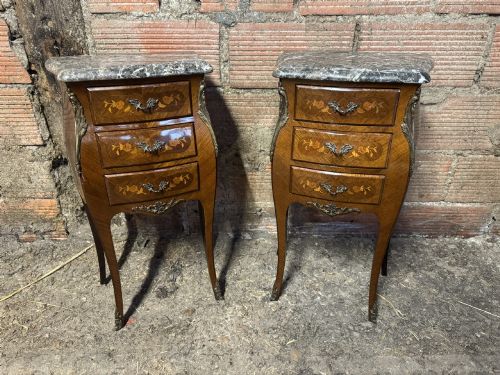
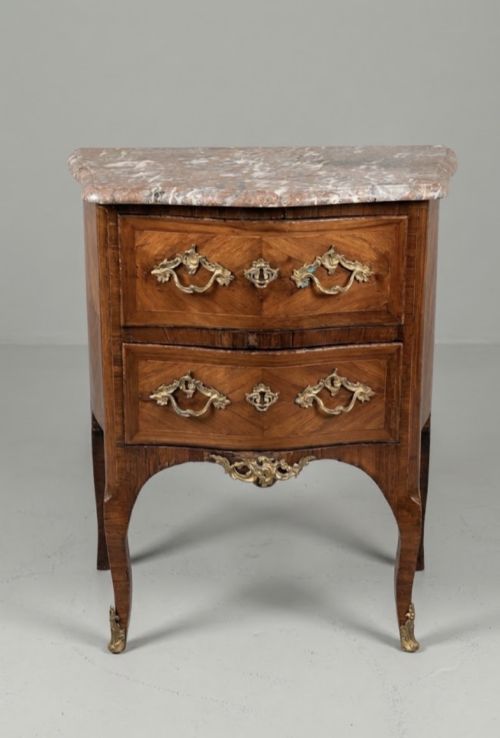
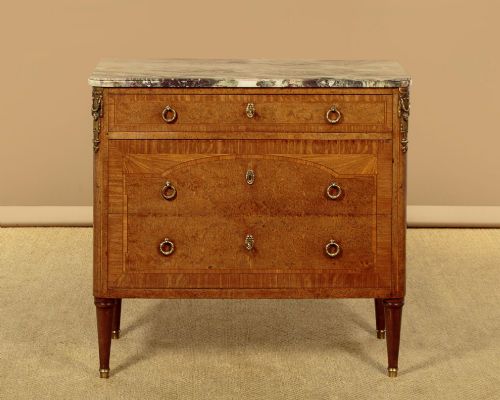
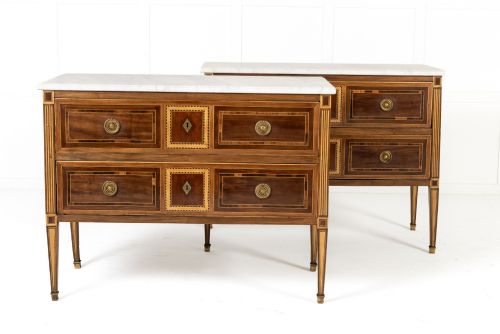
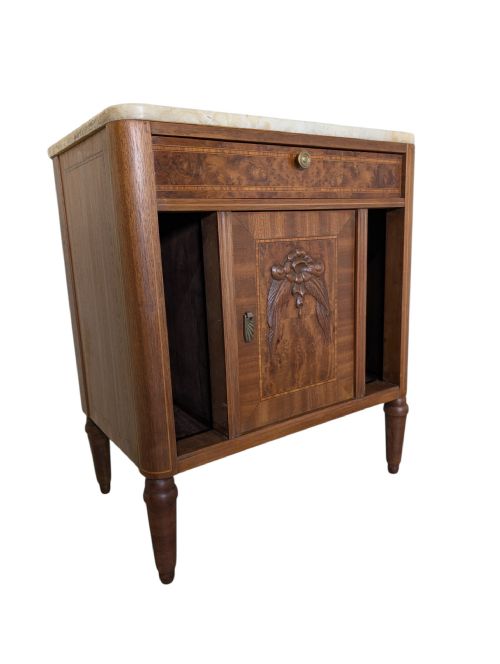
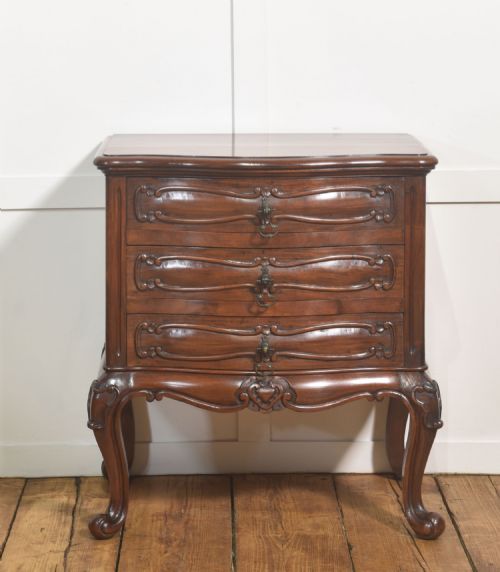
Walnut bedside commodes span the eighteenth, nineteenth and early twentieth centuries, drawing heavily on French Louis XV, Italian Rococo and Georgian revival styles. These pieces function as small chests of drawers, side cabinets and nightstands designed to sit beside a bed.
Origins stretch across French workshops and Italian makers, often incorporating marble tops and metal mounts. The selection ranges from compact bedside tables to larger commodes adapted for modern bedroom use.
How They Were Made
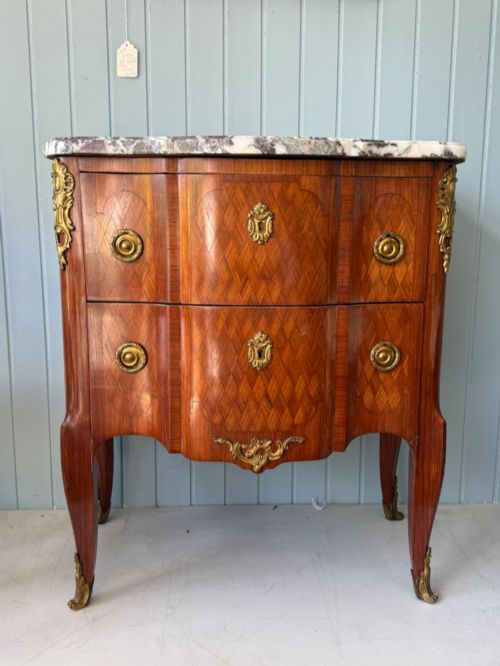
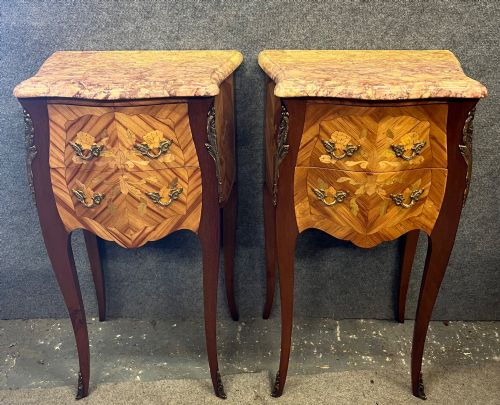
Cabinet makers utilised walnut, burr walnut and kingwood veneers laid over secondary timbers to create patterned surfaces on fronts and sides. Marquetry and parquetry geometric designs frequently accent the woodgrain.
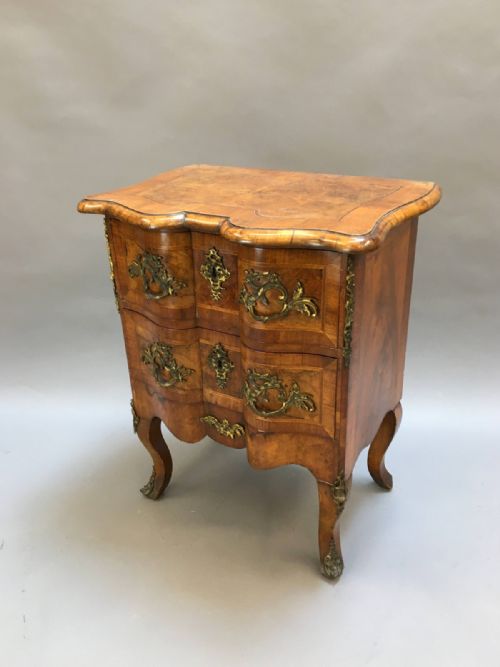
Heavy use of marble tops in white or mottled varieties provides a durable surface, complemented by cast or chased ormolu and gilt bronze mounts. Brass hardware secures drawers and doors on both French and Italian models.
Walnut Bedside Commodes Retail Price Guide 2026
Typical asking prices for walnut bedside commodes among the pieces listed under this phrase on Sellingantiques today, from the lower quarter to the upper quarter. They describe what is for sale here now, not the wider market.
Listings feature walnut, burr walnut and kingwood materials across nineteenth-century and early twentieth-century periods.
What Varies in Quality
Subtlety of wood figure and precision of marquetry inlay distinguish finer examples from standard production. The crispness of ormolu mounts and the thickness of matched marble slabs alter the tactile impression of each piece.
Structural integrity depends on the stability of carcass joints and the smooth operation of drawer runners. The complexity of serpentine or bombe shaping requires skilled joinery that holds firm across centuries.
The Walnut Bedside Commodes Glossary
- Bombe
- A bulging, outward-curving chest or commode shape popular in French and Italian furniture. This swelling profile requires expert veneer work to follow the compound curves.
- Ormolu
- Gilt bronze mounts applied to furniture for decorative accent. These cast metal details highlight corners, aprons and handles.
- Parquetry
- Geometric wood inlay patterns resembling mosaics. Artisans arrange contrasting veneers like walnut and kingwood in precise repeating grids.
- Serpentine
- A wave-like front contour curving convexly in the centre and concavely at the sides. This fluid shape demands careful hand-shaping of solid timber and drawer fronts.
- Marquetry
- Elaborate pictorial or decorative veneer work using various coloured woods. Craftsmen assemble thin slices of burr walnut and fruitwoods to create floral or scroll motifs.
Walnut Bedside Commodes: Frequently Asked Questions
What is a bedside commode?
A bedside commode is a small cabinet or chest of drawers designed to stand beside a bed for storage. Historical examples often incorporate marble tops and enclosed cupboard space.
Today they function as lamp tables and nightstands holding personal items while adding decorative presence to a bedroom.
How do I date an antique commode?
Dating relies on examining construction methods, hardware, wood species and stylistic revival markers. Eighteenth-century models display distinct hand-cut joinery compared to later nineteenth-century adaptations.
Revival pieces from the Victorian and Edwardian eras borrow heavily from Louis XV and Georgian design vocabularies.
Are marble tops original?
Many nineteenth and twentieth-century French and Italian commodes retain their original fitted marble slabs. These stone tops were chosen for durability and water resistance.
Replacement marble appears on some pieces, though edge profiles and thickness usually correspond to the period of the wooden carcass.
How do I care for walnut veneer?
Walnut veneer requires protection from direct sunlight and excessive humidity to prevent fading and lifting. Regular dusting with a dry cloth keeps the polished surface stable.
Avoid silicone polishes and harsh cleaners, opting instead for traditional beeswax applied sparingly by hand.