



Walnut Bar Cupboard
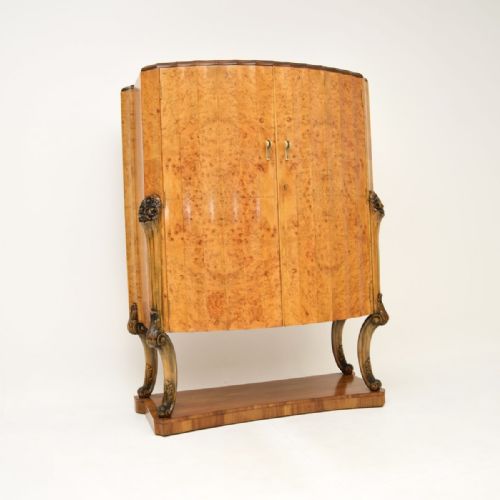
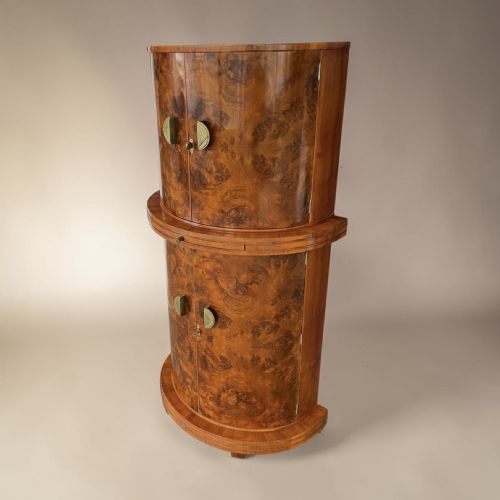
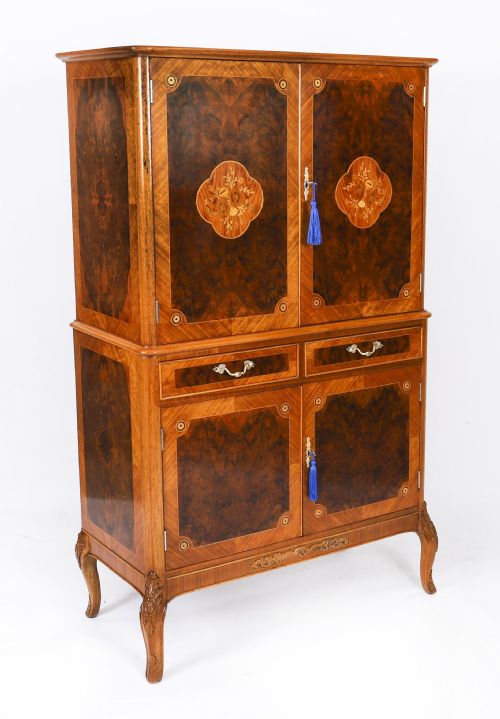
These walnut bar cupboard options bring striking grain patterns and period charm to any room, offering serious presence for entertaining.
Walnut Bar Cupboard
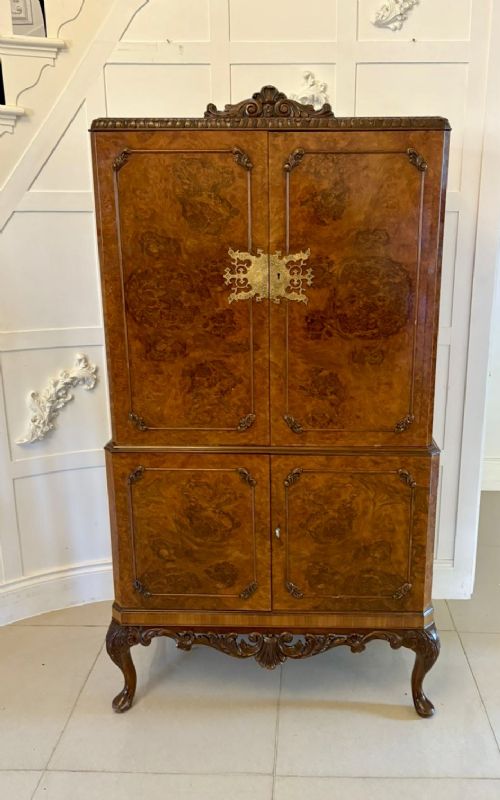
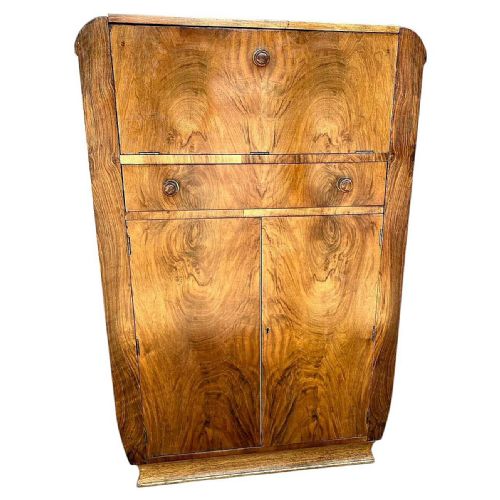
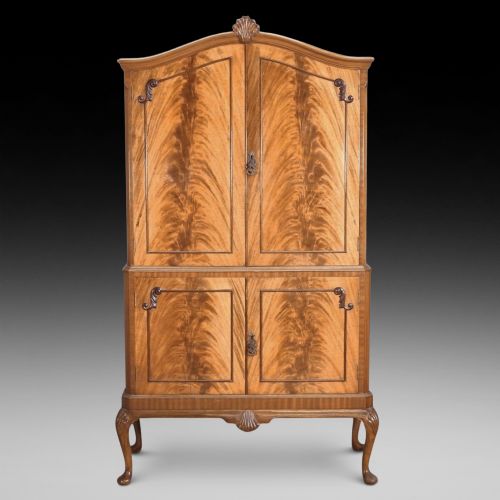
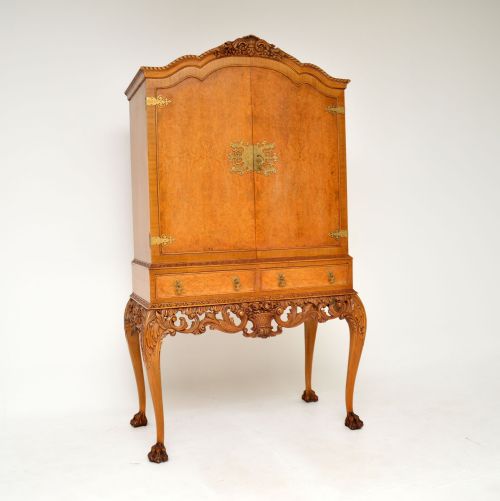
A walnut bar cupboard search reveals pieces designed primarily to house bottles, glassware and mixing equipment for home entertaining. The vast majority of these items date from the Art Deco period of the 1930s or the 1920s, alongside examples in Victorian, Georgian Revival and Queen Anne styles.
Most variations take the form of dedicated cocktail cabinets, drinks cabinets or dry bars, though occasional bookcase or corner formats also appear. These functional storage units combine drop-front serving surfaces with internal glass shelving, mirror panels and dedicated bottle compartments.
The selection ranges from restrained geometric Art Deco carcases to more ornate revival styles featuring marquetry inlay and bow fronts. Buyers select these statement furnishings to anchor a dining room or living space with period character and practical serving capability.
Materials and construction methods
Cabinet makers utilised solid wood frames finished with decorative timber veneers, most notably burr walnut, flame walnut and standard walnut. These figured veneers were carefully matched and laid across the exterior doors and drop-fronts to create symmetrical patterns and visual depth.
Interiors frequently incorporate mirror glass backings, glass shelves and polished wood working surfaces designed to resist spills during drinks preparation. Brass hardware, such as hinges, handles and locks, provides functional contrast against the dark, polished grain of the timber.
Distinctions in quality and finish
The standard of timber selection and veneer matching defines the visual impact of each piece, with dense burr walnut and intricate marquetry inlay sitting at the higher end. The precision of the joinery around curved fronts, such as double bow or serpentine shapes, further separates standard production items from finer workshop pieces.
Internal outfitting also reveals differences in execution, distinguishing basic wooden shelving from mirrored interiors with integrated lighting or specialised glassware racks. The integration of maker attributions or stamps provides additional confirmation of workshop provenance.
Epstein·Hille·Harry and Lou Epstein·Waring and Gillow
The Walnut Bar Cupboard Glossary
- Burr walnut
- A prized timber harvested from the irregular growth knots of the walnut tree. It yields highly figured, swirling grain patterns heavily utilised on cabinet doors.
- Marquetry
- The art of applying small pieces of veneer to a structure to form decorative patterns. Artisans use varied timber tones to create elaborate surface designs.
- Art Deco
- A design movement prevalent in the 1920s and 1930s. It prioritises streamlined geometric forms, symmetry and luxurious materials.
- Veneer
- A thin slice of superior wood applied over a more stable secondary wood base. This technique allows makers to display striking grain without warping solid timber.
- Drop-front
- A hinged panel that folds down horizontally to create a temporary serving shelf. It conceals cocktail preparation areas when closed.
Walnut Bar Cupboard: Frequently Asked Questions
How do I date a walnut bar cupboard?
Most examples originate from the 1920s or 1930s, characterised by Art Deco geometric lines or various revival styles. Cabinet feet, handle designs and internal construction methods help pinpoint the exact era of manufacture.
Revival pieces often borrow heavily from Queen Anne or Georgian design motifs, whereas 1930s pieces lean towards clean, symmetrical waterfall edges and bold burr veneers.
How do I care for burr walnut veneer?
Protect the polished wooden surfaces by keeping cabinets away from direct sunlight and sudden temperature changes. This prevents the delicate walnut veneers from drying out or splitting over time.
Dust regularly with a soft, dry cloth and avoid harsh chemical cleaners that can damage the antique polish. Occasional application of suitable wax helps maintain the lustre of the grain.
Are these cabinets suitable for modern living rooms?
Their compact storage capacity makes them practical statement pieces for contemporary living spaces and dining rooms. They serve their original function as home bars while adding distinct architectural character.
The striking grain patterns allow these items to blend easily with both traditional interiors and modern minimalist decor schemes.