

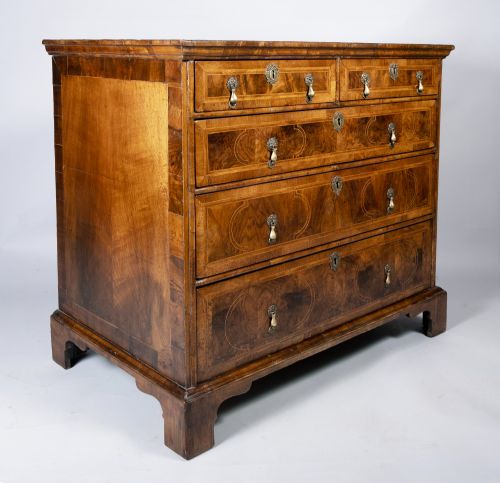
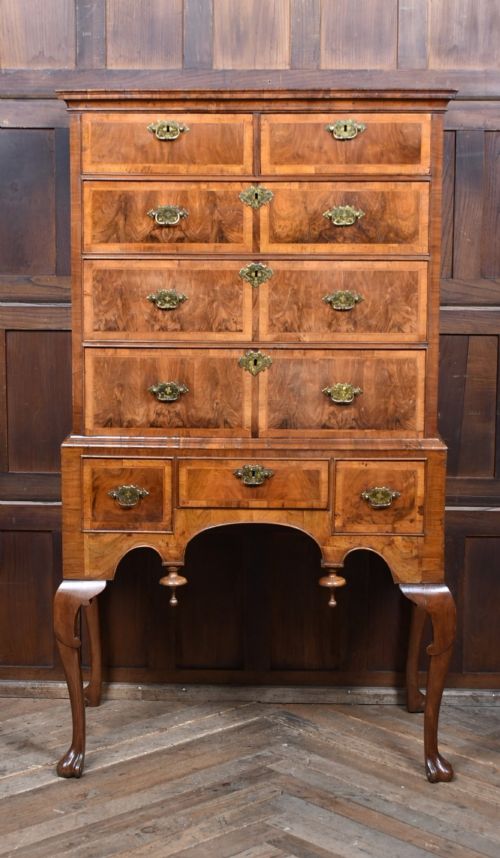


Walnut Banded Cabinet
A walnut banded cabinet brings rich grain and crisp linear detail to a room, offering both generous storage and striking period presence.
Walnut Banded Cabinet
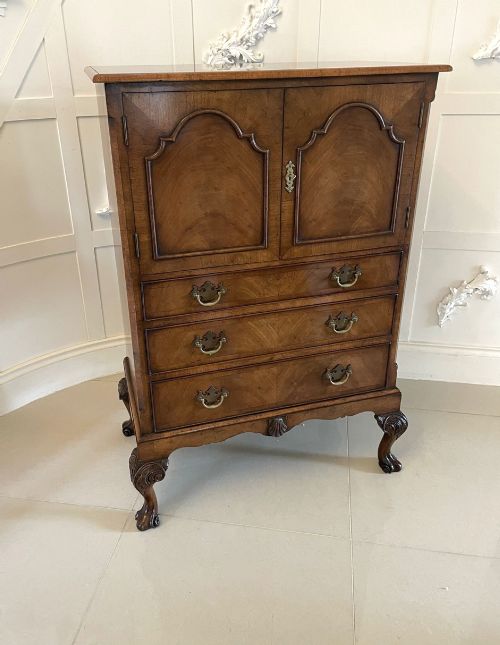
A walnut banded cabinet encompasses a diverse range of case furniture built to display or conceal belongings, defined primarily by contrasting timber banding around the edges of doors, drawers, or tops. You will encounter forms spanning compact pier cabinets, tall chests on stands, and elegant corner cupboards.
The pieces appearing here stretch from the early eighteenth century through the Georgian and Victorian eras up to the nineteen-thirties. Eighteenth-century examples frequently showcase burr walnut or feather banding, whereas later nineteenth and twentieth-century interpretations lean towards cross-banding in kingwood or tulipwood.
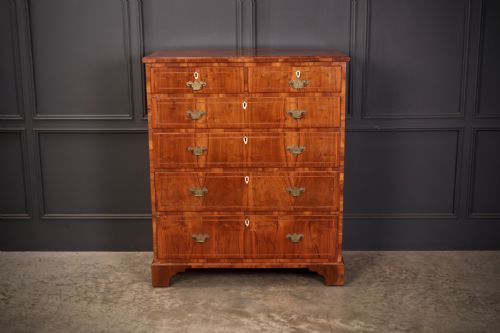
Chest variants and writing pieces like bureaux dominate the selection, bringing functional compartmentalised storage alongside decorative surfaces. Each form uses the pale-to-dark tones of walnut to create a focal point in a traditional interior.
How they were made
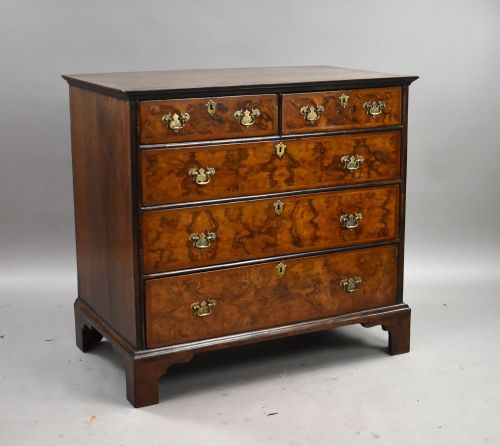
Cabinet makers constructed the primary carcases from stable secondary timbers like oak before applying carefully sliced veneers of figured walnut, burr walnut, or birds-eye maple to the visible exterior surfaces. This technique allowed craftsmen to display dramatic swirling grain patterns that solid timber could not reliably sustain without warping.
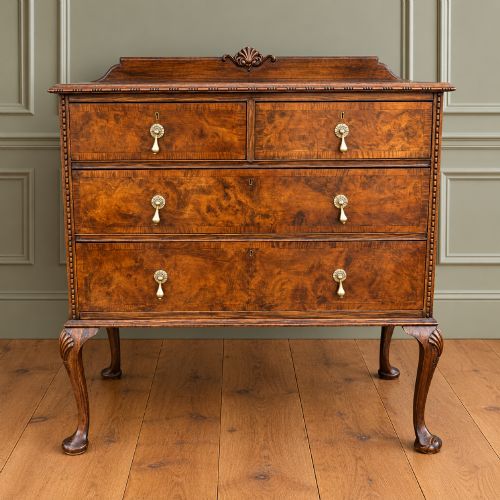
Banding, cross-banding, and feather banding were meticulously inlaid around drawer perimeters and door edges, often bordered by delicate herringbone stringing in contrasting light and dark woods. Ormolu mounts, brass handles, and bone escutcheons were then added to secure and ornament the structure.
Walnut Banded Cabinet Retail Price Guide 2026
Typical asking prices for walnut banded cabinet among the pieces listed under this phrase on Sellingantiques today, from the lower quarter to the upper quarter. They describe what is for sale here now, not the wider market.
Listings feature walnut combined with brass, glass, ormolu, velvet, and bone across periods from the eighteenth century to nineteen-thirty.
What varies in quality
Quality rests heavily on the selection and matching of the veneer figures across the front facades, with symmetrical book-matched burr walnut commanding higher regard. The precision of the inlay work and the subtlety of the feather banding also separate standard workshop output from exceptional cabinet-making.
Proportions dictate the standing of a piece, as smaller scaled items or those retaining their original stands and mounts hold greater architectural harmony. The condition of the secondary timbers and the retention of period brassware further distinguish superior examples.
The Walnut Banded Cabinet Glossary
- Feather banding
- A delicate decorative border formed by cutting veneers diagonally and arranging them in a herringbone V-shape pattern. It typically frames the drawer fronts of Georgian case furniture.
- Cross-banding
- A technique where veneer is laid with its grain running perpendicular to the length of the moulding or panel it edges. This creates a contrasting border effect around a central panel.
- Burr walnut
- Timber taken from the gnarled growths on walnut trees, yielding highly figured, swirling grain patterns. Cabinet makers prized it for surface panels on elite furniture.
- Escutcheon
- A protective plate surrounding a keyhole, often fashioned from brass, bone, or ivory. It prevents the surrounding wood from wearing down through repeated use.
- Lowboy
- A small low dressing table or side table featuring drawers and cabriole legs. They date predominantly from the early eighteenth century onwards.
Walnut Banded Cabinet: Frequently Asked Questions
What is a walnut banded cabinet?
A walnut banded cabinet is a piece of storage furniture finished with decorative timber veneers and contrasting edge banding around the doors or drawers. These items range from small pier cabinets to tall chests.
They combine practical storage with decorative woodwork, utilising natural grain patterns to create visual depth on flat surfaces.
How do I date a walnut cabinet?
Dating relies on examining construction methods, timber choices, hardware, and overall proportions. Eighteenth-century pieces often feature feather banding and oak linings, while Victorian versions incorporate tulipwood and ormolu.
Secondary woods and the style of the feet or stands also provide clear indicators of the period of manufacture.
Where should I place a pier cabinet?
A pier cabinet fits well against narrow wall spaces between windows or doors, historically designed to display ornaments. Their shallow depth makes them suitable for smaller reception rooms.
Keep them away from direct sunlight and strong heat sources to protect the delicate walnut veneer and inlay.
How do I care for walnut veneer?
Maintain walnut veneer by dusting gently with a soft cloth and avoiding moisture or silicone-based polishes. Maintaining stable room humidity prevents the veneer from lifting or cracking over time.
Occasional application of appropriate wax helps preserve the sheen and nourishment of the antique timber surface.