

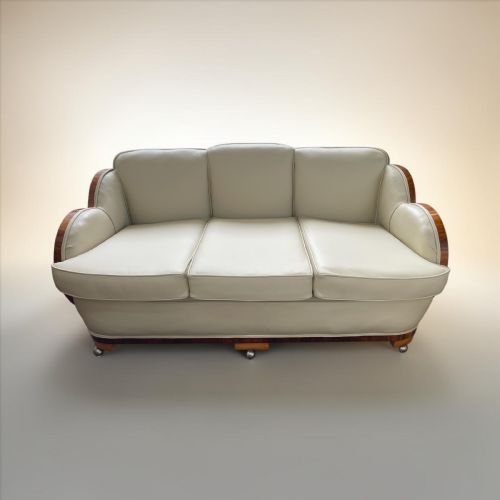


Walnut Art Deco Sofa
A walnut art deco sofa brings striking geometric lines and rich timber figuring into a modern interior.
Walnut Art Deco Sofa
A walnut art deco sofa represents the distinctive design movements of the 1920s and 1930s, typically appearing as part of a three-piece suite or as an individual lounge piece. These pieces combine substantial timber frames with low, sweeping silhouettes characteristic of the period.
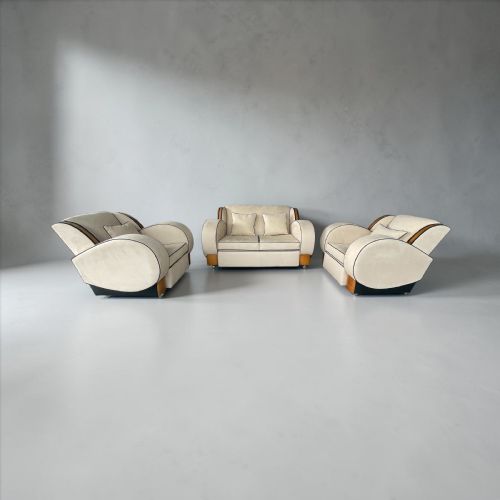
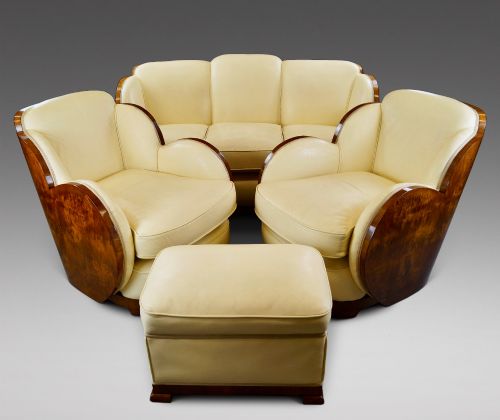
The versions most commonly met on this page span the 1920s to 1930, featuring distinctive cloud-shaped profiles or clean architectural lines. Many examples are paired with matching armchairs or integrated into broader lounge suites.
Constructed primarily during the interwar years, these seating options range from English cloud suites to French high-end designs. They serve as central statement items for contemporary living spaces.
How they were made
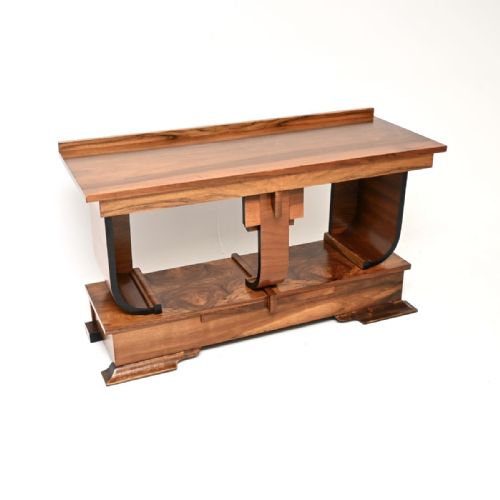
Cabinet makers utilised solid timber frames overlaid with carefully selected walnut and burr walnut veneers to create striking grain patterns across the front panels and armrests. Ebonised wood details frequently provide sharp contrast against the warm brown tones of the primary timber.
Upholstery techniques of the era involved durable leather or woven textiles stretched over sprung seats and padded backs. Frame construction prioritised generous proportions and ergonomic curves, particularly evident in the distinctive cloud-shaped backs.
Listings demonstrate a strong presence of 1930s design, utilising walnut, burr walnut, and leather across lounge suites and occasional tables.
What varies in quality
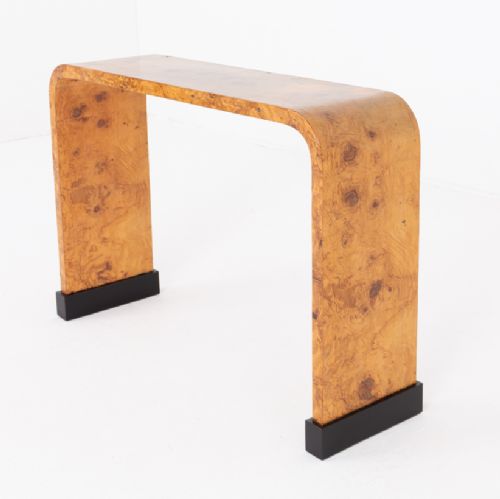
The distinction between standard production and top-tier examples lies in the selection and bookmatching of the veneer figures. Highly figured burr walnut displays complex, swirling grain patterns that require immense skill to apply symmetrically across curved surfaces.
Maker attribution and framing integrity further separate the ranges, with recognised workshops delivering superior joinery and refined proportions. The depth of the timber finishing and the original integration of leather or secondary materials dictate the overall standing of each piece.
Hille·Epstein·Harry and Lou Epstein·Gilbert Rohde
The Walnut Art Deco Sofa Glossary
- Burr Walnut
- Timber harvested from a tree growth that produces intricate, swirling grain patterns. This highly decorative wood is sliced into thin veneers for prominent display on cabinet fronts and sofa frames.
- Cloud Suite
- A distinct style of lounge seating characterised by rounded, bulbous upholstery forms resembling cumulus clouds. These sets typically comprise a three-seater sofa and matching armchairs.
- Veneer
- A thin layer of superior wood applied over a secondary timber base to create a decorative surface without structural compromise. Master craftsmen arrange these sheets to create symmetrical patterns.
- Ebonised Wood
- Timber treated with a chemical stain or finish to imitate ebony, producing a deep black surface. It serves as a contrasting trim on walnut furniture.
- Bergere
- A type of enclosed upholstered armchair or sofa featuring woven cane panels on the sides or back. This French-derived seating style occasionally crosses over into interwar designs.
Walnut Art Deco Sofa: Frequently Asked Questions
How do I identify burr walnut?
Burr walnut is recognised by its dense, swirling grain patterns and knot clusters, which create a natural mosaic effect across the timber surface. It was extensively used as a veneer on high-end furniture of the period.
Cabinet makers carefully matched these grain patterns across panels to achieve visual symmetry.
Where were these sofas made?
These pieces originated primarily in England and France during the interwar decades. British workshops produced robust cloud suites and occasional tables, while French makers focused on high-end console designs and refined veneers.
International designers also contributed distinct silhouettes to the period.
How do I care for walnut veneer?
Walnut veneer requires protection from direct sunlight and excessive moisture to prevent the thin timber layer from drying or lifting. Regular dusting with a soft, dry cloth preserves the natural lustre of the finish.
Avoiding harsh chemical polishes ensures the historical patina remains intact.