

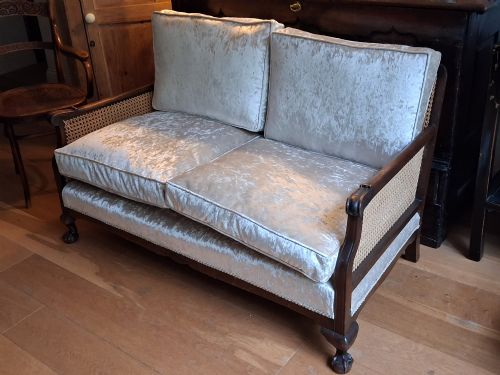
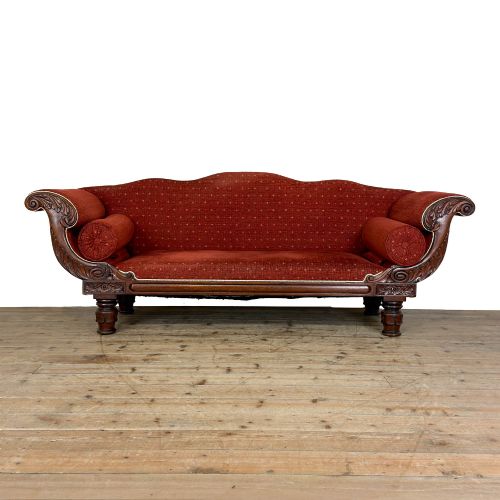
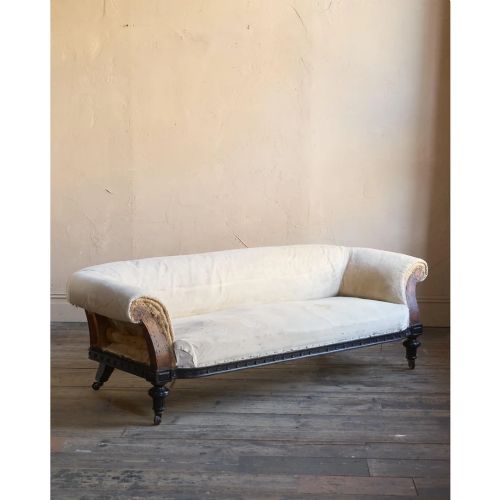

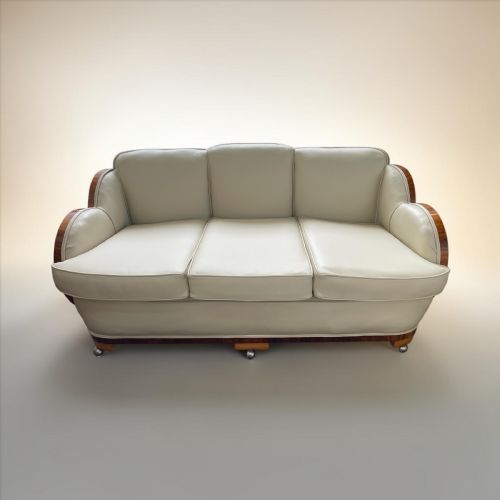


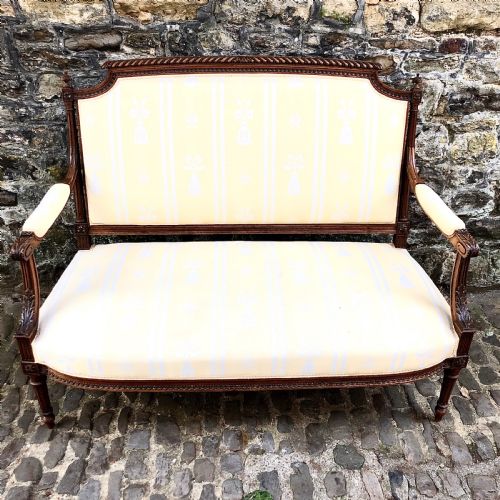


Walnut Arm Settee
These walnut arm settee pieces bring warmth and refined seating to a room, uniting rich timber frames with soft upholstery.
Walnut Arm Settee
A walnut arm settee combines a sturdy wooden framework with comfortable seating designed for multiple occupants. The selection encompasses various eras, ranging from mid-nineteenth-century examples up to pieces from the 1930s.
Buyers encounter distinct design influences across the inventory, including Victorian, Edwardian, George II style, French Rococo Revival, and Art Deco. Forms span two-seater and three-seater sofas, salon settees, and open arm variants.
The materials recorded in the listings heavily feature walnut and burr walnut, frequently paired with fabric, velvet, and upholstery fabric. Wooden frames are occasionally accented with brass or paired with secondary timbers like mahogany.
Materials and construction
Makers shaped structural elements from solid walnut and decorative burr walnut veneers, sometimes supporting the framework on turned walnut legs. Detail work involved intricate wood carving on open arms and framing.
Upholstery techniques incorporated traditional fabric and velvet coverings over sprung or padded seats. Additional detailing included cane work panels on specific French-inspired seating designs.
Walnut Arm Settee Retail Price Guide 2026
Typical asking prices for walnut arm settee among the pieces listed under this phrase on Sellingantiques today, from the lower quarter to the upper quarter. They describe what is for sale here now, not the wider market.
Listings feature walnut and burr walnut frameworks paired with velvet, fabric, and cane work across the Victorian and Art Deco periods.
Assessing quality in walnut settees
Superior examples demonstrate refined carving on the walnut framework and the careful selection of figured burr walnut veneers. The integration of the wooden structure with the upholstered components determines the overall elegance of the piece.
Finer items often bear the hallmarks of renowned workshops or distinct regional styles, such as French provincial or English Howard designs. The precision of the joinery and the condition of exposed wooden elements set exceptional pieces apart from standard seating.
Harry and Lou Epstein·Howard and Sons
The Walnut Arm Settee Glossary
- Burr walnut
- A figured wood veneer taken from the warted growths on walnut trees, prized for its swirling grain patterns. It adds distinct visual texture to the frame of a settee.
- Bergère
- An enclosed upholstered armchair or sofa with wooden framing and cane side panels. This French seating style often incorporates exposed polished wood.
- Chesterfield
- A large upholstered sofa traditionally featuring deep buttoning and rolled arms of the same height. This form appears across nineteenth-century variations.
- Salon settee
- An elegant upholstered seat intended for formal reception rooms. These pieces often showcase decorative carved wooden frames from the Victorian era.
- George II style
- A revival aesthetic drawing on eighteenth-century British design principles. Pieces in this style typically feature shaped walnut framing and cabriole legs.
Walnut Arm Settee: Frequently Asked Questions
How do I date a walnut settee?
Dating relies on examining the combination of stylistic cues, framing details, and upholstery methods present in the piece. Victorians favoured heavy upholstery and dark carved woods, whereas later twentieth-century pieces embraced streamlined Art Deco or simpler modernist lines.
Changes in leg turning, wood finishing, and structural joinery also help determine whether a settee originates from the mid-nineteenth century or the 1930s.
What is the difference between a settee and a sofa?
Historically, a settee referred to a long wooden or upholstered seat designed for multiple people, often with an enclosed back and arms. A sofa traditionally implied a fully upholstered piece intended for reclining.
In modern usage across antique inventories, these terms frequently overlap and describe similar two- or three-seater upholstered furniture.
How do I care for walnut wood frames?
Maintain polished walnut frames by dusting them regularly with a soft, dry cloth to prevent grit accumulation. Avoid placing antique wooden furniture in direct sunlight or near heat sources to protect the timber and veneers.
Occasional application of appropriate wax polish helps nourish the grain without leaving a heavy buildup.
Where should I place a settee in a room?
A settee works well positioned against a principal living room wall or floating as part of a conversation grouping. Smaller salon settees and window seats fit neatly into bedrooms, hallways, or bay windows.
Ensure there is enough surrounding floor space to appreciate the carved walnut arms and decorative woodwork of the frame.