

Wall Mounted Coat Hanger
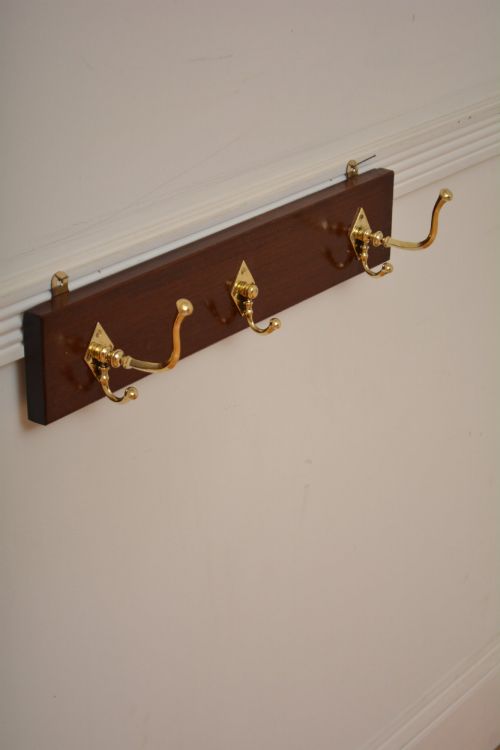
A wall mounted coat hanger brings solid wood and cast brass into hallways, keeping heavy coats and hats neatly off the floor.
Wall Mounted Coat Hanger
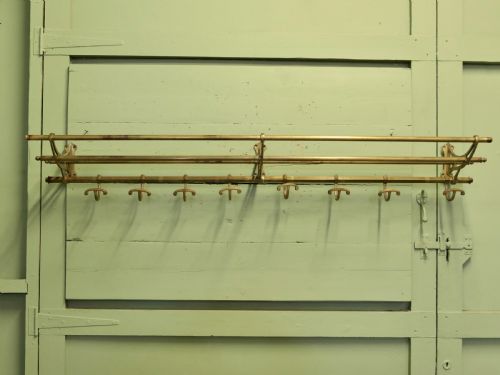
A wall mounted coat hanger provides a practical storage solution for entryways, utilising sturdy backboards mounted directly to vertical surfaces. These items range from simple rows of hooks to substantial racks incorporating hat shelves and mirrors.
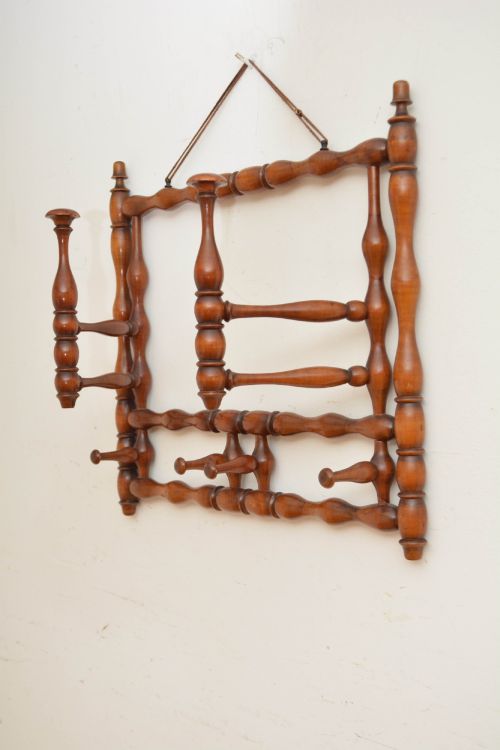
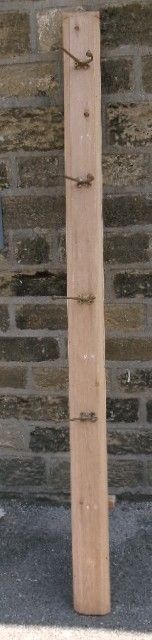
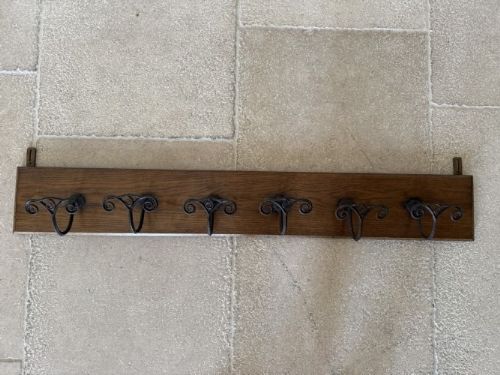
The pieces appearing on this page span the Victorian and Edwardian eras alongside early twentieth-century examples. Oak, mahogany, pine, and turned wood form the primary backboards supporting brass, iron, or ceramic hooks.
Continental and British workshops produced these functional household items in various styles, including French country, Art Deco, and rustic country house designs. Buyers frequently encounter combinations of polished timber and cast metalwork suited for daily use.
Materials and construction methods
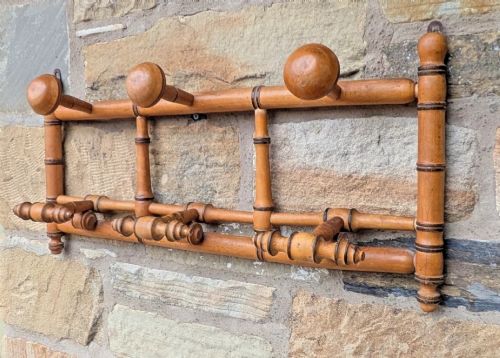
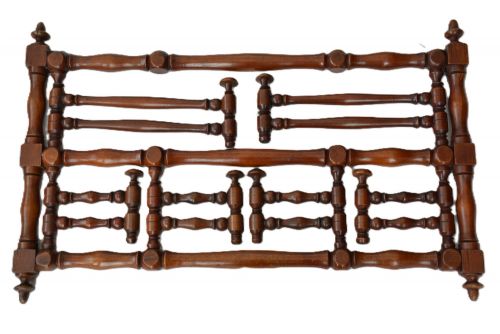
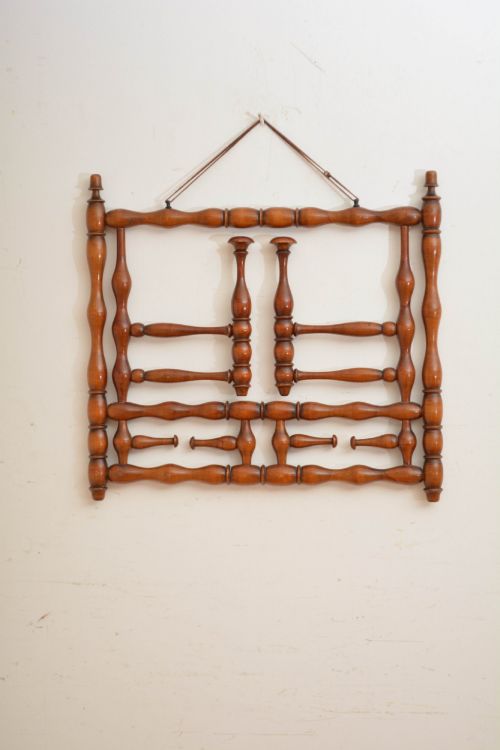
Cabinetmakers and metalworkers utilised dense hardwoods such as oak and mahogany alongside softer pine for the supporting backboards, occasionally applying ebonised finishes. Turned wood elements and faux bamboo styling demonstrate the decorative woodworking techniques common to the period.
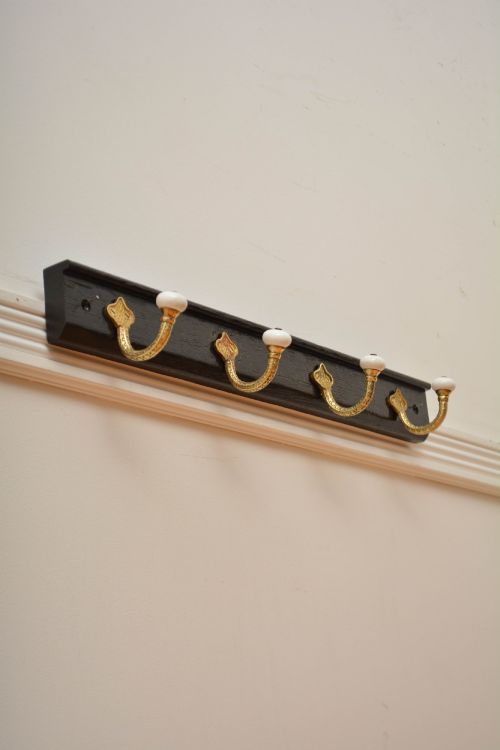
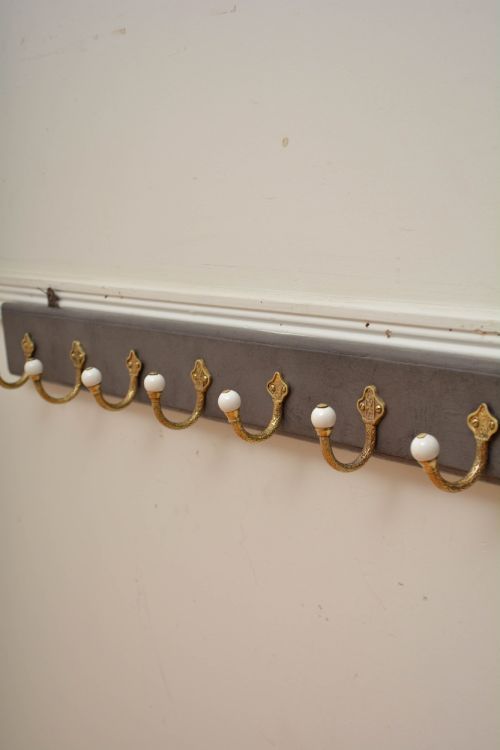
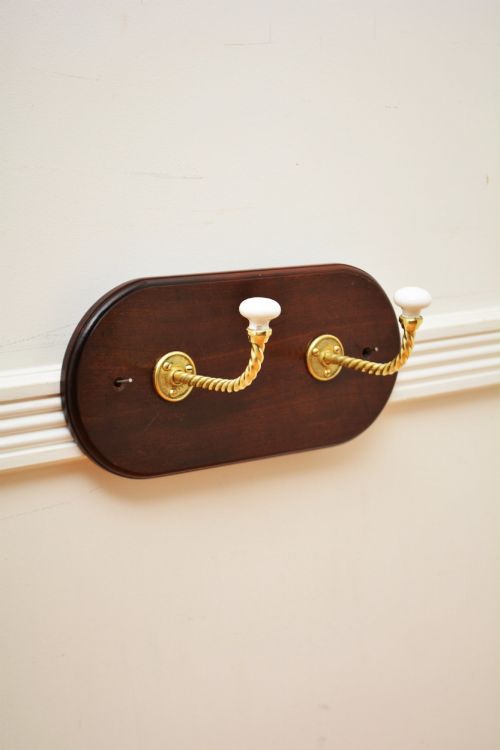
Functional hardware relied on cast brass, bronze, and iron for durability, often paired with ceramic hook inserts or porcelain tips. Screws and mounting plates secured the hooks firmly to the wooden backing boards to withstand heavy daily loads.
Wall Mounted Coat Hanger Retail Price Guide 2026
Typical asking prices for wall mounted coat hanger among the pieces listed under this phrase on Sellingantiques today, from the lower quarter to the upper quarter. They describe what is for sale here now, not the wider market.
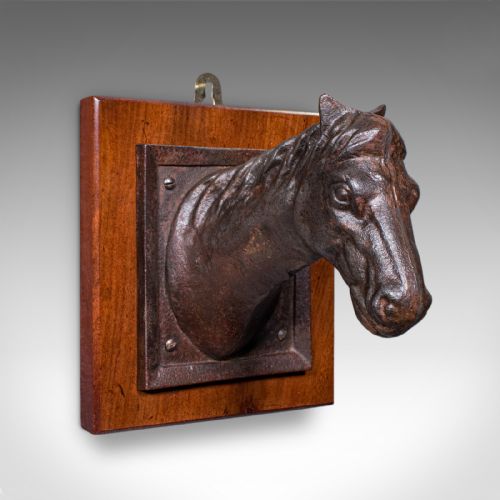
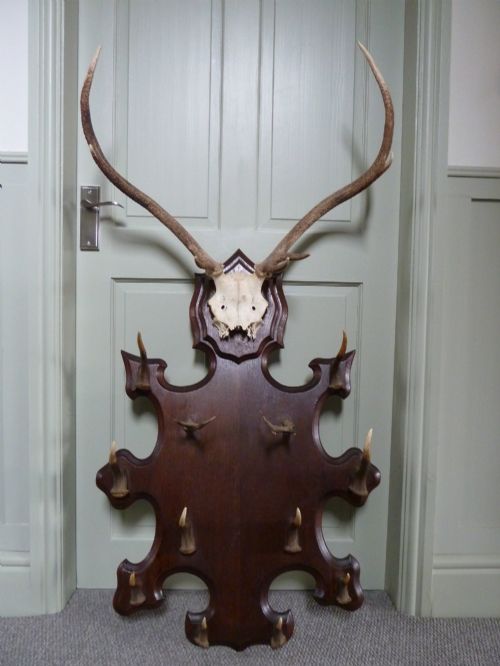
Stags' antlers and taxidermy mounts served as practical hallway hangers in nineteenth-century country houses.
Distinctions in quality and finish
The integrity of the timber backboard sets superior examples apart, particularly where figured mahogany or quarter-sawn oak displays clean joinery and original mounting points. Substantial weight in the metal hardware indicates robust casting rather than lighter stamped production.
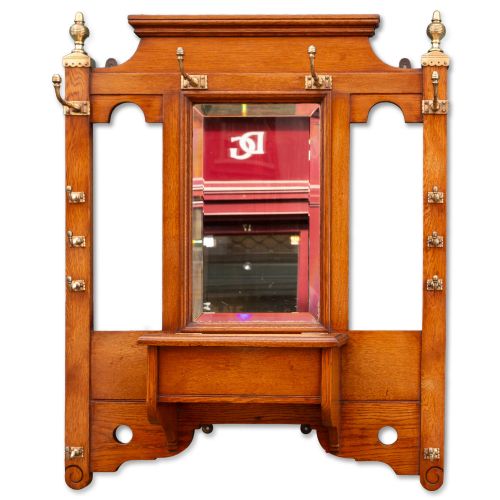
Finishing details reveal the maker's hand, from finely turned wooden pegs to carefully moulded brass plates and intact ceramic components. The survival of original mirror plates and integrated hat shelves further elevates the standing of individual pieces.
The Wall Mounted Coat Hanger Glossary
- Backboard
- The horizontal plank of wood that carries the hooks and secures the assembly to the wall. This timber element provides structural rigidity and protects the wall surface from wear.
- Ebonised
- Wood treated with a dark stain or finish to imitate ebony. This technique was popular in Victorian design for creating high-contrast decorative effects.
- Faux bamboo
- Wood turned or carved to resemble natural bamboo stems. This decorative style appeared frequently in late nineteenth and early twentieth-century French furnishings.
- Portmanteau
- A combined hall stand or wall rack featuring hooks, a hat shelf, and frequently an integrated mirror. These multifunctional pieces served as central fixtures in period entrance halls.
Wall Mounted Coat Hanger: Frequently Asked Questions
How do I secure a heavy wooden coat rack to the wall?
Heavy racks require sturdy fixings driven directly into wall studs or solid masonry using appropriate wall plugs. The mounting holes pre-drilled in the backboard dictate the correct spacing for weight distribution.
Ensuring the screws match the depth and gauge of the original fixing points prevents movement when heavy winter coats hang from the hooks.
Can these antique racks support heavy winter coats?
Solid wood backboards screwed securely into wall supports handle heavy garments with ease. Period brass and iron hooks possess considerable tensile strength built for everyday Victorian and Edwardian household use.
Checking that the individual hook screws remain tight inside the wood ensures the rack maintains its load-bearing capacity over time.
How do I clean polished brass and wood safely?
Dust timber backboards regularly with a dry cloth and nourish the wood periodically with appropriate beeswax. Avoid harsh chemical cleaners that strip the historic patina from the polished surfaces.
Clean brass and bronze components gently with a soft cloth, taking care not to let abrasive polishes touch surrounding wood or ceramic inserts.
What distinguishes Edwardian coat racks from Victorian ones?
Victorian pieces often feature darker ebonised woods, heavy cast brass, and ornate ceramic elements reflecting robust interior aesthetics. Edwardian designs frequently display lighter golden oak or simplified profiles suited to brighter hallways.
Both periods prioritise functional durability, though the decorative motifs on the mounting plates and hooks shift subtly across the turn of the century.