



Wall Hanging Trade Sign
A wall hanging trade sign carries the history of old commerce straight into your room with real presence and character.
Wall Hanging Trade Sign
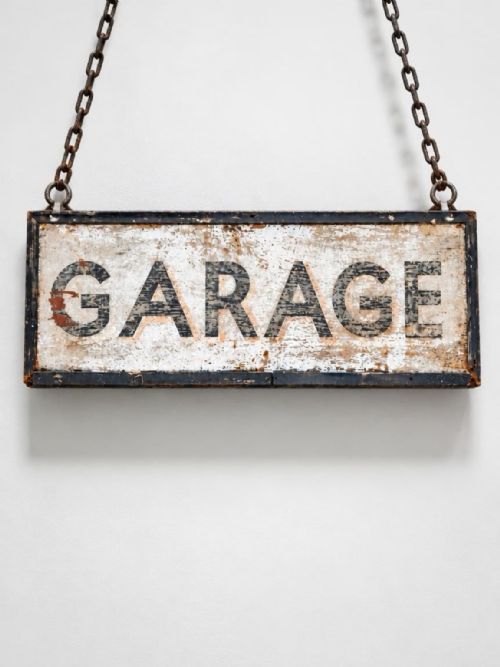
When you search for a wall hanging trade sign, you encounter heavy functional markers made to advertise a business from a building exterior. The pieces meeting this description span from the late nineteenth century through to the Edwardian period and the nineteen-twenties.
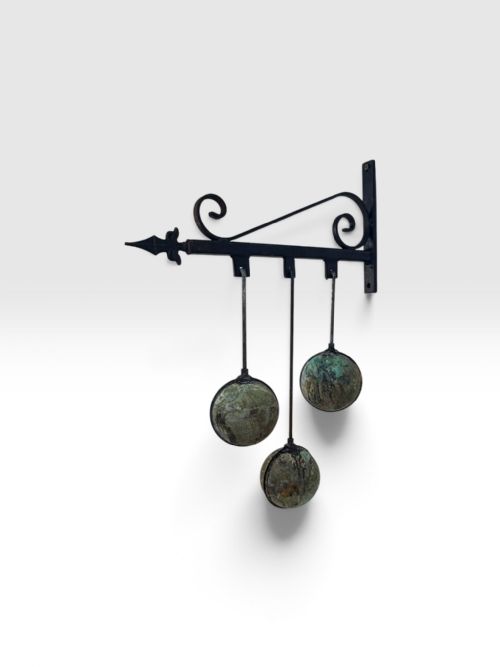
The inventory on this page holds distinct forms including pawnbrokers' symbols, pocket watch clocks, chemists' pharmacy boards, and locksmith emblems. Most examples date from the nineteen-twenties or the late nineteenth century, reflecting Victorian and Edwardian commercial life.
You will find signs originating from British and French workshops, shaped as iron brackets, double-sided painted boards, or large hanging timepieces. They bring direct architectural salvaged presence into modern interiors.
Materials and construction
Makers shaped these objects using heavy iron, wrought iron, copper, sheet metal, and gilt metal alongside oak timber elements. Artisans forged structural brackets and shaped metals to withstand outdoor elements on high street shopfronts.
Surfaces received hand-painted lettering and designs, sometimes paired with glass faces on clock-form signs. The combination of painted metal and sturdy ironwork defined durable commercial signage of the era.
Wall Hanging Trade Sign Retail Price Guide 2026
Typical asking prices for wall hanging trade sign among the pieces listed under this phrase on Sellingantiques today, from the lower quarter to the upper quarter. They describe what is for sale here now, not the wider market.
Time stands still on the oversized pocket watch signs that once commanded the attention of hurried Victorian pedestrians.
Judging quality in commercial signage
Quality rests in the legibility of original hand-painted lettering and the integrity of the base metal. Superior examples retain their authentic surface weathering and untouched structural brackets without excessive later repainting.
Unusual sculptural forms, such as three-dimensional pocket watches or specific trade symbols, command greater interest than flat rectangular boards. The depth of the ironwork and the clarity of the trade iconography determine the standing of each piece.
Josef Herzog
The Wall Hanging Trade Sign Glossary
- Trade sign
- A board or sculptural emblem hung outside a shop to advertise a specific trade or service to passers-by. These objects formed the visual language of the nineteenth-century and early twentieth-century high street.
- Sign bracket
- The metal arm projecting from a wall to support a heavy hanging sign. Wrought iron brackets allowed signs to swing freely in the wind.
- Double sided
- A sign bearing painted or raised lettering on both front and reverse faces. This allowed pedestrians walking in either direction along the pavement to read the business name.
- Architectural salvage
- Building elements and exterior fixtures rescued from structures slated for demolition. Trade signs often reach the market through this salvage route.
Wall Hanging Trade Sign: Frequently Asked Questions
What were wall hanging trade signs used for?
These signs hung above shopfronts to identify the premises of tradesmen, pawnbrokers, chemists, and locksmiths to passing pedestrians. Their distinct shapes and symbols communicated services instantly to an often illiterate public.
Over time, they evolved from simple boards into elaborate sculptural objects like oversized pocket watches and painted iron pub signs. They served as permanent outdoor landmarks for businesses.
How do I hang a heavy iron sign?
Due to the substantial weight of iron and copper components, hanging requires secure attachment directly into structural wall studs or masonry. Using appropriate masonry anchors or load-bearing brackets ensures the safety of the display.
Many signs retain their original iron brackets, which dictate the correct mounting orientation and projection distance from the wall.
How do I tell a Victorian sign from a 1920s one?
Nineteenth-century examples often display simpler wrought ironwork and hand-brushed lettering styles typical of Victorian signwriters. Pieces from the nineteen-twenties sometimes incorporate bolder industrial aesthetics and cleaner painted typography.
Examining the underlying metal preparation and the style of the script helps separate the late nineteenth-century items from Edwardian and later pieces.
Can these signs be hung outdoors again?
While originally built for exterior use, surviving antique signs generally benefit from indoor placement to preserve fragile historic paint and aged metal surfaces. Exposure to modern weather accelerates the degradation of original nineteenth-century and early twentieth-century paint layers.
Displaying them inside protects the delicate patination achieved over decades of exposure.