


Vintage Yorkshire Drawing
These vintage yorkshire drawing works capture northern landscapes on paper, offering an authentic glimpse into twentieth-century rural scenes.
Vintage Yorkshire Drawing
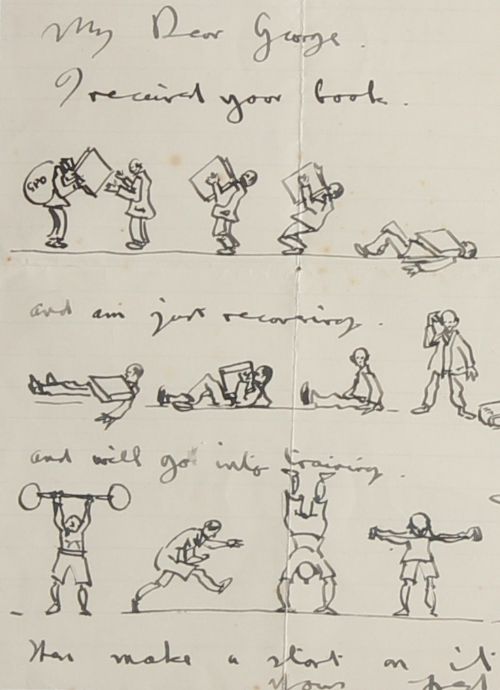
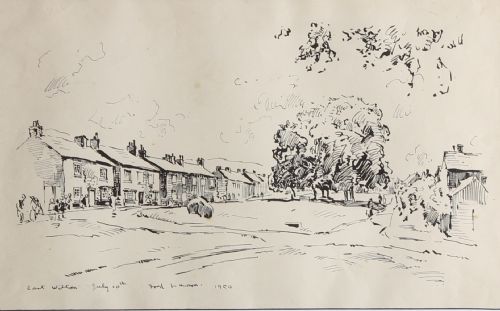
When you search for vintage yorkshire drawing, you encounter works on paper depicting northern landscape and townscape subjects. These original pieces document locations such as East Witton, Bolton Castle, and the Cleveland Hills across the twentieth century. The selection spans the 1910s through to the 1960s, showing regional views executed by British artists.
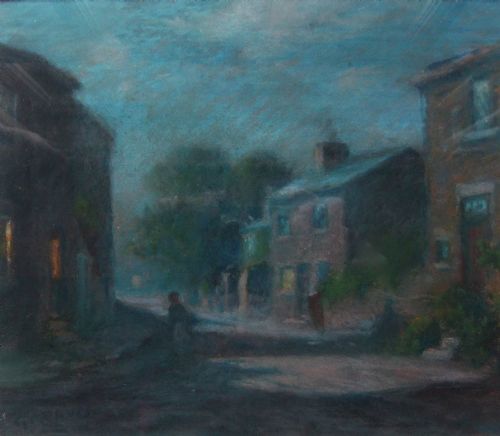
You are most likely to meet landscape works executed by Fred Lawson, alongside pastels by artists such as Angus Rands and Robert Leslie Howey. The formats include single sheets, paired compositions, and pages removed from sketchbooks. Subjects range from village scenes and mills to river views and architectural landmarks like York Minster.
How they were made
Artists utilise paper as the primary support, applying media such as ink, watercolour, pastel, and colour pencil. Many compositions combine pen and ink line work with watercolour washes to define northern topography. Pastels provide soft textures for atmospheric landscape effects, while pencil sketches rely on fine linear precision.
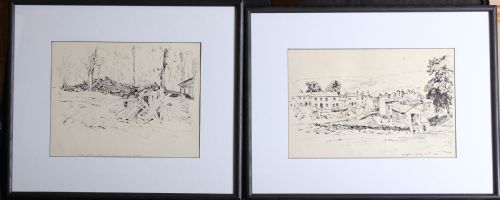
Framing typically involves wood and glass to protect the delicate paper surfaces from environmental damage. The execution relies on traditional graphic and painterly methods practised by twentieth-century British artists working directly from the subject.
Listings feature paper supports combined with ink, watercolour, pastel, and wood framing materials from the 1910s to the 1960s.
What varies in quality
Quality rests upon the strength of the draughtsmanship and the artist's ability to render light and atmosphere within the landscape. Stronger examples demonstrate confident handling of ink lines and harmonious control of watercolour or pastel pigments. The directness of observation from the Yorkshire subject dictates the overall visual impact of the sheet.
Condition of the paper and the integrity of the media also differentiate examples within the range. Works that retain their original pigment vibrancy without excessive fading or paper degradation present the composition more clearly.
Fred Lawson·Angus Rands·Robert Leslie Howey·William Greaves
The Vintage Yorkshire Drawing Glossary
- Drawing
- A graphic work produced by making marks on paper using instruments such as pens, pencils, or chalks. It forms the basis of many finished landscape compositions.
- Watercolour
- A paint consisting of pigment suspended in a water-soluble binder, applied in translucent washes to paper. It creates luminous effects across landscape views.
- Pastel
- A dry art medium in the form of a stick, consisting of powdered pigment and a binder. It produces velvety textures suited to atmospheric sky and terrain depictions.
- Works on paper
- An inclusive category for art forms executed on a paper support, including drawings, watercolours, pastels, and sketches.
- Twentieth-Century British
- The artistic classification encompassing works produced in Britain between nineteen hundred and nineteen ninety-99, reflecting movements such as British Impressionism and Modern British styles.
Vintage Yorkshire Drawing: Frequently Asked Questions
What subjects appear in these works?
The subjects focus on Yorkshire topography, including castles, village streets, rivers, and hill country. Scenes span rural locations and identifiable landmarks across the region.
Artists recorded specific viewpoints, from mills in Aysgarth to streetscapes in Selby and York Minster.
Which materials do artists use?
Works utilise paper supports combined with ink, watercolour, pastel, and colour pencil media. Many drawings merge ink outlines with watercolour washes.
Pastel works appear frequently, capturing soft atmospheric effects in landscape and townscape compositions.
How should I display them?
Display works behind glass within suitable wood frames to protect the paper surface from dust and moisture. Keep them away from direct sunlight to prevent the watercolour and pastel pigments from fading over time.
Proper mounting ensures the paper does not touch the glass directly.
How are the periods identified?
Periods are determined through artist signatures, dated inscriptions on the work, and stylistic markers associated with early to mid-twentieth-century British art. Cataloguing often references specific decades such as the 1930s or 1950s based on these annotations.
Stylistic comparison with known dated works by figures like Fred Lawson aids dating.