

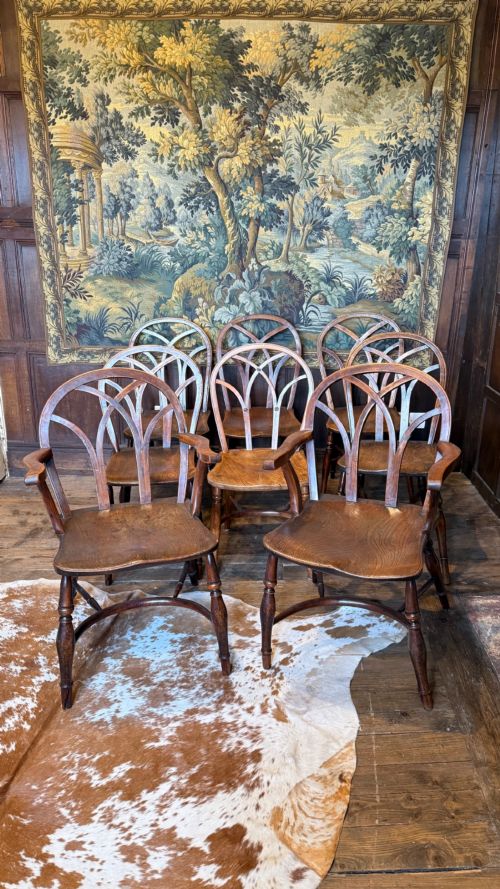
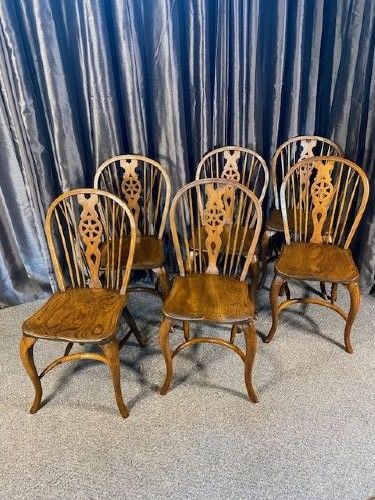


Vintage Yew Chair
A vintage yew chair brings rich timber grain and traditional vernacular design into a room, offering both sturdy seating and historic character.
Vintage Yew Chair
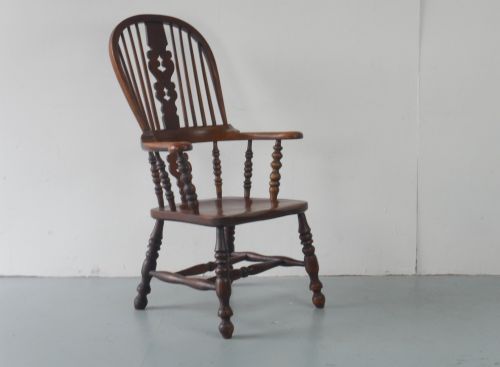
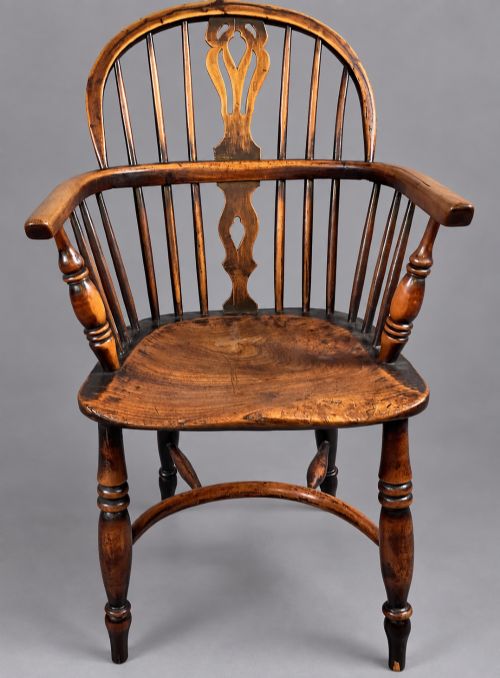
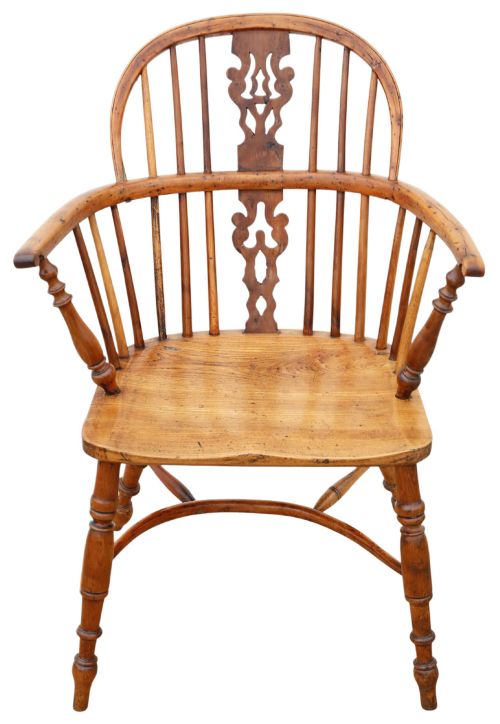
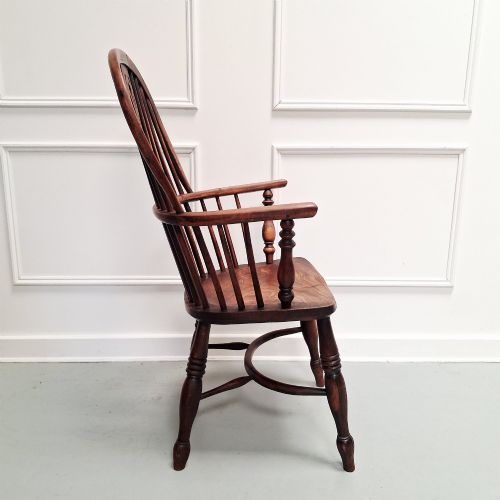
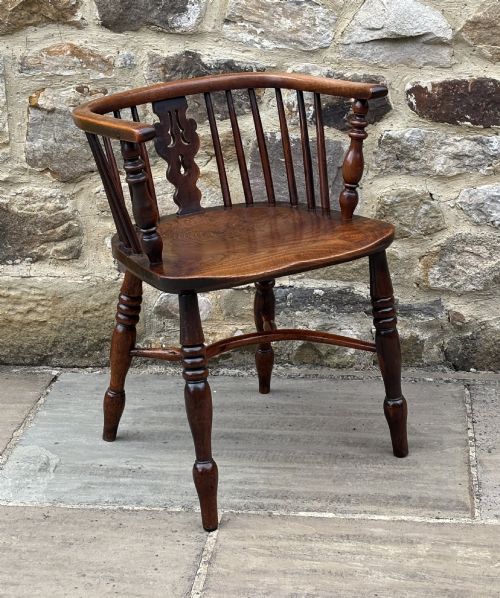
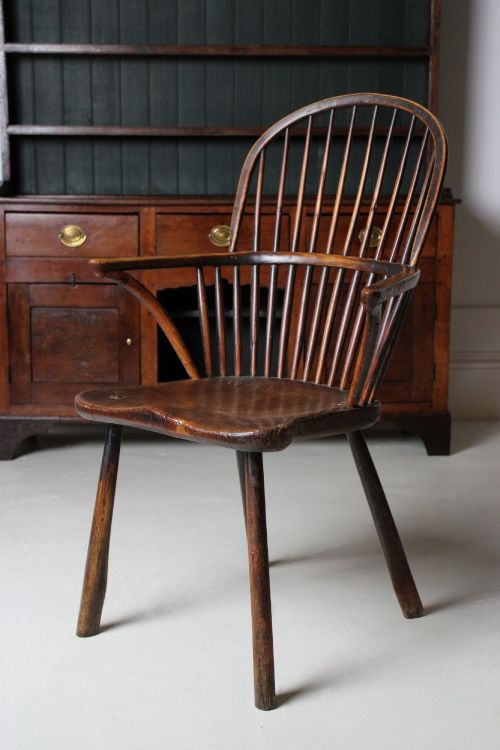
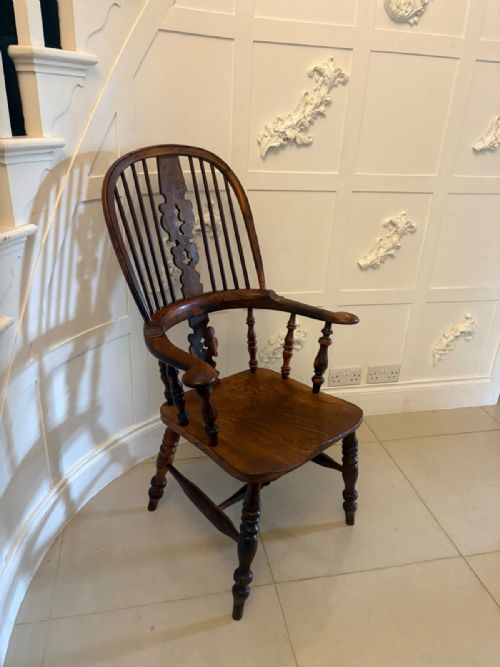
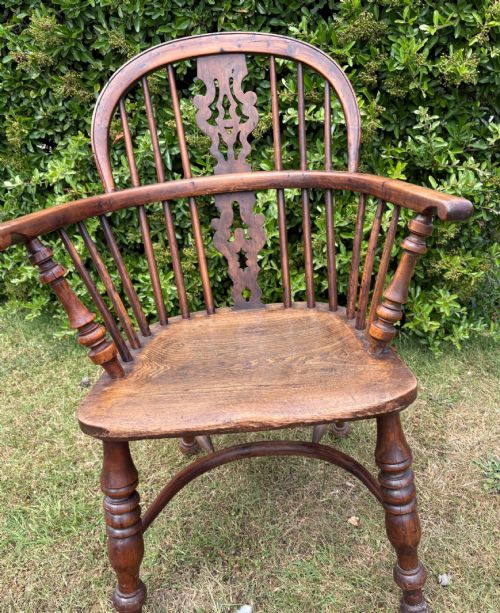
When you search for a vintage yew chair, you encounter diverse forms shaped by English provincial makers primarily across the eighteenth and nineteenth centuries. These include high-back and low-back Windsor armchairs, comb-back variants, and occasional rocking or child chairs rooted in English country vernacular traditions.
The pieces appearing in this selection demonstrate regional variations, from Thames Valley workshop outputs to Nottinghamshire designs. Armchairs and carver chairs dominate the offerings, frequently combining yew timber with elm seats and beech or ash structural elements.
Period examples span Georgian origins through Victorian interpretations and early twentieth-century reproductions. The common thread linking these items is the distinctive warm figure of yew wood applied to traditional seating architectures.
Factors influencing quality and distinction
Quality rests upon the preservation of the original timber patina and the crispness of the turned structural elements. Pieces displaying deep, rich figuring in the yew grain alongside uncompromised saddle seats command greater appreciation among collectors.
Proportion and structural integrity separate standard utility pieces from exceptional vernacular items. Maker marks stamped into the woodwork add a layer of documented provenance that elevates certain examples above unmarked workshop production.
Listings feature periods spanning from the Georgian era through Victorian times, alongside early twentieth-century examples.
J SPENCER·Gabbitass Worksop·Ben Gilling·Allsop Worksop·Rockley Maker
The Vintage Yew Chair Glossary
- Windsor chair
- A wooden chair built with a heavy solid timber seat into which the legs and back spindles are separately bored and wedged. This construction method defines the core style of the pieces found in this category.
- Carver chair
- An armchair designed for dining or desk use, often featuring open wooden arms flanking a spindle back. These chairs served as head-of-table seating in country houses.
- Comb back
- A chair back style where the vertical spindles extend upward to support a horizontal top rail resembling the teeth of a comb. This design offers distinct lumbar support in vernacular seating.
- Broad arm
- An armchair featuring an expanded, paddle-like wooden armrest integrated into the spindle structure. This regional adaptation provides a convenient surface for writing or resting.
- Vernacular furniture
- Domestic items made by local tradesmen using regional materials and traditional local techniques rather than following metropolitan stylistic conventions. Such pieces reflect the practical needs of rural communities.
Vintage Yew Chair: Frequently Asked Questions
What is a vintage yew chair made from?
Makers combined yew wood for the decorative backs and arms with tough elm for the solid carved seats. Additional timber species such as beech and ash frequently formed the turned legs and structural undercarriages.
This mixed-timber approach utilised the specific mechanical properties of each tree to ensure both durability and visual appeal in country workshops.
How do I identify an eighteenth-century model?
Early examples often display narrower saddle seats, deeper patination on the yew grain, and hand-turned undercarriages showing slight irregularities from pole-lathe production. Regional traits from areas like the Thames Valley also point toward earlier manufacturing dates.
Examining the construction methods beneath the seat reveals pegged joints and traditional wedge configurations distinct from later industrial assembly.
Where were these chairs manufactured?
Production took place across various English rural workshops and regional centres, with notable outputs originating from Nottinghamshire and the Thames Valley. Local craftsmen utilised accessible regional timbers to supply farms, cottages, and country houses.
Certain pieces carry stamped maker names on the woodwork, pointing directly to specific workshops operating in towns such as Worksop.
How should I care for yew wood furniture?
Maintain the timber by keeping pieces away from direct heat sources and sudden humidity shifts that can cause wood to split. Regular dusting with a dry cloth preserves the natural surface sheen without requiring heavy polishes.
Allowing the wood to breathe naturally safeguards the historic patina accumulated over generations of domestic use.