




Vintage Wooden Workbox
A vintage wooden workbox brings solid mahogany, walnut, and rosewood together to organise threads, needles, and small treasures.
Vintage Wooden Workbox
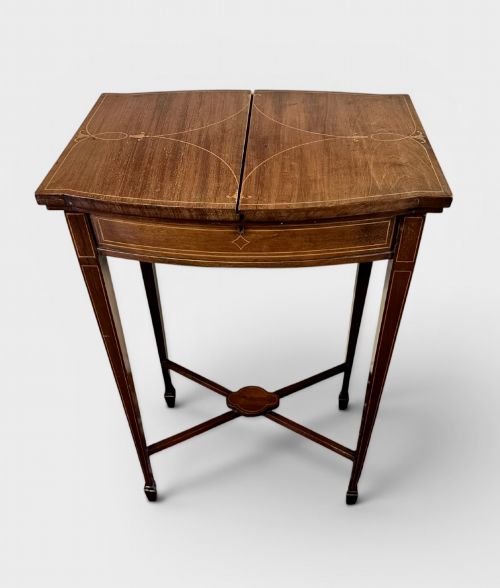
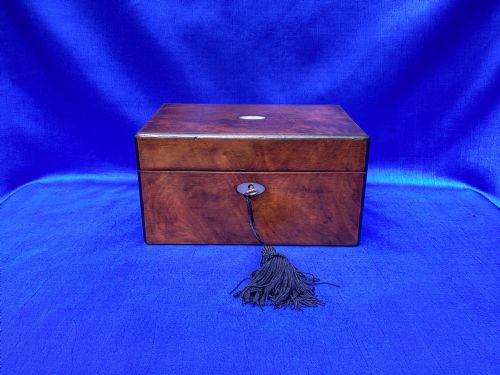
A vintage wooden workbox serves as a traditional container for sewing implements, embroidery supplies, and jewellery, often taking the form of a portable box or a fitted standing table. These pieces emerge across the Victorian and Edwardian periods, alongside examples from the Regency era, William IV, and the 1920s.
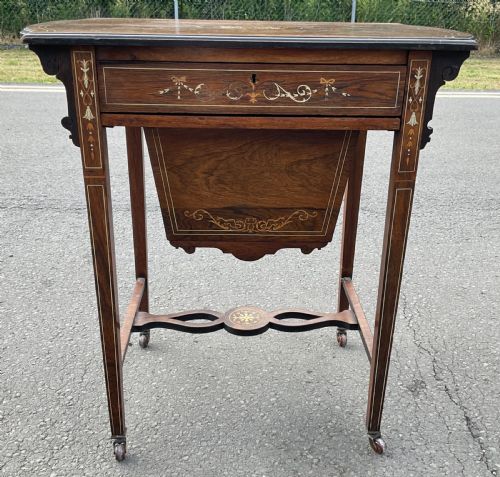
Buyers meet portable tabletop boxes alongside larger sewing tables and occasional side tables equipped with fitted interiors. Woods span mahogany, walnut, rosewood, oak, and satinwood, frequently enhanced by brass mounts, mother-of-pearl inlay, or Tunbridge Ware decoration.
Origins vary from English workshops to French, Scandinavian, and broader nineteenth-century continental centres. Some items double as jewellery boxes, decorative boxes, or garden trugs, reflecting domestic tasks of the period.
Materials and construction methods
Cabinetmakers utilised dense hardwoods such as mahogany, walnut, and rosewood, often applying burr walnut or satinwood veneers to exterior surfaces. Solid oak and burr birch also appear, giving structural stability to tables and portable containers alike.
Decoration relied upon brass stringing, mother-of-pearl inlay, and intricate Tunbridge Ware mosaic patterns built from natural wood woods. Interiors were lined with silk and fitted with small compartments, trays, and needle holders designed for domestic sewing.
Distinguishing quality in construction and detail
Quality rests in the selection of timbers, where figured grains like burr walnut and book-matched rosewood elevate the exterior appearance. The precision of the inlay, whether brass stringing or multi-coloured Tunbridge Ware wood mosaics, dictates the standard of craftsmanship.
Internal organisation shapes utility and value, with complete fitted compartments and intact silk linings demonstrating superior preservation. Structural joinery in the legs, stands, and dovetail joints of the boxes separates robust workshop production from simpler items.
The Vintage Wooden Workbox Glossary
- Tunbridge Ware
- A type of woodworking featuring tiny mosaic tiles assembled from different coloured woods to form geometric or pictorial patterns. This decorative technique appears frequently on nineteenth-century boxes.
- Work box
- A portable container designed to hold sewing gear, threads, and small needles. These items often feature lift-out trays and compartmentalised interiors.
- Sewing table
- A freestanding piece of furniture with legs, incorporating a storage box or suspended fabric bag for needlework projects. They function as both decorative side tables and practical work spaces.
- Stringing
- Thin lines of contrasting wood or metal inlaid flush into the surface of a box or table for decoration. Brass stringing is typical of finer Victorian pieces.
- Burr walnut
- Timber taken from the abnormal growth of a walnut tree, producing swirling, highly figured grain patterns. Cabinetmakers used it for decorative veneer on high-status boxes.
Vintage Wooden Workbox: Frequently Asked Questions
What is a work box?
A work box is a lidded container built to hold sewing tools, threads, pins, and domestic craft items. These boxes often feature compartmentalised trays and delicate internal fittings.
Portable versions sit on tables or desks, while larger iterations stand on their own legs as dedicated sewing tables with drop bags or built-in storage.
How do I date a wooden box?
Dating relies on timber choices, construction techniques, and decorative styles characteristic of specific eras like the Victorian or Edwardian periods. Regency and William IV pieces display distinct neoclassical or heavier revival proportions.
Secondary woods inside the box, hinges, locks, and lining materials also offer clues to the manufacturing decade.
What woods were used?
Cabinetmakers turned to dense hardwoods including mahogany, walnut, rosewood, and oak for durability and rich colour. Exotic veneers like satinwood and burr walnut provided decorative contrast on outer surfaces.
Inlay work incorporated various native and foreign timbers to create geometric patterns or pictorial mosaic scenes.
Are interiors usually original?
Many work boxes retain their original wooden lift-out trays and compartmentalised inserts designed for spools and needles. Silk linings and fabric pockets frequently show wear and tear due to age and active use.
Some pieces have had their fabric linings replaced during their lifetime while keeping the structural wooden framework intact.