



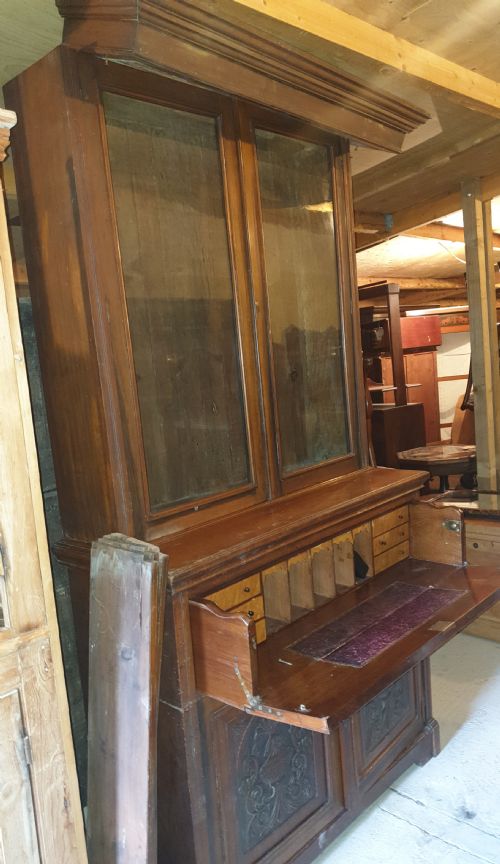


Vintage Wooden Secretaire
These vintage wooden secretaire pieces combine practical writing surfaces with secure storage, offering a sophisticated writing desk and cabinet solution for traditional interiors.
Vintage Wooden Secretaire
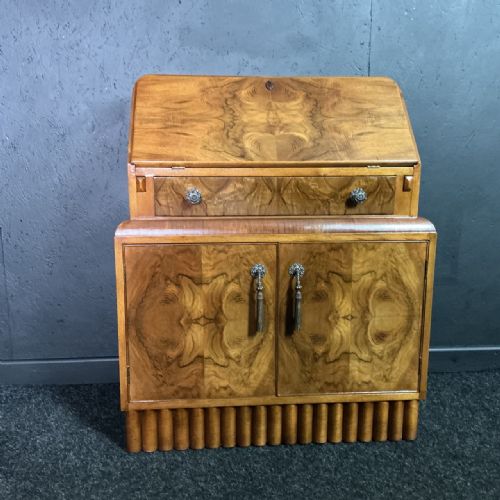
A vintage wooden secretaire provides a dedicated writing space that conceals its functional desk compartment behind a drop-down front or drawer facade. These items span periods from the Georgian and Regency eras through to Victorian designs and later 1930s Art Deco examples.
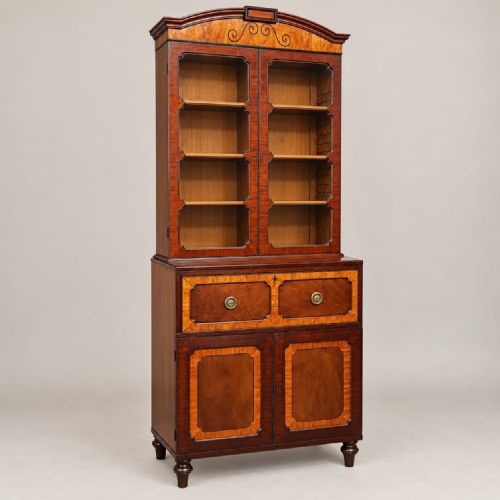
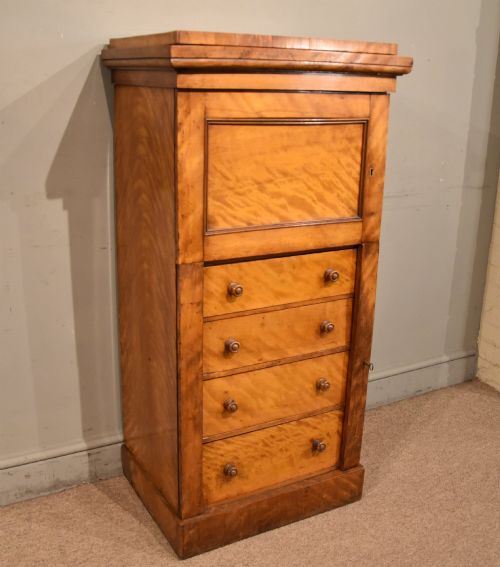
The form appears in various configurations on this page, including tall secretaire bookcases, compact chests of drawers, campaign chests, and housekeeper's cupboards. Mahogany and walnut form the primary cabinet woods, frequently supplemented by satinwood and satin birch interiors.
Buyers seeking a vintage wooden secretaire will encounter regional expressions such as Scottish yew desks and Chinese camphor wood campaign chests alongside classic English cabinetmaking. Each piece balances display shelving or drawer capacity with a fitted writing interior.
How they were made
Cabinetmakers constructed these secretaire pieces using dense timbers like mahogany, walnut, and elm, often applying finer veneers of satinwood or satin birch to interior desk compartments. Brass hardware provides structural reinforcement and decorative contrast, particularly on campaign styles and drawer pulls.
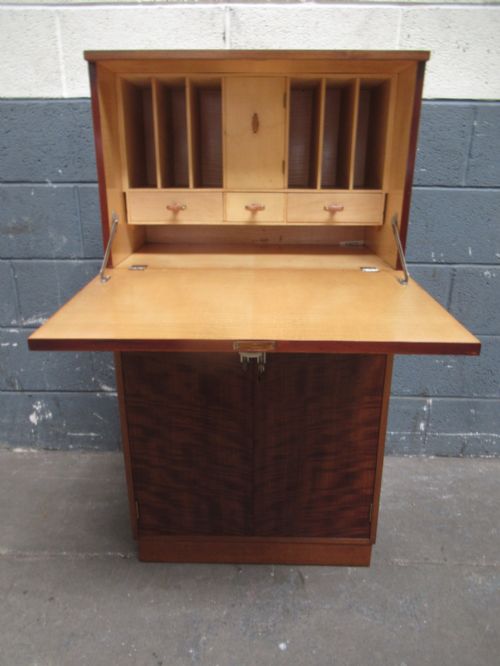
Internal fitted sections incorporate small drawers, pigeonholes, and writing surfaces lined with baize or leather. Glass doors feature on bookcase variants, while precise joinery allows drop-front writing drawers to function smoothly without compromising the exterior facade.
Vintage Wooden Secretaire Retail Price Guide 2026
Typical asking prices for vintage wooden secretaire among the pieces listed under this phrase on Sellingantiques today, from the lower quarter to the upper quarter. They describe what is for sale here now, not the wider market.
Camphor wood chests brought the aroma of the East into British homes long before travel was common.
What varies in quality
The sophistication of the internal fitting dictates much of the distinction between examples, separating simple drop-front drawers from complex architectural desk interiors with multiple concealed compartments and pigeonholes. Timber selection also defines quality, where finely figured mahogany, walnut, or contrasting satinwood veneers elevate the visual presence of the cabinet.
Proportion and execution of decorative details, such as inlaid stringing, brass handles, and glazing bars, separate standard utility pieces from high-status workshop productions. The integration of the writing flap within the wider chest or bookcase framework reveals the skill of the original cabinetmaker.
The Vintage Wooden Secretaire Glossary
- Secretaire
- A piece of furniture containing a built-in writing drawer or fold-down writing flap. This mechanism conceals pigeonholes and small drawers behind an exterior that often resembles a standard chest of drawers or bookcase.
- Campaign chest
- A portable cabinet made in sections with recessed brass fittings, designed for easy transport by military officers. These items utilise durable timbers such as camphor wood and feature flush handles.
- Satinwood
- A lustrous, fine-grained yellowish wood used for cabinetwork and internal veneers. It provides a bright contrast against darker timbers like mahogany and walnut.
- Baize
- A coarse woolen material resembling felt, traditionally used to line writing surfaces and desk flaps. It offers a soft texture suitable for writing.
Vintage Wooden Secretaire: Frequently Asked Questions
What is a secretaire bookcase?
A secretaire bookcase combines an upper shelving section for books with a lower cabinet featuring a pull-out or drop-front writing desk. This dual-purpose design maximises storage and workspace in compact rooms.
Such pieces range from tall Georgian constructions to later Victorian and Edwardian interpretations built in mahogany or walnut.
How do campaign secretaires differ?
Campaign secretaires were built in separate sections with recessed brass handles and corner brackets to withstand travel. They frequently utilise dense timbers like camphor wood.
These utilitarian items offer robust construction and distinctive hardware while maintaining internal desk facilities.
Which woods are most common?
Mahogany and walnut predominate among the listed items, providing durable structure and deep grain patterns. Lighter secondary woods such as satinwood and satin birch appear frequently in internal compartments.
Regional examples also incorporate elm, yew, and camphor wood depending on the origin and period.
How do you identify the period?
Period identification relies on structural proportions, timber choices, and decorative motifs such as inlay or brasswork. Georgian and Regency pieces tend to show classical architectural lines, while Victorian examples often feature heavier proportions.
Later 1930s pieces introduce streamlined Art Deco forms alongside traditional cabinet layouts.