

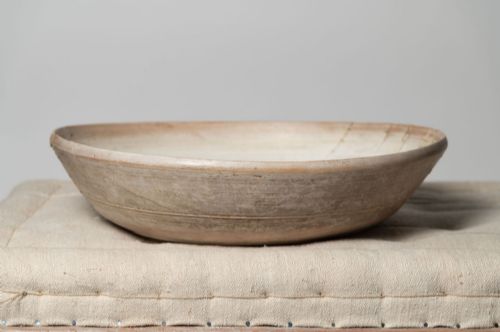
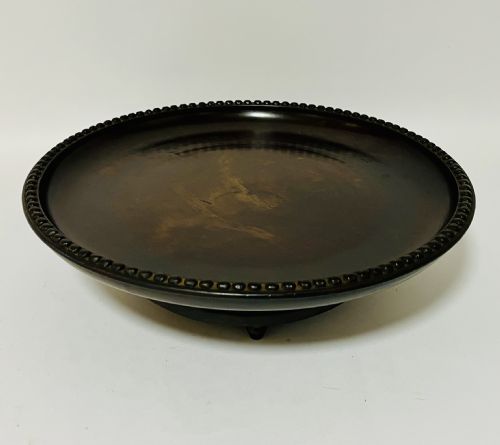


Vintage Wooden Fruit Bowl
A vintage wooden fruit bowl brings warmth and texture to a table, offering deep carved detail and rich timber grain.
Vintage Wooden Fruit Bowl
A vintage wooden fruit bowl bridges functional service and domestic display, drawing on traditions from Georgian times through to the twentieth century. When exploring this selection, buyers encounter everything from deep mahogany containers to sycamore dairy vessels repurposed for the dining table.
The objects span diverse origins, taking in English oak presentation pieces, Swiss folk art and Scandinavian country forms. Most examples balance utility with decorative carving, such as fruiting vine motifs on oak centrepieces.
Object types vary widely across the inventory, ranging from dedicated presentation bowls and serving platters to turned wooden bowls and large platters. Ash, oak and dark stained wood dominate the forms, frequently paired with silver plate, ceramic or brass mounts.
Materials and construction methods
Makers shaped these pieces from native timbers like oak, ash, mahogany and sycamore, selecting each log for its grain pattern and stability. Turning on a lathe formed the fundamental circular body of the bowl, while hand carving added surface relief and decorative borders.
Metal components introduce contrasting textures, utilising silver plate, brass and mounts to reinforce rims or add handles. Ceramic and porcelain inserts appear in specific presentation designs, combining kiln-fired elements with turned timber frames.
Materials recorded across the selection include solid oak, pine, ash, mahogany, sycamore, silver plate, brass, and ceramic.
Assessing craftsmanship and execution
Quality rests primarily in the harmony of the timber selection and the precision of the turning. Heavy, stable timbers with well-figured grain command attention, whereas utilitarian pieces rely on straightforward utility.
Carved enrichment distinguishes standard vessels from exceptional examples. Crisp execution in foliate or vine motifs separates workshop output from basic production, while integrated silver mounts add formal weight.
The Vintage Wooden Fruit Bowl Glossary
- Treen
- Small handmade wooden objects of domestic use. This term embraces turned platters, bowls and containers shaped by traditional woodworkers.
- Dairy bowl
- A utilitarian vessel originally used in milk processing and cream separation. These wide, shallow forms later found favour for holding fruit and displaying timber grain.
- Centrepiece
- A prominent decorative object placed in the middle of a dining table. These large bowls often feature elaborate carved decoration or silver-plated mounts.
- Arts and Crafts
- A design movement valuing hand craftsmanship and traditional materials over mass production. Pieces from this tradition emphasise honest construction and natural wood finishes.
- Silver plate
- A thin layer of silver applied to a base metal such as copper or brass. It appears on rims, handles and mounts to provide decorative contrast with the dark wood.
Vintage Wooden Fruit Bowl: Frequently Asked Questions
Can I use these for actual fruit?
Most pieces function well for holding dry produce like apples, oranges or nuts on a sideboard or dining table. The natural timbers provide a stable, breathable environment for daily service.
Avoid placing damp or unwashed produce directly onto untreated wood surfaces for extended periods. Lining the base with a cloth or paper insert protects antique interiors from moisture damage.
How are different periods identified?
Dating relies on timber species, tool marks left during turning, and stylistic indicators such as Edwardian silver mounts or Georgian mahogany proportions. Early pieces often show hand-adzed or pit-sawn undersides.
Comparative study of known design movements, including Art Nouveau curves and Arts and Crafts simplicity, helps place an object within its original era.
What woods were commonly used?
English cabinet makers favoured native hardwoods like oak, ash and mahogany for their durability and attractive grain patterns. Softer or paler timbers such as sycamore and pine served simpler dairy and kitchen roles.
Dark stained wood and exotic imports also appear, reflecting the global reach of nineteenth and twentieth-century workshops.