
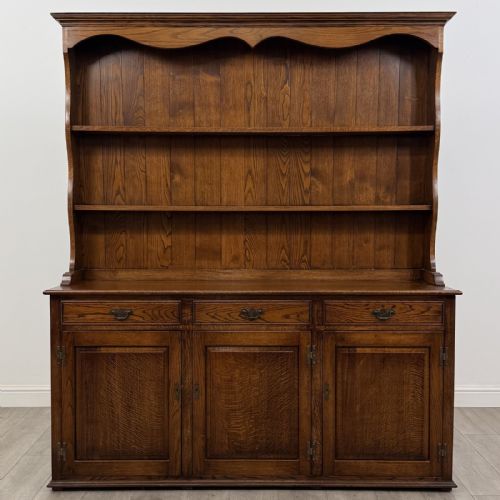
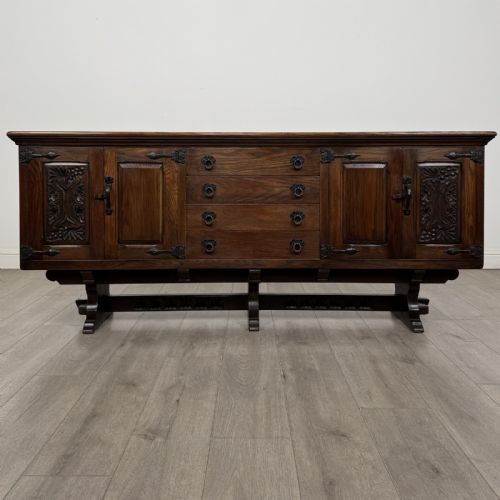
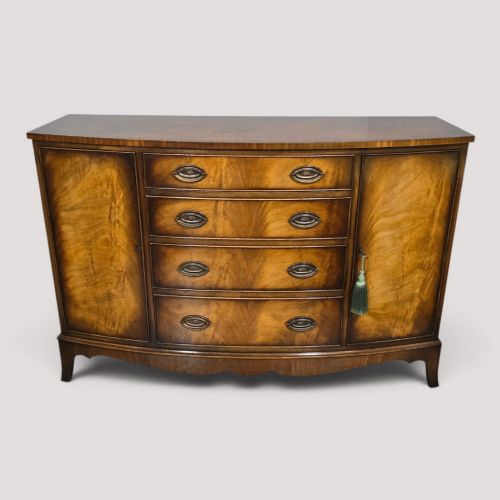
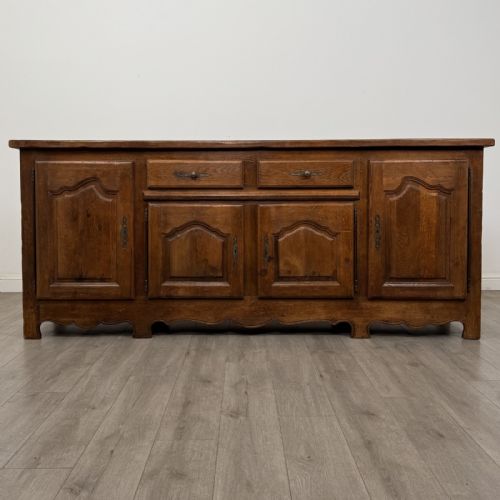
Vintage Wooden Buffet
A vintage wooden buffet brings practical storage and architectural presence to a dining room, uniting varied timbers with enduring British and continental craftsmanship.
Vintage Wooden Buffet
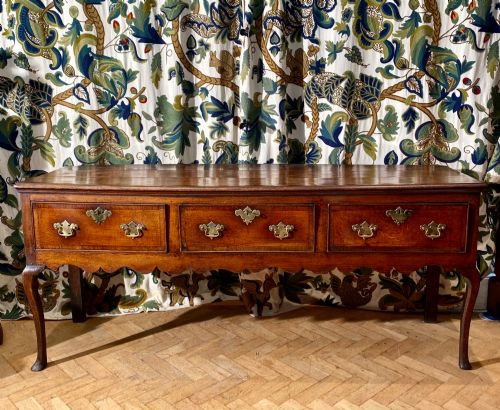
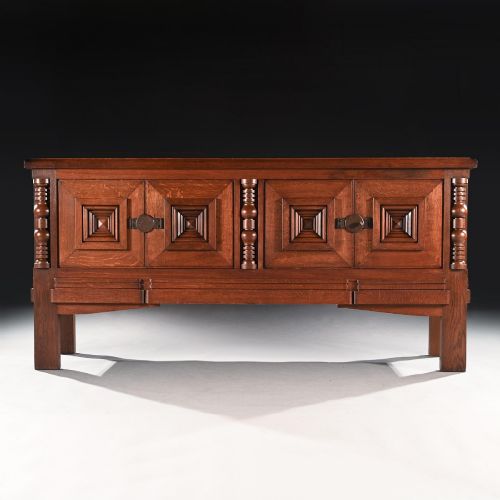
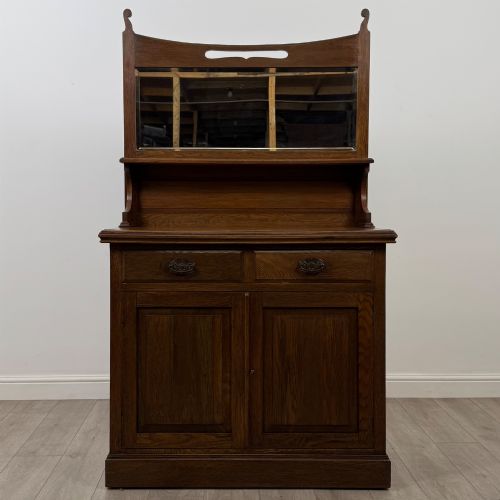
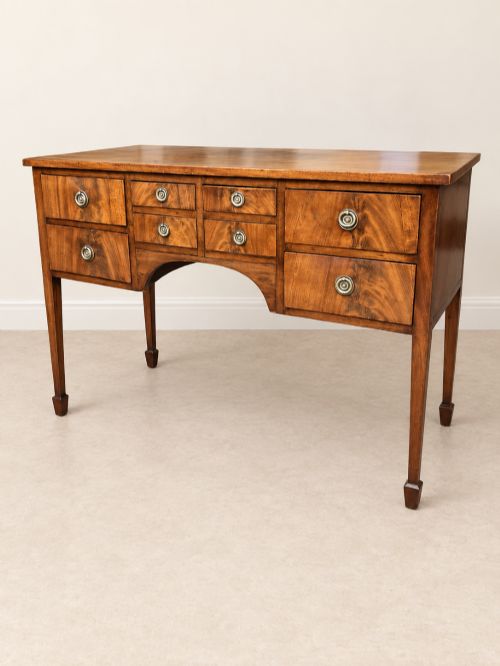
When you search for a vintage wooden buffet, you encounter a diverse group of large dining room storage pieces spanning sideboards, cupboards, and dresser bases. The selection ranges from early nineteenth century mahogany designs to twentieth century art deco interpretations.
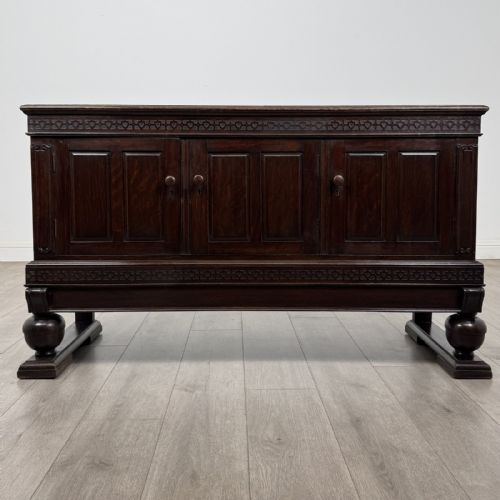
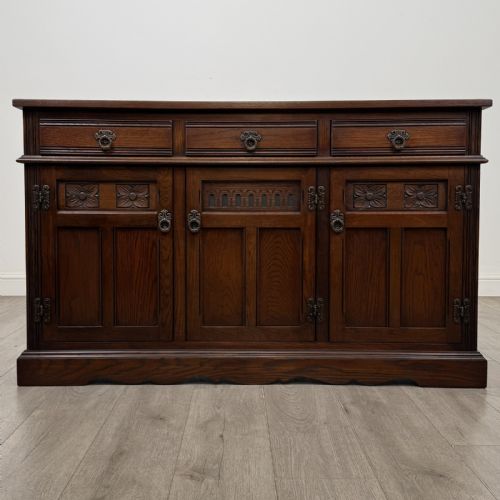
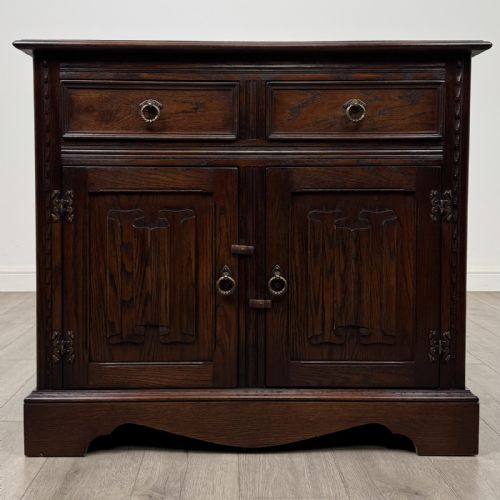
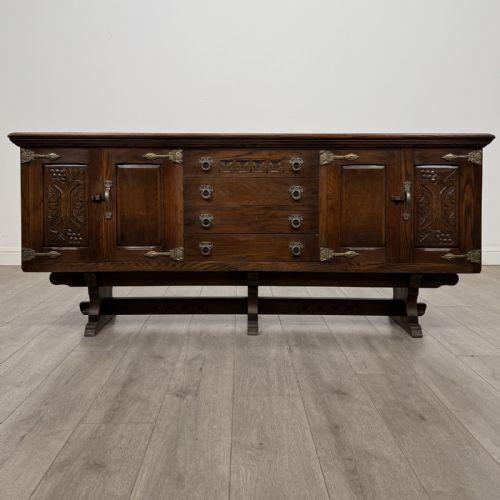
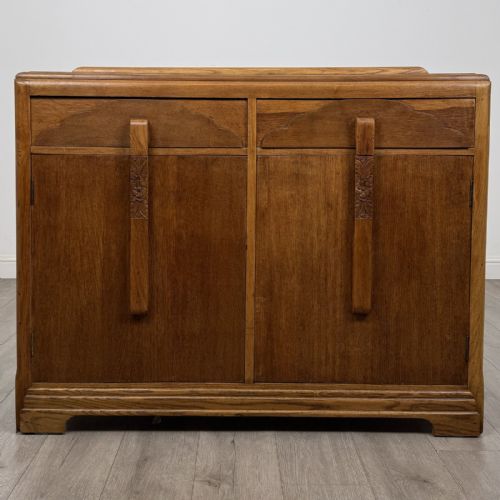
The version you meet most frequently on this page is constructed from oak or mahogany, often featuring carved detailing, turned legs, or brass handles. These items originate from periods such as the Edwardian era, the nineteen-twenties, and the nineteenth century.
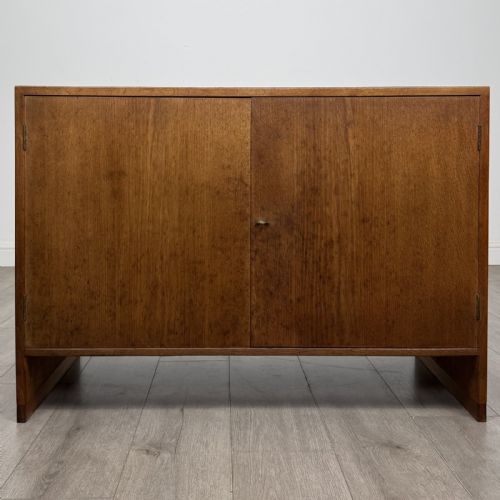
Forms vary from bow-fronted sideboards and breakfront dresser bases to simple two-door cupboards with shelved interiors. Each style reflects the prevailing tastes of its decade, from heavy Jacobean revival carvings to clean art deco lines.
Materials and construction
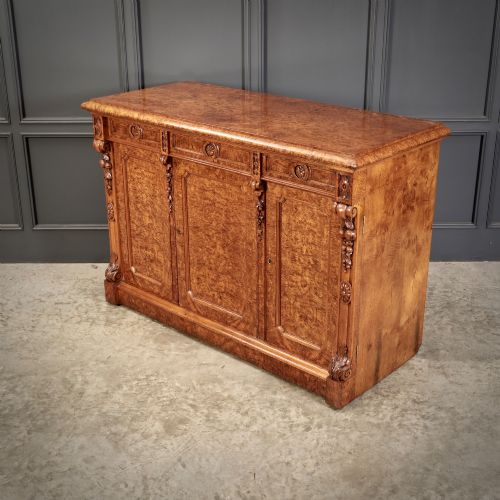
Cabinet makers utilised dense hardwoods such as mahogany, oak, and occasionally burr walnut or satinwood for structural integrity and rich grain patterns. Secondary timbers were often employed for internal shelving and drawer linings, joined through traditional methods.
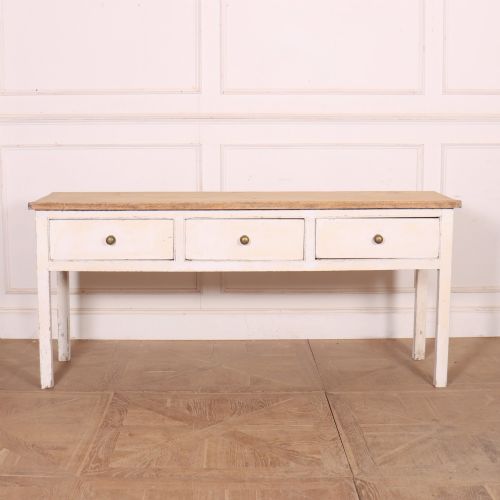
Surface decoration relied on carved detailing, linenfold panels, and decorative inlay work rather than applied veneers alone. Brass handles and glass panels frequently completed the hardware, while painted finishes appeared on specific regional dresser bases.
Listings incorporate items in mahogany, oak, burr walnut, and satinwood across periods spanning from the eighteenth century to the mid-twentieth century.
Distinctions in construction and design
The upper tier of pieces displays exceptional timber selection, such as highly figured mahogany or matched burr walnut, paired with precise joinery and substantial brass hardware. Lesser examples rely on plainer woods and simpler, utilitarian assembly.
Proportion and decorative restraint separate finer workshop productions from standard commercial output. Pieces retaining original surface finishes and intact structural elements hold greater integrity than those with altered components.
Charles Dudouyt·Maurice Adams·Edward Barnsley
The Vintage Wooden Buffet Glossary
- Sideboard
- A long dining room furniture piece designed for serving food and storing tableware. It usually incorporates a combination of cupboards and drawers.
- Dresser base
- A lower storage unit derived from regional kitchen furniture, featuring drawers above cupboards or an open pot board. These pieces lack the upper plate rack of a full dresser.
- Linenfold
- A style of carved wooden panelling that resembles folded fabric, commonly seen on oak cupboards from the early twentieth century and earlier revival periods.
- Breakfront
- A cabinet design where the central section projects forward from the flanking outer sections, creating depth and architectural rhythm on the facade.
- Chiffonier
- A compact sideboard or low cabinet popular during the nineteenth century, often equipped with a raised mirror back or enclosed shelving.
Vintage Wooden Buffet: Frequently Asked Questions
What is a buffet?
A buffet is a low storage cabinet traditionally utilised in dining rooms for holding crockery, cutlery, and serving dishes.
Over time, the form evolved across different design movements, encompassing sideboards, cupboards, and dresser bases with varying door and drawer configurations.
How do I date a sideboard?
Dating relies on observing the primary wood species, construction techniques, hardware, and stylistic indicators such as carved detailing or inlay.
Nineteenth-century pieces often feature solid mahogany or pollard oak with hand-cut joints, whereas nineteen-twenties examples introduce art deco geometry or revival linenfold panels.
Where were these pieces used?
These storage units were primarily placed in dining rooms, entrance halls, or large country kitchens to house dining accessories.
In contemporary interiors, they function equally well in living spaces and hallways as focal storage furniture.
How do I clean wooden surfaces?
Maintenance requires gentle dusting with a soft, dry cloth to prevent the accumulation of grit on polished wood surfaces.
Occasional application of appropriate wax feeds the timber and preserves the natural finish without damaging the antique patina.