



Vintage Wooden Bookcase Desk
A vintage wooden bookcase desk combines shelved storage and a writing surface, offering a practical combination of library and study furniture for daily use.
Vintage Wooden Bookcase Desk
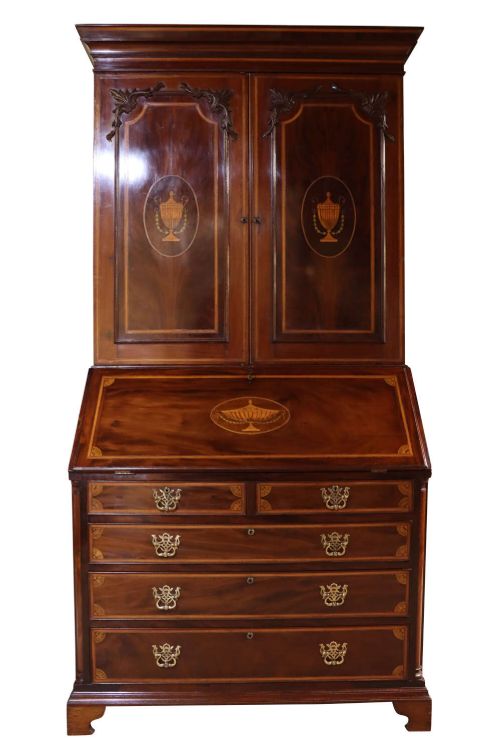
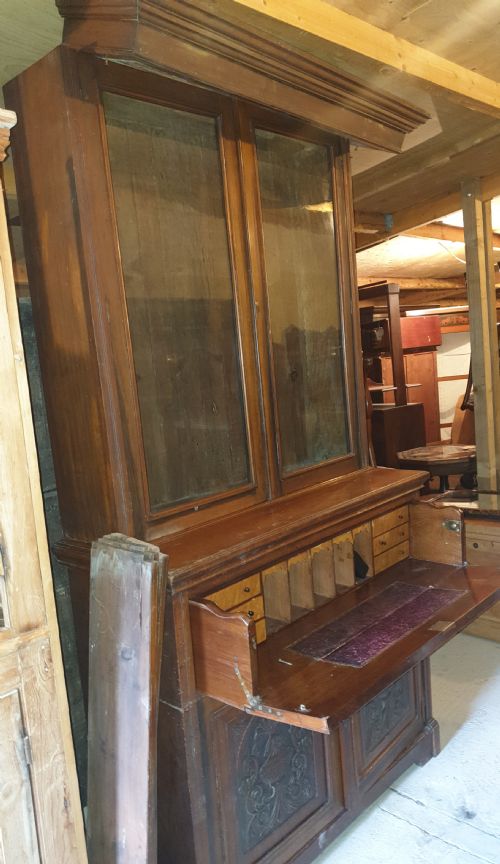
A vintage wooden bookcase desk merges upper book storage with a lower writing compartment, typically taking the form of a bureau bookcase, secretaire bookcase, or cylinder roll top desk with a glazed bookcase.
Buyers encountering this search phrase find pieces spanning multiple periods, ranging from 18th-century Georgian examples through Victorian and Edwardian interpretations up to early 20th-century reproductions built in the Georgian style.
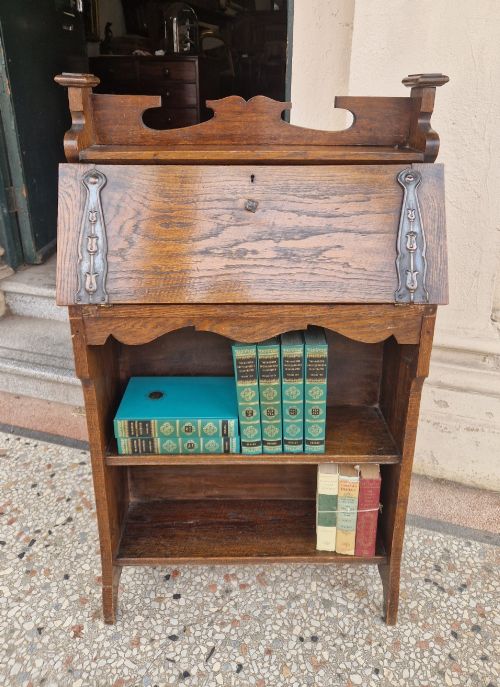
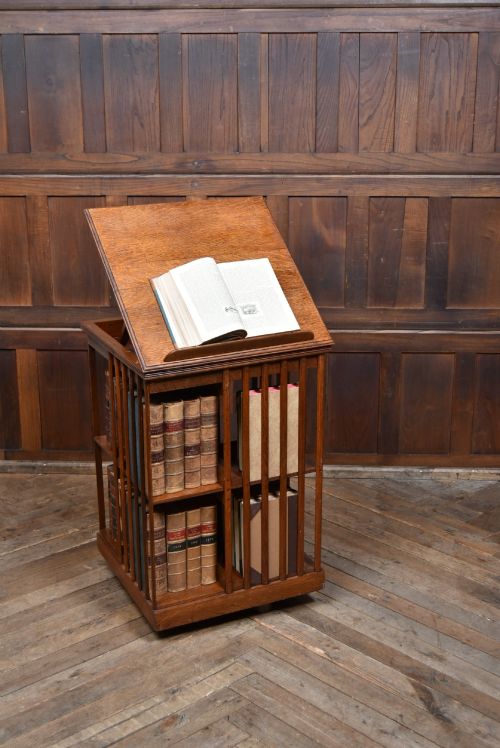
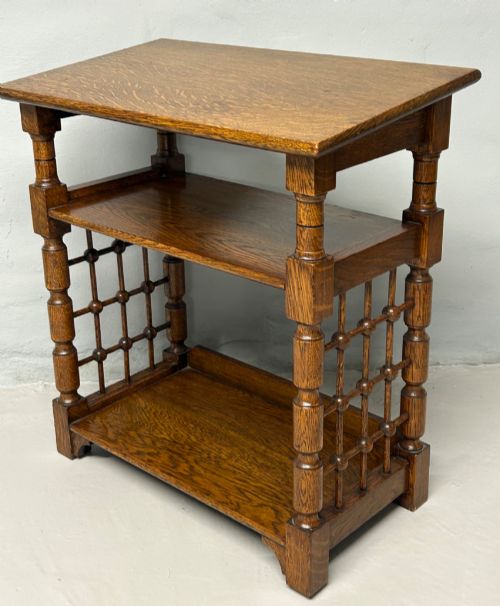
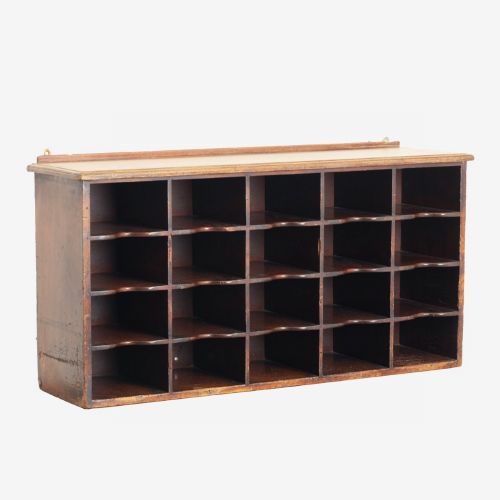
The selection also includes smaller related forms such as desk organisers, book stands, revolving bookcases, and extending book slides, though the towering two-part bureau remains the most prominent incarnation.
Materials and construction
Cabinetmakers utilised solid timbers and veneers, with mahogany and oak dominating the output across the Georgian, Victorian, and Edwardian eras, occasionally complemented by walnut, rosewood, and satinwood.
Inlay work added decorative detail to mahogany surfaces, while brass hardware fitted drawers, cupboards, and drop-front writing slopes, and glass panel doors protected the upper bookcase sections.
The listings show desk bookcases spanning the Georgian, Victorian, William IV, Regency, and Edwardian eras in oak, mahogany, walnut, and rosewood.
Assessing quality
Quality rests upon the selection of timber and the precision of the cabinetmaker's joinery, distinguishing finely figured mahogany and deliberate wood inlay from plainer or later reproduction work.
Interior fittings reveal standard execution, particularly within the fitted stationery interiors of bureau compartments, pigeon holes, and drawers where secondary woods and dovetail construction indicate the level of care.
The Vintage Wooden Bookcase Desk Glossary
- Bureau bookcase
- A combination of a sloping-front desk and a shelved upper bookcase, designed to hold books and writing materials within one piece of furniture.
- Secretaire bookcase
- A tall cabinet featuring a dedicated pull-out drawer with a drop-front writing surface concealed beneath upper bookcase doors.
- Book slide
- An extending wooden stand designed to sit on a desk or table, holding a small row of books upright with adjustable lengths.
- Revolving bookcase
- A low or table-top freestanding wooden bookcase mounted on a pivot so the volumes can be rotated for easy selection.
- Bureau cabinet
- A combined storage and writing piece often built in older vernaculars like the Georgian style during later decades.
Vintage Wooden Bookcase Desk: Frequently Asked Questions
What is the difference between a bureau bookcase and a secretaire bookcase?
A bureau bookcase utilises a hinged diagonal writing flap that pulls down to reveal internal pigeon holes and small drawers.
In contrast, a secretaire bookcase conceals its writing surface inside a wide horizontal drawer that pulls straight out before dropping forward.
How do I fit a large bookcase desk into a modern room?
Many tall bureau bookcases are built in two separate parts, making transport and placement significantly easier across rooms with low ceilings.
Ensure you measure both vertical clearance and floor space to accommodate the open writing flap or revolving shelf radius.
What woods were commonly used for these desk bookcases?
Mahogany and oak form the vast majority of surviving pieces, reflecting the favoured furniture timbers of the Georgian, Victorian, and Edwardian periods.
Walnut, rosewood, and satinwood appear less frequently, usually reserved for more decorative or refined examples featuring inlay work.
How can I tell an Edwardian piece from a Georgian original?
Edwardian versions often feature lighter mahogany framing, delicate string inlay, and softer secondary timbers alongside different internal stationery layouts.
Earlier Georgian pieces display heavier proportions, deeper cabinet construction, and specific cabinetmaking joints characteristic of the eighteenth century.