

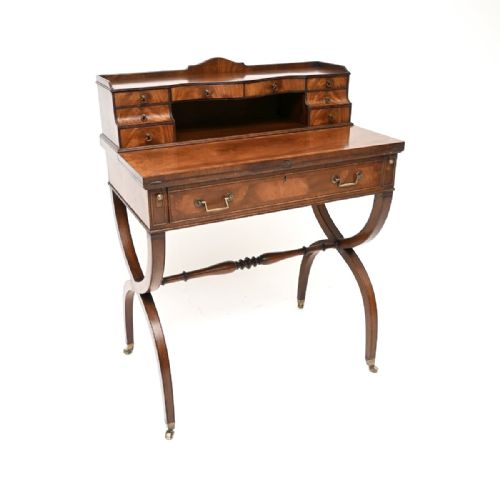
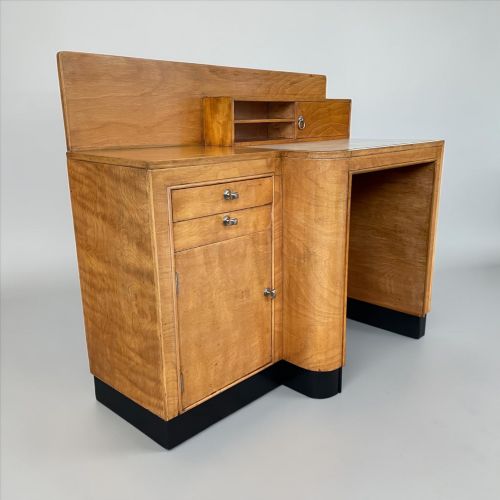
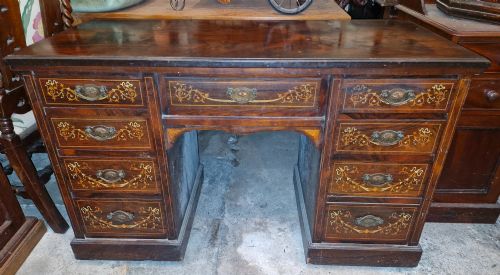
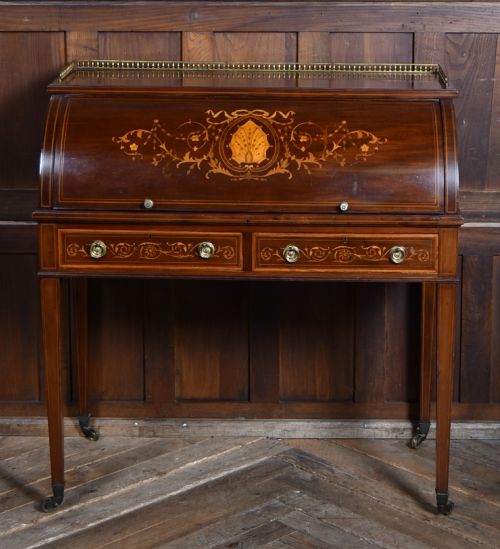

Vintage Wood Writing Bureau
A vintage wood writing bureau brings enduring craftsmanship and clever compartment design into daily use.
Vintage Wood Writing Bureau
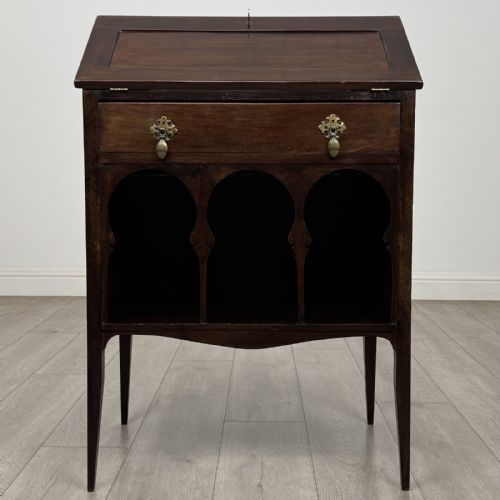
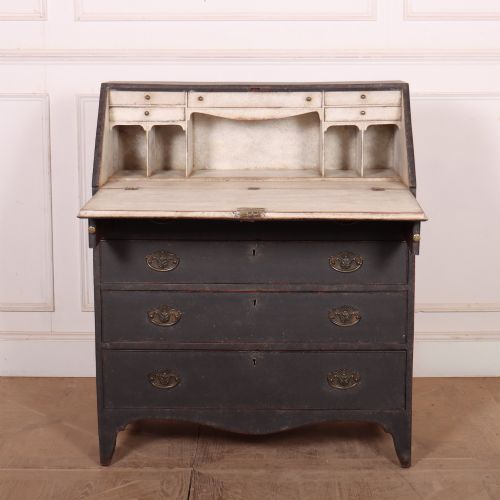
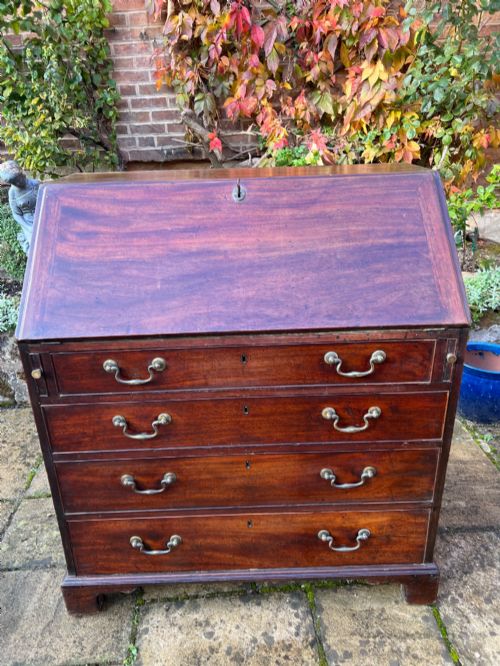
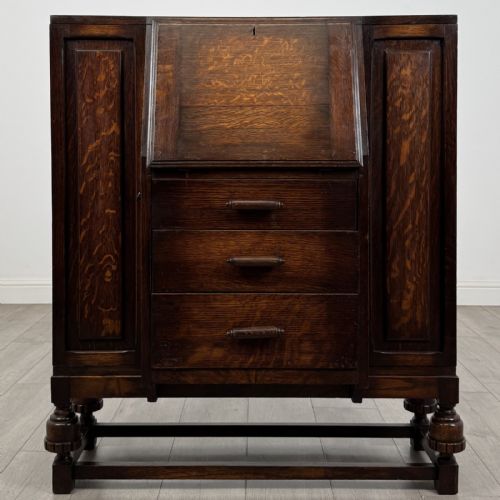
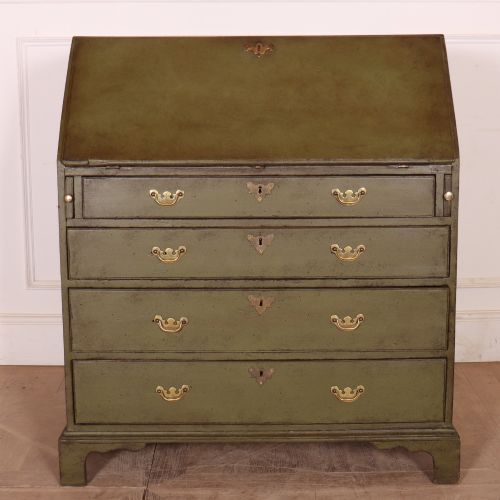
A vintage wood writing bureau combines a sloping flap that drops down to form a writing surface with an internal arrangement of small drawers and pigeonholes. When closed, these pieces present a compact cabinet appearance that conceals correspondence and papers.
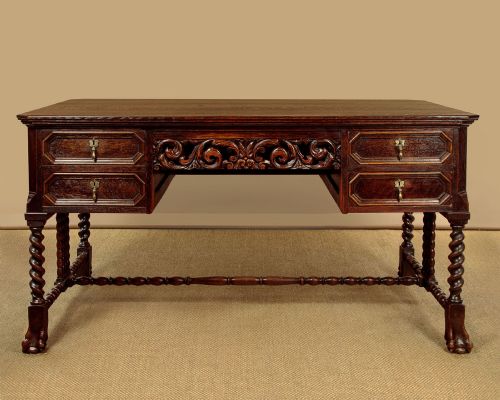
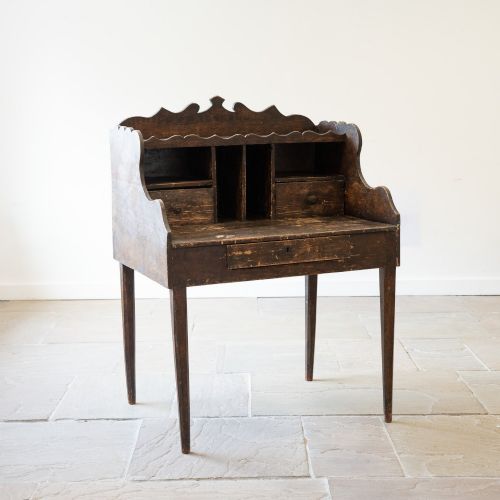
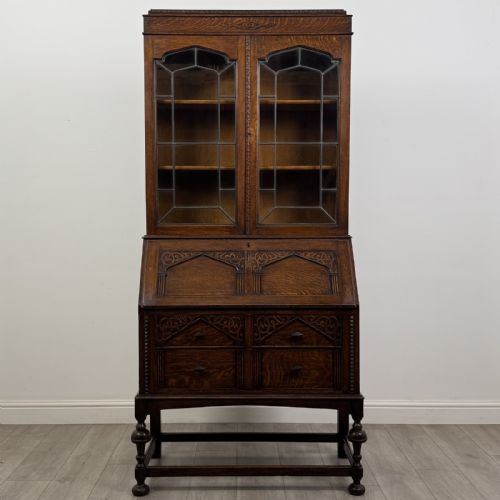
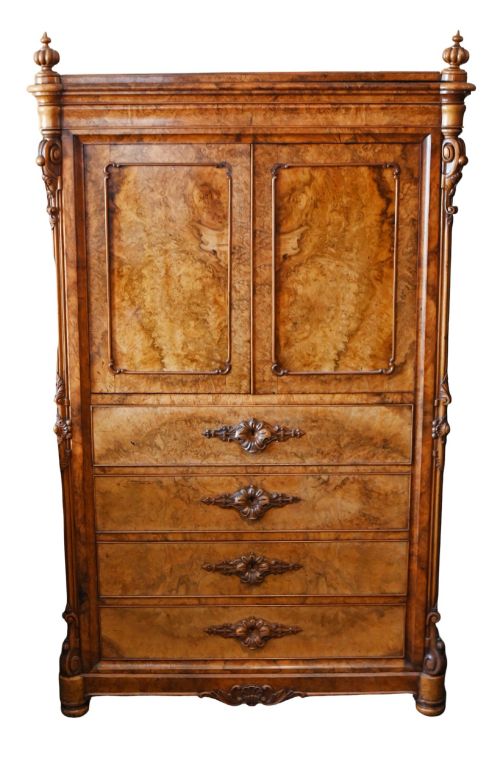
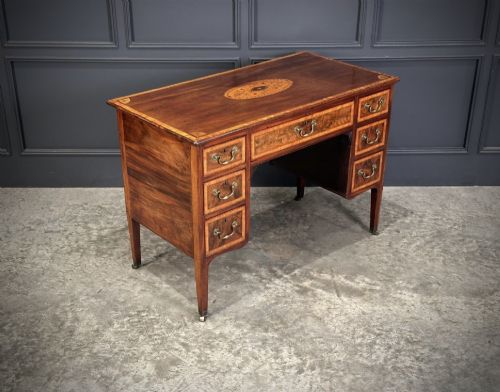
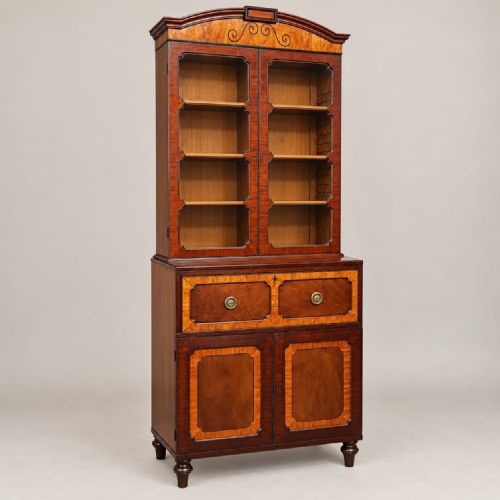
The most common examples encountered on this page stem from the Edwardian period and the early twentieth century, though older pieces stretch back through the Victorian era and the eighteenth century. Alongside standard drop-front designs, variations include bureau bookcases featuring glazed upper sections, secretaire cabinets, and pedestal desks.
Stylistic influences range from straightforward Edwardian oak and mahogany constructions to revival pieces invoking Jacobean, Georgian, and French Provincial aesthetics. Art Deco figured walnut desks and cylinder desks also appear, demonstrating how cabinetmakers adapted the form across successive eras.
Materials and construction methods
Structural integrity relies on traditional joinery techniques, paired with leather writing inserts and occasional glass panels for bookcase doors. Surviving examples demonstrate how makers selected timbers for both durability on exterior carcases and fine grain pattern on drop-front flaps.
Vintage Wood Writing Bureau Retail Price Guide 2026
Typical asking prices for vintage wood writing bureau among the pieces listed under this phrase on Sellingantiques today, from the lower quarter to the upper quarter. They describe what is for sale here now, not the wider market.
Many vintage bureaux hide secret compartments behind miniature drawers, designed centuries ago for private letters and precious keepsakes.
Distinguishing quality across periods
Quality reveals itself in the crispness of carved details, the complexity of internal fitted drawers, and the selection of timber figures on prominent surfaces like the fall-front flap. Superior pieces display thoughtful proportion and seamless integration between the writing flap and the internal compartments.
The sophistication of secondary woods, the execution of inlay work, and the precision of the joinery separate standard utility pieces from exceptional cabinetmaking. Period hardware and well-preserved leather inserts further distinguish the upper tier of surviving examples.
Gillows
The Vintage Wood Writing Bureau Glossary
- Bureau
- A writing cabinet featuring a sloping lid that opens to reveal a fitted interior of small drawers and pigeonholes.
- Secretaire bookcase
- A tall cabinet combining a writing drawer or fall-front desk compartment with upper shelving enclosed by glass doors.
- Marquetry
- Decorative veneer work arranged in intricate patterns using various coloured woods to adorn drawer fronts and surfaces.
- Cylinder desk
- A writing table featuring a curving semicircular wooden shutter that rolls back to uncover the writing surface.
- Pigeonhole
- A small, open compartment within the fitted interior of a desk used for sorting letters and documents.
Vintage Wood Writing Bureau: Frequently Asked Questions
How do I use a bureau as a desk?
Lower the hinged wooden flap to create a horizontal writing platform supported by side arms or pulls. This reveals an internal arrangement of compartments designed for organising modern stationery and laptops.
Once work concludes, simply fold the writing surface back up and lock the fall-front to conceal paperwork and restore a tidy room appearance.
What is the difference between a bureau and a secretaire?
A traditional bureau utilises an entire sloping fall-front that drops outward on hinges to form the writing surface. Internal drawers remain visible and accessible immediately upon opening.
A secretaire typically incorporates the writing compartment inside a drawer or cabinet door that pulls straight out or drops down from a larger piece of furniture, such as a bookcase or chest.
How can I tell an Edwardian bureau from an 18th-century one?
Eighteenth-century examples often display rich mahogany timbers with hand-cut dovetails, solid backboards, and simpler, deeper internal drawer configurations. The proportions tend to feel heavier and the brasses reflect period casting techniques.
Edwardian pieces generally utilise lighter construction methods, machine-sawn elements, and varied revival styles such as satinwood inlay or linenfold oak panels.
Where should I place a bureau in my home?
These compact cabinets suit home offices, living rooms, and bedrooms because their enclosed design hides clutter when not in use. Measure the clearance space in front of the piece to ensure the drop-front flap opens fully without obstructing walkways.
Keep wooden items away from direct heat sources and strong sunlight to protect the polish and prevent timber shrinkage over time.