





Vintage Wood Weather Glass
These vintage wood weather glass pieces combine practical forecasting with rich cabinet-making traditions, offering period charm for any interior wall.
Vintage Wood Weather Glass
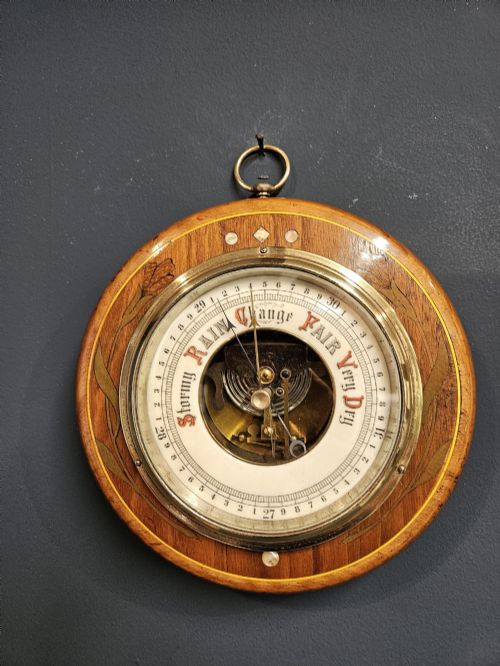
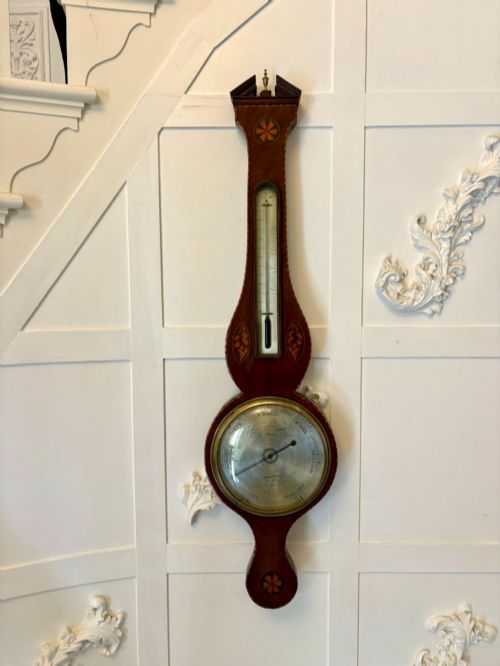
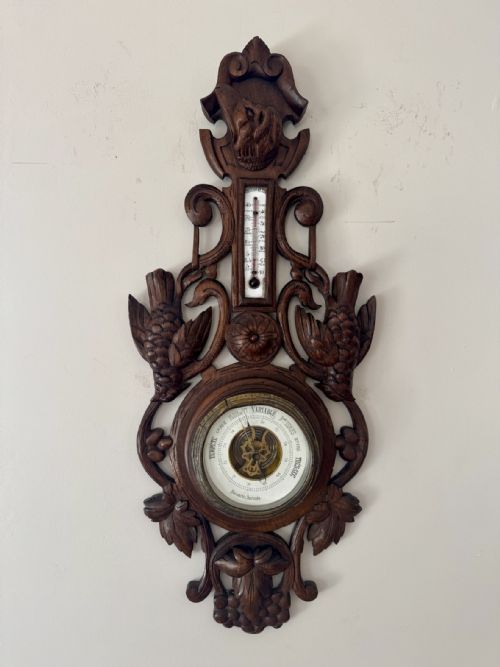
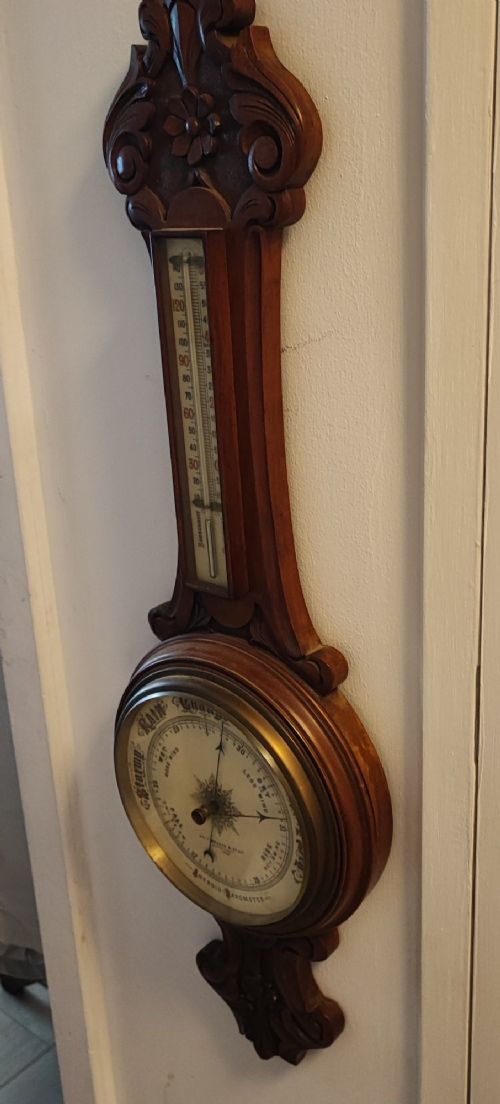
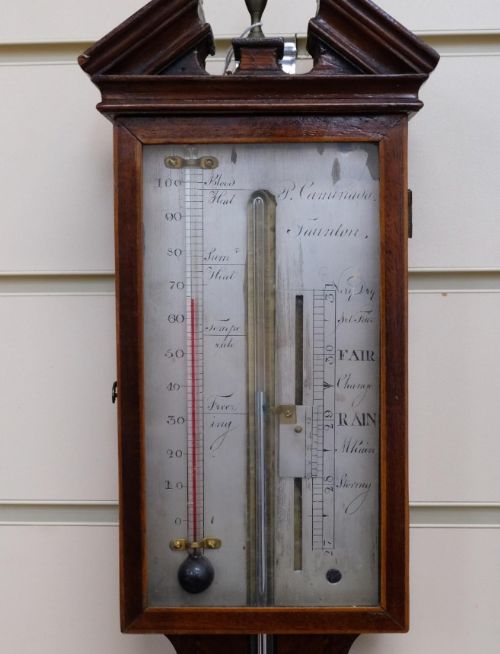
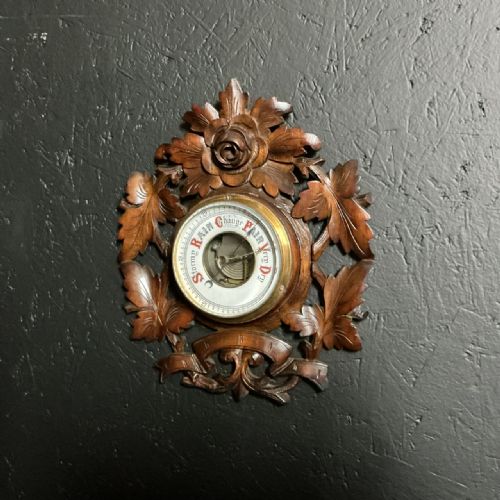
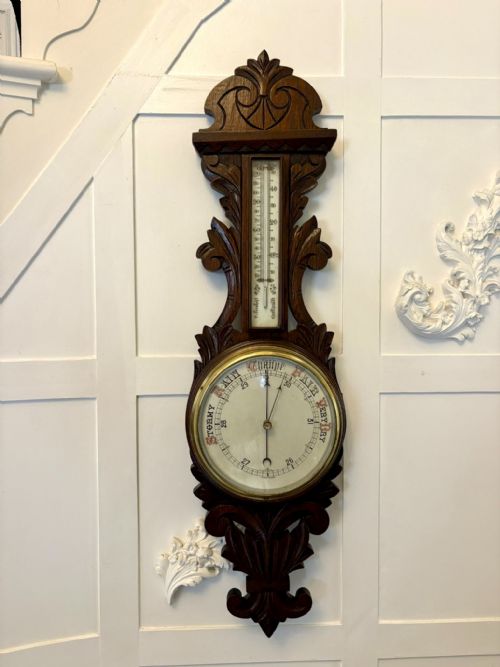
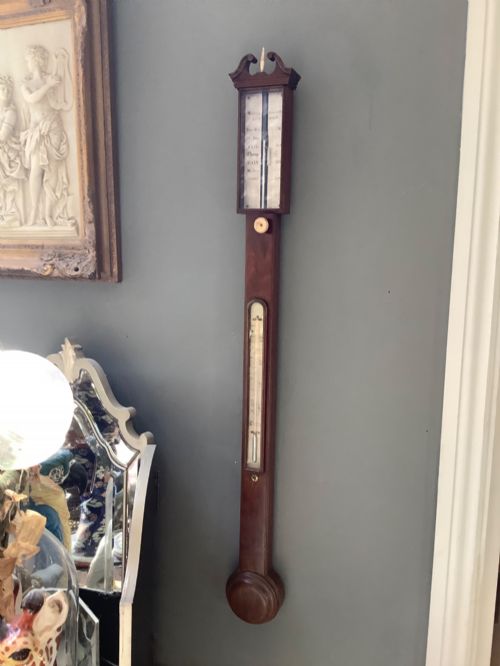
A vintage wood weather glass typically manifests as a wall-mounted barometer, stick barometer, or banjo barometer housed in timber frames from the Georgian, Victorian, and Edwardian eras. Buyers exploring this category encounter mercury and aneroid mechanisms set within mahogany, oak, walnut, rosewood, and carved Black Forest styles. The selection frequently includes wheel barometers featuring porcelain dials, exposed skeletonised movements, and integrated thermometers alongside the core weather glass display.
Originating across 19th-century Britain, Denmark, and Alpine workshops, these instruments range from simple domestic weather glasses to elaborate marquetry-inlaid showpieces. The listings demonstrate a heavy concentration of Victorian and Georgian designs, where dense native and exotic hardwoods house sensitive pressure-reading columns and dials.
Timber construction and barometer mechanics
Cabinet makers constructed the surrounds of these weather glasses using solid and veneered timbers such as mahogany, rosewood, oak, and walnut, frequently incorporating shell inlay, mother-of-pearl, or deep carved foliage. The wooden cases hold either a mercurial tube system or an aneroid metal capsule movement that expands and contracts with atmospheric pressure changes.
Dials are formed from porcelain, ceramic, or engraved brass, protected behind glass plates and brass bezels. Many examples integrate bone or ivory adjustment indicators alongside mercury-filled thermometers mounted directly onto the carved wood backplates.
Vintage Wood Weather Glass Retail Price Guide 2026
Typical asking prices for vintage wood weather glass among the pieces listed under this phrase on Sellingantiques today, from the lower quarter to the upper quarter. They describe what is for sale here now, not the wider market.
Some weather instruments share showroom space with unexpected companion pieces like barrel stand coffee tables and directional street signs.
Distinguishing craftsmanship and material integrity
The distinction between standard domestic weather glasses and superior examples lies in the sharpness of the wood carving, the complexity of the case inlay, and the pedigree of the maker recorded on the dial. Elaborate Black Forest deep-relief carvings, intricate marquetry, and dense rosewood or mahogany housings elevate the visual weight of the instrument.
Internal mechanical complexity also separates output, with skeletonised movements that expose the brass workings commanding greater attention than plain enclosed dials. The precision of the engraved brass scales and the intact survival of delicate mercury tubes or sensitive aneroid linkages determine the overall execution.
P. Caminada Taunton·Negretti & Zambra·Jenkins Of Old Swindon·W Watson & Sons·W.E. Pain of Cambridge
The Vintage Wood Weather Glass Glossary
- Aneroid barometer
- An instrument that measures atmospheric pressure using a flexible metal capsule without liquid. It moves internal levers and springs to turn a dial indicator.
- Banjo barometer
- A wall barometer shaped like a banjo, featuring a circular dial at the top and a wider elongated body below. This form became popular during the Georgian and Victorian periods.
- Stick barometer
- A tall, narrow barometer where the mercury column is directly visible against an engraved scale. These instruments offer precise atmospheric readings through a simple vertical tube.
- Skeletonised movement
- A clock or barometer mechanism with cut-away plates that reveal the internal gears and springs. This style highlights the intricate brass components of the device.
- Weather glass
- A traditional term for instruments containing liquids or mechanical elements designed to forecast local weather changes. They combine scientific utility with decorative furniture design.
Vintage Wood Weather Glass: Frequently Asked Questions
How do I read a vintage weather glass?
Read the pressure pointer against the engraved weather descriptions on the dial face, noting whether the needle moves toward storm, rain, change, fair, or very dry.
Compare the primary pointer with the manually set index needle to track whether atmospheric pressure is rising or falling over the course of the day.
Where should I hang a wood barometer?
Mount the wooden instrument on an interior wall away from direct sunlight, central heating radiators, and exterior doors. Rapid temperature swings and strong drafts interfere with the internal movement and can damage delicate timber cases.
Ensure the wall has a secure fixing point capable of supporting the weight of the dense mahogany, oak, or rosewood frame.
How do I identify a Georgian barometer?
Georgian barometers, dating from the 18th and early 19th centuries, typically feature restrained mahogany or rosewood stick designs with architectural pediments and fine string inlay. The brass scales are hand-engraved and often signed directly by the maker.
Victorian and later examples tend toward heavier carving, broader banjo shapes, porcelain dials, and more ornate architectural detailing such as onion-top cases.
Are mercury barometers safe to keep?
Enclosed mercury stick and wheel barometers remain stable for domestic display as long as the sealed glass tube containing the liquid is not cracked, broken, or inverted during transport. The liquid metal stays safely contained within the glass column under normal conditions.
Handle the instrument with care when moving it between rooms, keeping the frame upright to prevent the column from separating or fracturing the glass.