




Vintage Wood Steps
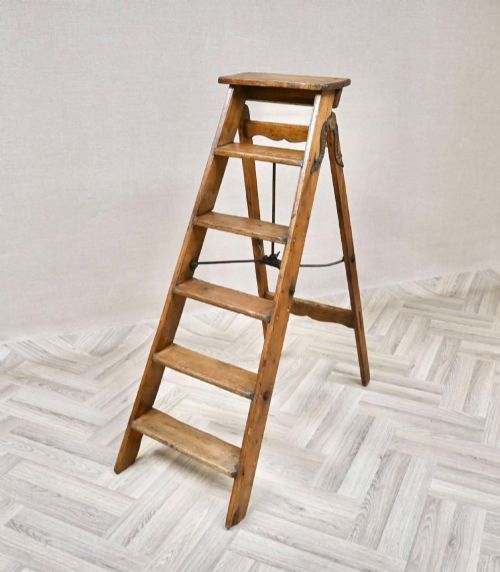
Vintage wood steps bring practical height and honest utility into a room, spanning sturdy industrial ladders and refined mahogany library sets.
Vintage Wood Steps
When searching for vintage wood steps, buyers encounter a diverse range of items designed for elevation and access, from utilitarian folding ladders and railway steps to elegant library sets. The selection spans the nineteenth century through the art deco period, offering both rugged pine structures and polished mahogany designs.
Origins vary widely, encompassing English domestic pieces, railway utility items, and rustic country pieces. Each object reflects the specific functional demands of its era, whether that meant reaching high bookshelves in a Georgian study or scaling loft spaces.
How they were made
Construction relies primarily on hardwoods such as mahogany, oak, and walnut, alongside utilitarian pine for structural frames and ladders. Cabinetmakers and carpenters utilised traditional joinery methods, ensuring stability under weight through mortise and tenon joints or sturdy A-frame bracing.
Surface treatments and finer details elevate certain pieces from simple tools to refined furniture. Leather inserts frequently top the treads of library steps, while brass hinges, fixtures, and turned wooden supports provide both mechanical function and decorative contrast.
Vintage Wood Steps Retail Price Guide 2026
Typical asking prices for vintage wood steps among the pieces listed under this phrase on Sellingantiques today, from the lower quarter to the upper quarter. They describe what is for sale here now, not the wider market.
Railway steps once used by station staff now quietly assist modern bibliophiles in reaching the top shelf.
What varies in quality
The distinction between ordinary utility items and superior examples lies in the selection of timber and the ambition of the design. Dense, well-figured mahogany and intricate spiral framing represent a higher tier of craftsmanship than standard pine ladders made purely for labour.
Execution of secondary details, such as stitched leather tread inserts, turned wooden supports, and robust folding mechanisms, determines the refinement of the piece. Superior construction ensures that the steps remain rigidly balanced and visually compelling after decades of use.
Harry and Lou Epstein·Hille
The Vintage Wood Steps Glossary
- Library steps
- Self-supporting or folding wooden stairs designed to reach high bookshelves in domestic libraries. They often feature leather-lined treads and turned supports.
- Tread
- The horizontal upper surface of a step where the foot rests. In finer library steps, these surfaces are frequently inset with tooled leather.
- A-frame
- A structural configuration forming a triangle that provides stability. This method is common in folding library steps and practical wooden ladders.
- Turned support
- A vertical wooden pillar or spindle shaped on a lathe. These components offer structural integrity and decorative detail to the sides of library steps.
Vintage Wood Steps: Frequently Asked Questions
How were library steps used?
Library steps provided access to towering wall bookcases in grand homes and institutions. Users climbed the tiers safely to retrieve bound volumes stored on upper shelves.
Beyond strict utility, many sets served as decorative furniture when not in active service. Their architectural forms complemented the scholarly atmosphere of period rooms.
Can I use vintage steps daily?
Many vintage wood steps remain structurally sound and capable of supporting weight for household tasks. Solid hardwood construction and robust hinges ensure continued reliability.
Buyers should inspect the joints and treads for stability before relying on them for climbing. Lighter decorative items might suit display better than heavy daily use.
How do I date wooden steps?
Dating relies on timber choices, construction techniques, and stylistic markers associated with specific periods. Georgian and Victorian examples often feature heavy mahogany or oak with traditional joinery.
Later twentieth-century versions may show art deco influences or simpler industrial production methods. Comparing the hardware and wood finish helps narrow down the era of manufacture.
Where do I place them at home?
These pieces fit naturally beside bookcases, in studies, or serving as unique plant stands in living spaces. Their vertical profiles make them efficient additions to corners and narrow gaps.
Folding versions offer flexibility, allowing owners to store them flat or display them open. They bring tactile warmth and historical character to modern interiors.