





Vintage Wood Piano
These vintage wood piano pieces range from grand instruments to revolving stools, bringing period craftsmanship and musical history directly to your home.
Vintage Wood Piano
When searching for a vintage wood piano, buyers frequently encounter a diverse selection of instruments alongside the seating designed to accompany them. The inventory spans grand pianos, baby grand pianos, square pianos, and numerous piano stools.
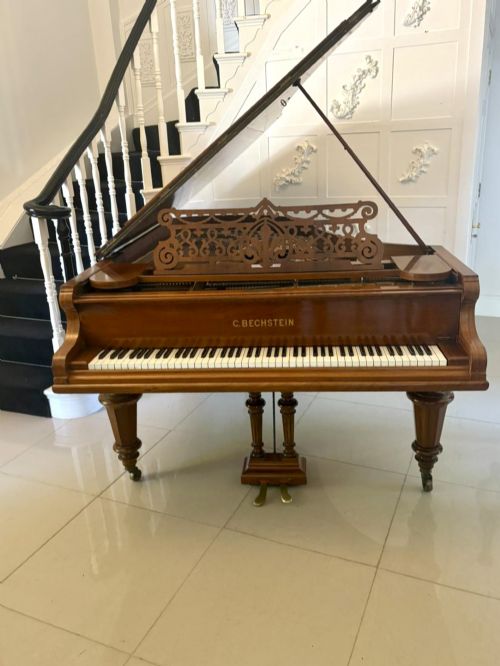
The objects originate from periods including the Victorian era, the nineteenth century, the Edwardian period, and the Regency era. Stools and benches dominate the selection, appearing alongside specific instruments by makers such as C. Bechstein and Wood, Small & Co.
How they were made
Carpenters and cabinetmakers utilised dense timbers such as mahogany, rosewood, walnut, and oak to construct both the instruments and their matching stools. These woods often display polished finishes or carved details suited to Victorian, Georgian, and Art Deco aesthetics.
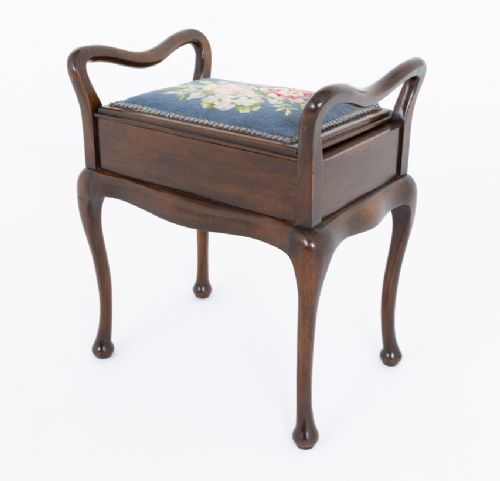
Functional metal elements, including brass fittings, cast iron, and adjustable screw mechanisms, were integrated into revolving stools and music chairs. Upholstered seats frequently feature fabric, velvet, or needlework coverings over internal padding.
Vintage Wood Piano Retail Price Guide 2026
Typical asking prices for vintage wood piano among the pieces listed under this phrase on Sellingantiques today, from the lower quarter to the upper quarter. They describe what is for sale here now, not the wider market.
Listings feature woods such as mahogany, rosewood, walnut, and oak across periods spanning the Georgian era to Art Deco.
What varies in quality
The standard of carving and joinery separates standard production items from pieces bearing maker attributions. Workshops such as Gillows and Jas Shoolbred applied refined proportions and detailed woodworking to their seating.
Material selection dictates much of the distinction between pieces, with figured rosewood, birds-eye maple, and gilt oak representing more ambitious commissions. The preservation of original mechanical revolving tops and adjustable screws also marks the standard of survival.
C Bechstein·Wood Small And Co·Gillows·Jas Shoolbred
The Vintage Wood Piano Glossary
- Boudoir grand piano
- A smaller scale grand piano designed for domestic rooms rather than concert halls. These instruments combine full keyboard compasses with compact casework.
- Revolving piano stool
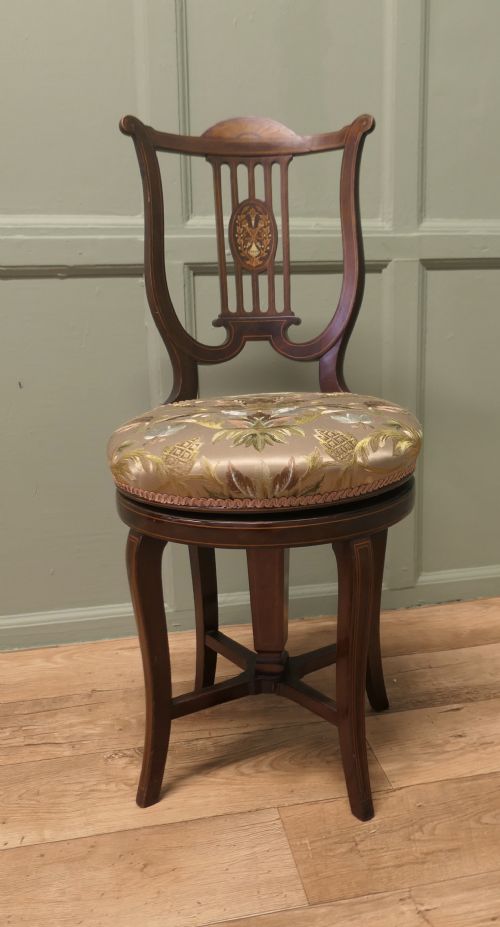
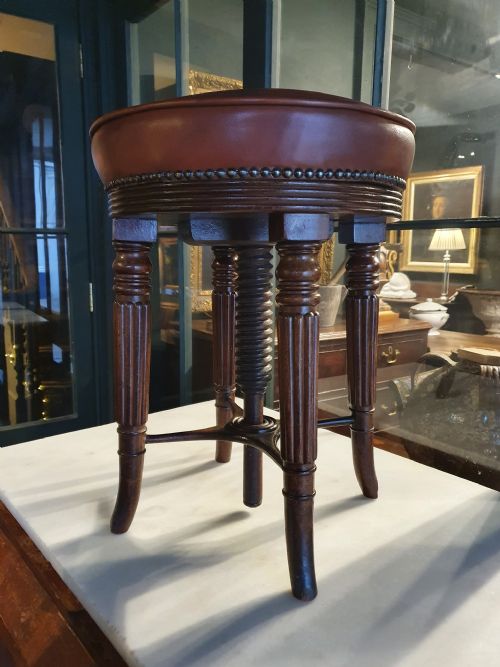
- A seat featuring an adjustable screw mechanism allowing the player to alter height by turning the top. These pieces often incorporate tripod or four-legged wooden bases.
- Duet stool
- An elongated piano bench built to seat two musicians simultaneously. They frequently appear in Edwardian and Art Deco styles.
- Square piano
- A keyboard instrument built in a rectangular table-like case rather than the traditional wing shape. These instruments date predominantly to the nineteenth century.
- Lyre back
- A chair or stool backrest shaped in the outline of a classical lyre. This motif appears frequently on nineteenth-century music chairs.
Vintage Wood Piano: Frequently Asked Questions
What is a square piano?
A square piano is a stringed keyboard instrument housed in a rectangular wooden case, resembling a table with legs rather than a grand piano.
These instruments were common in nineteenth-century homes before upright models became standard.
How do revolving piano stools work?
Revolving piano stools use a central wooden or metal screw mechanism that permits the seat to adjust in height when turned.
Musicians used this feature to attain a comfortable seating position relative to the keyboard.
What are duet piano stools?
Duet piano stools are wider benches designed to accommodate two people playing piano pieces together at the same time.
They appear in Edwardian and Art Deco styles, often matching the wood of the primary instrument.
How do I identify Victorian piano stools?
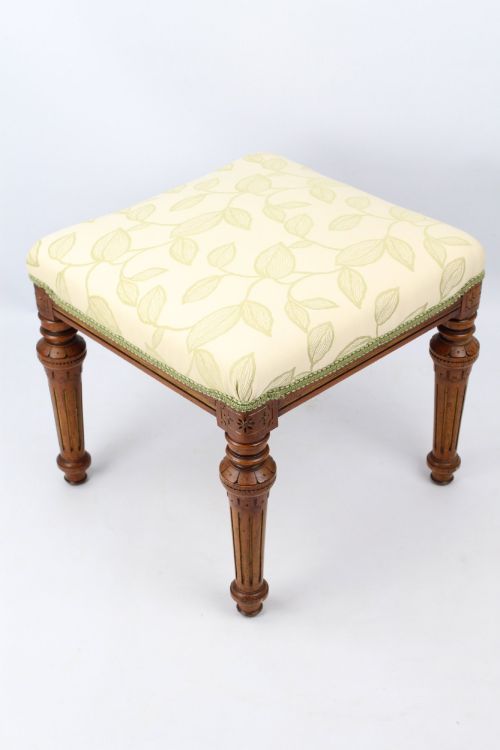
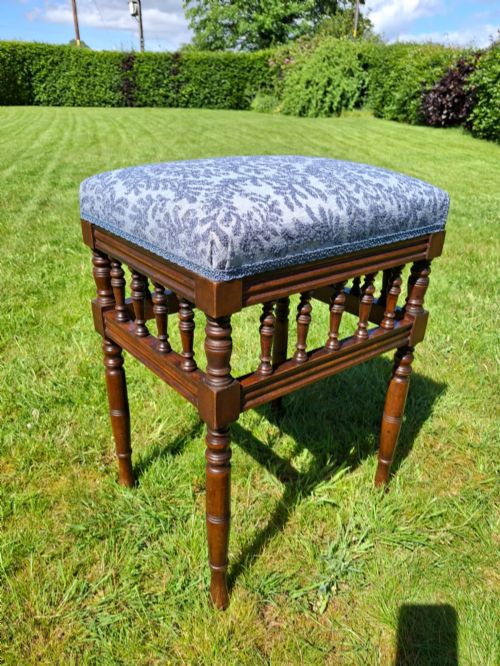
Victorian piano stools are typically constructed from mahogany or walnut, featuring turned legs, carved woodwork, and adjustable revolving tops.
They date from the mid-nineteenth century to the early twentieth century and match period parlour aesthetics.