

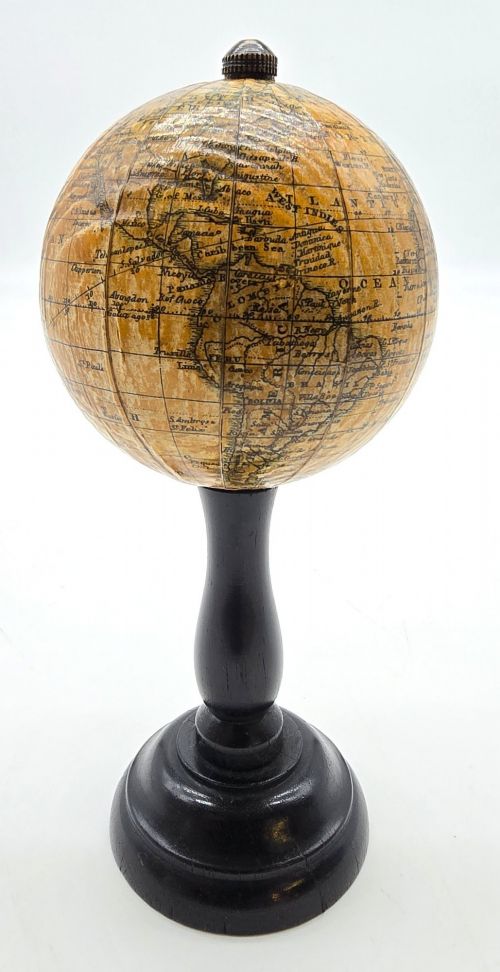


Vintage Wood Globe
A vintage wood globe sits on a desk or floor, mapping the world through paper gores mounted on spheres from the Victorian era to the mid-century.
Vintage Wood Globe
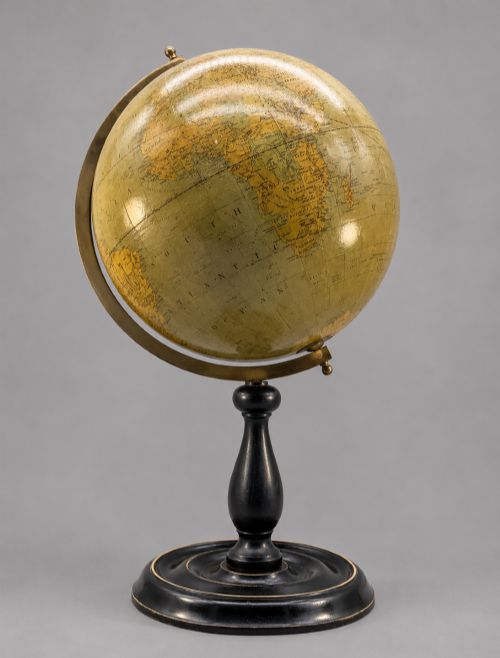
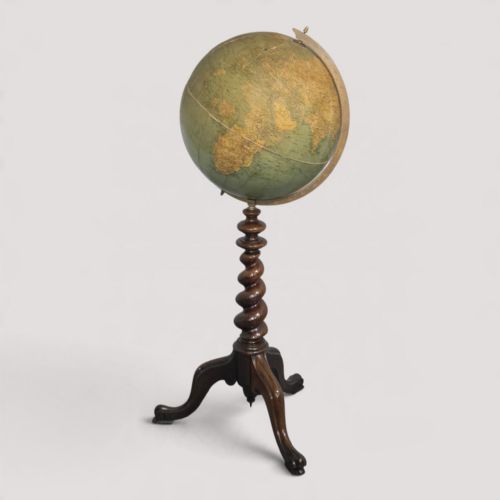
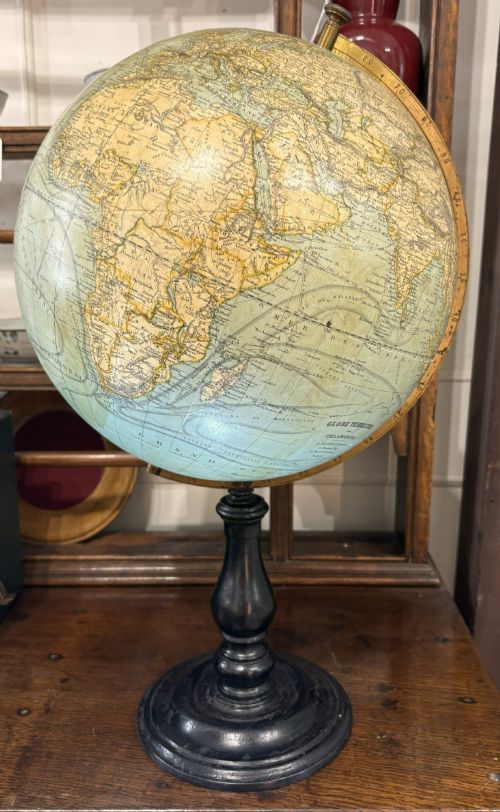
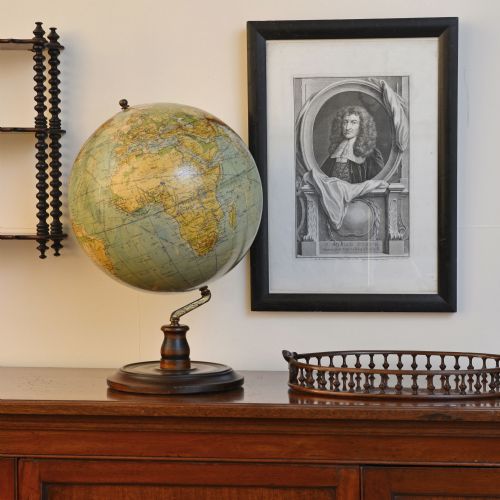
When you search for a vintage wood globe, you are looking at terrestrial and celestial instruments turned from timber and mounted with paper maps. These pieces range from tiny desk globes housed on ebony stands to large floor standing models raised on walnut feet.
The version you are most likely to meet on this page is a mid-century or interwar globe resting on a turned wooden base, often featuring paper gores applied over a plaster or papier-mâché core. Makers such as Bacon and George Philips produced these geographical tools for homes, libraries and classrooms.
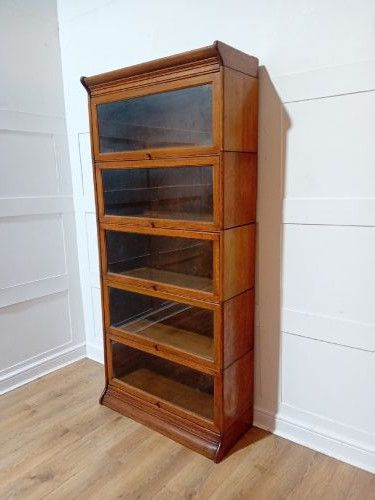
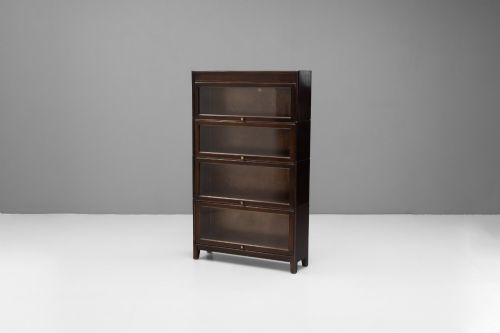
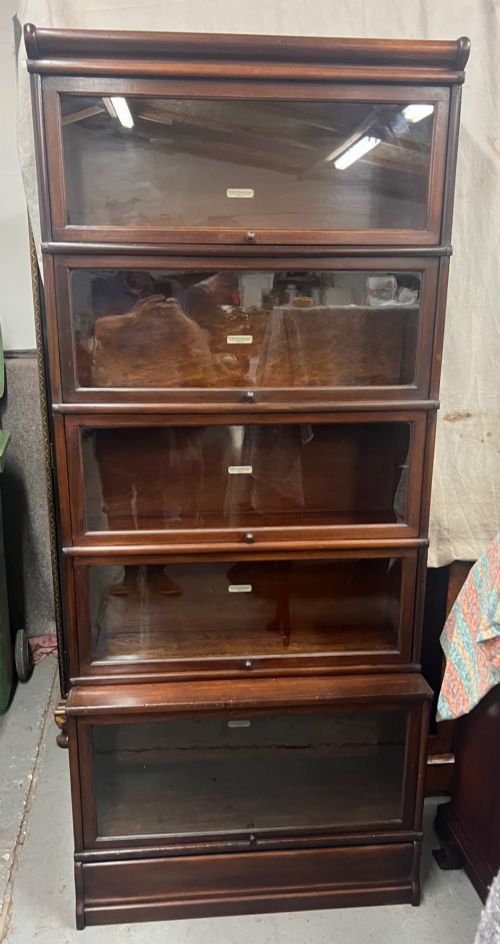
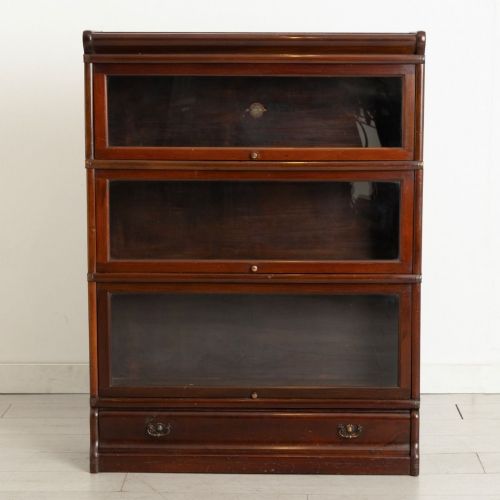
Beyond standalone spheres, the evidence shows that this search captures related library furniture and accessories sharing the same name or maker, including stacking bookcases and string boxes.
How they were made
Makers constructed the spherical body from plaster or papier-mâché over a core, then applied printed paper gores in precise segments to form the map of the world. Brass meridians and hour circles frequently frame these spheres, supported by turned wooden stands made from mahogany, walnut, oak or ebonised wood.
Stands and bases required skilled joinery and turning, matching the dense timber of the period to the delicate paper map above. Details such as ball feet and graduated wooden horizons complete the construction.
Vintage Wood Globe Retail Price Guide 2026
Typical asking prices for vintage wood globe among the pieces listed under this phrase on Sellingantiques today, from the lower quarter to the upper quarter. They describe what is for sale here now, not the wider market.
Listings feature items spanning the 18th century through to the 1960s, constructed from wood, paper, brass, glass and plaster.
What varies in quality
Quality rests in the clarity and completeness of the cartography, alongside the stability of the wooden stand and the preservation of the paper gores. Crisp printing on the map and rich grain in the walnut or mahogany base separate finer specimens from standard examples.
Original mounts, such as brass meridians paired with matching wooden feet, elevate an object above those altered or repaired with later replacements.
Bacon·George Philips and Son Ltd·Gunn Furniture·Globe Wernicke·Carey·Malby
The Vintage Wood Globe Glossary
- Gores
- The tapered strips of printed paper applied to the sphere to form the map. Accurate alignment of these sections is essential for a correct projection.
- Meridian
- The brass or metal ring surrounding the globe that allows it to spin on an axis. This ring often bears degree markings for navigation.
- Terrestrial Globe
- A scale model of the Earth showing political and physical geography. These contrast with celestial globes, which map the constellations.
- Stacking Bookcase
- Modular shelving units with glass doors, frequently produced by makers like Globe Wernicke. These share a name with the globe manufacturers but serve to house libraries.
Vintage Wood Globe: Frequently Asked Questions
How do I date a globe?
Examine the political boundaries, country names and shipping routes depicted on the paper gores. Cartographic changes often provide a narrow window of production.
Makers frequently updated their plates for new editions, allowing collectors to match geographical details to specific historical decades.
Where were these globes placed?
Smaller versions sat upon library desks, mahogany tables and enclosed string boxes. Floor standing models occupied studies, reading rooms and halls.
Their placement depended on scale, with miniature desk globes designed for close inspection and large floor models serving as room centrepieces.
What woods were used for the stands?
Turned bases utilise dense hardwoods including mahogany, walnut, oak and ebonised timber. These woods provided the necessary weight to anchor the spinning sphere above.
Finishes reflect the prevailing style of the period, from dark Victorian polishes to lighter mid-century grains.
Are celestial globes different?
Celestial globes map the stars and constellations rather than the continents and oceans of the Earth. They were often issued as pairs alongside a terrestrial globe.
Both types share similar wooden stands and brass meridian rings despite mapping different spheres.