

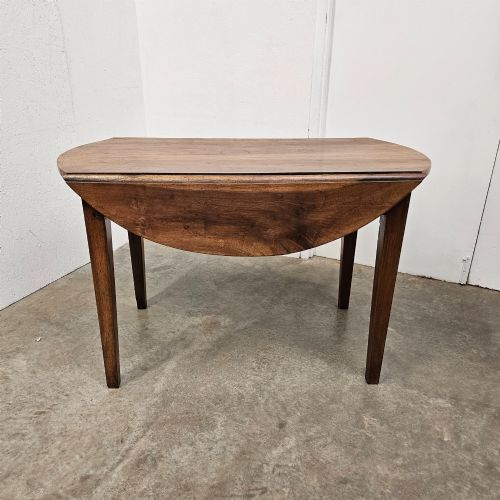
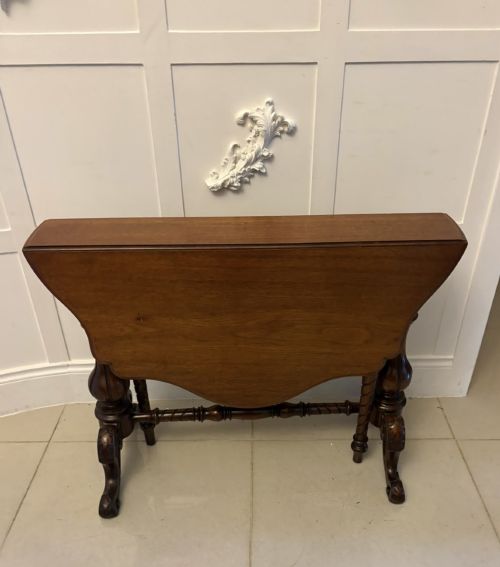
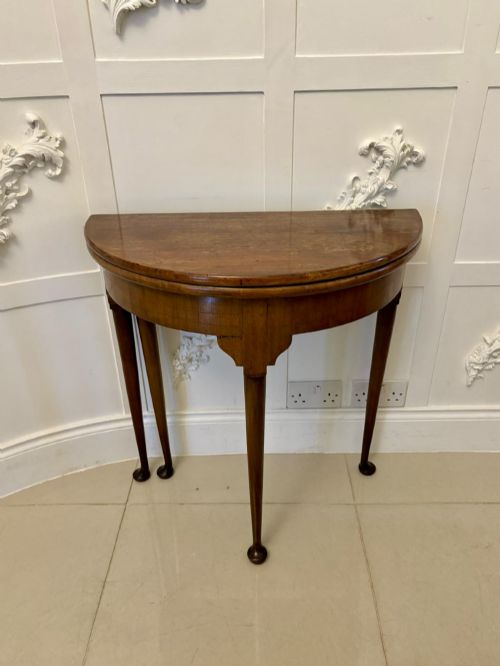
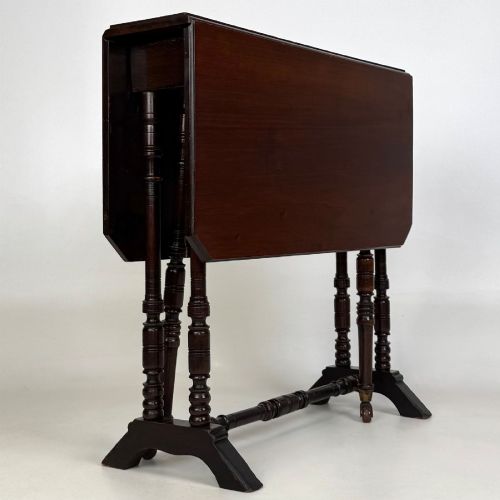


Vintage Wood Gateleg Table
A vintage wood gateleg table brings ingenious space-saving folding leaves and sturdy drop-leaf action into your home.
Vintage Wood Gateleg Table
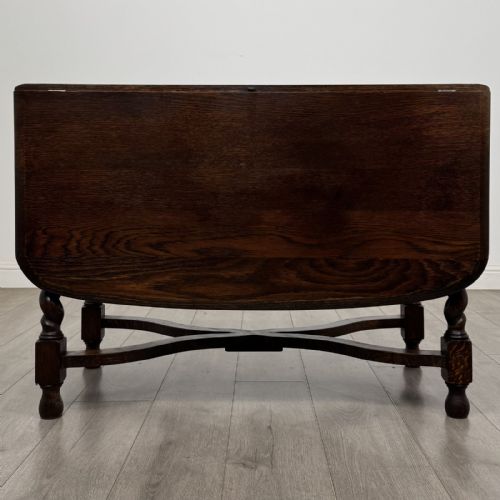
A vintage wood gateleg table provides a practical surface that folds down compactly when not needed and expands swiftly on hinged swinging legs.
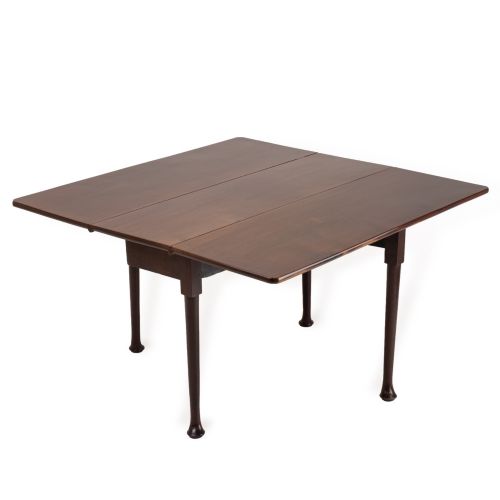
The selections span grand 18th-century dining pieces in mahogany to compact Edwardian occasional tables and robust 17th-century oak examples.
You will encounter various formats ranging from large oak dining tables to small coffee tables, card tables, and slender Sutherland tables.
How they were made
Cabinet makers utilised dense hardwoods like mahogany, oak, walnut, and elm, sometimes applying burr walnut veneers or delicate marquetry inlay.
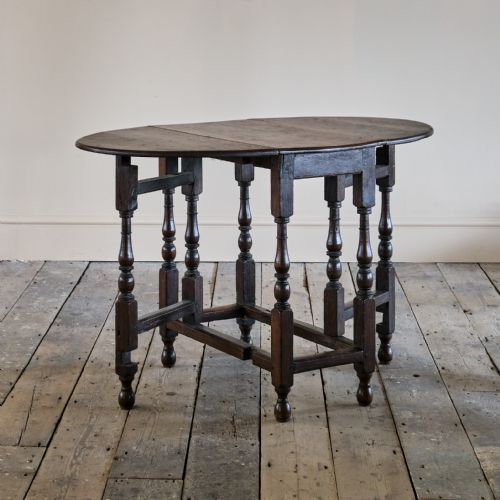
Structural stability relied on clever joinery and hinged wooden gates that swing outwards to support the dropping leaves under load.
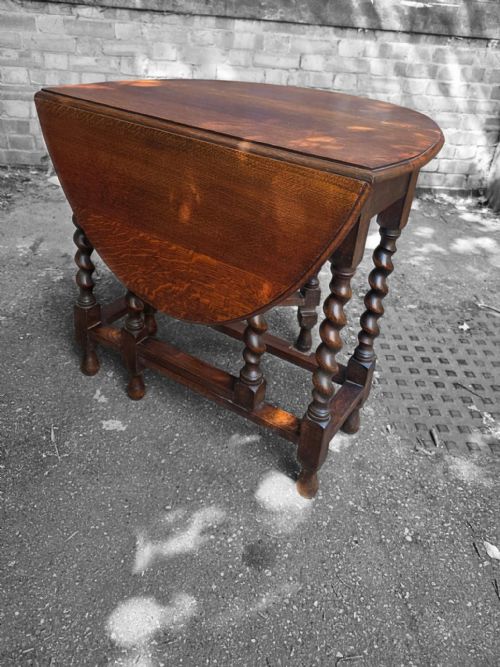
Turned supports such as barley twist legs, spider legs, and brass hardware provide functional reinforcement alongside decorative detail.
Vintage Wood Gateleg Table Retail Price Guide 2026
Typical asking prices for vintage wood gateleg table among the pieces listed under this phrase on Sellingantiques today, from the lower quarter to the upper quarter. They describe what is for sale here now, not the wider market.
Listings feature oak, mahogany, walnut, and elm spanning the 17th century through the Edwardian period and the 1920s.
What varies in quality
Construction standards depend on the choice of timber and the precision of the hinge mechanisms supporting the drop leaves.
Design sophistication ranges from plain country house oak to finely inlaid surfaces and elaborate turned leg configurations.
The Vintage Wood Gateleg Table Glossary
- Gateleg table
- A table with hinged leaves supported by one or more legs that swing outward like a gate.
- Sutherland table
- A narrow drop-leaf table with exceptionally slender legs and leaves that fold down almost vertically.
- Barley twist
- A type of decorative wood turning resembling a twisted rope, common on 17th-century and 1920s revival pieces.
- Demi-lune
- Half-moon shaped, typically describing tables designed to sit flat against a wall.
- Marquetry
- Decorative patterns formed by inserting pieces of contrasting veneer into a wood surface.
Vintage Wood Gateleg Table: Frequently Asked Questions
How do gateleg tables work?
Hinged flaps on either side lift up to create an extended surface for dining or writing. Pivoting legs swing out from the central frame to hold the leaves securely in place.
When extra space is required in a room, the legs fold back inwards and the leaves drop down flat against the sides.
What is a Sutherland table?
A Sutherland table is a specific variation of the drop-leaf table featuring a very narrow central top and exceptionally wide leaves. They often stand on slender legs supported by a gate action.
Victorian and Edwardian makers produced these compact pieces to serve as occasional or tea tables that occupied minimal floor space.
How do I date an oak gateleg table?
Early examples from the 17th century typically show heavy construction in solid oak with hand-carved details and pegged joints. Later revival pieces from the early 20th century utilise machine-turned barley twists and standardised hardware.
Timber colour, patination, and the complexity of the underframe construction help distinguish period originals from later interpretations.
Can I use a drop leaf table daily?
These tables adapt easily to daily life because the leaves adjust quickly depending on whether you need a compact side surface or a full dining area. Solid timber construction handles routine use reliably.
Care should be taken not to lean excessive weight on the unsupported outer edges of extended leaves.