


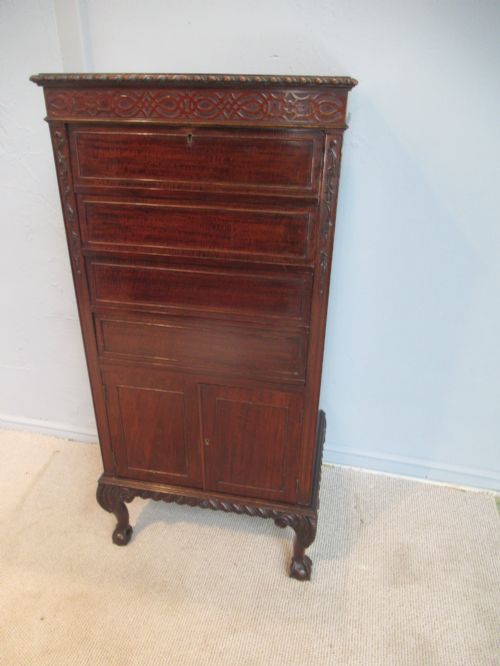
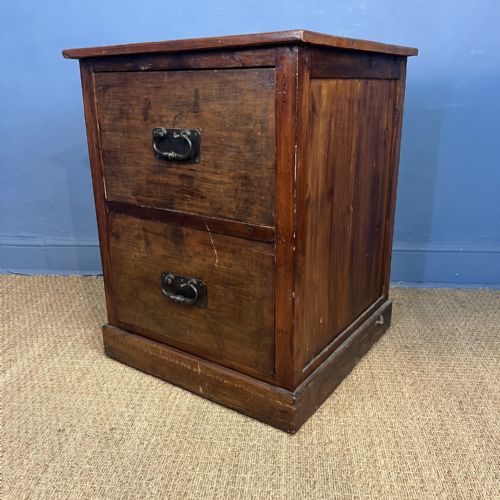


Vintage Wood Filing Chest
A vintage wood filing chest brings disciplined storage into a room, offering deep drawers and tambour doors shaped from oak, mahogany, and walnut.
Vintage Wood Filing Chest
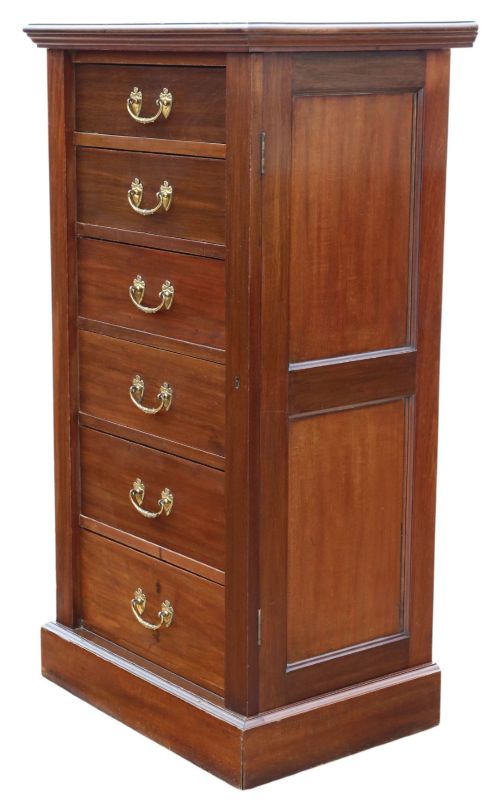
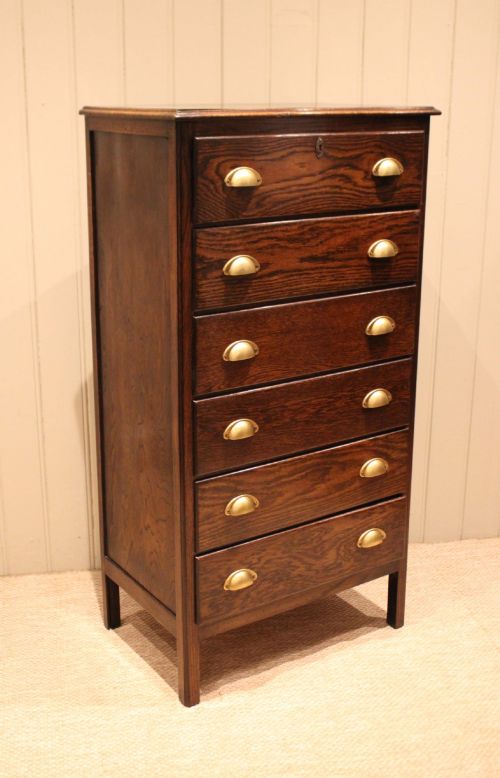
A vintage wood filing chest is a functional piece designed for sorting papers, ledgers, and correspondence, often taking the form of a multi-drawer bank, a tambour-front cabinet, or a Wellington chest. The examples found here span from the 18th century through the Edwardian period and the 1920s, showing how office storage evolved into domestic furniture.
Buyers meet variations ranging from compact music cabinets to heavy banker's pedestals and tall oak chests of drawers. Woods like mahogany, oak, walnut, teak, and rosewood dominate the construction, paired with utilitarian hardware.
Origins stretch across British, Anglo-Indian, and continental workshops, encompassing styles from Georgian and Victorian to Arts and Crafts and industrial periods. These cabinets suit studies and workspaces where organisation requires genuine material presence.
Materials and construction methods
Cabinetmakers utilised hardwoods such as solid mahogany, oak, and walnut, frequently selecting them for durability in daily commercial and domestic use. Teak and rosewood also appear in specific regional pieces, while secondary woods support internal framework and drawer carcasses.
Joinery relies on traditional dovetailing for drawer construction to withstand the weight of heavy paper files and ledgers. Flexible tambour slats are glued to canvas backings to slide smoothly around curved tracks, and brass fittings secure the operational fronts.
Vintage Wood Filing Chest Retail Price Guide 2026
Typical asking prices for vintage wood filing chest among the pieces listed under this phrase on Sellingantiques today, from the lower quarter to the upper quarter. They describe what is for sale here now, not the wider market.
Many filing chests still retain tiny remnants of old paper labels tucked inside their brass pulls, recording forgotten filing systems.
Factors of quality and execution
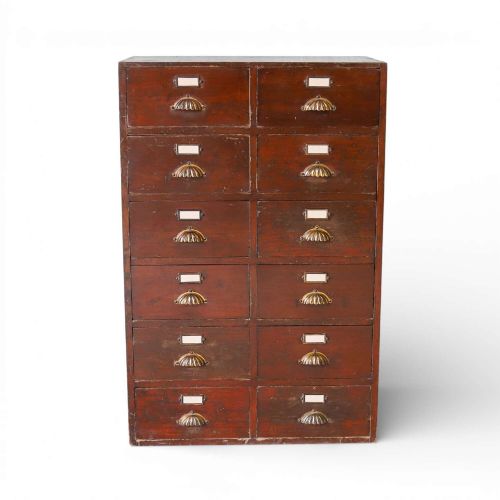
Quality rests in the selection of timber grain and the precision of the joinery, particularly where tambour doors meet their housings or multi-drawer banks align within a heavy carcase. Superior pieces retain original brass shell pulls and label holders rather than modern replacements.
The integrity of the internal mechanisms, such as locking stiles on Wellington chests or adjustable shelving in oak cabinets, separates standard utility furniture from finer workshops. Original patination on walnut and mahogany surfaces marks pieces that have aged through active service without harsh intervention.
The Vintage Wood Filing Chest Glossary
- Tambour front
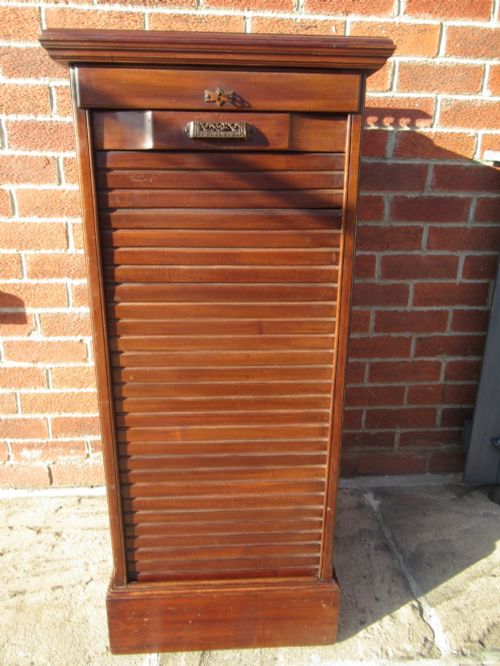
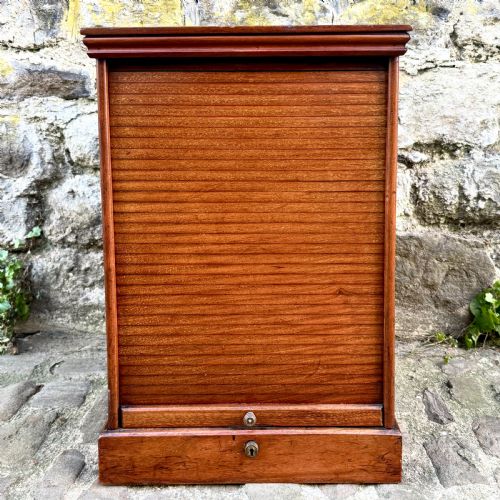
- A flexible door made of narrow wood strips glued to a canvas backing, allowing it to slide around a track to conceal interior shelves or files.
- Wellington chest
- A tall, narrow chest of drawers secured by a hinged vertical side stile that locks over the drawer edges with a single key.
- Bank of drawers
- A multi-tiered cabinetry unit housing numerous shallow drawers designed for sorting documents, maps, or sheet music.
- Shell pull
- A pressed or cast brass handle shaped like a scallop shell, often incorporating a small frame to hold a paper label.
- Folio cabinet
- A specialised piece of furniture built to store large sheets of paper, prints, or musical scores flat.
Vintage Wood Filing Chest: Frequently Asked Questions
What fits inside these chests?
These chests accommodate standard papers, correspondence, and ledgers within their shallow or deep banks of drawers. Music cabinets and folio chests specifically suit sheet music and large documents.
Larger pedestal units and patent letter files offer deeper storage capacity for heavier office requirements and systematic filing.
How do tambour doors work?
Tambour doors consist of narrow wooden slats attached to a flexible canvas backing that runs along grooved tracks inside the cabinet carcase. This allows the door to slide smoothly around a corner and out of sight.
Keeping the tracks clean and lightly waxed ensures the mechanism operates smoothly without binding.
Can I use one for modern office files?
Many multi-drawer cabinets and filing chests accommodate historical paper sizes rather than modern suspended suspension files, though smaller drawers work well for stationery and loose documents. Measuring the interior drawer dimensions before purchase ensures your specific items will fit.
Several pieces feature adjustable shelves or flexible configurations suited to varied desk storage needs.
How do I date a wooden filing chest?
Dating relies on observing construction methods, timber choices, and style markers such as Edwardian proportions or Arts and Crafts details. Brass hardware like original shell pulls and label holders also provide clues to the manufacturing era.
Patent stamps, such as those found on Amberg’s cabinets, offer specific chronological reference points.