

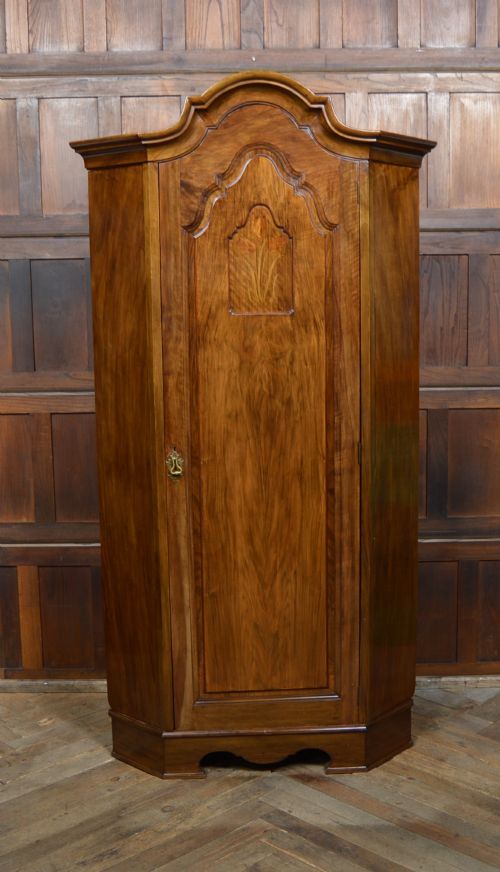

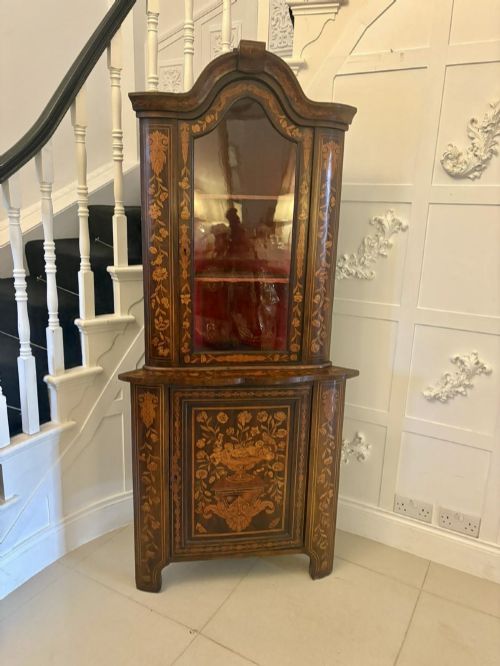
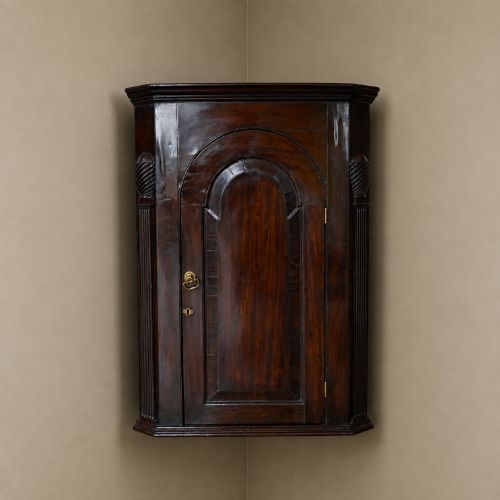
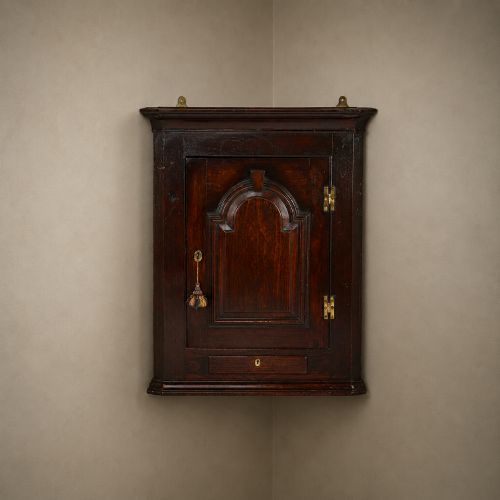
Vintage Wood Corner Cupboard
A vintage wood corner cupboard brings dead space to life, turning an empty room angle into display space or concealed storage.
Vintage Wood Corner Cupboard
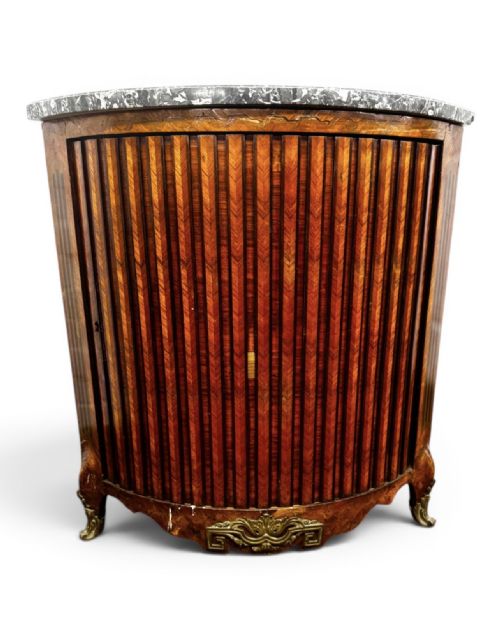
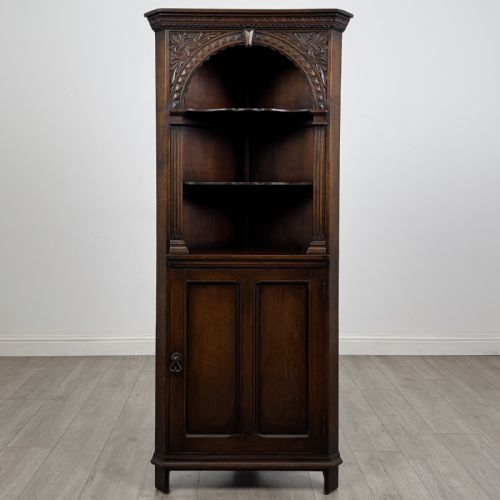
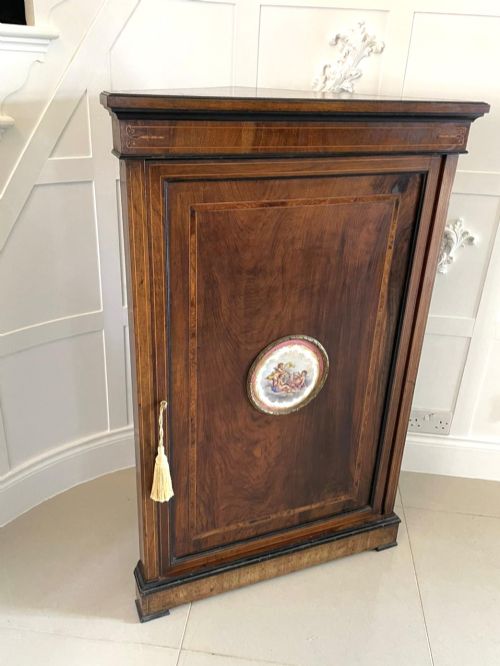
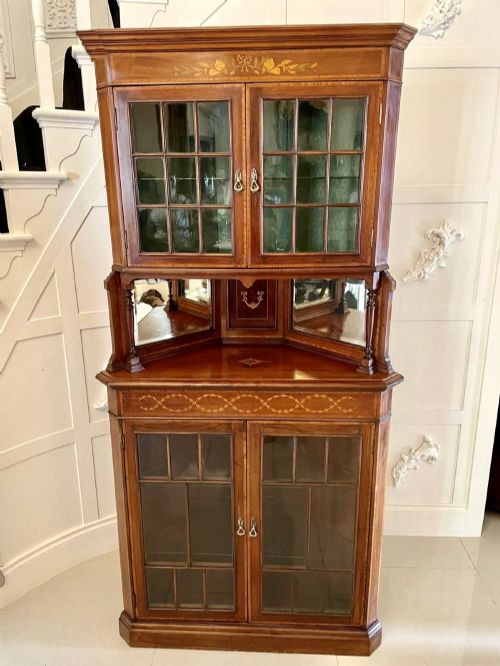
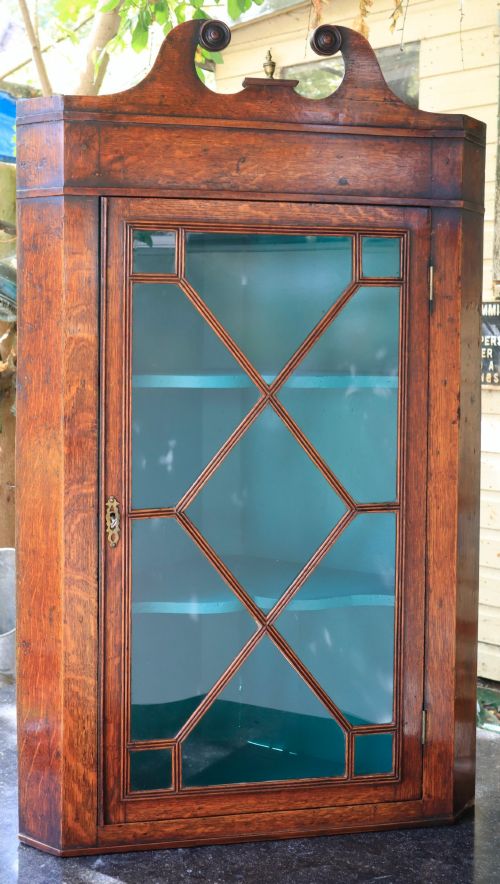
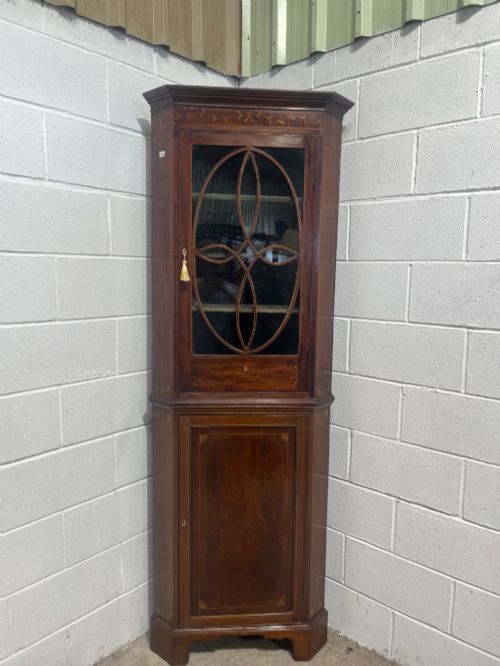
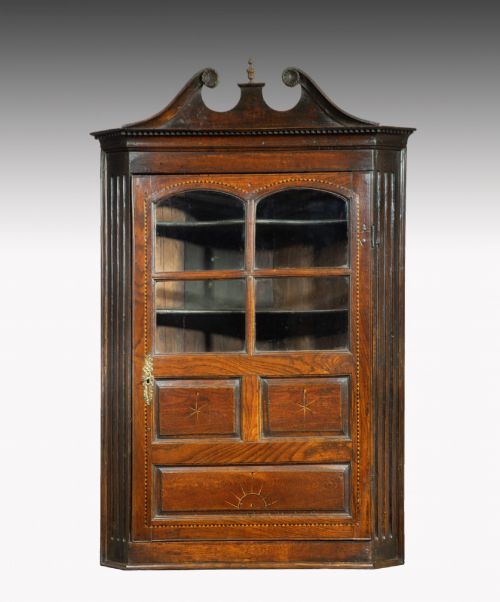
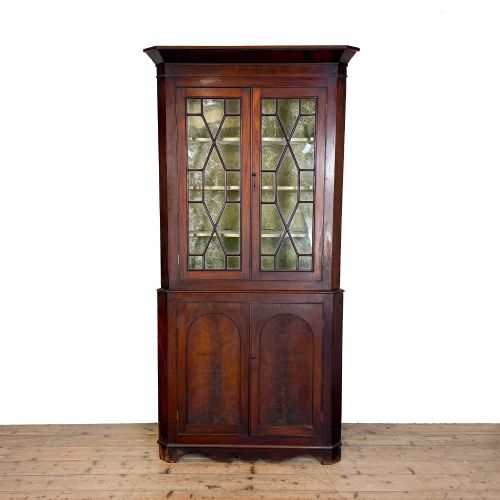
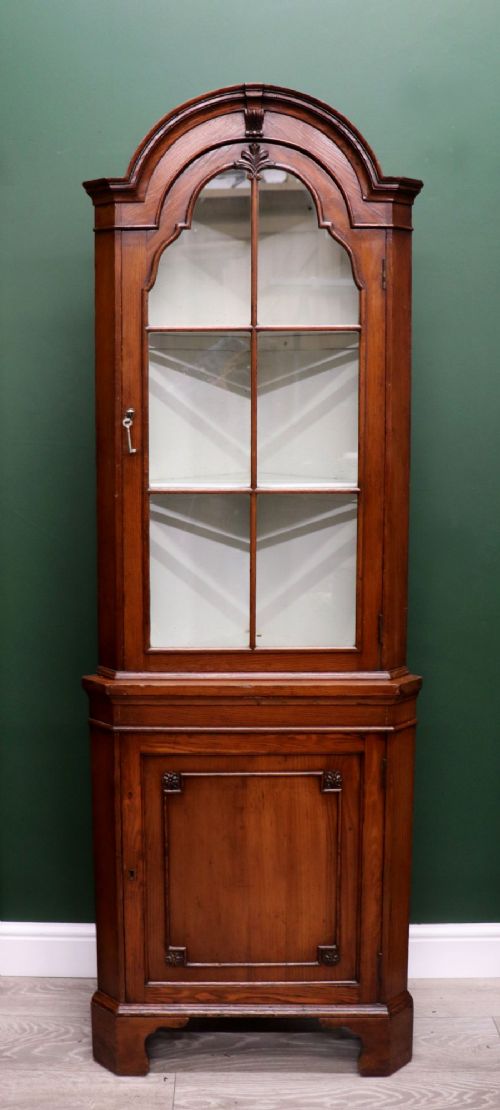
When you search for a vintage wood corner cupboard, you encounter fitted architectural furniture designed to occupy the meeting point of two walls. The forms range from small wall-hanging units to tall floor-standing cabinets, display vitrines, and double-door storage pieces.
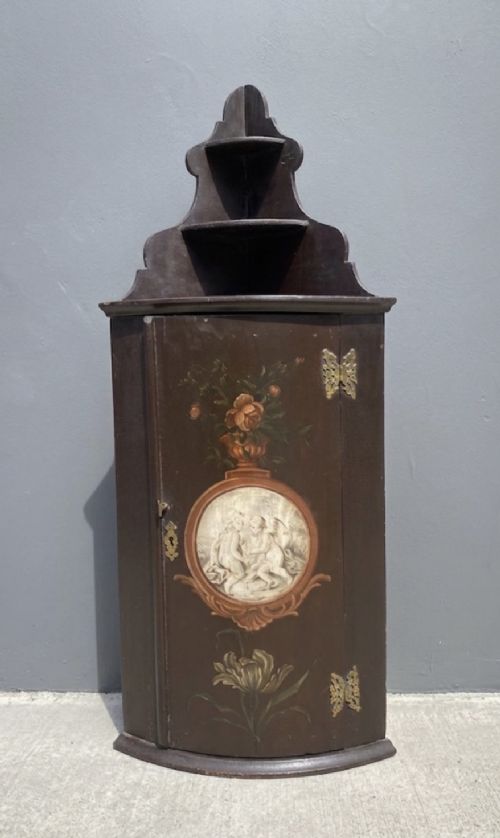
The versions most frequently met on this page span the eighteenth, nineteenth, and twentieth centuries. Georgian mahogany hanging pieces and Edwardian inlaid styles dominate the selection alongside Victorian, oak, and painted country cupboards.
These items serve specific domestic functions, utilising interior shelves to hold books, tableware, or glassware. Some incorporate glazed doors for exhibition or drawers below the main compartment for smaller items.
Materials and construction
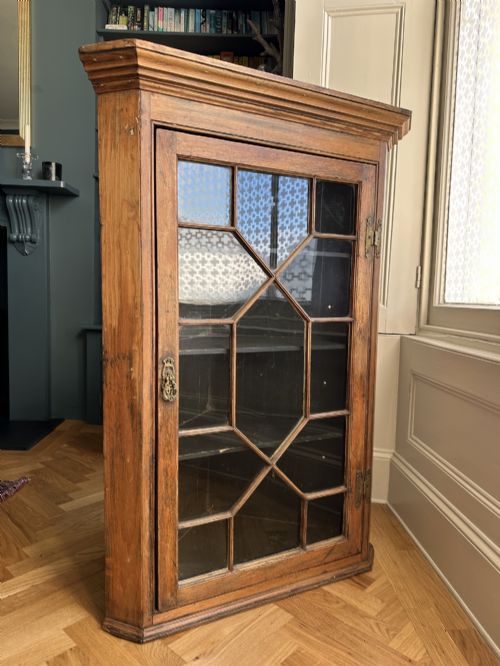
Cabinet makers utilised solid timber and veneers, with mahogany and oak appearing most often alongside walnut, satinwood inlay, and pine. Brass fittings such as hinges, escutcheons, and keyplates provide structural contrast to the timber surfaces.
Construction techniques include panelled doors, glazed front panels, and marquetry or satinwood inlay work. Painted finishes and original decorated interiors also occur across eighteenth-century and nineteenth-century examples.
Vintage Wood Corner Cupboard Retail Price Guide 2026
Typical asking prices for vintage wood corner cupboard among the pieces listed under this phrase on Sellingantiques today, from the lower quarter to the upper quarter. They describe what is for sale here now, not the wider market.
What distinguishes finer examples
Quality rests upon the selection of timber figures, the precision of inlaid details, and the integrity of the joinery. Finer pieces demonstrate careful alignment in their grain patterns and crisp execution in marquetry work.
Design sophistication also sets examples apart, seen in architectural cornices, original brass hardware, and well-proportioned glazed door frames. The presence of fitted interior shelves and working locks with keys further distinguishes superior cabinets.
The Vintage Wood Corner Cupboard Glossary
- Marquetry
- Decorative veneer work arranged in patterns or pictorial designs using various coloured woods. This technique adorns many Edwardian and Dutch cabinets.
- Vitrine
- A glass-fronted cabinet utilised for displaying fragile objects or porcelain. These pieces often feature glazed doors to protect the contents.
- Cornice
- The moulded projection that crowns the top of a cabinet. It finishes the architectural profile against the wall.
- Escutcheon
- A protective plate surrounding a keyhole, frequently cast in brass. It prevents the timber from wearing around the lock.
- Hanging cabinet
- A cupboard built without a floor base, intended to be fixed directly to wall studs. These items maximise floor space in smaller rooms.
Vintage Wood Corner Cupboard: Frequently Asked Questions
Where should I place a corner cupboard?
These cabinets suit awkward room angles and empty intersections where standard square furniture fails to fit. They anchor dead corners in dining rooms, hallways, and living spaces.
Wall-hanging versions mount directly above tables or sideboards, while floor-standing variants occupy the entire vertical angle from skirting board to cornice.
How do I distinguish Georgian from Edwardian pieces?
Georgian examples, dating through the eighteenth and early nineteenth centuries, rely on solid mahogany proportions, fielded panels, and architectural brass H-hinges. Their construction prioritises functional gravity and structural strength.
Edwardian interpretations from around 1900 lean towards lighter satinwood inlay, Sheraton Revival motifs, and delicate glazed frames. They reflect a lighter decorative aesthetic compared to earlier iterations.
Can I store heavy items inside them?
Most interiors contain fixed or adjustable timber shelving designed for everyday crockery, books, or glassware. Floor-standing variants carry greater weight capacity due to their direct contact with the floor.
Wall-hanging models require secure fixing to solid masonry or wall studs to support the combined weight of the timber structure and its contents.
What is a double corner cabinet?
A double corner cabinet comprises a larger structural footprint featuring upper and lower storage sections or four doors. These substantial pieces provide expanded capacity for collections and household goods.
They require significant wall clearance on both adjacent sides to accommodate their wider triangular proportions.