



Vintage Wine Pitcher Silver
These vintage wine pitcher silver pieces combine cut glass and plated mounts to serve claret at the Victorian and Edwardian table.
Vintage Wine Pitcher Silver
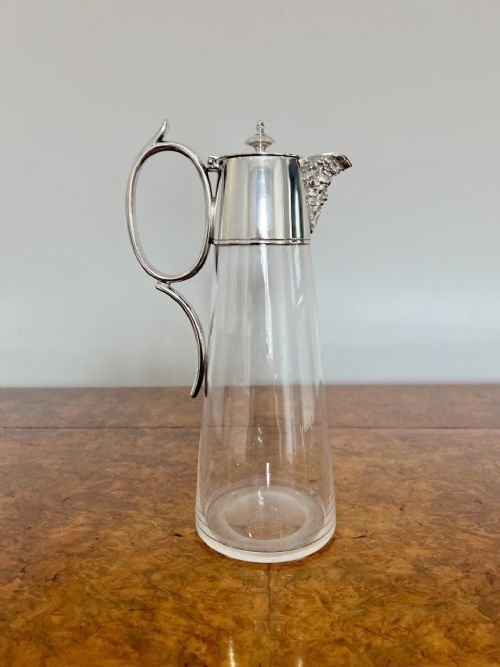
A vintage wine pitcher silver piece takes the form of a claret jug, decanter, or serving ewer designed for pouring wine at the dining table. The selection spans the Victorian, Edwardian, and mid-century periods, with items originating from the nineteenth and twentieth centuries.
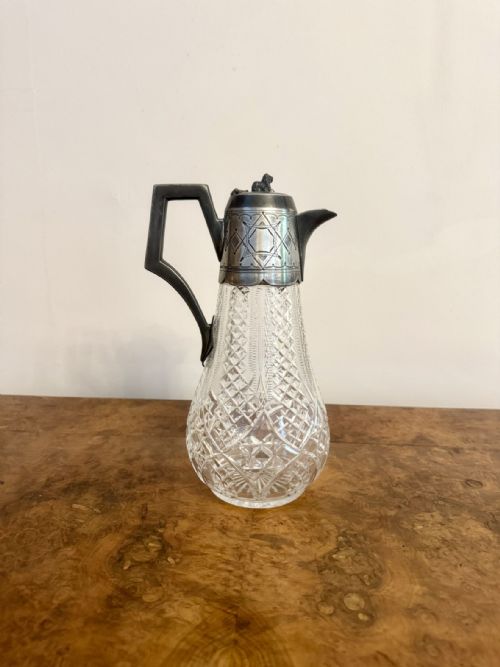
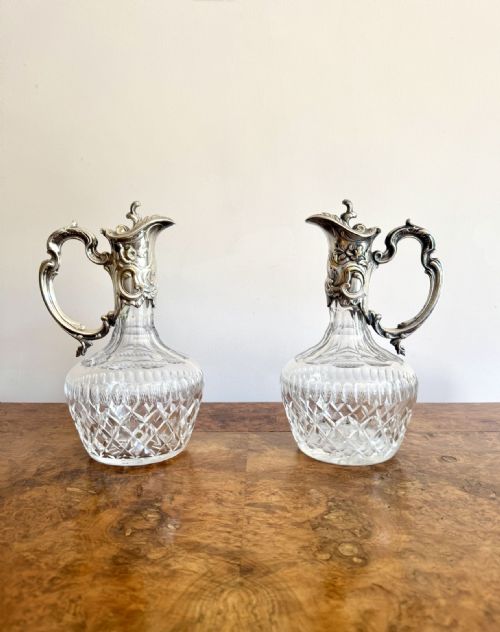
The most common examples on this page pair a glass body with silver-plated mounts, hinged lids, and decorative handles. These vessels range from traditional cut glass claret jugs to cranberry glass wine decanters and occasional sterling silver mounts.
Stylistic influences include Rococo, Art Nouveau, Arts and Crafts, and Mid-Century Modern designs. Buyers encounter everything from standard table jugs to specialised vessels such as whisky noggins and communion jugs.
How they were made
Maker's workshops combined blown or moulded glass bodies with metal components, utilising clear, cut, crystal, or cranberry glass. Artisans shaped the glass through blowing and wheel-cutting to create geometric or floral patterns across the body.
Metal mounts, covers, and handles consist of silver plate, Old Sheffield plate, or sterling silver fixed securely to the glass collars. Artisans applied casting, chasing, and etching techniques to decorate the hinged lids, scroll designs, and mounts.
The listings span periods from the eighteenth century through to 1960, encompassing Victorian, Edwardian, Art Nouveau, and Mid-Century Modern styles.
What varies in quality
Quality rests in the weight and clarity of the glass body, alongside the depth of hand-cut facets or etched detailing. Finer vessels display crisp moulding and substantial crystal rather than thin, light glass.
The standard of the metalwork also separates tiers, with heavier silver plating and more complex cast mounts indicating superior craftsmanship. Details such as figural finials, face spouts, and robust hinged mechanisms distinguish elevated examples from plain production.
Hukin & Heath·Valenti
The Vintage Wine Pitcher Silver Glossary
- Claret jug
- A specialised pouring vessel designed specifically for serving red claret wine at table. These pieces typically feature a glass body with a metal handle and hinged lid.
- Silver plate
- A base metal coated with a thin layer of silver through electroplating or older fusing methods. This material provided the decorative mounts for many nineteenth-century glass jugs.
- Cranberry glass
- A rich red glass coloured with gold chloride during the manufacturing process. It frequently appears in Edwardian wine decanters and ewers.
- Whisky noggin
- A small drinking vessel or personal jug used for spirits. Examples in this category include giant chota peg designs from the colonial era.
Vintage Wine Pitcher Silver: Frequently Asked Questions
What is a claret jug?
A claret jug is a vessel designed to hold and pour red wine at the dining table. They typically combine a decorative glass body with a metal handle and a hinged lid.
Victorian and Edwardian households used them specifically for serving claret during formal meals.
How do I clean silver plate?
Silver plate requires gentle cleaning with a specialised silver cloth or mild polish to preserve the thin metal layer. Avoid abrasive cleaners that can wear away the plating over time.
Take care to keep moisture away from any secured glass joints during the cleaning process.
Are these pieces made of solid silver?
Most items on this page utilise silver plate rather than solid sterling silver. The glass bodies form the main structure, while the mounts, handles, and lids carry the silver coating.
Selected pieces do feature sterling silver mounts, which are usually marked with appropriate hallmarks.
How do I date a glass jug?
Dating relies on the combined style of the glass cutting, the shape of the metal mount, and any visible hallmarks. Victorian pieces often display heavier Rococo or gothic revival influences.
Edwardian and later twentieth-century examples shift towards cleaner lines, Art Nouveau curves, or mid-century minimalism.