

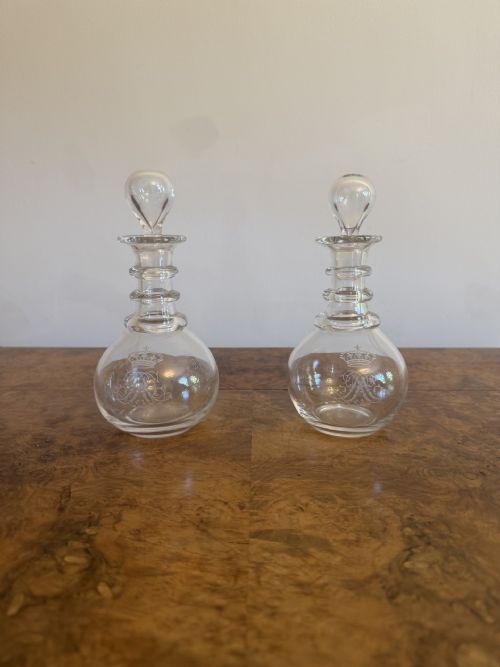
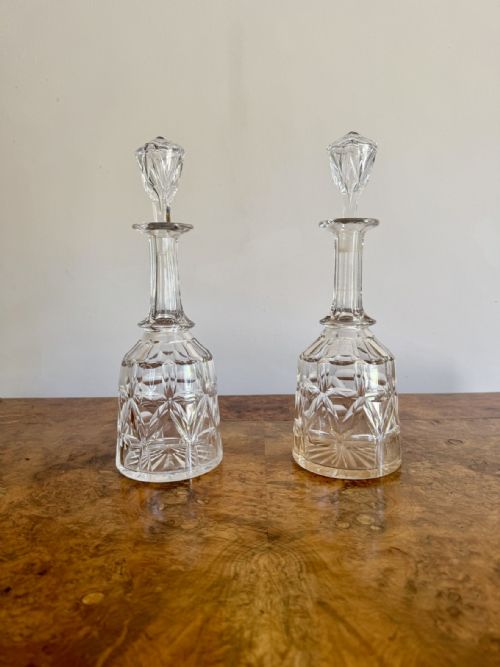


Vintage Wine Decanter Pair
A vintage wine decanter pair brings symmetry to the table, combining matched pouring vessels shaped by decades of glassmaking and metalwork traditions.
Vintage Wine Decanter Pair
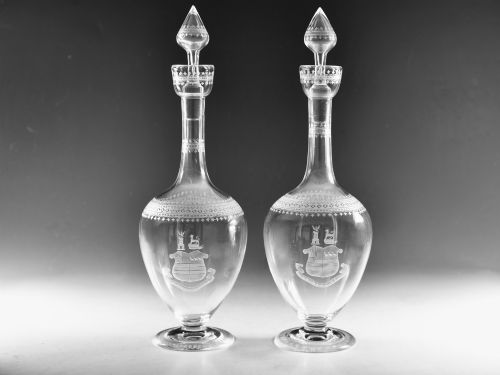
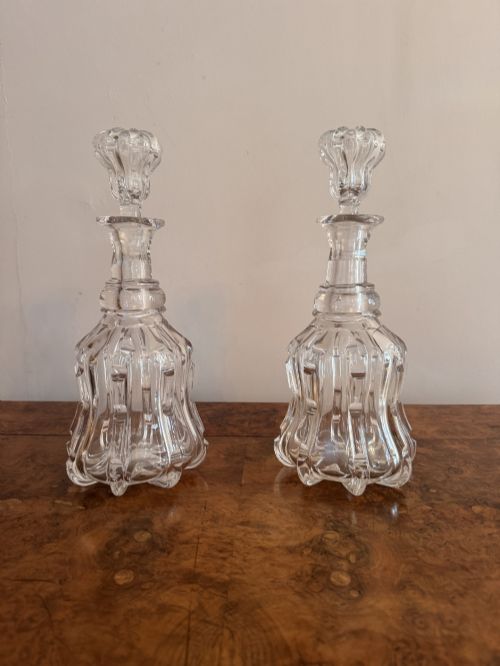
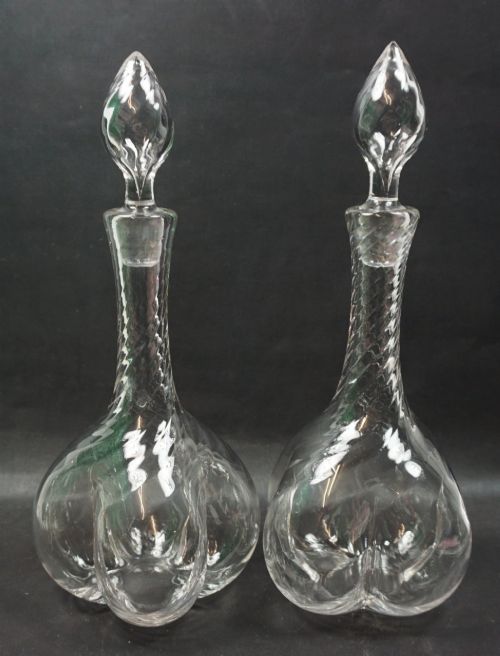
A vintage wine decanter pair typically takes the form of matched bottles or jugs designed to hold and serve wine together. The pieces seen here span from the 19th Century and Victorian eras through to the Edwardian period and the 1920s, reflecting shifts in dining room presentation.
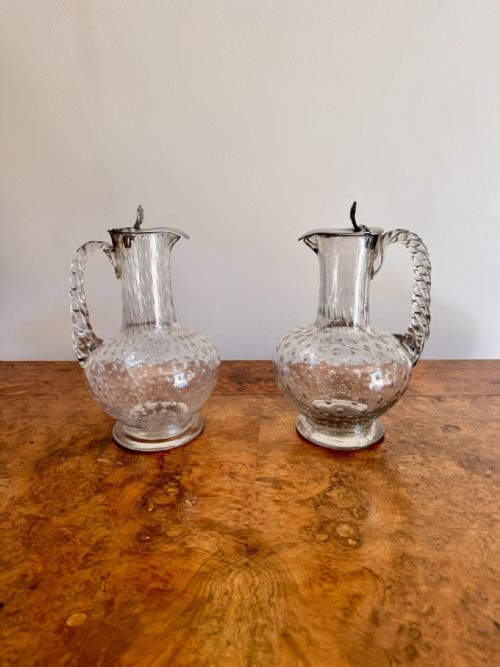
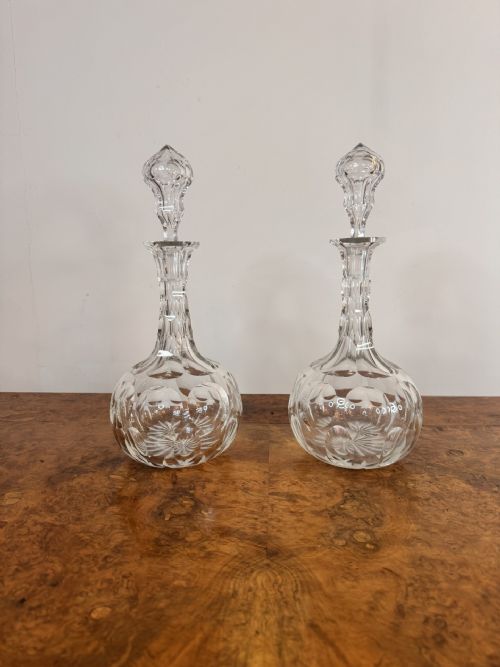
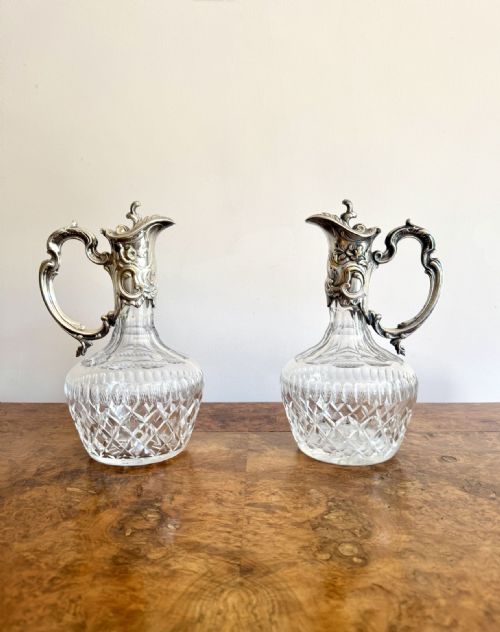
The most common examples on this page date from the Edwardian period and the 19th Century, often combining glass bodies with metal mounts. These pairs range from straightforward cut glass vessels to more elaborate styles like claret jugs and liqueur ewers.
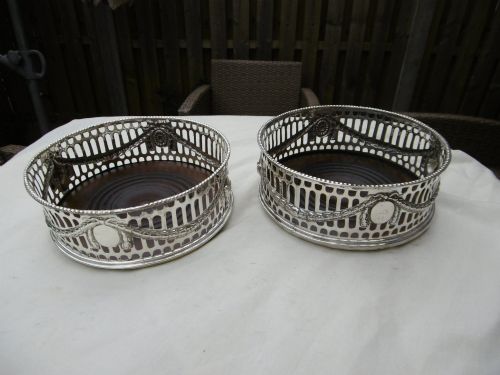
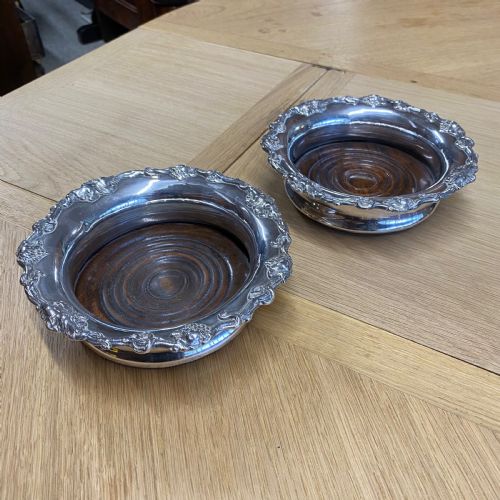
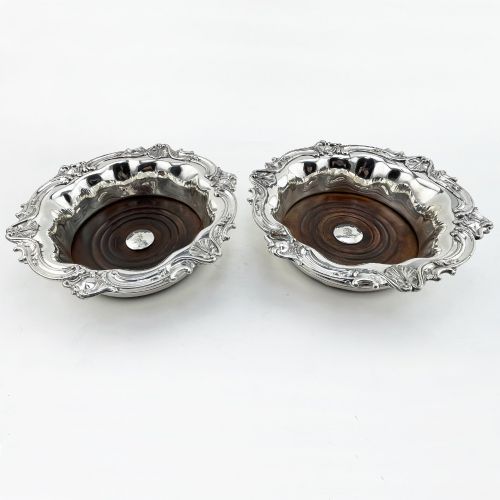
Alongside glass bottles, the selection includes accompanying wine coasters and bottle stands made from wood, silver plate, and pewter. These items share the dining table with the decanters, providing a coordinated setting for vintage wine service.
Distinctions in manufacture
The standard of cutting on the glass body separates standard vessels from finer examples, with deep, crisp facets showing greater skill than shallow moulding. Clarity of the crystal and the weight of the glass further distinguish the work.
Metal mounts demonstrate quality through the crispness of chased or engraved details and the weight of the silver plate or pewter used. Solid silver elements and named makers add distinction to the metalwork.
Matching consistency within the pair dictates overall success, as hand-blown items often display slight individual variations in height, capacity, or form. Pairs that maintain uniform proportions and matching stoppers represent the better end of the range.
Vintage Wine Decanter Pair Retail Price Guide 2026
Typical asking prices for vintage wine decanter pair among the pieces listed under this phrase on Sellingantiques today, from the lower quarter to the upper quarter. They describe what is for sale here now, not the wider market.
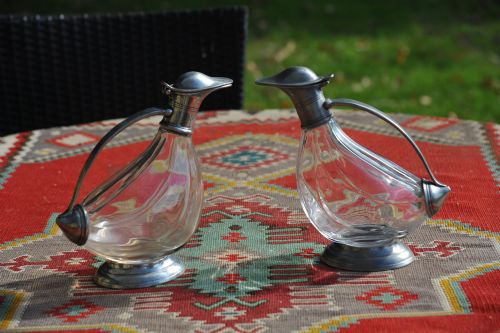
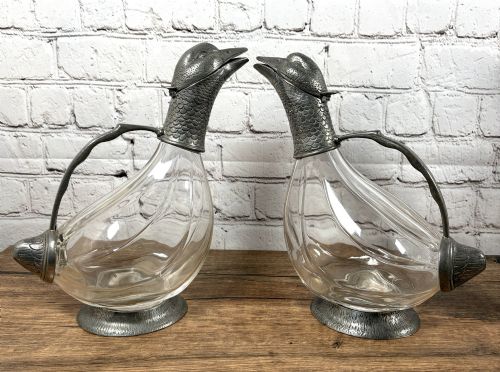
Keep an eye out for stylised duck decanters, proving that 1950s dining tables welcomed waterfowl alongside traditional crystal.
John Rowbotham·Walsh & Walsh·James Powell·Asprey·Rene Lalique·Matthew Boulton
The Vintage Wine Decanter Pair Glossary
- Claret jug
- A pouring vessel designed specifically for red wine, usually featuring a handle and a hinged metal lid. These jugs often combine glass bodies with pewter or silver-plated mounts.
- Prussian decanter
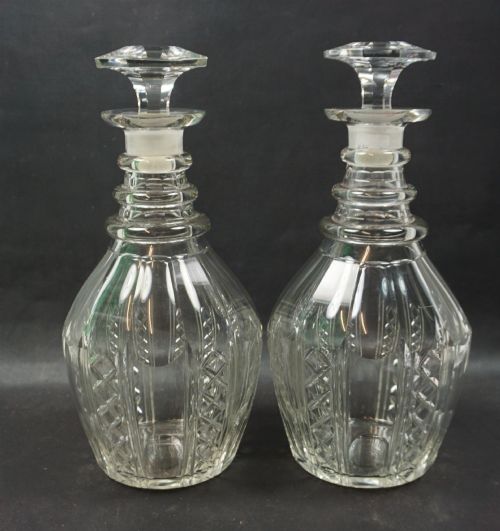
- A bottle shape characterised by a slightly tapering cylindrical body and multiple neck rings. This form appeared frequently during the Georgian and 19th Century periods.
- Wine coaster
- A small circular tray placed on the table to hold a wine bottle or decanter and protect the surface. They are constructed from wood, silver plate, or pewter.
- Lead crystal
- A type of glass containing lead oxide, which increases the weight, refractive index, and clarity of the material. It allows for deeper and sharper cutting than standard glass.
- Old Sheffield Plate
- A composite material made by fusing a thin sheet of silver to a thicker copper base. This technique predates modern electroplating and appears on 19th-century serving items.
Vintage Wine Decanter Pair: Frequently Asked Questions
What is a vintage wine decanter pair?
A vintage wine decanter pair consists of two matched pouring vessels intended for serving wine together at the table. They share matching materials, forms, and decorative details.
Such sets typically date from the 19th Century through the early decades of the 20th century, encompassing styles from Victorian cut glass to Edwardian silver plate.
How were decanter pairs used?
These vessels served to hold and aerate wine before pouring it into glasses during formal dining. Two matched bottles allowed hosts to serve different wines simultaneously or maintain a symmetrical table arrangement.
Associated items like wine coasters were placed beneath the bottles to catch drips and protect polished dining surfaces from rings.
How do I identify the period?
Dating relies on observing the shape of the body, the style of the cutting, and the nature of any metal mounts. Victorian and Edwardian pieces often display heavy cut glass patterns, while 1920s examples may show simpler silhouettes or art nouveau influences.
Maker marks on metal collars or stoppers can also help narrow down the decade of manufacture.
How do I live with them?
Decanter pairs function effectively as decorative table centrepieces or sideboard displays when not in use for entertaining. Placing them away from direct sunlight helps preserve the colour of tinted glass.
Careful hand washing with bottle brushes keeps the interior clear without damaging historic glass surfaces or metal mounts.