


Vintage White Glass Pendants
These vintage white glass pendants bring diffuse, working light into a room, combining practical illumination with period character from the early twentieth century.
Vintage White Glass Pendants
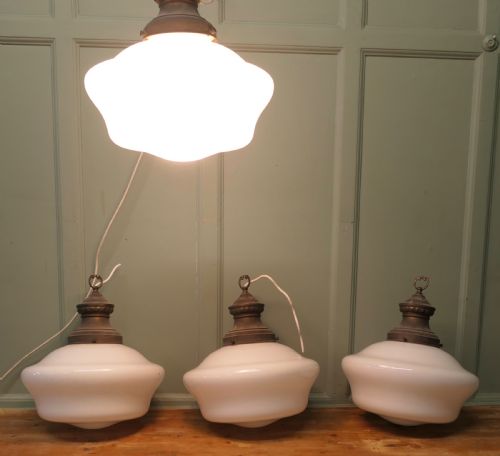
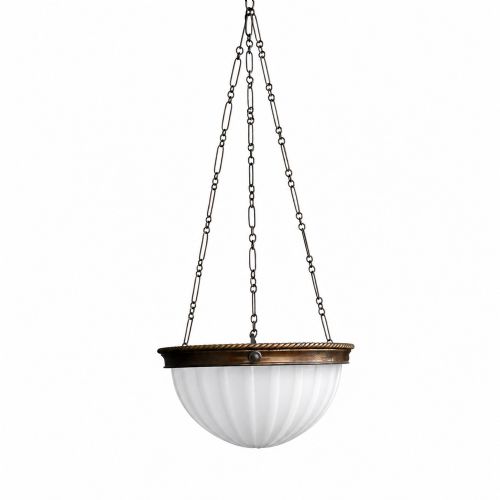
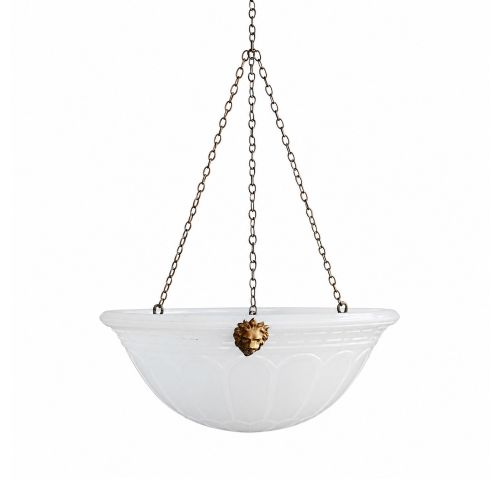
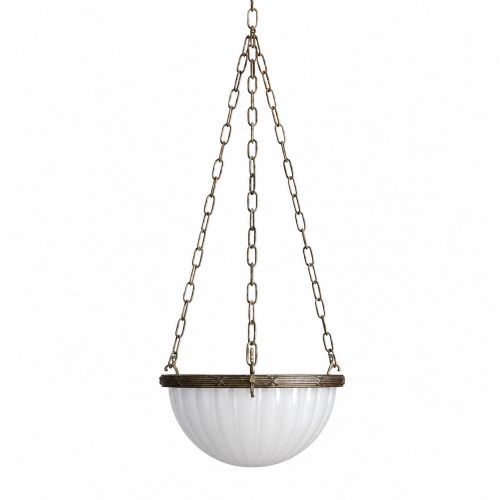
When you search for vintage white glass pendants, you encounter ceiling fixtures shaped as bowls, domes, pears, and cones designed to hang directly from wiring suspensions. These lights draw on periods running from Victorian times through the 1920s, 1930s, and mid-century, reflecting shifts in domestic and industrial design.
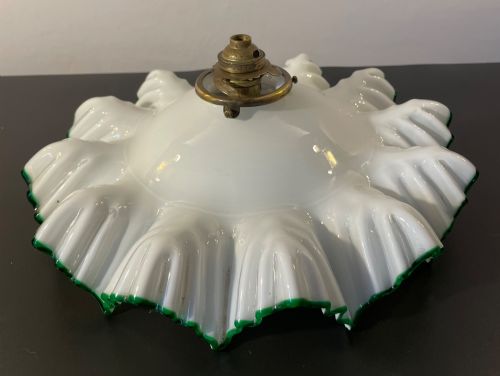
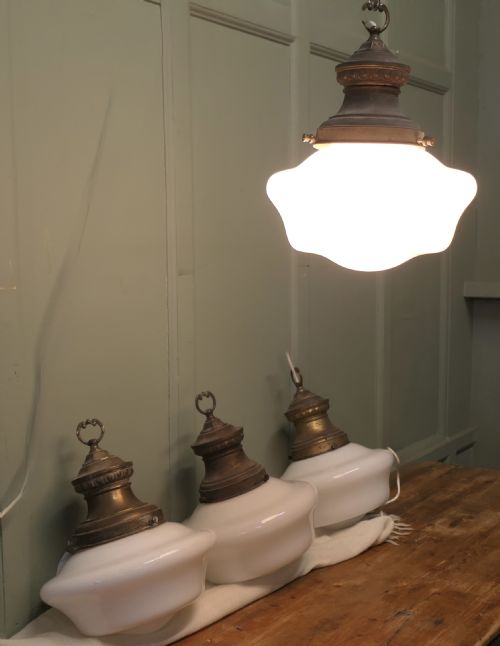
The selections on this page lean heavily toward early twentieth-century English and French examples, featuring opaline, moonstone, and frosted glass shades paired with brass, chrome, or enamel fittings. Forms range from utilitarian chapel and pharmacy lights to decorative art deco domes and French frill lampshades.
Beyond straightforward pendant lights, the category extends to related ceiling lighting forms such as plafonniers, chandeliers, and hanging lamp shades. Each piece uses white glass to soften the bulb output, creating an even glow suited to hallways, kitchens, and living spaces.
How they were made
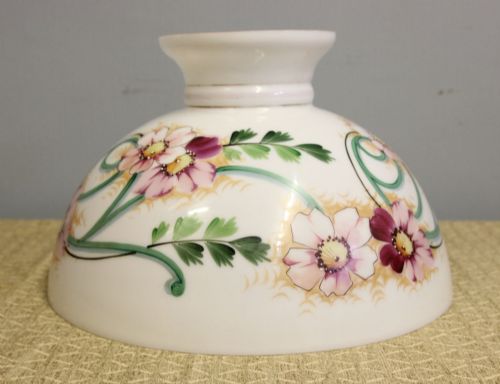
The shades in this selection rely on specialised glass formulas, utilising opaline, moonstone, opal, and frosted glass to achieve varying degrees of translucency and milk-white opacity. Makers blew or moulded the glass into specific silhouettes, sometimes adding etched details or painted highlights before assembly.
Metal components such as brass, bronze, chrome, and painted toleware provide the structural support, suspension galleries, and ceiling roses. These elements were cast, spun, or turned to secure the heavy glass bowls and shades safely overhead.
What varies in quality
Quality in these pendants reveals itself through the depth and weight of the glass, where heavier opaline and moonstone mixtures diffuse light with greater softness. Superior examples display balanced proportions, clean moulding lines, and crisp surface textures like reeded or fish scale patterns.
The integrity of the original metalwork distinguishes finer pieces, particularly where cast brass galleries, bronze mounts, or chrome fittings retain their original patination and secure the shade firmly. Details such as etched crystal motifs or gilded highlights indicate a higher tier of design and manufacturing effort.
Rene Lalique, Jefferson
The Vintage White Glass Pendants Glossary
- Opaline glass
- A semi-translucent milk-white glass often used in nineteenth and early twentieth-century lighting to soften glare. It diffuses light evenly while maintaining a bright appearance when unlit.
- Moonstone glass
- A specific type of translucent white glass with a cloudy, mottled appearance resembling the gemstone. It creates a gentle, atmospheric glow.
- Plafonnier
- A ceiling-mounted glass bowl light fixture that sits close to the surface rather than hanging on a long suspension cord or chain. These fixtures often feature decorative metal galleries.
- Toleware
- Painted or lacquered sheet metal used for decorative lantern frames, shades, and ceiling suspensions. It frequently appears in French lighting designs with polychrome or gilded finishes.
- Gallery
- The metal ring or fitting that grips the neck of a glass lampshade to connect it to the suspension cord and bulb holder. Galleries are commonly cast in brass or bronze.
Vintage White Glass Pendants: Frequently Asked Questions
How do I hang a heavy pendant?
These glass pendants require appropriate ceiling hooks and wiring that can support the combined weight of the glass shade and metal fittings. Professional installation ensures the fixture hangs securely from ceiling joists.
Most period pendants connect to standard suspension chains or rigid brass rods. Electricians can adjust drop heights to suit specific room dimensions during installation.
What rooms suit these lights?
White glass pendants provide functional, non-glare illumination suited to kitchens, hallways, and dining areas. Their diffuse output works well where comfortable ambient light is needed.
Smaller opaline shades fit narrow corridors, while large industrial or chapel pendants anchor higher ceilings in living spaces. The neutral white glass complements both traditional and modern interiors.
How do I clean old glass shades?
Wash opaline and frosted glass gently in warm soapy water using a soft cloth to remove dust and grease. Avoid harsh abrasives that can damage delicate etched surfaces or painted highlights.
Metal galleries and brass fittings benefit from dry dusting or specialised metal cleaners used sparingly. Keeping moisture away from vintage electrical components during cleaning is essential.
How do I identify the period?
Dating relies on combining the glass type, metal hardware, and overarching design style seen in the piece. Early twentieth-century examples often feature heavy opaline glass and simple brass galleries, whereas 1930s designs frequently incorporate chrome and geometric art deco shapes.
Victorian and Edwardian pieces frequently show heavier brass mounts, decorative chains, or arts and crafts influences. Comparing the shade shape and manufacturing technique helps narrow down the decade of production.