




Vintage Wheelback Chairs
Vintage wheelback chairs are sturdy country seats built around a characteristic pierced splat, offering rustic charm and solid timber construction for daily use.
Vintage Wheelback Chairs
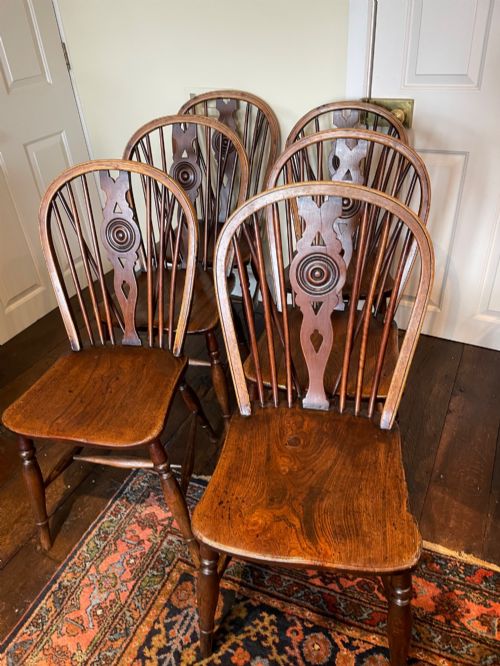
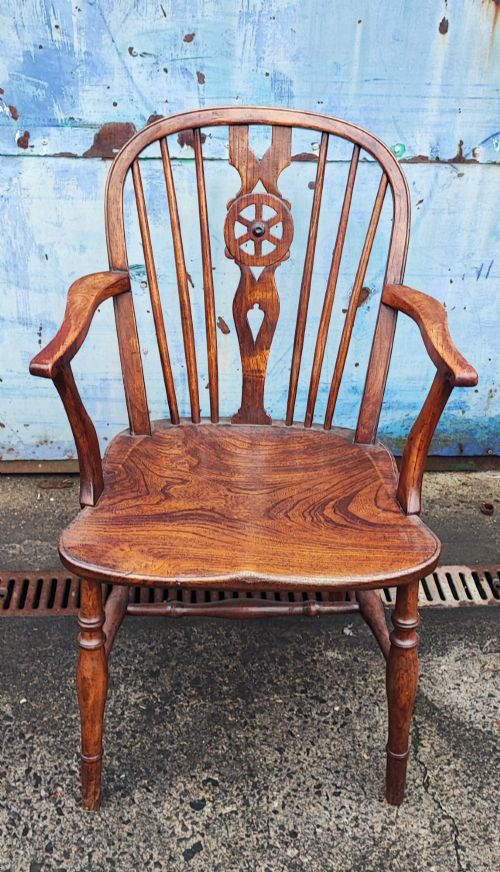
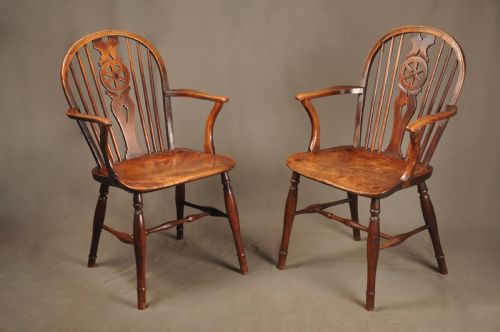
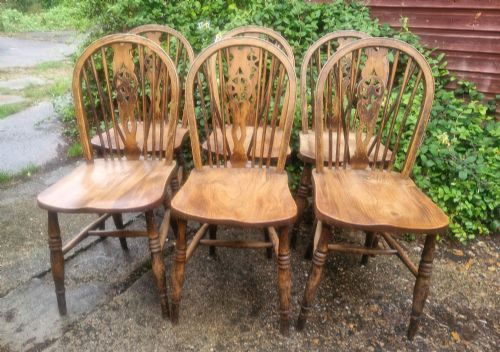
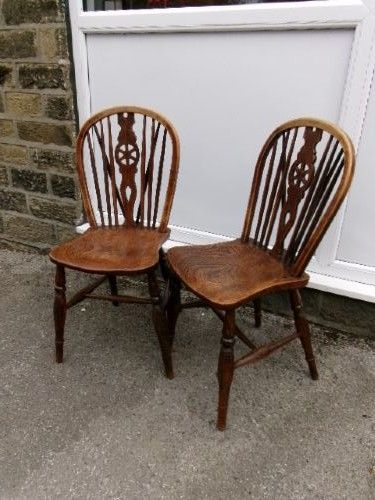
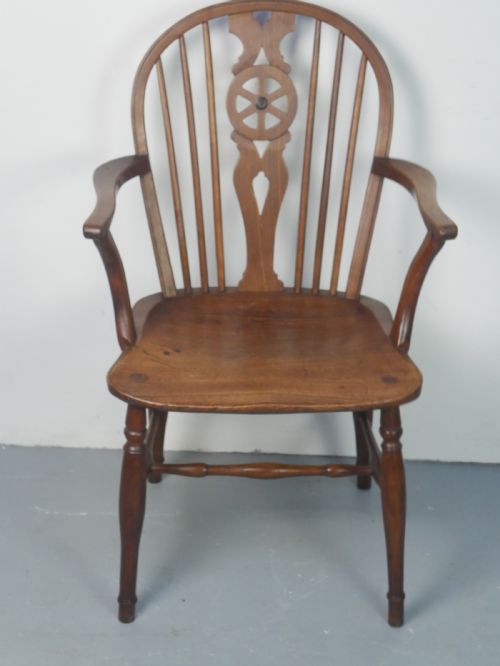
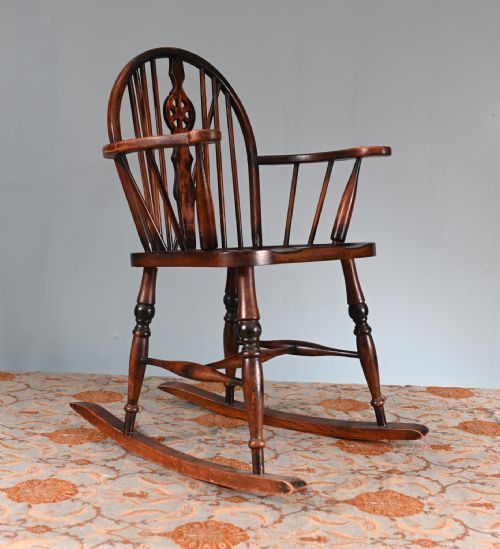
When you search for vintage wheelback chairs, you encounter a robust tradition of wooden seating originating in British rural workshops and domestic kitchens. These forms typically combine a sculpted solid seat with spindle backs and a distinctive pierced wheel motif.
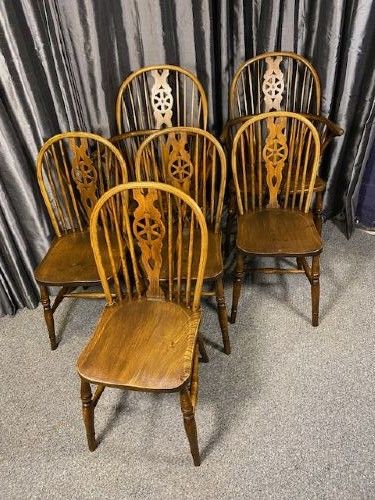
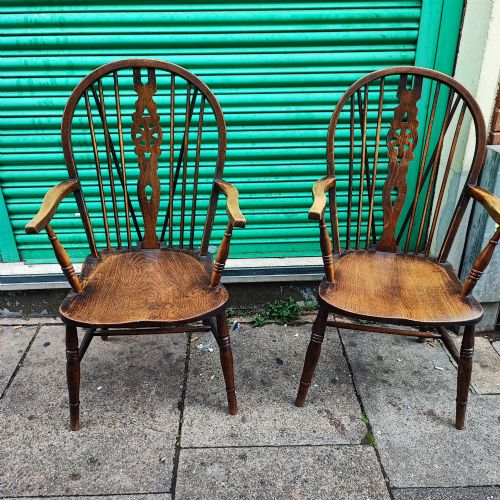
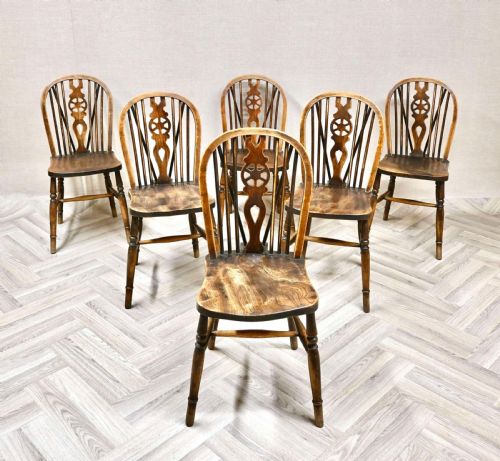
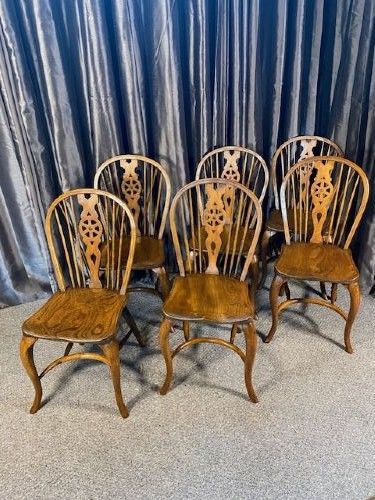
The selections span distinct periods ranging from Georgian country pieces and Regency examples through to Victorian and early twentieth-century interpretations. You will find single armchairs, pairs, and larger dining sets in both low and high back formats.
Most pieces on this page emerge from regional English traditions, including Thames Valley workshops and country house dining rooms. They function practically as dining chairs, carvers, and occasional rocking chairs.
How they were made
Maker techniques rely on combining multiple native timbers within a single frame, pairing strong woods for distinct structural roles. Elm is commonly selected for the saddle-shaped seats because its interlocking grain resists splitting under weight.
Turned beech, ash, and occasional mahogany form the upright spindles, legs, and bow frames. Artisans shaped these components using lathes and drawknives before wedging them into bored holes in the solid seat block.
Vintage Wheelback Chairs Retail Price Guide 2026
Typical asking prices for vintage wheelback chairs among the pieces listed under this phrase on Sellingantiques today, from the lower quarter to the upper quarter. They describe what is for sale here now, not the wider market.
The furniture styles span English Country, Georgian Vernacular, and Sheraton Revival forms.
What varies in quality
Quality rests in the proportional balance of the turned components and the depth of the sculpted elm seat. Superior examples display crisp definition in the central wheel carving and harmonious thickness across the tapering spindles.
Construction integrity defines the upper tier, seen in tight joints and well-pegged undercarriage stretchers. Harlequin sets and matched groups show variation in patina and timber selection that influences visual cohesion.
Fred Walker
The Vintage Wheelback Chairs Glossary
- Wheelback
- A chair back featuring a pierced wooden disk carved to resemble a cartwheel. This motif became popular during the nineteenth century in English country seating.
- Windsor chair
- A chair built with a heavy solid wooden seat into which the legs and back spindles are tenoned directly. These seats provide sturdy construction without a traditional upholstered frame.
- Carver
- An armchair designed to sit at the head of a dining table or serve as an occasional seat. These chairs feature integral armrests supported by the seat structure.
- Stretcher
- A horizontal wooden rod connecting the legs of a chair to provide structural rigidity. These undercarriages are often turned in matching timber.
- Harlequin set
- A collection of dining chairs that share a general style and period but vary slightly in individual details. Such groups were often assembled over time rather than purchased as one original set.
Vintage Wheelback Chairs: Frequently Asked Questions
What woods were used for wheelback chairs?
Traditional makers selected native British timbers based on mechanical strength and elasticity. Elm was widely chosen for the carved solid seat boards because the twisting grain prevents cracking.
Supporting elements like legs, bows, and spindles typically utilised turned beech, ash, or yew wood. Selected examples incorporate mahogany or fruitwood within formal or regional variations.
How do I date an antique wheelback?
Dating relies on examining the construction methods, tool marks, and timber patination beneath the seat. Earlier examples from the Georgian period often feature broader proportions, thicker arm supports, and deep saddle seats.
Victorian and later twentieth-century iterations tend toward standardised turnings and lighter framing. Examining the wedges used to secure the spindle tenons also reveals workshop age.
Are wheelback chairs comfortable for daily dining?
The saddle-shaped wooden seats are ergonomically carved to distribute weight effectively without requiring soft padding. Many people find the scooped timber surprisingly supportive for meals and desk work.
Adding small loose squab cushions provides extra softness during extended sitting periods. The upright posture encourages active support compared to deeply sprung modern upholstery.
How do I care for antique elm seats?
Maintain the timber by applying a light coat of traditional beeswax periodically to nourish the dry grain. Avoid placing antique wooden chairs near direct heat sources or radiators.
Keep humidity levels stable within the room to prevent wood movement and joint loosening. Gentle dusting with a dry cloth preserves the aged patina.