


Vintage Weather Vane
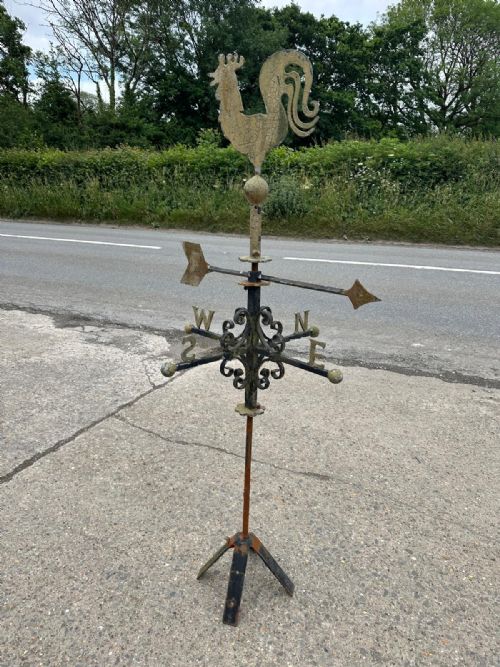
A vintage weather vane turns structural iron and beaten copper into sculptural outdoor folk art shaped by the wind.
Vintage Weather Vane
A vintage weather vane is a functional instrument and sculptural object that indicates wind direction while animating a roofline or garden. When searching for a vintage weather vane, buyers encounter animal silhouettes, working scientific anemometers, and spinning folk art whimsies.
Folk art traditions heavily influence these vanes, resulting in rustic country interpretations alongside more formal architectural instruments. They function equally well mounted outdoors or displayed indoors as sculptural wall art.
What varies in quality
Quality rests in the sculptural articulation of the silhouette and the integrity of the original surfaces, such as weathered old paint or patinated copper. Stronger examples display crisp hammer work and balanced proportions that respond cleanly to air currents.
Age and maker's technique dictate the presence of genuine wear rather than manufactured distress. Pieces retaining their original mounting hardware and unpolished metal skins hold greater visual weight.
Vintage Weather Vane Retail Price Guide 2026
Typical asking prices for vintage weather vane among the pieces listed under this phrase on Sellingantiques today, from the lower quarter to the upper quarter. They describe what is for sale here now, not the wider market.
Listings feature copper, iron, sheet metal, and wood spanning the Georgian period, the nineteenth century, and the early twentieth century.
The Vintage Weather Vane Glossary
- Anemometer
- A scientific instrument used for measuring wind speed and pressure. Lind's pattern anemometers record atmospheric force through liquid levels in glass tubes.
- Whirligig
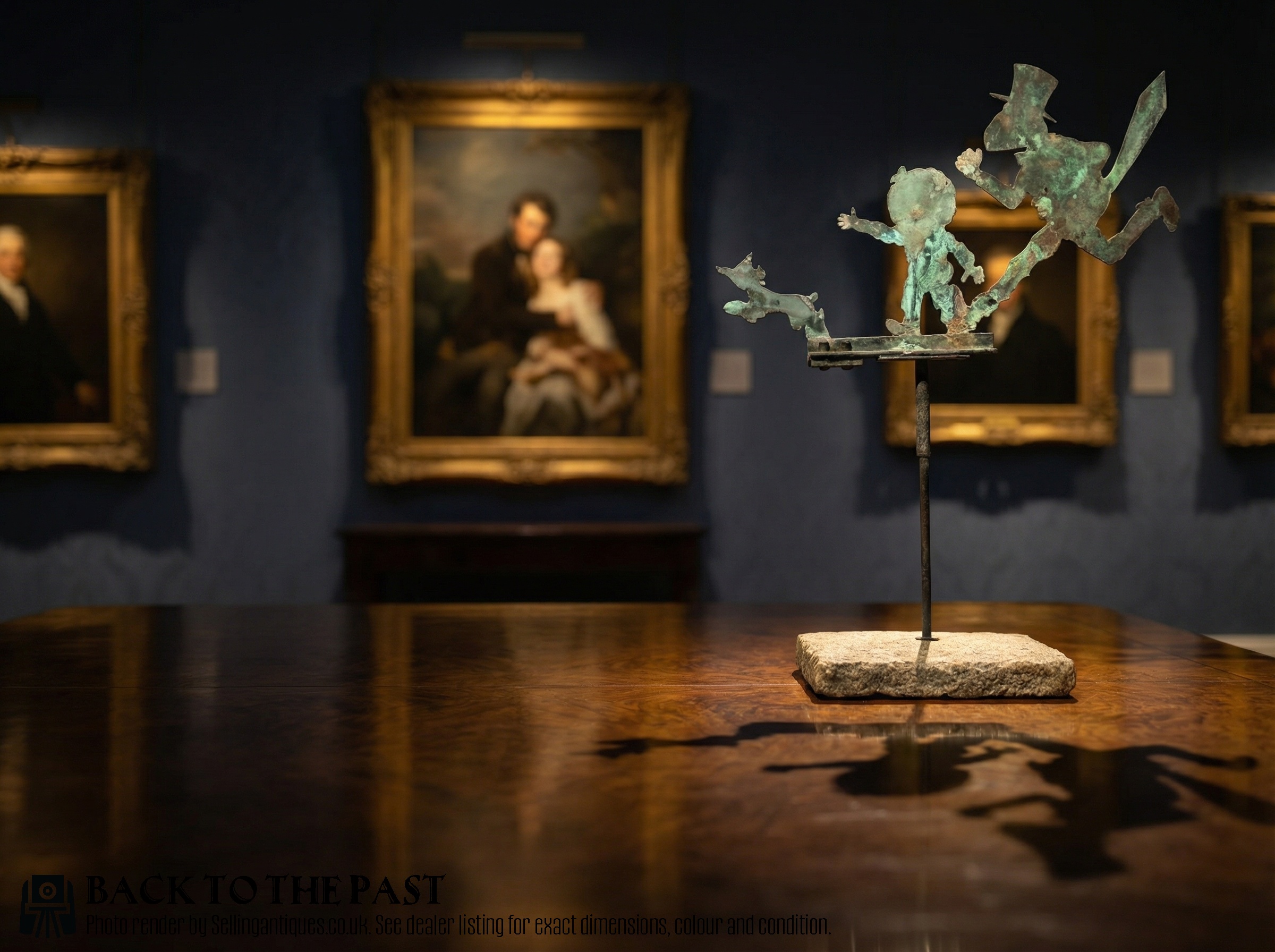
- A wind-driven folk art sculpture with moving parts that spin or teeter when caught by a breeze. These playful objects often depict figures in motion.
- Patina
- The surface oxidation and colour acquired by metals like copper and iron through age and exposure to weather. Collectors value untouched patinas.
- Silhouette
- A solid outline portrait cut from sheet metal or iron, commonly depicting animals or human figures like huntsmen.
- Folk art
- Utilitarian objects and sculptures created by self-taught or traditional makers working outside mainstream academic art traditions.
Vintage Weather Vane: Frequently Asked Questions
Can I mount a vintage weather vane outside?
Many weather vanes were built to withstand outdoor conditions using robust iron, copper, and sheet metal construction. However, pieces with delicate old paint or historical significance are often preserved indoors as wall art.
Checking the stability of the mounting rod and the condition of the metal helps determine whether a specific vane is suited for exterior display.
How do I date an antique weather vane?
Dating relies on material analysis, construction techniques, and stylistic markers associated with specific periods like the Georgian era or the early twentieth century. Hand-hammered sheet iron and early patinated copper usually point to nineteenth-century manufacture.
Makers often employed specific joining methods and material combinations that shift across decades, offering clues to their approximate age.
What animals appear most often on these vanes?
Cockerels and horses dominate the selection, alongside foxes and human silhouettes such as huntsmen. These subjects reflect traditional rural life and agrarian interests.
Animal forms were chosen both for their symbolic resonance and because their shapes caught the wind effectively when mounted on a pivot.
Are weather vanes and anemometers the same thing?
Weather vanes indicate the direction of the wind by pointing into the airflow, while anemometers measure wind speed. Both function as outdoor instruments designed to record atmospheric conditions.
Scientific anemometers incorporate specialised gauges, whereas standard weather vanes rely on balanced silhouettes and directional arrows.