




Antique Wind Vane
An antique wind vane is a functional sculpture that tracks the breeze, bringing tactile folk art character and historic charm to a garden or roofline.
Antique Wind Vane
An antique wind vane encompasses traditional weather vanes, weathervanes, whirligigs, and scientific instruments designed to measure or indicate air movement. The selections here span the Georgian, Victorian, Edwardian, and early twentieth-century periods, capturing vernacular craftsmanship from both English and American makers.
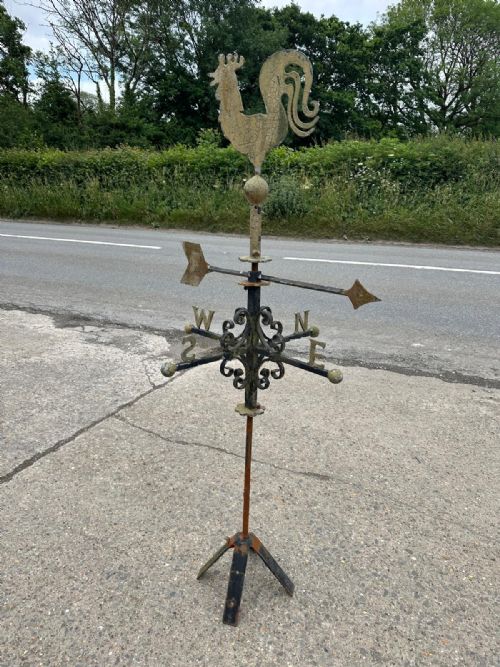
Cockerel silhouettes and animal figures dominate the forms, alongside mounted horse figures, huntsmen silhouettes, and mechanical whirligig figures such as sailors and signalmen. These functional objects served practical purposes on farms, coastal properties, and rural estates before transitioning into decorative folk art sculptures.
Buyers will encounter rustic country objects alongside refined folk art pieces, reflecting diverse regional styles like nautical folk art and English or American folk art traditions. Each object bears the marks of outdoor exposure, combining utility with expressive sculptural form.
How they were made
Maker construction relies on durable metals like copper, sheet iron, wrought iron, and painted sheet metal, shaped to withstand constant exposure to the elements. Many pieces retain traces of old paint or verdigris patination accumulated over decades outdoors.
Structural elements frequently incorporate carved wood and stone mounts, paired with forged iron pivots and directional hardware. The combination of beaten sheet copper and sturdy iron armature gives these sculptures their characteristic silhouette and balance.
Antique Wind Vane Retail Price Guide 2026
Typical asking prices for wind vane among the pieces listed under this phrase on Sellingantiques today, from the lower quarter to the upper quarter. They describe what is for sale here now, not the wider market.
Folk art styles encompass English, American, and nautical traditions alongside scientific instruments.
What varies in quality
The sophistication of the silhouette and the expressiveness of the carving set exceptional folk art sculptures apart from standard utilitarian markers. Pieces featuring animated subjects like cockfighting birds or articulated whirligig figures demonstrate greater sculptural ambition.
Surface preservation significantly influences the character of a piece, particularly where original layered paint or natural weathered patination remains intact. The integrity of the underlying metalwork and the balance of the directional arms also distinguish finer examples.
Negretti & Zambra
The Antique Wind Vane Glossary
- Anemometer
- A scientific instrument used for measuring the speed and force of the wind. Lind's pattern examples utilise liquid columns to gauge atmospheric pressure.
- Whirligig
- A wind-driven folk art sculpture with moving parts that spin or rotate in a breeze. These playful figures often depict figures like sailors or signalmen in motion.
- Verdigris
- A green patina or crust that forms on copper and brass surfaces through atmospheric oxidation. This natural weathering layer develops over long periods of outdoor exposure.
- Silhouette
- A solid outline portrait or profile cut from sheet metal or wood. In these objects, animal and human figures are rendered in flat profile to catch the wind.
Antique Wind Vane: Frequently Asked Questions
How do I mount an antique wind vane?
Most weather vanes require a sturdy rooftop bracket, cupola mount, or dedicated garden display stand to secure the heavy iron or copper rod. The mounting system must allow the directional arrow and sculptural topper to rotate freely with the breeze.
Ensure the cardinal points are properly aligned using a compass during installation so the vane accurately indicates wind direction.
Can these pieces stay outside year round?
Copper, iron, and treated wood objects have weathered outdoor conditions for over a century, developing protective patinas in the process. However, extreme winter gales or heavy frost can stress delicate sheet metal and historical joints.
Many collectors choose to shelter fragile whirligigs or painted pieces indoors during harsh weather to preserve their remaining surface pigment.
What is the difference between a vane and a whirligig?
A standard weather vane pivots as a single balanced silhouette to point directly into the oncoming wind. A whirligig incorporates moving mechanical components, such as spinning paddles or swinging arms, powered by the breeze.
While both served as outdoor indicators, whirligigs prioritize kinetic animation and folk art storytelling over precise directional readings.
How can I tell the age of a weather vane?
Dating relies on stylistic clues, construction methods, and the natural wear found on the metal or wood components. Georgian and Victorian examples often feature hand-hammered copper and forged iron, while early twentieth-century pieces may display stamped sheet metal.
Surface characteristics, such as layered historical paint schemes and deep verdigris, also help establish the chronology of a piece.