




Vintage Waterfall Shelves
Vintage waterfall shelves bring tiered charm to any room, offering stepped surfaces for books and display.
Vintage Waterfall Shelves
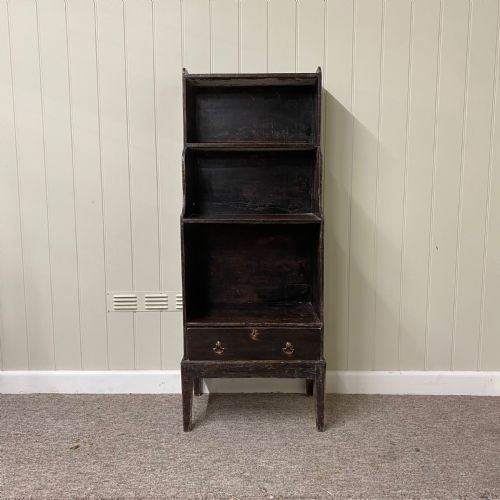
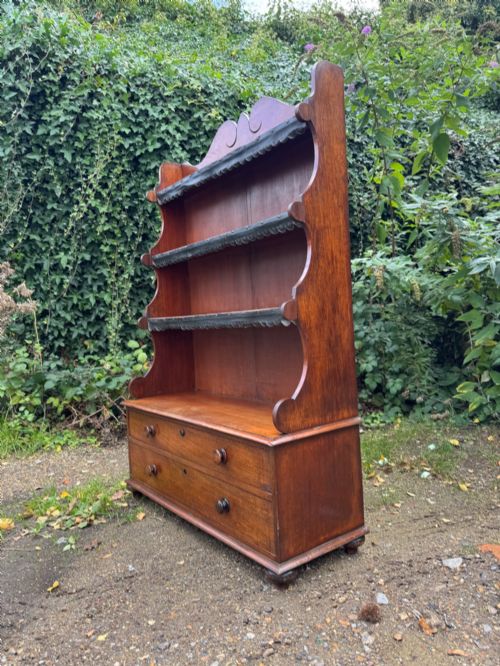
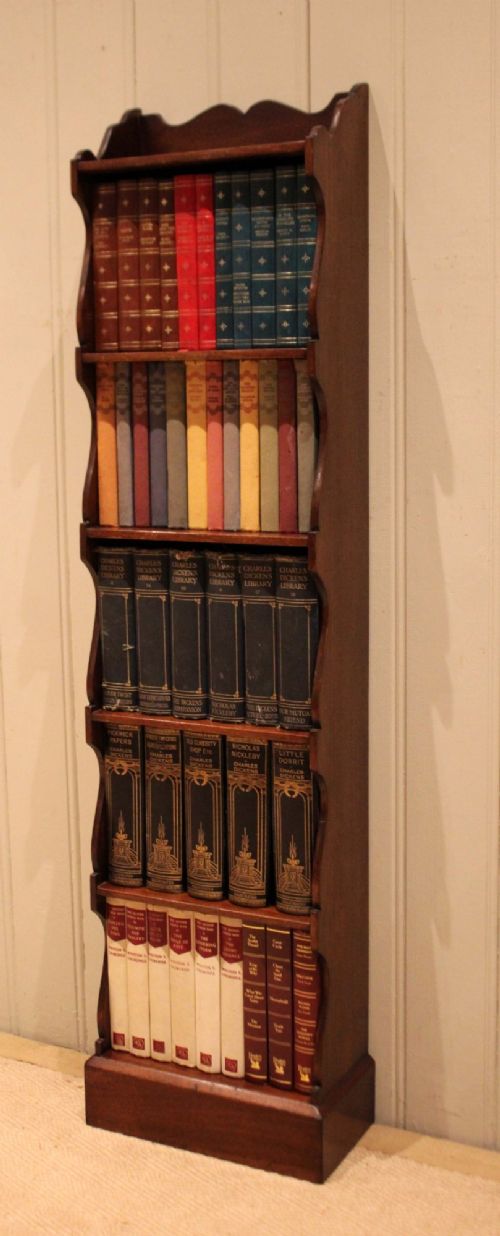
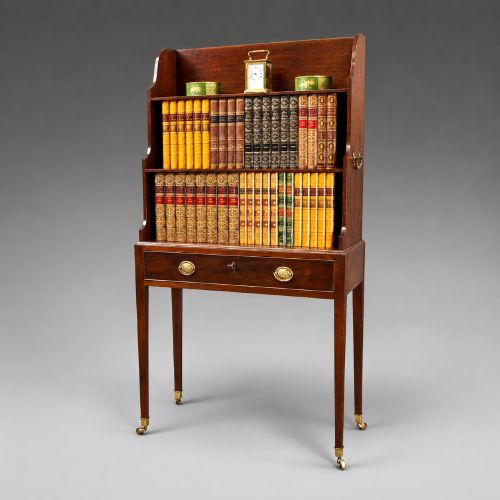
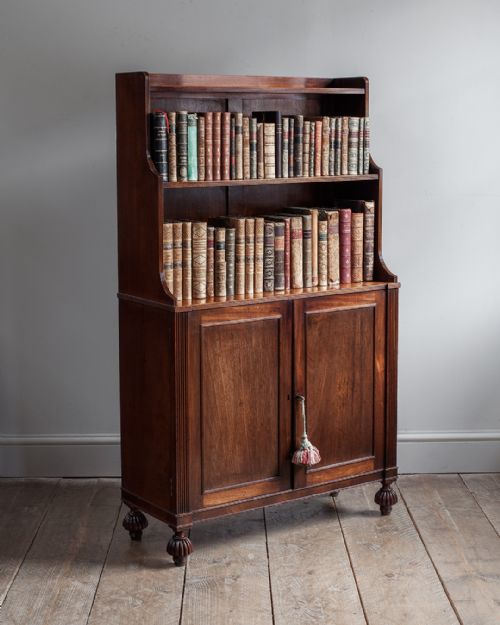
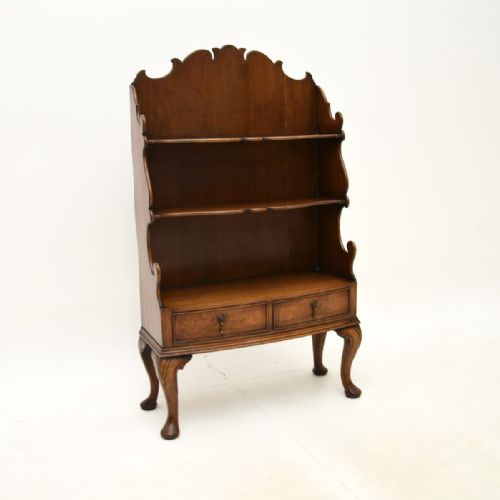
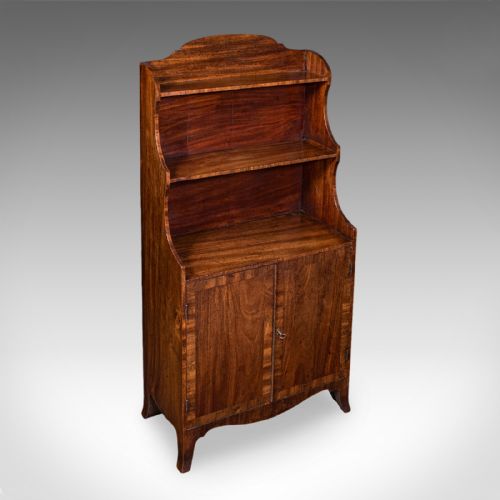
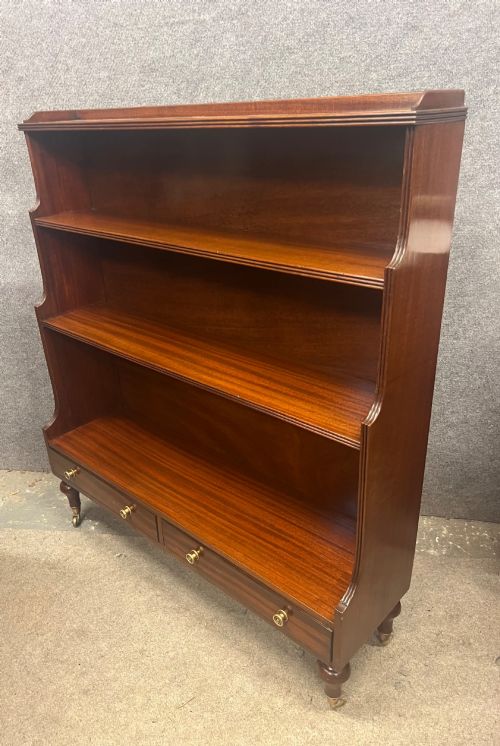
Vintage waterfall shelves encompass tiered bookcases, wall hanging shelves, and small cabinets designed with graduating tiers that step back as they rise. These pieces emerge across the nineteenth and early twentieth centuries, spanning Georgian, Regency, Victorian, and Edwardian periods.
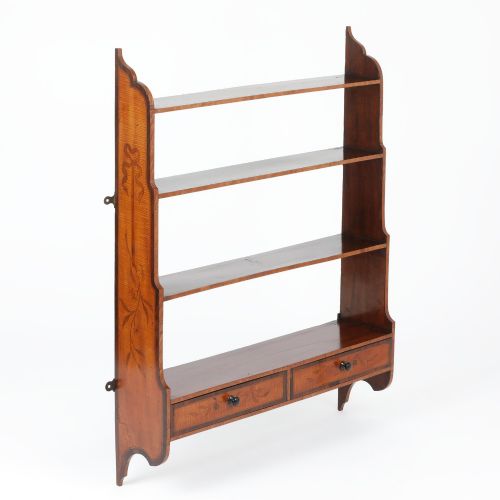
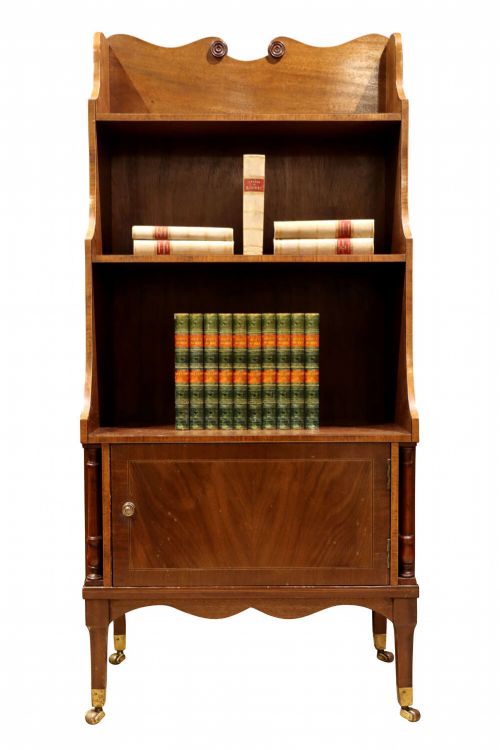
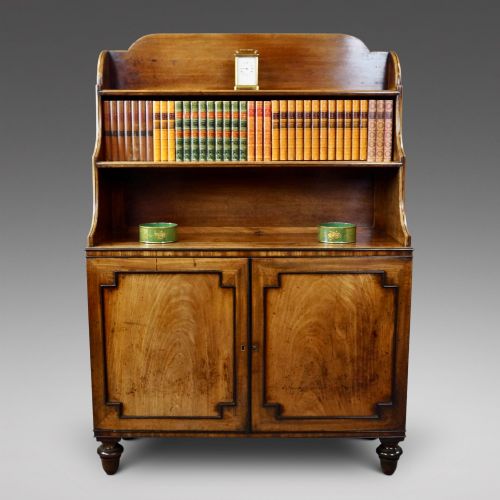
The most common pieces met on this page are mahogany bookcases and open shelving units, alongside occasional examples in oak, burr walnut, and satinwood. Formats range from floor-standing dwarf bookcases on brass castors to wall-hanging displays and integrated cupboard bases.
How they were made
Timbers such as mahogany, oak, walnut, and satinwood form the primary structure, often utilised as fine veneers like flame mahogany or burr walnut over secondary woods. Cabinetmakers shape the graduating tiers to descend smoothly, sometimes incorporating delicate inlay work, brass castors, and open galleries.
Joinery techniques reflect the period of construction, from nineteenth-century cabinetmaking to early twentieth-century production. Details like brass fittings, hanging brackets, and single-drawer integrations add both stability and function to the cascading shelves.
Vintage Waterfall Shelves Retail Price Guide 2026
Typical asking prices for vintage waterfall shelves among the pieces listed under this phrase on Sellingantiques today, from the lower quarter to the upper quarter. They describe what is for sale here now, not the wider market.
Listings feature mahogany, oak, walnut, satinwood, and yew wood across periods from the Georgian era through the early twentieth century.
What varies in quality
The choice of timber and veneer dictates much of the visual distinction, with figured grains like flame mahogany and burr walnut setting apart the finer examples. The crispness of inlaid details and the harmony of the graduating proportions reveal the maker's hand.
Structural integrity and original elements, such as brass castors or gallery rails, separate standard utility pieces from high-period expressions. The execution of the stepped tiers and the overall balance of the piece determine its standing within the range.
Shapland & Petter
The Vintage Waterfall Shelves Glossary
- Waterfall bookcase
- A tiered shelving unit where each level steps back progressively from the one below it. This design creates a cascading effect reminiscent of a waterfall, popular for displaying books and ornaments.
- Dwarf bookcase
- A low-standing bookcase designed to sit beneath window height or within reach. These pieces often feature open shelves or enclosed cupboards below.
- Flame mahogany
- A distinctive wood grain pattern resembling flickering flames, achieved by cutting across the bough of a mahogany tree. Cabinetmakers prize this figure for decorative surfaces on fine furniture.
- Inlay
- A decorative technique where contrasting materials are inserted into recesses in a wood surface. Common materials include light satinwood or darker woods set into a primary mahogany body.
- Open gallery
- A low decorative rail or pierced border fitted along the top shelf of a cabinet or bookcase. This feature prevents items from sliding off the edge.
Vintage Waterfall Shelves: Frequently Asked Questions
What are vintage waterfall shelves?
Vintage waterfall shelves are tiered storage units featuring graduating ledges that step backward toward the top. They serve to display books and decorative objects while maintaining a compact footprint.
Originating largely across the nineteenth and early twentieth centuries, these pieces utilise timbers like mahogany, oak, and walnut in both open and cabinet configurations.
How were waterfall bookcases used?
These bookcases were placed in parlours, libraries, and studies to hold frequently read volumes and small display items. Their stepped design allowed titles of varying heights to be seen clearly.
Wall-hanging versions provided accessible storage in smaller rooms where floor space was limited, while larger dwarf bookcases stood freely against walls.
How do I date a waterfall shelf?
Dating relies on identifying the prevailing style, construction timber, and hardware associated with specific periods. Georgian and Regency examples typically show dense mahogany and elegant proportions, while Edwardian pieces often incorporate lighter inlay.
Secondary indicators like brass castors, dovetail joints, and timber choice help narrow the window of manufacture across the nineteenth and early twentieth centuries.
How do I care for antique wood shelves?
Maintenance involves keeping the timber away from direct heat sources and strong sunlight to prevent veneer cracking and fading. Regular dusting with a soft, dry cloth preserves the polished finish.
Applying a traditional beeswax polish occasionally helps nourish the wood surface without building up excessive residue over time.