

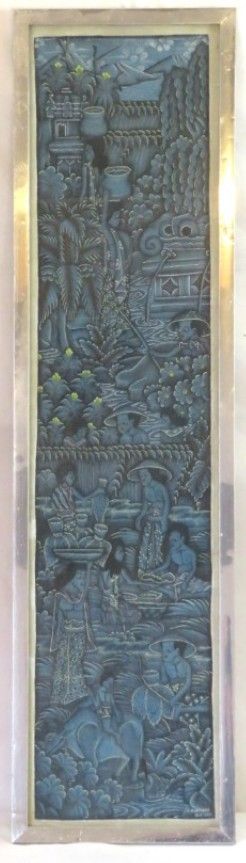


Vintage Water Colour
These vintage water colour pieces bring historic brushwork and pigment straight to your walls, offering an authentic glimpse into past artistic visions.
Vintage Water Colour
When you search for vintage water colour, you encounter a diverse array of framed paintings, original artwork, and wall art spanning multiple decades. The selection encompasses works ranging from 19th Century Romanticism and Victorian Classical Revival to Edwardian scenes and Mid-Century Modern compositions.
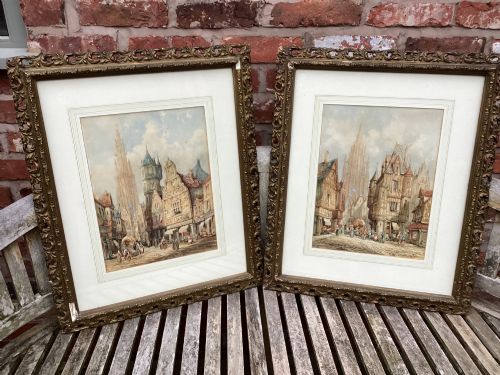
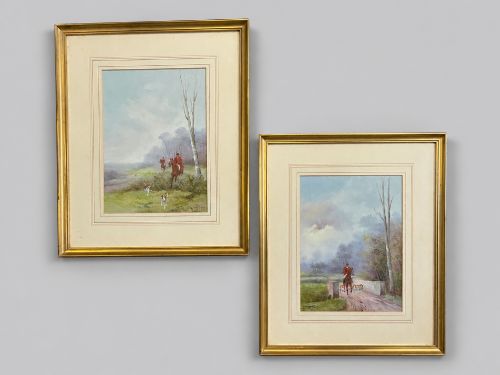
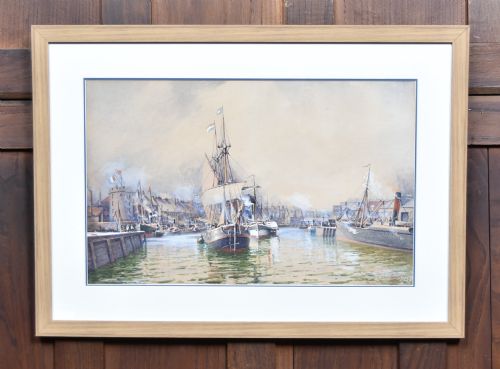
You are most likely to meet individual painted sheets on paper or fabric, framed for display, capturing landscapes, ports, and figurative studies. Pieces like the Balinese water colour on fabric from 1930 sit alongside 19th-century maritime scenes and 1960 illustration work.
The objects cross geographical and stylistic boundaries, including Balinese Batuan pieces, French mid-century views by Yves Brayer, and British works by artists such as William Woolard and Edith E Caswall. Each item represents a distinct period of artistic output, from the Edwardian era through to the 1960s.
Materials and methods
Watercolour pigment applied to paper forms the core medium of these works, utilising the absorbency and texture of the ground to create translucent washes and fine detail. Artists layer wet media to build depth, occasionally combining watercolour with ink or bodycolour.
Certain works utilise alternative supports such as fabric, expanding the traditional boundaries of the medium beyond standard paper sheets. Framing materials typically involve wood and glass to protect the delicate painted surfaces from atmospheric damage.
Vintage Water Colour Retail Price Guide 2026
Typical asking prices for vintage water colour among the pieces listed under this phrase on Sellingantiques today, from the lower quarter to the upper quarter. They describe what is for sale here now, not the wider market.
Among the painted views of ports and European lakes sits an original Walt Disney watercolour illustration from 1960.
Assessing quality
Quality rests upon the sureness of the brushwork and the artist's command of tone and light across the composition. Stronger works demonstrate confident pigment placement and enduring vibrancy in the colour palette.
The condition of the paper or fabric support and the fidelity of the framing preservation also dictate the standing of a piece. Original signatures, period framing, and documented provenance further distinguish superior examples from standard decorative works.
William Woolard·Edith E Caswall·B Kaufmann·Lobmeyr·Walt Disney·Yves Brayer
The Vintage Water Colour Glossary
- Watercolour
- A paint consisting of a solution of colour in water, typically using gum arabic as a binder. It is applied in translucent washes onto paper or fabric.
- Edwardian
- Pertaining to the reign of King Edward VII, spanning from 1901 to 1910. Works from this period often reflect refined academic traditions.
- Romanticism
- An artistic movement emphasising emotion, individualism, and awe of nature. 19th-century examples focus heavily on dramatic landscapes and atmospheric light.
- Mid-Century Modern
- A style in art and design from the middle decades of the twentieth century. It is characterised by clean lines and simplified forms.
- Provenance
- The chronology of the ownership and origin of a work of art. Documented history confirms the authenticity and attribution of the piece.
Vintage Water Colour: Frequently Asked Questions
What periods do these paintings cover?
The works span from the 19th century through the Edwardian era, 1920s, 1930s, and into the mid-20th century up to 1960.
This broad chronological range allows collectors to find examples from specific historical art movements and decades.
Are these works painted on paper?
Most works consist of watercolour applied to paper supports, though some selections utilise fabric.
Paper serves as the traditional ground for this medium, allowing for the characteristic translucent washes.
How should I frame and display them?
Works on paper require framing behind glass with acid-free mounts to protect the delicate pigments from fading and moisture.
Keep them away from direct sunlight to preserve the integrity of the original watercolour wash.
How do I identify a signed piece?
Signatures typically appear in pencil or ink in the lower corners of the painted surface.
Some pieces also feature artist attributions or studio marks on the reverse of the mount or frame.